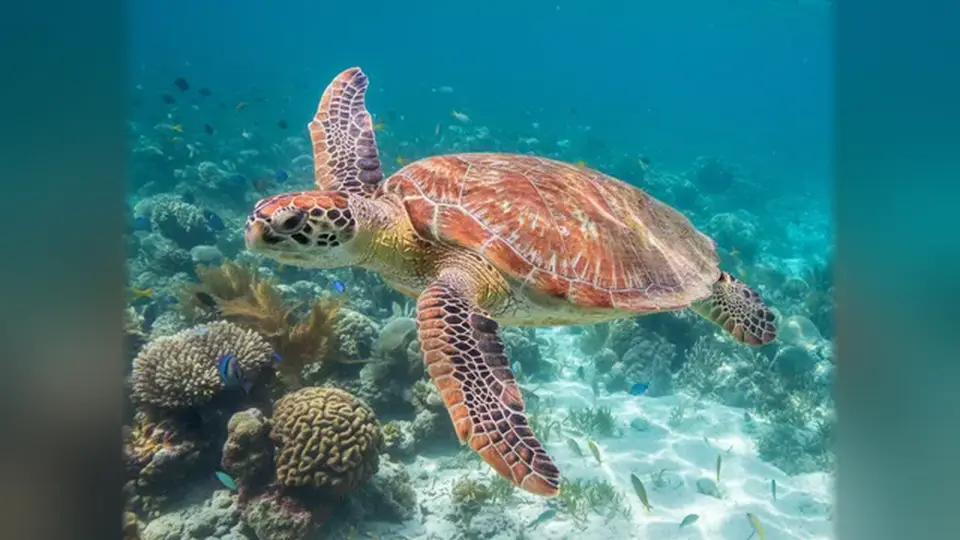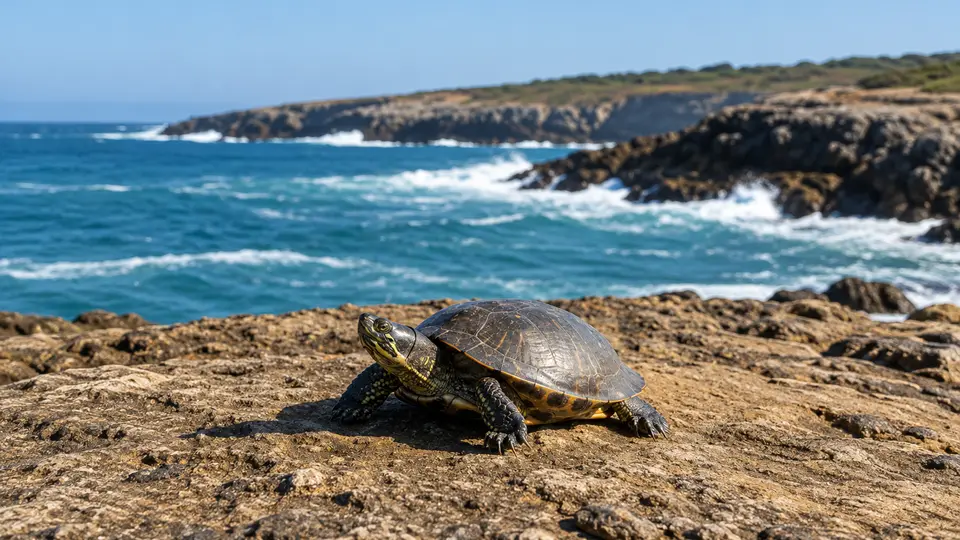
Mediterranean Turtle in its natural habitat, AI illustration
SizeCarapace length 15–25 cmLifespanNot reliably establishedStatusCheck current assessment

Mediterranean Turtle: where and when to see them

Mauremys leprosa

Mediterranean Turtle at a glance

The Spanish pond turtle is a freshwater reptile of southwestern Europe and northwestern Africa, rather than a land tortoise. In Portugal it inhabits quiet waters where sunny banks and exposed logs provide basking places. Its olive to brown shell often looks plain at a distance, while yellowish neck stripes become apparent through binoculars. Wetland drainage, road mortality, pollution and competition with introduced turtles can affect local populations.

Behaviour & reproduction

Size
Carapace length 15–25 cm
Weight
Not reliably established
Lifespan
Not reliably established
Status
Check current assessment

These turtles alternate between feeding in water and basking to regulate body temperature. Several may share a convenient log, but they usually slip into the water when approached. Activity changes with temperature, and cold periods can bring prolonged inactivity. Females leave the water to dig nests in terrestrial soil, sometimes crossing roads. Young animals tend to use sheltered shallow margins, where vegetation provides cover from birds and other predators. They are capable of estivation, burying themselves in mud during dry periods to survive drought. Males often engage in elaborate courtship rituals, which may include head bobbing and chasing females in the water.

Top wildlife locations

Portugal wildlife habitat

Portugal

Freshwater ponds, slow rivers and wetland paths offer plausible bank-side viewing, especially in warmer regions. An inland excursion is usually required from coastal ports; turtles are not assured at any accessible waterbody.

Adventure cruises in Portugal
Destinations describe the species' habitat, not guaranteed cruise stops. Some animals require an optional inland excursion or are found in restricted reserves.

Fun facts about the Mediterranean Turtle

  • Females are generally larger than males.
  • The species occurs naturally on both sides of the Strait of Gibraltar.
  • Its webbed feet suit freshwater movement, unlike the stout feet of land tortoises.
  • Basking helps regulate temperature and supports normal physiological functions.

Best time to see the Mediterranean Turtle

Spring through early autumn generally offers the best opportunity to notice active turtles in Portugal. Mild sunny mornings can encourage basking, whereas intense summer heat may reduce exposure. Water levels and local weather matter more than a fixed calendar, and nesting activity should never be disturbed. During especially dry years, water bodies may shrink, concentrating turtles and making them easier to spot, but also increasing competition and stress. Warmer water temperatures in spring stimulate increased activity levels, including foraging and mating displays.

Mediterranean Turtle: season matrix by destination

Travel and observation windows vary by region. Highlighted months are an orientation for planning, not confirmed sightings or a guarantee of access.

Portugal

These months broadly suit warm-weather activity and wetland visits, not a guaranteed sighting or a precise nesting calendar.

JanFebMarAprMayJunJulAugSepOctNovDec
Cruise ships in Portugal

Where the Mediterranean Turtle lives

Slow rivers, ponds, reservoirs, irrigation channels and seasonal wetlands can support this species. It needs accessible basking surfaces, refuge in deeper water or vegetation, and nearby ground suitable for nesting. Some populations tolerate mildly brackish conditions, but it remains principally a freshwater turtle. They are often found in areas with soft substrates like mud or sand, which they use for burrowing or resting. While primarily freshwater, they can also adapt to certain coastal lagoons or estuaries where salinity levels fluctuate.

What the Mediterranean Turtle eats

An opportunistic omnivore, it eats aquatic invertebrates, carrion, small vertebrates and plant material. The balance changes with age and availability, with younger turtles generally taking more animal food. Feeding wild turtles bread or other human food can degrade water quality and alter natural behaviour. Their strong jaws are well adapted for crushing snail shells and the exoskeletons of aquatic insects. Juveniles are particularly vulnerable and consume more protein for rapid growth, making small aquatic invertebrates a crucial food source for them.

Species at a glance

Common name
Mediterranean Turtle
Scientific name
Mauremys leprosa
Animal group
Reptiles
Size
Carapace length 15–25 cm
Weight
Not reliably established
Lifespan
Not reliably established
Status
Check current assessment
Identification
Compared with the European pond turtle, it usually has longitudinal yellow neck stripes rather than numerous yellow dots across a dark head and shell. The plastron (under shell) is typically yellow, often with dark spots or patches, which can vary geographically. Some individuals may exhibit a reddish or orange tint on their plastron or limbs, particularly in older specimens.

Mediterranean Turtle: frequently asked questions

Where can I see the Mediterranean Turtle?
Portugal. Scan logs and quiet banks from an established path using binoculars. Stop before basking turtles retreat, keep dogs away, and never handle an animal or approach a nesting female. Shore excursions near suitable wetlands or slow moving rivers often provide vantage points from stable ground. Patience is key as they can remain submerged for extended periods, but a still surface can often reveal their presence.
When is the best time to see the Mediterranean Turtle?
Spring through early autumn generally offers the best opportunity to notice active turtles in Portugal. Mild sunny mornings can encourage basking, whereas intense summer heat may reduce exposure. Water levels and local weather matter more than a fixed calendar, and nesting activity should never be disturbed. During especially dry years, water bodies may shrink, concentrating turtles and making them easier to spot, but also increasing competition and stress. Warmer water temperatures in spring stimulate increased activity levels, including foraging and mating displays.
How big does the Mediterranean Turtle get?
Carapace length 15–25 cm. Adult weight: Not reliably established. Size varies with age, sex and population.
How should I behave around the Mediterranean Turtle?
Scan logs and quiet banks from an established path using binoculars. Stop before basking turtles retreat, keep dogs away, and never handle an animal or approach a nesting female. Shore excursions near suitable wetlands or slow moving rivers often provide vantage points from stable ground. Patience is key as they can remain submerged for extended periods, but a still surface can often reveal their presence.
What does the Mediterranean Turtle eat?
An opportunistic omnivore, it eats aquatic invertebrates, carrion, small vertebrates and plant material. The balance changes with age and availability, with younger turtles generally taking more animal food. Feeding wild turtles bread or other human food can degrade water quality and alter natural behaviour. Their strong jaws are well adapted for crushing snail shells and the exoskeletons of aquatic insects. Juveniles are particularly vulnerable and consume more protein for rapid growth, making small aquatic invertebrates a crucial food source for them.
Are wildlife sightings guaranteed on an adventure cruise?
No. Animals move freely and routes, weather, access restrictions and local conditions influence every outing. Confirm the actual itinerary and shore programme before booking.

Compare wildlife in the same destinations

Explore other reptiles recorded in these destinations. Similar surroundings do not mean the animals share the same habits or viewing season.

Species comparison by animal group and destination
Mediterranean TurtleMediterranean TurtleLeatherback Sea TurtleLeatherback Sea TurtleLoggerhead Sea TurtleLoggerhead Sea Turtle
Animal groupReptilesAnimal groupReptilesAnimal groupReptiles
DestinationsPortugalDestinationsFlorida, PortugalDestinationsFlorida, Cape Verde, Croatia, Greece, Portugal, Turkey
All wildlife destinations
Plan your trip

Find your next wildlife adventure

Compare destinations, shore programmes and dates with the animals and habitats you would love to see.

  • Naturalist-led shore excursions
  • Responsible wildlife watching
  • Small expedition ships

Newsletter

Take Blue Rides with you

Adventure cruise offers, last-minute deals and trip inspiration.

Free, unsubscribe anytime. Details: Privacy Policy

Partner with Blue Rides

Affiliate Program

Recommend adventure cruises and earn commission on every confirmed booking.

Share. Track. Earn.