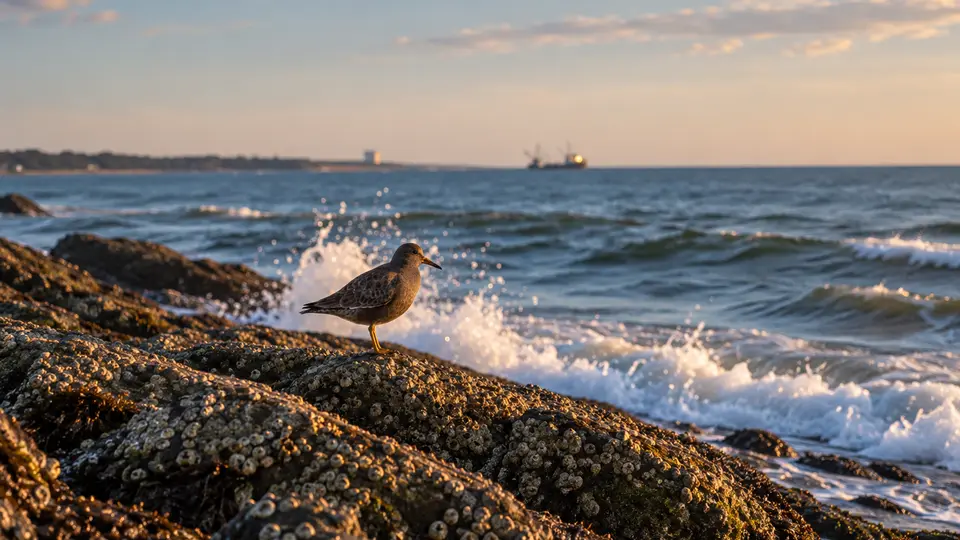
Purple Sandpiper in its natural habitat, AI illustration
Size20–22 cm body lengthLifespanNot reliably establishedStatusLeast Concern

Purple Sandpiper: where and when to see them

Calidris maritima

Purple Sandpiper at a glance

The purple sandpiper is a hardy northern shorebird best known for feeding on wave-washed rocks in winter. Its name refers to a subtle sheen that is rarely obvious at a distance, not a bright purple plumage. Short yellowish legs and a slightly drooping bill help distinguish it among dark coastal stones. Unlike many sandpipers that favor mudflats, this species regularly occupies exposed rocky shores where surf and spray create demanding feeding conditions.

Behaviour & reproduction

Size
20–22 cm body length
Weight
60–105 g
Lifespan
Not reliably established
Status
Least Concern

Outside the breeding season, purple sandpipers often gather in compact flocks that work across rocks as waves recede. They pick food from crevices and seaweed, then retreat or flutter away from incoming water. High tides concentrate birds at sheltered roosts. Breeding occurs on northern tundra, where pairs nest on the ground. Males commonly undertake much of the care of chicks after females leave, an unusual division of parental effort among familiar shorebirds. They are highly social outside the breeding season, often forming mixed flocks with other shorebirds like turnstones and dunlin. Their habit of foraging actively in the spray of breaking waves makes them a hardy and charismatic species of winter coasts.

Top wildlife locations

New England wildlife habitat

New England

Rocky headlands, seawalls and accessible breakwaters provide winter viewing opportunities from safe shore paths. Birds are localized rather than widespread, and exposed jetties may be inaccessible or dangerous during storms.

Adventure cruises in New England

Destinations describe the species' habitat, not guaranteed cruise stops. Some animals require an optional inland excursion or are found in restricted reserves.

Fun facts about the Purple Sandpiper

  • The purple sheen is subtle and often invisible under field conditions.
  • It winters farther north than many other sandpipers.
  • Males frequently provide most chick care after hatching.
  • Winter flocks can feed within reach of breaking surf.

Best time to see the Purple Sandpiper

In New England, late autumn through early spring is the most useful shore-viewing period. Winter flocks may occupy favored rocky sites repeatedly, but tide, storms and disturbance alter their positions. Breeding-season observations generally require travel much farther north. Prime viewing opportunities often occur after strong autumn cold fronts push migrants south from their Arctic breeding grounds. Their presence can sometimes extend into late spring as they stage for their northward migration.

Purple Sandpiper: season matrix by destination

Travel and observation windows vary by region. Highlighted months are an orientation for planning, not confirmed sightings or a guarantee of access.

New England

This is a credible winter visitor window, not a breeding season; abundance and departure dates vary locally.

JanFebMarAprMayJunJulAugSepOctNovDec
Cruise ships in New England

Where the Purple Sandpiper lives

Breeding sites include Arctic and subarctic tundra, sometimes on rocky uplands well away from the shore. In winter, the species strongly favors rocky marine coasts, offshore islands, breakwaters and jetties, especially where intertidal algae and crevices support abundant small prey. Though generally coastal in winter, they can occasionally be found on large freshwater lakes in migration, especially those with rocky shores. They show a strong fidelity to specific wintering sites, returning to the same rocky stretches year after year.

What the Purple Sandpiper eats

Winter food consists largely of small mollusks, crustaceans and other invertebrates collected from rocks and seaweed. On breeding grounds it eats insects and other terrestrial invertebrates, with some plant material. Feeding opportunities shift continuously with tides and wave exposure. Their robust bill and strong legs allow them to dislodge prey from tightly adhering algae and barnacles. During extreme cold, they may also consume small amounts of plant seeds and berries if invertebrates are scarce.

Species at a glance

Common name
Purple Sandpiper
Scientific name
Calidris maritima
Animal group
Birds
Size
20–22 cm body length
Weight
60–105 g
Lifespan
Not reliably established
Status
Least Concern
Identification
Compared with ruddy turnstones and other small sandpipers, it has dark grey plumage, short yellow-orange legs and a gently downcurved bill with a yellowish base. Their dark plumage provides excellent camouflage against the dark rocks and kelp, making them easy to overlook despite their compact size. In good light, a faint purplish sheen can sometimes be observed on their upperparts, giving them their common name.

Purple Sandpiper: frequently asked questions

Where can I see the Purple Sandpiper?
New England. Use binoculars from secure shore paths rather than slippery jetties. Keep back from high-tide roosts, since flushing birds wastes winter energy, and never approach wave-washed rocks during heavy surf. Scanning large seaweed-covered rocks exposed at low tide can reveal these birds camouflaged against the dark substrate. Listen for their distinctive 'wit-wit-wit' call, especially when they are flushed or in flight.
When is the best time to see the Purple Sandpiper?
In New England, late autumn through early spring is the most useful shore-viewing period. Winter flocks may occupy favored rocky sites repeatedly, but tide, storms and disturbance alter their positions. Breeding-season observations generally require travel much farther north. Prime viewing opportunities often occur after strong autumn cold fronts push migrants south from their Arctic breeding grounds. Their presence can sometimes extend into late spring as they stage for their northward migration.
How big does the Purple Sandpiper get?
20–22 cm body length. Adult weight: 60–105 g. Size varies with age, sex and population.
How should I behave around the Purple Sandpiper?
Use binoculars from secure shore paths rather than slippery jetties. Keep back from high-tide roosts, since flushing birds wastes winter energy, and never approach wave-washed rocks during heavy surf. Scanning large seaweed-covered rocks exposed at low tide can reveal these birds camouflaged against the dark substrate. Listen for their distinctive 'wit-wit-wit' call, especially when they are flushed or in flight.
What does the Purple Sandpiper eat?
Winter food consists largely of small mollusks, crustaceans and other invertebrates collected from rocks and seaweed. On breeding grounds it eats insects and other terrestrial invertebrates, with some plant material. Feeding opportunities shift continuously with tides and wave exposure. Their robust bill and strong legs allow them to dislodge prey from tightly adhering algae and barnacles. During extreme cold, they may also consume small amounts of plant seeds and berries if invertebrates are scarce.
Are wildlife sightings guaranteed on an adventure cruise?
No. Animals move freely and routes, weather, access restrictions and local conditions influence every outing. Confirm the actual itinerary and shore programme before booking.

Compare wildlife in the same destinations

Explore other birds recorded in these destinations. Similar surroundings do not mean the animals share the same habits or viewing season.

Species comparison by animal group and destination
Purple SandpiperPurple SandpiperAtlantic PuffinAtlantic PuffinBald EagleBald Eagle
Animal groupBirdsAnimal groupBirdsAnimal groupBirds
DestinationsNew EnglandDestinationsNew England, Norway, Scotland, ArcticDestinationsAlaska, Florida, New England
All wildlife destinations
Plan your trip

Find your next wildlife adventure

Compare destinations, shore programmes and dates with the animals and habitats you would love to see.

  • Naturalist-led shore excursions
  • Responsible wildlife watching
  • Small expedition ships

Newsletter

Take Blue Rides with you

Adventure cruise offers, last-minute deals and trip inspiration.

Free, unsubscribe anytime. Details: Privacy Policy

Partner with Blue Rides

Affiliate Program

Recommend adventure cruises and earn commission on every confirmed booking.

Share. Track. Earn.