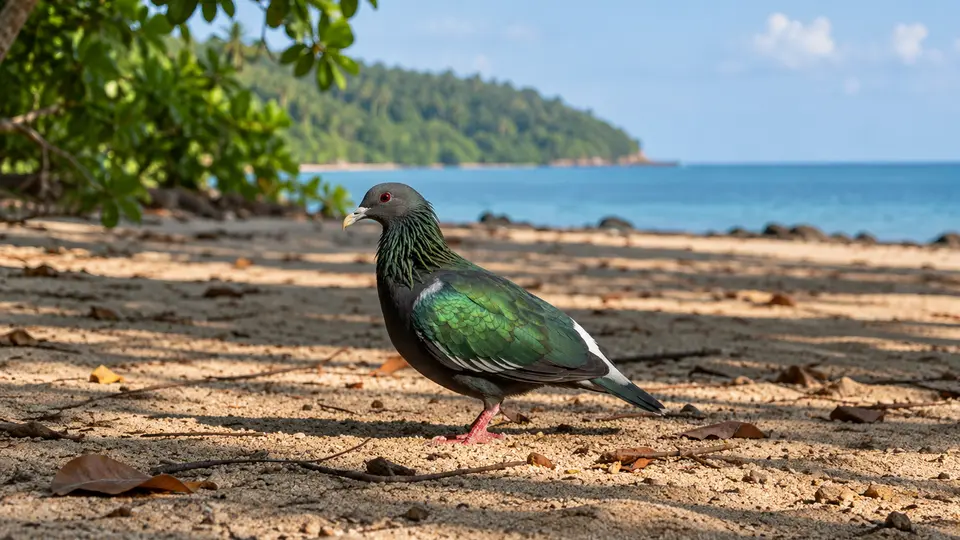
Nicobar pigeon in its natural habitat, AI illustration
Size32-35 cm body lengthLifespanNot reliably establishedStatusNear Threatened

Nicobar pigeon: where and when to see them

Caloenas nicobarica

Nicobar pigeon at a glance

The Nicobar pigeon is a large island pigeon with metallic green and bronze plumage, elongated neck feathers and a contrasting white tail. Its range extends through parts of the eastern Indian Ocean and western Pacific, but populations are fragmented among islands. In Thailand it is associated with selected offshore islands rather than ordinary mainland parks. Hunting, trapping and introduced predators threaten a bird whose nesting and feeding requirements can depend on several islands.

Behaviour & reproduction

Size
32-35 cm body length
Weight
460-600 g
Lifespan
Not reliably established
Status
Near Threatened

Nicobar pigeons spend considerable time walking on the forest floor, searching leaf litter for food. They may commute between islands, using some for feeding and others for communal roosting or breeding. Strong, direct flight contrasts with their deliberate ground movements. Nesting can be colonial in trees and shrubs. Birds are often wary where disturbed, and their forest habits mean that an occupied island does not necessarily offer easy views from an authorized path. They are highly social birds, often seen in small to large flocks, particularly when foraging or flying between islands. Their flight is fast and direct, often at low altitudes over water, contrasting sharply with their sedate ground movements.

Top wildlife locations

Thailand wildlife habitat

Thailand

Selected Andaman islands retain coastal forest suitable for Nicobar pigeons. Authorized shore trails may provide opportunities, but the species is localized, some islands are inaccessible, and ordinary mainland excursions are unlikely to encounter it.

Adventure cruises in Thailand
Destinations describe the species' habitat, not guaranteed cruise stops. Some animals require an optional inland excursion or are found in restricted reserves.

Fun facts about the Nicobar pigeon

  • Genetic studies place it among the closest living relatives of the extinct dodo.
  • Adults have a conspicuous white tail, whereas juveniles have a dark tail.
  • Both parents help incubate the single egg.
  • Individuals can travel between separate nesting, roosting and feeding islands.

Best time to see the Nicobar pigeon

For Thailand's Andaman islands, roughly November through April usually offers calmer travel conditions and greater access to authorized forest trails. This is not a verified species-wide breeding season. Island closures, local distribution and permissions must be checked before planning any wildlife excursion. During this period, the breeding season for some populations may coincide, though specific island breeding cycles vary. Always check local regulations, as some islands or areas may be seasonally closed for wildlife protection or traditional uses.

Nicobar pigeon: season matrix by destination

Travel and observation windows vary by region. Highlighted months are an orientation for planning, not confirmed sightings or a guarantee of access.

Thailand

This reflects typical Andaman travel and park-access conditions, not confirmed sightings or a general breeding calendar; verify current island permissions.

JanFebMarAprMayJunJulAugSepOctNovDec
Cruise ships in Thailand

Where the Nicobar pigeon lives

Small wooded islands, coastal forest and nearby larger forested islands provide complementary nesting, roosting and feeding habitat. Predator-free or lightly disturbed islands are particularly valuable. In Thailand, suitable habitat is localized offshore, and protected areas may impose seasonal closures or prohibit access. They prefer dense forest on small, remote islands, often with limited human disturbance. These pigeons are particularly vulnerable to habitat loss and degradation, especially the introduction of predators to their island homes.

What the Nicobar pigeon eats

Fallen fruits, seeds and other plant material make up much of the diet, with occasional small invertebrates. Birds forage mainly on the ground. A muscular gizzard and swallowed grit help process hard food, allowing them to exploit seeds unavailable to some softer-fruit specialists. Their robust gizzard allows them to consume larger, harder seeds that many other frugivores cannot digest, reducing dietary competition. They often feed in small flocks, overturning leaf litter with their bills to find hidden food.

Species at a glance

Common name
Nicobar pigeon
Scientific name
Caloenas nicobarica
Animal group
Birds
Size
32-35 cm body length
Weight
460-600 g
Lifespan
Not reliably established
Status
Near Threatened
Identification
Its long metallic neck hackles, dark iridescent body and short white tail distinguish adult Nicobar pigeons from imperial pigeons and other regional island pigeons. Juveniles are duller, lacking the long neck hackles and showing a brownish-black tail. The striking iridescent green and copper plumage on their head and body shimmers beautifully in good light.

Nicobar pigeon: frequently asked questions

Where can I see the Nicobar pigeon?
Thailand. Watch quietly from authorized island forest paths, allowing birds to cross without pursuit. Do not bait them or enter nesting vegetation. Respect biosecurity checks, since introduced predators pose a serious threat to island colonies. Be patient and look for their distinctive movements among the undergrowth. Viewing from a distance with binoculars can provide excellent, undisturbed observations, allowing the birds to continue their natural activities.
When is the best time to see the Nicobar pigeon?
For Thailand's Andaman islands, roughly November through April usually offers calmer travel conditions and greater access to authorized forest trails. This is not a verified species-wide breeding season. Island closures, local distribution and permissions must be checked before planning any wildlife excursion. During this period, the breeding season for some populations may coincide, though specific island breeding cycles vary. Always check local regulations, as some islands or areas may be seasonally closed for wildlife protection or traditional uses.
How big does the Nicobar pigeon get?
32-35 cm body length. Adult weight: 460-600 g. Size varies with age, sex and population.
How should I behave around the Nicobar pigeon?
Watch quietly from authorized island forest paths, allowing birds to cross without pursuit. Do not bait them or enter nesting vegetation. Respect biosecurity checks, since introduced predators pose a serious threat to island colonies. Be patient and look for their distinctive movements among the undergrowth. Viewing from a distance with binoculars can provide excellent, undisturbed observations, allowing the birds to continue their natural activities.
What does the Nicobar pigeon eat?
Fallen fruits, seeds and other plant material make up much of the diet, with occasional small invertebrates. Birds forage mainly on the ground. A muscular gizzard and swallowed grit help process hard food, allowing them to exploit seeds unavailable to some softer-fruit specialists. Their robust gizzard allows them to consume larger, harder seeds that many other frugivores cannot digest, reducing dietary competition. They often feed in small flocks, overturning leaf litter with their bills to find hidden food.
Are wildlife sightings guaranteed on an adventure cruise?
No. Animals move freely and routes, weather, access restrictions and local conditions influence every outing. Confirm the actual itinerary and shore programme before booking.

Compare wildlife in the same destinations

Explore other birds recorded in these destinations. Similar surroundings do not mean the animals share the same habits or viewing season.

Species comparison by animal group and destination
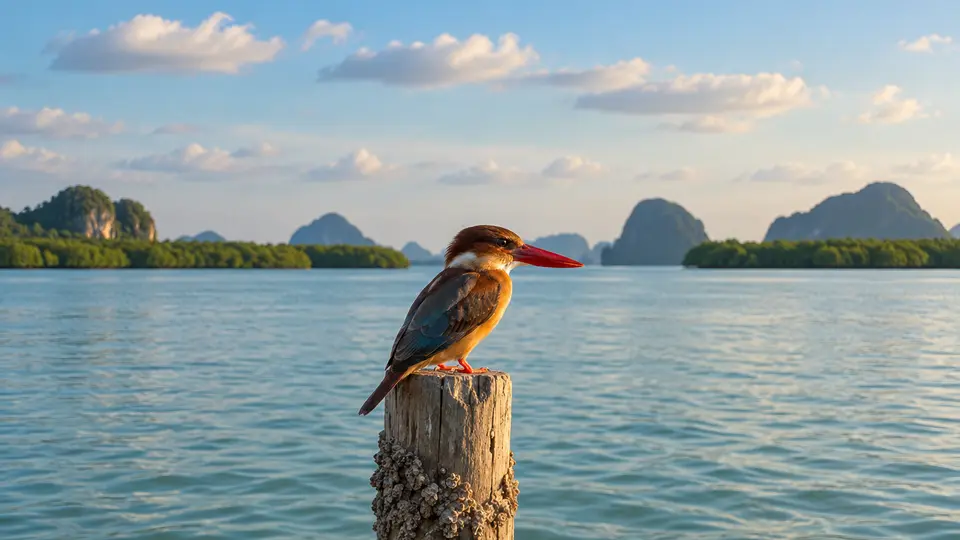
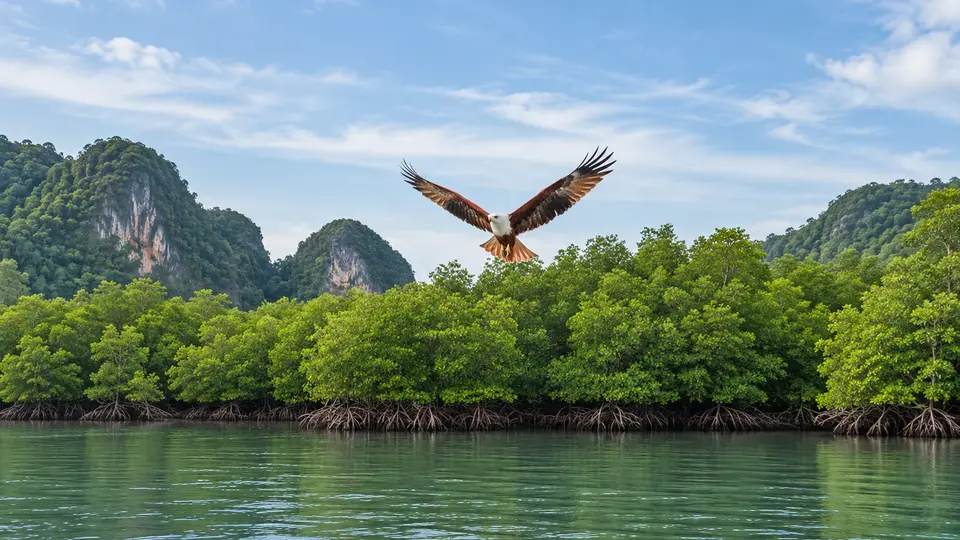
Nicobar pigeonNicobar pigeonBrahminy kiteBrahminy kiteBrown-winged kingfisherBrown-winged kingfisher
Animal groupBirdsAnimal groupBirdsAnimal groupBirds
DestinationsThailandDestinationsIndonesia, Thailand, VietnamDestinationsThailand
All wildlife destinations
Plan your trip

Find your next wildlife adventure

Compare destinations, shore programmes and dates with the animals and habitats you would love to see.

  • Naturalist-led shore excursions
  • Responsible wildlife watching
  • Small expedition ships

Newsletter

Take Blue Rides with you

Adventure cruise offers, last-minute deals and trip inspiration.

Free, unsubscribe anytime. Details: Privacy Policy

Partner with Blue Rides

Affiliate Program

Recommend adventure cruises and earn commission on every confirmed booking.

Share. Track. Earn.