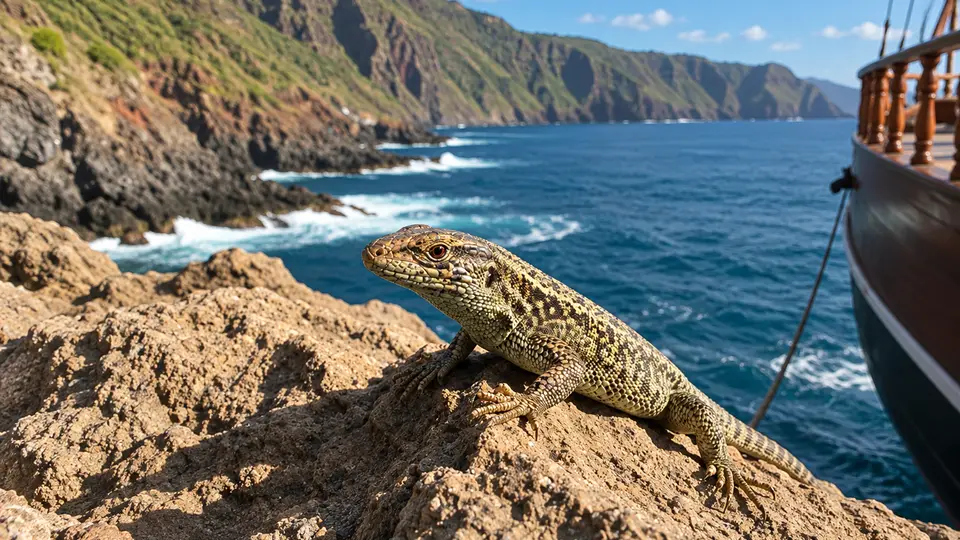
Madeira Wall Lizard in its natural habitat, AI illustration

Madeira Wall Lizard: where and when to see them

Teira dugesii

Madeira Wall Lizard at a glance

The Madeira wall lizard is a small, active reptile native to the Madeira archipelago and the Selvagens. It is familiar on sunny stonework, rocky slopes and garden edges, making it one of the region's more approachable native vertebrates. Colour varies considerably among individuals and island populations, from muted brown to greener or more strongly patterned animals. Introduced populations also exist outside its native islands, so locality matters when interpreting an observation.

Behaviour & reproduction

Size
15–23 cm total length
Weight
Not reliably established
Lifespan
Not reliably established
Status
Least Concern

These lizards regulate body temperature by moving between sunshine and shelter. They often bask on walls before making quick foraging excursions, retreating into cracks when disturbed. Males interact territorially during the reproductive period, using posture and pursuit. Individuals can become accustomed to people at busy viewpoints, but this should not encourage feeding. Activity changes with temperature, cloud and exposure, with shelter especially important during cool, windy or very hot conditions. Courtship displays involve head bobs and tail wags, with males often chasing females to initiate mating. These lizards exhibit remarkable site fidelity, often returning to the same basking spots or shelters daily, which can aid in repeated observations during a stay.

Top wildlife locations

Portugal wildlife habitat

Portugal

Madeira's coastal gardens, stone walls and rocky public paths offer plausible shore-adjacent viewing without an inland excursion. Other native island populations may occupy protected or inaccessible terrain, and mainland occurrences are introduced.

Adventure cruises in Portugal
Destinations describe the species' habitat, not guaranteed cruise stops. Some animals require an optional inland excursion or are found in restricted reserves.

Fun facts about the Madeira Wall Lizard

  • It is the only living species usually placed in the genus Teira.
  • Its diet can include nectar as well as insects.
  • A detached tail can regrow, though the replacement differs from the original.
  • Native island populations show conspicuous variation in colour and pattern.

Best time to see the Madeira Wall Lizard

Warm, bright conditions from spring into autumn usually favour visible activity on Madeira. Lizards may emerge during mild winter weather too. Morning or later-afternoon sunshine can be productive, while cold wind, heavy rain or intense midday heat may reduce exposed basking. Peak activity for foraging and social interactions typically occurs when ambient temperatures are within their preferred range, often between 25 and 35 degrees Celsius. On excursions, early mornings offer opportunities to see them emerging to warm up, while late afternoons can be active as they forage before nightfall.

Madeira Wall Lizard: season matrix by destination

Travel and observation windows vary by region. Highlighted months are an orientation for planning, not confirmed sightings or a guarantee of access.

Portugal

This broad mild-weather window favours outdoor activity; basking depends on daily sunshine and temperature, not a fixed visitor season.

JanFebMarAprMayJunJulAugSepOctNovDec
Cruise ships in Portugal

Where the Madeira Wall Lizard lives

Rocky ground, dry-stone walls, gardens, cultivated terraces and open scrub all provide suitable habitat. The species ranges from coastal settings into uplands where conditions permit. Crevices, vegetation cover and sun-exposed surfaces create the thermal variety needed for daily activity. They are particularly abundant in coastal areas and on offshore islets, demonstrating a remarkable adaptability to different substrate types including bare rock and sandy dunes. The species has also successfully colonized urban environments, utilizing man-made structures like old buildings and pavements for shelter and thermoregulation.

What the Madeira Wall Lizard eats

The diet includes insects, spiders and other small invertebrates, together with substantial plant foods in some settings. Lizards consume fruits, flowers and nectar when available. This flexibility helps them exploit both natural vegetation and human-modified landscapes without needing tourist food. Their opportunistic diet contributes to their success in diverse environments, allowing them to exploit seasonal changes in food availability. This broad diet also includes a significant proportion of ants, which are a readily available and consistent food source across their range.

Species at a glance

Common name
Madeira Wall Lizard
Scientific name
Teira dugesii
Animal group
Reptiles
Size
15–23 cm total length
Weight
Not reliably established
Lifespan
Not reliably established
Status
Least Concern
Identification
Within its native islands, Madeira wall lizard is the familiar slender, long-tailed wall lizard, but variable colour alone does not reliably distinguish it from introduced mainland wall-lizard species elsewhere. Key identification features include a relatively flattened head and small, granular scales on the body, with larger keeled scales on the tail. Males often exhibit brighter green or blue coloration on their flanks, particularly during the breeding season, while females and juveniles are generally more cryptically patterned brown or grey.

Madeira Wall Lizard: frequently asked questions

Where can I see the Madeira Wall Lizard?
Portugal. Watch sunny walls without chasing lizards into crevices or offering food. Never grab a tail, which can detach under stress. Stay on safe paths rather than leaning over cliffs to follow a retreating animal. When observing, look for slight movements of their head or tail, indicating alertness or communication within their territory. On cruises, spotting them involves scanning sun-drenched rock walls and ruins visible from paths and viewpoints, as they often perch conspicuously.
When is the best time to see the Madeira Wall Lizard?
Warm, bright conditions from spring into autumn usually favour visible activity on Madeira. Lizards may emerge during mild winter weather too. Morning or later-afternoon sunshine can be productive, while cold wind, heavy rain or intense midday heat may reduce exposed basking. Peak activity for foraging and social interactions typically occurs when ambient temperatures are within their preferred range, often between 25 and 35 degrees Celsius. On excursions, early mornings offer opportunities to see them emerging to warm up, while late afternoons can be active as they forage before nightfall.
How big does the Madeira Wall Lizard get?
15–23 cm total length. Adult weight: Not reliably established. Size varies with age, sex and population.
How should I behave around the Madeira Wall Lizard?
Watch sunny walls without chasing lizards into crevices or offering food. Never grab a tail, which can detach under stress. Stay on safe paths rather than leaning over cliffs to follow a retreating animal. When observing, look for slight movements of their head or tail, indicating alertness or communication within their territory. On cruises, spotting them involves scanning sun-drenched rock walls and ruins visible from paths and viewpoints, as they often perch conspicuously.
What does the Madeira Wall Lizard eat?
The diet includes insects, spiders and other small invertebrates, together with substantial plant foods in some settings. Lizards consume fruits, flowers and nectar when available. This flexibility helps them exploit both natural vegetation and human-modified landscapes without needing tourist food. Their opportunistic diet contributes to their success in diverse environments, allowing them to exploit seasonal changes in food availability. This broad diet also includes a significant proportion of ants, which are a readily available and consistent food source across their range.
Are wildlife sightings guaranteed on an adventure cruise?
No. Animals move freely and routes, weather, access restrictions and local conditions influence every outing. Confirm the actual itinerary and shore program before booking.

Compare wildlife in the same destinations

Explore other reptiles recorded in these destinations. Similar surroundings do not mean the animals share the same habits or viewing season.

Species comparison by animal group and destination
Madeira Wall LizardMadeira Wall LizardLeatherback Sea TurtleLeatherback Sea TurtleLoggerhead Sea TurtleLoggerhead Sea Turtle
Animal groupReptilesAnimal groupReptilesAnimal groupReptiles
DestinationsPortugalDestinationsFlorida, PortugalDestinationsFlorida, Cape Verde, Croatia, Greece, Portugal, Turkey
All wildlife destinations
Plan your trip

Find your next wildlife adventure

Compare destinations, shore programs and dates with the animals and habitats you would love to see.

  • Naturalist-led shore excursions
  • Responsible wildlife watching
  • Small expedition ships

Newsletter

Take Blue Rides with you

Adventure cruise offers, last-minute deals and trip inspiration.

Free, unsubscribe anytime. Details: Privacy Policy

Partner with Blue Rides

Affiliate Program

Recommend adventure cruises and earn commission on every confirmed booking.

Share. Track. Earn.

Your footage, our stage

Send us your videos or pictures.

Captured beautiful landscapes or wildlife? Share your videos and pictures with us, we may feature them on Blue Rides.