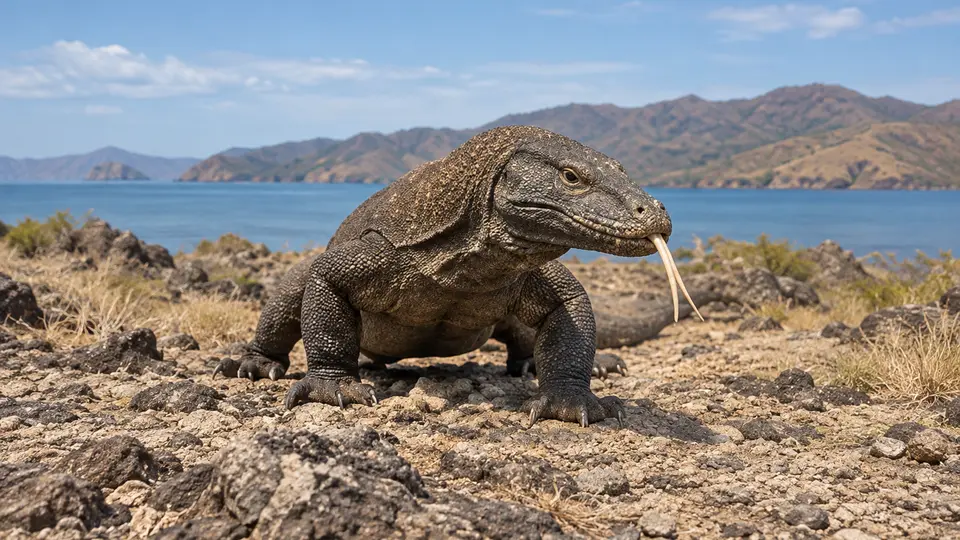
Komodo dragon in its natural habitat, AI illustration
Size2–3 m total lengthLifespanAbout 30 yearsStatusEndangered

Komodo dragon: where and when to see them

Varanus komodoensis

Komodo dragon at a glance

The Komodo dragon is the largest living lizard, native to a small group of Indonesian islands. Its muscular body, serrated teeth and powerful tail make it an effective predator and scavenger. Adults occupy the top of their island food webs, while juveniles spend much of their early lives in trees. Its restricted distribution makes habitat protection especially important as coastal environments face development, disturbance and rising sea levels.

Behaviour & reproduction

Size
2–3 m total length
Weight
30–90 kg
Lifespan
About 30 years
Status
Endangered

Komodo dragons usually forage alone, following chemical traces with repeated flicks of a forked tongue. Several may gather at a carcass, where size strongly influences access to food. Males wrestle during competition for mates, and females guard nesting areas before leaving the eggs to develop. Young dragons climb to escape larger predators, including adult dragons. Daily activity shifts with temperature, with shade becoming important during intense midday heat. They are ectothermic, relying on external heat sources to regulate their body temperature, often basking in the sun in the mornings. Adult dragons can exhibit territorial behavior, especially larger males, and display dominance through ritualized fights.

Top wildlife locations

Indonesia wildlife habitat

Indonesia

Permitted ranger-led trails on Komodo and Rinca cross coastal dry woodland and savanna used by dragons. Access is regulated, and visitors should not assume every island stop includes suitable habitat or a sighting.

Adventure cruises in Indonesia
Destinations describe the species' habitat, not guaranteed cruise stops. Some animals require an optional inland excursion or are found in restricted reserves.

Fun facts about the Komodo dragon

  • The forked tongue carries scent particles to the vomeronasal organs in the roof of the mouth.
  • Females can sometimes produce offspring without mating through parthenogenesis.
  • Juveniles commonly use trees as refuges from cannibalistic adults.
  • Females may excavate several misleading nest chambers around the true egg chamber.

Best time to see the Komodo dragon

The drier months, broadly April through October, often offer more manageable walking conditions on the relevant Indonesian islands. Dragons remain present year-round, but heat, rainfall and reproductive activity affect visibility. Early guided visits may avoid the strongest heat without ensuring an encounter. During the rainy season, from November to March, heavy downpours can make some trails impassable and reduce overall visibility. High temperatures throughout the year necessitate early morning visits to avoid the peak heat and observe more active dragons.

Komodo dragon: season matrix by destination

Travel and observation windows vary by region. Highlighted months are an orientation for planning, not confirmed sightings or a guarantee of access.

Indonesia

These months broadly reflect drier travel and walking conditions, not a guaranteed sighting period or the full breeding season.

JanFebMarAprMayJunJulAugSepOctNovDec
Cruise ships in Indonesia

Where the Komodo dragon lives

These lizards inhabit seasonally dry tropical landscapes, including savanna, open woodland, scrub and monsoon forest. They also use beaches and mangrove margins. Sheltered burrows and shaded vegetation provide relief from heat, while nesting sites include soil mounds and abandoned megapode nests. While primarily found on Komodo, Rinca, Flores, Gili Motang, and Gili Dasami, their populations are often concentrated in coastal areas and lowland forests. Their preferred habitats provide access to open areas for sunning and hunting, alongside denser vegetation for cover.

What the Komodo dragon eats

Adults eat deer, wild pigs and other vertebrates, taking both live prey and carrion. Smaller dragons consume insects, reptiles, birds and small mammals. Serrated teeth create deep wounds, while venom contributes to blood loss and impaired clotting during attacks. Their powerful bite can deliver up to 39 newtons of force, sufficient to tear flesh from bone. They also consume smaller dragons and their strong sense of smell, aided by their Jacobson's organ, can detect carrion from several miles away.

Species at a glance

Common name
Komodo dragon
Scientific name
Varanus komodoensis
Animal group
Reptiles
Size
2–3 m total length
Weight
30–90 kg
Lifespan
About 30 years
Status
Endangered
Identification
Its enormous size, heavy head and coarse, mostly unpatterned adult skin distinguish it from the smaller, more distinctly patterned water monitors. Their scales are rough and osteoderms, bony plates embedded in the skin, add to their armor-like appearance. The characteristic thick, muscular tail is nearly as long as their body, aiding balance and acting as a powerful weapon.

Komodo dragon: frequently asked questions

Where can I see the Komodo dragon?
Indonesia. Observe only from permitted trails with an authorized ranger, following their spacing instructions immediately. Never approach feeding animals, nests or resting dragons, and keep all food secured. These powerful lizards can accelerate suddenly. Always maintain a minimum distance of at least 15 feet (4.5 meters) from dragons, even when they appear docile. Never try to entice a dragon with food or approach them for photographs, as this can provoke an attack and is strictly prohibited.
When is the best time to see the Komodo dragon?
The drier months, broadly April through October, often offer more manageable walking conditions on the relevant Indonesian islands. Dragons remain present year-round, but heat, rainfall and reproductive activity affect visibility. Early guided visits may avoid the strongest heat without ensuring an encounter. During the rainy season, from November to March, heavy downpours can make some trails impassable and reduce overall visibility. High temperatures throughout the year necessitate early morning visits to avoid the peak heat and observe more active dragons.
How big does the Komodo dragon get?
2–3 m total length. Adult weight: 30–90 kg. Size varies with age, sex and population.
How should I behave around the Komodo dragon?
Observe only from permitted trails with an authorized ranger, following their spacing instructions immediately. Never approach feeding animals, nests or resting dragons, and keep all food secured. These powerful lizards can accelerate suddenly. Always maintain a minimum distance of at least 15 feet (4.5 meters) from dragons, even when they appear docile. Never try to entice a dragon with food or approach them for photographs, as this can provoke an attack and is strictly prohibited.
What does the Komodo dragon eat?
Adults eat deer, wild pigs and other vertebrates, taking both live prey and carrion. Smaller dragons consume insects, reptiles, birds and small mammals. Serrated teeth create deep wounds, while venom contributes to blood loss and impaired clotting during attacks. Their powerful bite can deliver up to 39 newtons of force, sufficient to tear flesh from bone. They also consume smaller dragons and their strong sense of smell, aided by their Jacobson's organ, can detect carrion from several miles away.
Are wildlife sightings guaranteed on an adventure cruise?
No. Animals move freely and routes, weather, access restrictions and local conditions influence every outing. Confirm the actual itinerary and shore programme before booking.

Compare wildlife in the same destinations

Explore other reptiles recorded in these destinations. Similar surroundings do not mean the animals share the same habits or viewing season.

Species comparison by animal group and destination
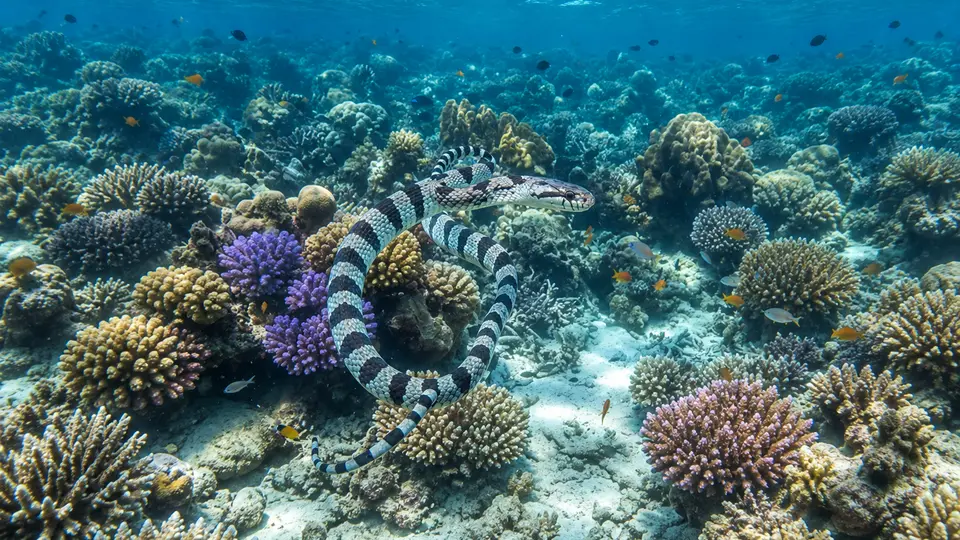
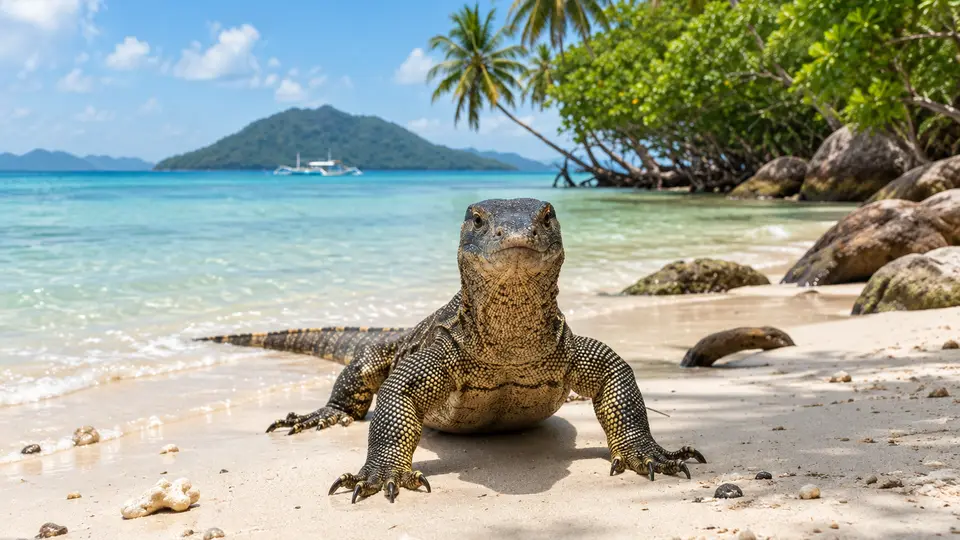
Komodo dragonKomodo dragonAsian water monitorAsian water monitorBanded sea kraitBanded sea krait
Animal groupReptilesAnimal groupReptilesAnimal groupReptiles
DestinationsIndonesiaDestinationsIndonesiaDestinationsIndonesia, Vietnam
All wildlife destinations
Plan your trip

Find your next wildlife adventure

Compare destinations, shore programmes and dates with the animals and habitats you would love to see.

  • Naturalist-led shore excursions
  • Responsible wildlife watching
  • Small expedition ships

Newsletter

Take Blue Rides with you

Adventure cruise offers, last-minute deals and trip inspiration.

Free, unsubscribe anytime. Details: Privacy Policy

Partner with Blue Rides

Affiliate Program

Recommend adventure cruises and earn commission on every confirmed booking.

Share. Track. Earn.