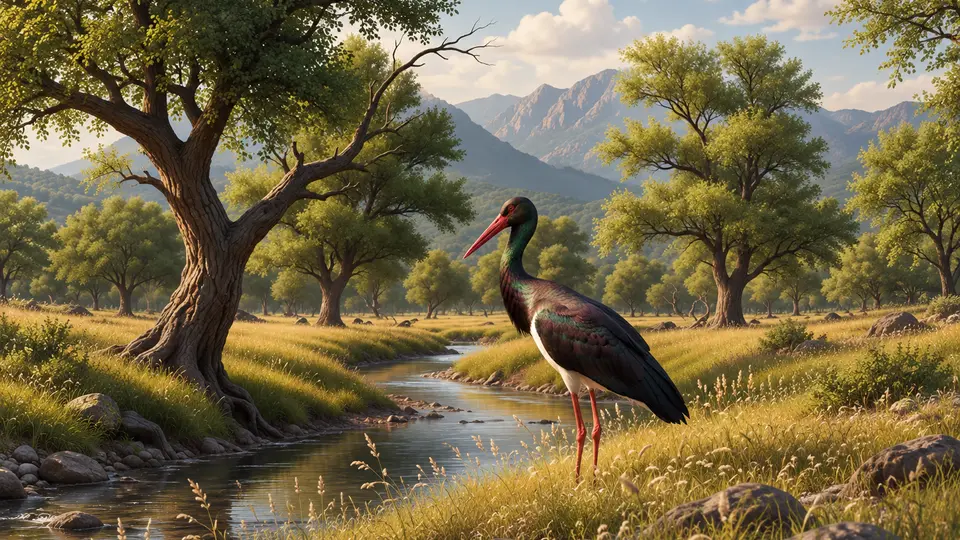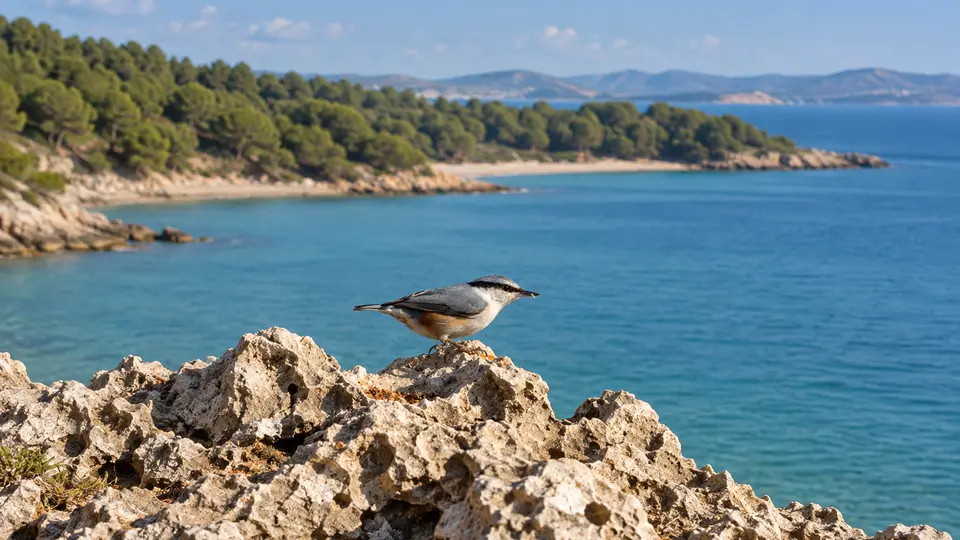
Krüper's Nuthatch in its natural habitat, AI illustration

Krüper's NuthatchSitta krueperiWhere and when to see them

Krüper's Nuthatch at a glance

Krüper's nuthatch is a small, energetic woodland bird whose distribution is centered on Turkey, with additional populations in nearby parts of the eastern Mediterranean and Caucasus. A black forehead, pale face and rusty breast patch give it a distinctive appearance. Closely associated with conifers, it is an appealing target for patient woodland observation rather than open seashore watching. The retention of mature trees and nesting cavities matters greatly to local populations.

Behaviour & reproduction

Size
11.5–12.5 cm long
Weight
10–15 g
Lifespan
Not reliably established
Status
Least Concern

Pairs search trunks and branches with quick, purposeful movements, often traveling headfirst down bark in typical nuthatch fashion. Their nasal calls can reveal their presence before the birds become visible. During breeding, they defend territories and use cavities in trees, including decaying wood. Outside the nesting period, individuals may join mixed feeding flocks, moving through the canopy alongside tits and other small woodland insect-eaters as they inspect bark and needles. They are highly territorial during the breeding season, with pairs actively defending their nesting area against rivals. The distinctive nasal call, often described as 'tsip' or 'twi-twi-twi', serves both as a contact call and a territorial advertisement. Outside the breeding season, they exhibit a more nomadic tendency, searching for optimal foraging grounds, sometimes forming loose associations with other species.

Top wildlife locations

Turkey wildlife habitat

Turkey

Mature coastal pinewoods in western and southern Turkey offer plausible habitat beside woodland paths. Many visits require a short inland excursion from the waterfront; exposed beaches themselves are not useful viewing habitat.
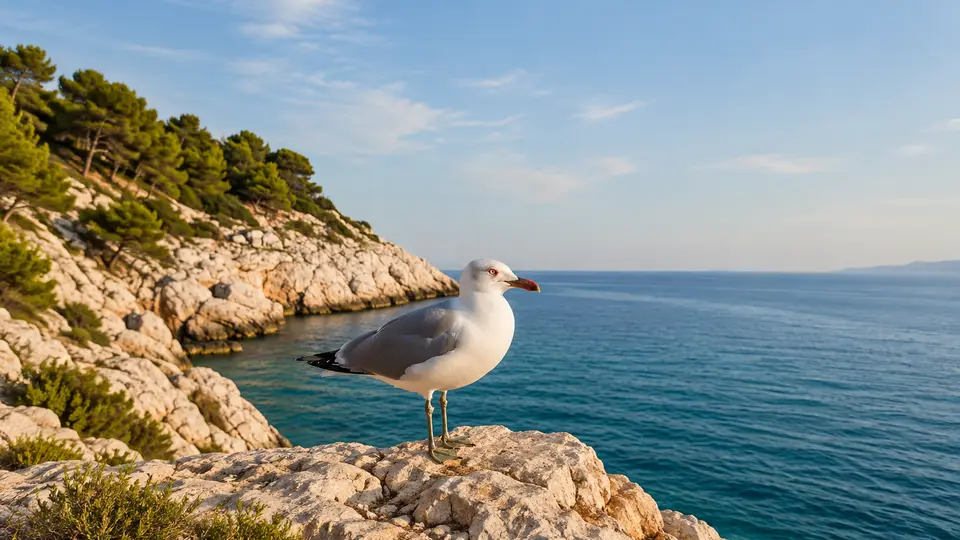
Destinations describe the species' habitat, not guaranteed cruise stops. Some animals require an optional inland excursion or are found in restricted reserves.

Fun facts about the Krüper's Nuthatch

  • Its scientific name commemorates the naturalist Theodor Krüper.
  • It can descend a tree trunk headfirst without using its tail as a prop.
  • Turkey contains the largest part of its global range.
  • Stored seeds can be tucked into bark fissures rather than carried to a communal cache.

Best time to see the Krüper's Nuthatch

Spring is useful for hearing territorial calls and locating active pairs in Turkish pinewoods. Autumn and winter can also offer opportunities among mixed woodland flocks. Elevation affects weather and accessibility, so coastal forests and mountain forests should not share a single rigid calendar. Late winter to early spring can be opportune for observing nuthatches engaged in courtship displays and nest cavity preparation. Summer is generally less productive for nuthatch observation as adults are busy raising young and less vocal, often remaining hidden in dense foliage. Local guides familiar with specific nuthatch territories can enhance viewing success during any season.

Krüper's Nuthatch: season matrix by destination

Travel and observation windows vary by region. Highlighted months are an orientation for planning, not confirmed sightings or a guarantee of access.

Turkey

Spring favors vocal activity, while autumn offers comfortable woodland walking; this resident bird can be present outside these suggested travel windows.

JanFebMarAprMayJunJulAugSepOctNovDec
Cruise ships in Turkey

Where the Krüper's Nuthatch lives

Conifer forests are central to this species, from low-elevation pinewoods near the Mediterranean coast to mountain stands of pine, fir and cedar. Mature trees, deadwood and suitable cavities improve habitat quality. Treeless beaches and dense urban waterfronts are unsuitable. This species exhibits a strong preference for specific conifer species, particularly Turkish pine (Pinus brutia) and Cilician fir (Abies cilicica). Its range within Turkey is primarily concentrated in the Taurus Mountains and coastal regions of the southern and western Anatolian peninsula. Habitat loss due to logging and development is a significant threat, impacting available nesting and foraging sites.

What the Krüper's Nuthatch eats

It takes insects, spiders and other small invertebrates from bark, twigs and foliage. Conifer seeds become more important when animal prey is scarce, especially outside the breeding season. Food may be cached in crevices for later retrieval. Beyond insects and seeds, Krüper's nuthatch also consumes small larvae and pupae found beneath bark flakes and in crevices. The caching behavior is crucial for survival during harsh winter months, allowing access to stored food when fresh prey is scarce. Their strong bills are well-adapted for prying open cone scales to extract seeds.

Species at a glance

Common name
Krüper's Nuthatch
Scientific name
Sitta krueperi
Animal group
Birds
Size
11.5–12.5 cm long
Weight
10–15 g
Lifespan
Not reliably established
Status
Least Concern
Identification
Its small black forehead cap and rusty breast patch distinguish it from the larger Eurasian nuthatch, which lacks that combination. The rufous lower flanks are another subtle but consistent identification mark that differentiates it from other nuthatch species in the region. Its relatively short tail and compact body shape are typical nuthatch characteristics, but the specific head and breast markings are unique. The small size, being one of the smallest nuthatches in the Palearctic, also aids in identification.

Krüper's Nuthatch: frequently asked questions

Where can I see the Krüper's Nuthatch?
Turkey. Listen quietly from established pinewood paths and scan trunks with binoculars. Avoid playback and close approaches to nest cavities, especially during spring, and watch footing on steep, needle-covered slopes. Scanning the trunks and larger branches of older conifer trees, especially those with fissured bark, is often rewarding. Patience is key, as these birds can be small and blend in with their surroundings, but their movements are distinctive. Observing from a distance using binoculars minimizes disturbance and increases the likelihood of natural behavior.
When is the best time to see the Krüper's Nuthatch?
Spring is useful for hearing territorial calls and locating active pairs in Turkish pinewoods. Autumn and winter can also offer opportunities among mixed woodland flocks. Elevation affects weather and accessibility, so coastal forests and mountain forests should not share a single rigid calendar. Late winter to early spring can be opportune for observing nuthatches engaged in courtship displays and nest cavity preparation. Summer is generally less productive for nuthatch observation as adults are busy raising young and less vocal, often remaining hidden in dense foliage. Local guides familiar with specific nuthatch territories can enhance viewing success during any season.
How big does the Krüper's Nuthatch get?
11.5–12.5 cm long. Adult weight: 10–15 g. Size varies with age, sex and population.
How should I behave around the Krüper's Nuthatch?
Listen quietly from established pinewood paths and scan trunks with binoculars. Avoid playback and close approaches to nest cavities, especially during spring, and watch footing on steep, needle-covered slopes. Scanning the trunks and larger branches of older conifer trees, especially those with fissured bark, is often rewarding. Patience is key, as these birds can be small and blend in with their surroundings, but their movements are distinctive. Observing from a distance using binoculars minimizes disturbance and increases the likelihood of natural behavior.
What does the Krüper's Nuthatch eat?
It takes insects, spiders and other small invertebrates from bark, twigs and foliage. Conifer seeds become more important when animal prey is scarce, especially outside the breeding season. Food may be cached in crevices for later retrieval. Beyond insects and seeds, Krüper's nuthatch also consumes small larvae and pupae found beneath bark flakes and in crevices. The caching behavior is crucial for survival during harsh winter months, allowing access to stored food when fresh prey is scarce. Their strong bills are well-adapted for prying open cone scales to extract seeds.
Are wildlife sightings guaranteed on an adventure cruise?
No. Animals move freely and routes, weather, access restrictions and local conditions influence every outing. Confirm the actual itinerary and shore program before booking.

Compare wildlife in the same destinations

Explore other birds recorded in these destinations. Similar surroundings do not mean the animals share the same habits or viewing season.

Species comparison by animal group and destination
Krüper's NuthatchKrüper's NuthatchAudouin's GullAudouin's GullBlack StorkBlack Stork
Animal groupBirdsAnimal groupBirdsAnimal groupBirds
DestinationsTurkeyDestinationsCroatia, Greece, Portugal, TurkeyDestinationsPortugal, Turkey
All wildlife destinations
Plan your trip

Find your next wildlife adventure

Compare destinations, shore programs and dates with the animals and habitats you would love to see.

  • Naturalist-led shore excursions
  • Responsible wildlife watching
  • Small expedition ships

Newsletter

Take Blue Rides with you

Adventure cruise offers, last-minute deals and trip inspiration.

Free, unsubscribe anytime. Details: Privacy Policy

Partner with Blue Rides

Affiliate Program

Recommend adventure cruises and earn commission on every confirmed booking.

Share. Track. Earn.

Your footage, our stage

Send us your videos or pictures.

Captured remarkable nature or wildlife on your journey? Share it with us, we may feature it on Blue Rides.