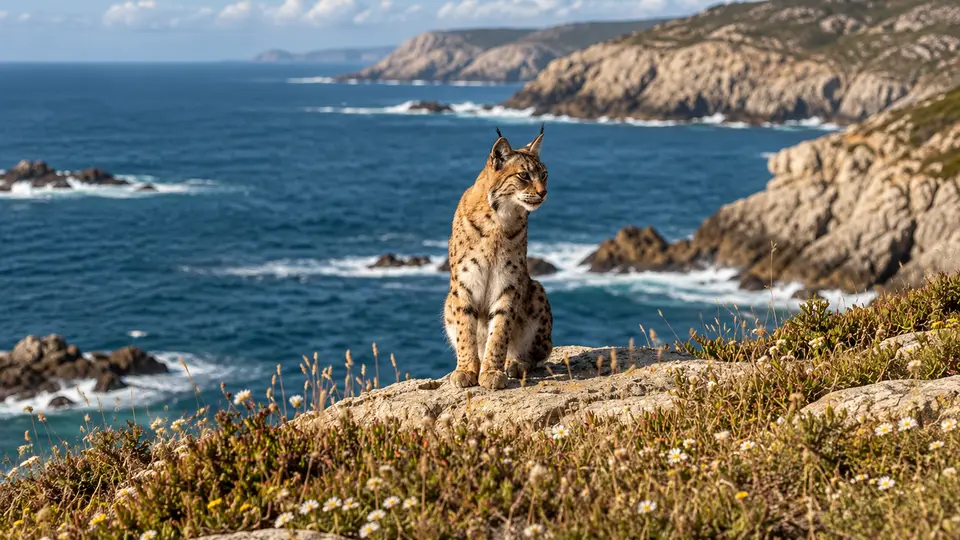
Iberian Lynx in its natural habitat, AI illustration
Size80–110 cm head-and-body lengthLifespan10–15 yearsStatusVulnerable

Iberian Lynx: where and when to see them

Lynx pardinus

Iberian Lynx at a glance

The Iberian lynx is a spotted, short-tailed cat native to the Iberian Peninsula and strongly dependent on European rabbits. Once reduced to a tiny remnant population, it has increased through habitat management, rabbit recovery, captive breeding and reintroduction. Portugal now supports a restored population centred on suitable southeastern landscapes. Recovery is significant but incomplete, with road mortality, disease affecting prey and fragmentation continuing to threaten this specialised predator.

Behaviour & reproduction

Size
80–110 cm head-and-body length
Weight
9–16 kg
Lifespan
10–15 years
Status
Vulnerable

Adults are primarily solitary and maintain home ranges marked with scent. Activity often peaks around dawn, dusk and night, although daytime movement occurs, particularly in cooler conditions. Lynx stalk rabbits using vegetation for cover before making a short rush. Females raise kittens in sheltered dens and later lead them through their territory. Young animals disperse in search of vacant habitat, sometimes crossing roads and unfamiliar agricultural landscapes. Lynx kittens typically stay with their mother for several months, learning crucial hunting and survival skills within her territory. Dispersing young lynx often face significant challenges, including road mortality and competition for resources in unfamiliar areas. Their solitary nature means that encounters between unrelated adults are usually brief and territorial.

Top wildlife locations

Portugal wildlife habitat

Portugal

An inland excursion to the Guadiana Valley is required; ordinary coastal scrub is not a realistic viewing target. Public tracks and authorised viewpoints overlook suitable habitat, but lynx sightings remain rare.

Adventure cruises in Portugal
Destinations describe the species' habitat, not guaranteed cruise stops. Some animals require an optional inland excursion or are found in restricted reserves.

Fun facts about the Iberian Lynx

  • European rabbits can account for the overwhelming majority of its prey.
  • Its global conservation category improved from Endangered to Vulnerable in 2024.
  • Portugal's reintroduction programme began releasing lynx in the Guadiana Valley in 2014.
  • Individual coat-spot patterns help researchers distinguish cats in camera-trap images.

Best time to see the Iberian Lynx

Cooler months can make daylight searching more practical, while summer heat often concentrates activity into darker hours. Winter courtship may increase movement, but sightings remain difficult. Arrange a locally informed inland excursion rather than selecting a coastal travel season as a proxy. While cooler months are generally better for observation, specific localized programs in protected areas may offer guided excursions during other times. Consider that heavy rainfall in winter can make some unpaved inland tracks inaccessible for viewing safaris. Early mornings and late afternoons are consistently the most active times for lynx throughout the year.

Iberian Lynx: season matrix by destination

Travel and observation windows vary by region. Highlighted months are an orientation for planning, not confirmed sightings or a guarantee of access.

Portugal

Cooler months favour comfortable daylight searching; this is an observation window, not a promise of activity or access to breeding sites.

JanFebMarAprMayJunJulAugSepOctNovDec
Cruise ships in Portugal

Where the Iberian Lynx lives

Mediterranean scrub, open woodland and mixed pastoral landscapes provide the combination of cover and rabbit-rich clearings this cat needs. Dense refuges support resting and breeding. In Portugal, relevant viewing areas are inland rather than ordinary coastal sightseeing routes or beach habitats. The Iberian lynx is highly specialized for Mediterranean ecosystems, relying on a mosaic of dense vegetation for cover and open areas for hunting. These areas are often characterized by cork oak and holm oak woodlands interspersed with scrub and grasslands. Habitat fragmentation and loss remain significant threats, isolating populations and limiting expansion.

What the Iberian Lynx eats

European rabbits dominate the diet, making local rabbit abundance a major constraint on lynx distribution. Birds, rodents and other small vertebrates are taken opportunistically, but these alternatives generally cannot replace a strong rabbit population across a viable breeding landscape. Rabbit warrens are critical for successful reproduction, providing a reliable food source for mothers and their growing kittens. A decline in rabbit populations, often due to disease, can directly lead to a decline in lynx numbers. This dietary specialization makes the Iberian lynx particularly vulnerable to changes in its prey base.

Species at a glance

Common name
Iberian Lynx
Scientific name
Lynx pardinus
Animal group
Mammals
Size
80–110 cm head-and-body length
Weight
9–16 kg
Lifespan
10–15 years
Status
Vulnerable
Identification
Compared with the Eurasian lynx, the Iberian lynx is smaller, more strongly spotted and typically has a conspicuous flared facial ruff. Beyond the facial ruff, adult Iberian lynx possess long, black ear tufts and a short tail with a black tip. Their coat pattern is highly variable, ranging from heavily spotted to more faintly marked individuals, but always distinct from the unspotted Eurasian lynx. The relatively long legs and short body also contribute to its unique silhouette.

Iberian Lynx: frequently asked questions

Where can I see the Iberian Lynx?
Portugal. Use established inland viewpoints with a knowledgeable guide and keep well back from any cat. Never bait, follow kittens or approach dens; stop safely off roads without blocking traffic or escape routes. Participating in guided tours through dedicated conservation centers or protected areas with established viewing hides increases chances of observation. Always maintain a quiet demeanor and avoid sudden movements that could disturb wildlife. Ensure all electronic devices are silenced to prevent startling animals.
When is the best time to see the Iberian Lynx?
Cooler months can make daylight searching more practical, while summer heat often concentrates activity into darker hours. Winter courtship may increase movement, but sightings remain difficult. Arrange a locally informed inland excursion rather than selecting a coastal travel season as a proxy. While cooler months are generally better for observation, specific localized programs in protected areas may offer guided excursions during other times. Consider that heavy rainfall in winter can make some unpaved inland tracks inaccessible for viewing safaris. Early mornings and late afternoons are consistently the most active times for lynx throughout the year.
How big does the Iberian Lynx get?
80–110 cm head-and-body length. Adult weight: 9–16 kg. Size varies with age, sex and population.
How should I behave around the Iberian Lynx?
Use established inland viewpoints with a knowledgeable guide and keep well back from any cat. Never bait, follow kittens or approach dens; stop safely off roads without blocking traffic or escape routes. Participating in guided tours through dedicated conservation centers or protected areas with established viewing hides increases chances of observation. Always maintain a quiet demeanor and avoid sudden movements that could disturb wildlife. Ensure all electronic devices are silenced to prevent startling animals.
What does the Iberian Lynx eat?
European rabbits dominate the diet, making local rabbit abundance a major constraint on lynx distribution. Birds, rodents and other small vertebrates are taken opportunistically, but these alternatives generally cannot replace a strong rabbit population across a viable breeding landscape. Rabbit warrens are critical for successful reproduction, providing a reliable food source for mothers and their growing kittens. A decline in rabbit populations, often due to disease, can directly lead to a decline in lynx numbers. This dietary specialization makes the Iberian lynx particularly vulnerable to changes in its prey base.
Are wildlife sightings guaranteed on an adventure cruise?
No. Animals move freely and routes, weather, access restrictions and local conditions influence every outing. Confirm the actual itinerary and shore programme before booking.

Compare wildlife in the same destinations

Explore other mammals recorded in these destinations. Similar surroundings do not mean the animals share the same habits or viewing season.

Species comparison by animal group and destination
Iberian LynxIberian LynxBlue WhaleBlue WhaleCommon Bottlenose DolphinCommon Bottlenose Dolphin
Animal groupMammalsAnimal groupMammalsAnimal groupMammals
DestinationsPortugalDestinationsMexico, Norway, Portugal, Antarctica, Arctic, Maldives, New ZealandDestinationsCosta Rica, Florida, Galapagos, Mexico, Cape Verde, Croatia, Greece, Portugal, Scotland, Seychelles, Turkey, Maldives, Australia, New Zealand
All wildlife destinations
Plan your trip

Find your next wildlife adventure

Compare destinations, shore programmes and dates with the animals and habitats you would love to see.

  • Naturalist-led shore excursions
  • Responsible wildlife watching
  • Small expedition ships

Newsletter

Take Blue Rides with you

Adventure cruise offers, last-minute deals and trip inspiration.

Free, unsubscribe anytime. Details: Privacy Policy

Partner with Blue Rides

Affiliate Program

Recommend adventure cruises and earn commission on every confirmed booking.

Share. Track. Earn.