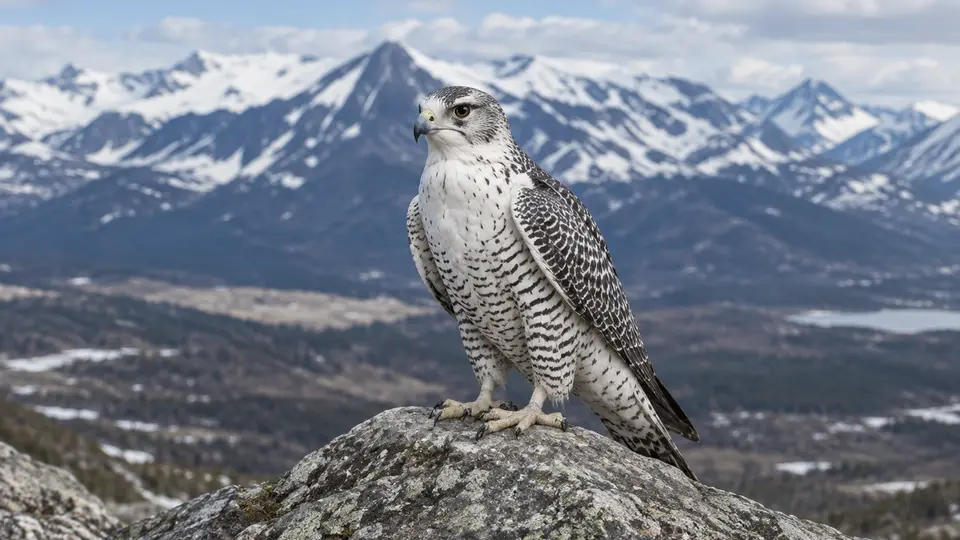
Gyrfalcon in its natural habitat, AI illustration
Size48–65 cm body length; 110–160 cm wingspanLifespanNot reliably establishedStatusLeast Concern

Gyrfalcon: where and when to see them

Falco rusticolus

Gyrfalcon at a glance

The gyrfalcon is the largest living falcon, built for powerful pursuit across northern landscapes. Its plumage ranges from almost white to dark slate, with geography influencing the frequency of different colour forms. Females are substantially larger than males. Although associated with the High Arctic, the species also occupies subarctic mountains and tundra. Its fortunes are closely linked to prey availability, especially ptarmigan in many breeding areas.

Behaviour & reproduction

Size
48–65 cm body length; 110–160 cm wingspan
Weight
0.8–2.1 kg
Lifespan
Not reliably established
Status
Least Concern

Gyrfalcons hunt through fast, sustained pursuit, low surprise approaches and attacks from elevated positions. Pairs defend large nesting territories and often reuse cliff sites over many years. They do not construct elaborate nests, instead using ledges or old nests of other birds. Some adults remain in northern territories through winter, while juveniles and other individuals disperse southward or toward coasts as prey and weather conditions change. Courtship displays involve aerial acrobatics and vocalizations near the chosen nesting site. While they do not build nests, pairs will often line a chosen scrape with moss, feathers, or other available debris before egg-laying.

Top wildlife locations

Arctic wildlife habitat

Arctic

Coastal cliffs and adjacent tundra can be scanned from permitted shore routes or distant decks. Birds are sparse across a vast region, and some suitable upland territories require inland excursions.

Adventure cruises in Arctic
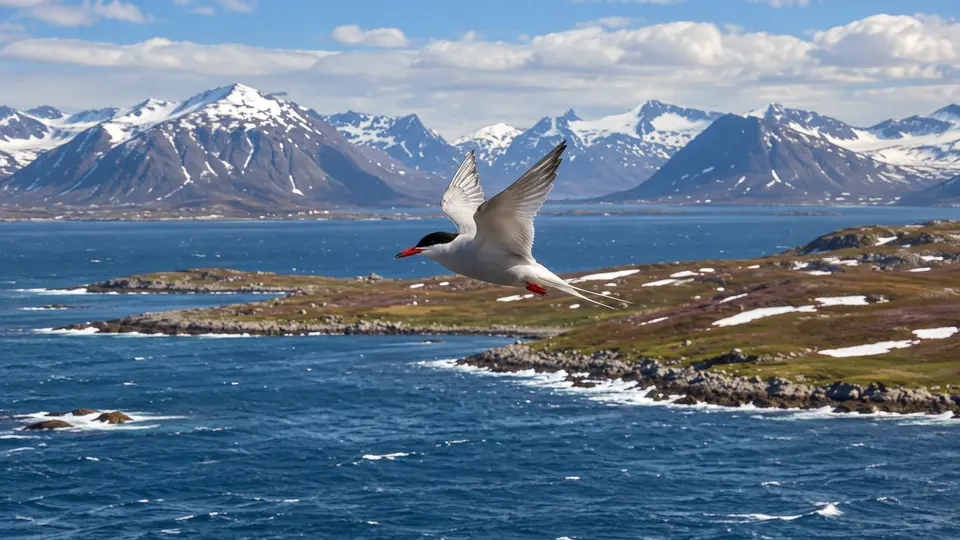
Destinations describe the species' habitat, not guaranteed cruise stops. Some animals require an optional inland excursion or are found in restricted reserves.

Fun facts about the Gyrfalcon

  • White, grey and dark birds all belong to the same species.
  • Females can be nearly twice the mass of small males.
  • Some traditional nesting ledges have accumulated evidence of use over many centuries.
  • Gyrfalcons often pursue prey horizontally rather than relying solely on a steep aerial stoop.

Best time to see the Gyrfalcon

Late spring and summer offer daylight and access for distant Arctic observation, although nesting cliffs require particular care. Winter coastal records occur in some regions but are irregular. The enormous Arctic range prevents a single reliable peak season from applying everywhere. Prime viewing opportunities exist during the breeding season when adults are active near nest sites, typically from May to August. Early spring migration (March-April) can offer chances to see birds moving back to breeding grounds, particularly along coastal routes.

Gyrfalcon: season matrix by destination

Travel and observation windows vary by region. Highlighted months are an orientation for planning, not confirmed sightings or a guarantee of access.

Arctic

These months broadly reflect Arctic travel access and daylight, not uniform nesting dates or confirmed presence at any particular stop.

JanFebMarAprMayJunJulAugSepOctNovDec
Cruise ships in Arctic

Where the Gyrfalcon lives

Open tundra, rocky uplands and coastal cliffs provide hunting space and nesting ledges. Breeding territories require suitable prey as well as secure cliffs. In winter, some birds use open coastal lowlands, estuaries and agricultural country beyond their northern breeding range. They are the largest falcon species, inhabiting tundra and taiga environments across the Northern Hemisphere. Their preferred nesting sites are often south-facing cliffs, which receive more sunlight and may offer warmer microclimates.

What the Gyrfalcon eats

Ptarmigan are central prey in many regions, especially early in the breeding season. Gyrfalcons also take seabirds, waterfowl, shorebirds and small mammals. Local abundance matters: coastal hunters may rely more heavily on birds concentrated around cliffs or open water. In addition to birds, gyrfalcons will occasionally prey on lemmings, voles, and even arctic hares, especially when other prey is scarce. Their hunting success is often tied to the cyclical populations of their primary prey species.

Species at a glance

Common name
Gyrfalcon
Scientific name
Falco rusticolus
Animal group
Birds
Size
48–65 cm body length; 110–160 cm wingspan
Weight
0.8–2.1 kg
Lifespan
Not reliably established
Status
Least Concern
Identification
Compared with peregrine falcons, gyrfalcons are bulkier with broader-based wings, a longer tail and usually a weaker facial moustache. Gyrfalcons exhibit significant color variation, ranging from nearly pure white to dark grey or even brown forms, often with streaking on the underparts. Juveniles are generally darker and more heavily streaked than adults, with a browner overall appearance.

Gyrfalcon: frequently asked questions

Where can I see the Gyrfalcon?
Arctic. Scan cliffs and open ridges with a telescope from established routes. Stay well away from nest ledges and retreat if adults alarm-call or circle repeatedly. Avoid sharing precise nest locations, since disturbance and illegal collection remain concerns. Look for them perched on prominent rock outcrops or flying with powerful, deep wingbeats over open landscapes. Their flight can appear more hawk-like than typical falcons due to their size and wing shape.
When is the best time to see the Gyrfalcon?
Late spring and summer offer daylight and access for distant Arctic observation, although nesting cliffs require particular care. Winter coastal records occur in some regions but are irregular. The enormous Arctic range prevents a single reliable peak season from applying everywhere. Prime viewing opportunities exist during the breeding season when adults are active near nest sites, typically from May to August. Early spring migration (March-April) can offer chances to see birds moving back to breeding grounds, particularly along coastal routes.
How big does the Gyrfalcon get?
48–65 cm body length; 110–160 cm wingspan. Adult weight: 0.8–2.1 kg. Size varies with age, sex and population.
How should I behave around the Gyrfalcon?
Scan cliffs and open ridges with a telescope from established routes. Stay well away from nest ledges and retreat if adults alarm-call or circle repeatedly. Avoid sharing precise nest locations, since disturbance and illegal collection remain concerns. Look for them perched on prominent rock outcrops or flying with powerful, deep wingbeats over open landscapes. Their flight can appear more hawk-like than typical falcons due to their size and wing shape.
What does the Gyrfalcon eat?
Ptarmigan are central prey in many regions, especially early in the breeding season. Gyrfalcons also take seabirds, waterfowl, shorebirds and small mammals. Local abundance matters: coastal hunters may rely more heavily on birds concentrated around cliffs or open water. In addition to birds, gyrfalcons will occasionally prey on lemmings, voles, and even arctic hares, especially when other prey is scarce. Their hunting success is often tied to the cyclical populations of their primary prey species.
Are wildlife sightings guaranteed on an adventure cruise?
No. Animals move freely and routes, weather, access restrictions and local conditions influence every outing. Confirm the actual itinerary and shore programme before booking.

Compare wildlife in the same destinations

Explore other birds recorded in these destinations. Similar surroundings do not mean the animals share the same habits or viewing season.

Species comparison by animal group and destination
GyrfalconGyrfalconArctic TernArctic TernAtlantic PuffinAtlantic Puffin
Animal groupBirdsAnimal groupBirdsAnimal groupBirds
DestinationsArcticDestinationsAlaska, Norway, ArcticDestinationsNew England, Norway, Scotland, Arctic
All wildlife destinations
Plan your trip

Find your next wildlife adventure

Compare destinations, shore programmes and dates with the animals and habitats you would love to see.

  • Naturalist-led shore excursions
  • Responsible wildlife watching
  • Small expedition ships

Newsletter

Take Blue Rides with you

Adventure cruise offers, last-minute deals and trip inspiration.

Free, unsubscribe anytime. Details: Privacy Policy

Partner with Blue Rides

Affiliate Program

Recommend adventure cruises and earn commission on every confirmed booking.

Share. Track. Earn.
