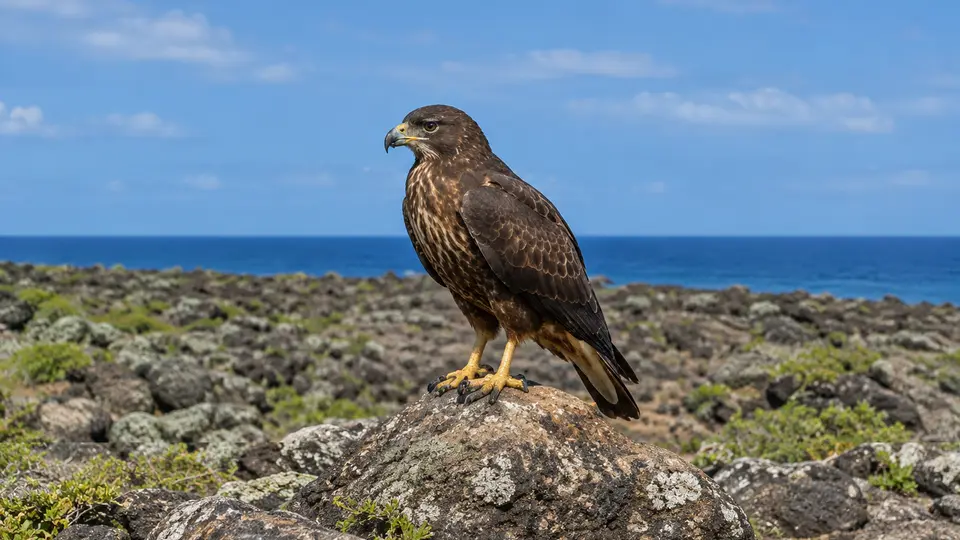
Galápagos Hawk in its natural habitat, AI illustration
Size45–58 cm longLifespanNot reliably establishedStatusVulnerable

Galápagos Hawk: where and when to see them

Buteo galapagoensis

Galápagos Hawk at a glance

The Galápagos hawk is an endemic raptor and one of the archipelago's principal native terrestrial predators. Adults are dark brown, with strong yellow feet and a barred tail. It survives on only part of its former island range, with persecution and introduced animals contributing to historical losses. Its ecological role includes both hunting and scavenging, linking it to many island food webs rather than to a single favored prey species.

Behaviour & reproduction

Size
45–58 cm long
Weight
0.65–1.3 kg
Lifespan
Not reliably established
Status
Vulnerable

Hawks search from exposed perches or circle above open terrain before descending on prey or carrion. Some breeding groups contain one female and several males, all of which may contribute to nesting duties and provisioning. Territorial adults can remain near established nesting areas, while younger birds gather more loosely outside breeding territories. Their apparent fearlessness around people requires restraint from observers, especially where birds perch close to authorized paths. The cooperative polyandrous breeding system, where multiple males mate with a single female and assist in raising young, is a unique aspect of their social structure. This behavior may be an adaptation to scarce resources, ensuring higher reproductive success for the group.

Top wildlife locations

Galapagos wildlife habitat

Galapagos

Authorized trails across coastal scrub and open lava on occupied islands offer possible views of perched or soaring hawks. Distribution is uneven, so a general archipelago visit does not ensure suitable hawk habitat.

Adventure cruises in Galapagos
Destinations describe the species' habitat, not guaranteed cruise stops. Some animals require an optional inland excursion or are found in restricted reserves.

Fun facts about the Galápagos Hawk

  • Some groups practice cooperative polyandry, with several males sharing one female.
  • Males in these groups may all help feed the chicks.
  • Females are larger than males.
  • Juveniles are much more mottled than the dark adults.

Best time to see the Galápagos Hawk

Resident hawks may be observed year-round on islands where populations persist. There is no universal visitor season that reliably predicts sightings or nesting. Clear conditions can help observers detect soaring birds, while local prey supplies influence activity and breeding schedules. Breeding activity, including nest building and chick rearing, can occur at any time of year depending on food availability, though a peak is often noted during the warm wet season when prey is more abundant. While no specific season guarantees sightings, the dry season might offer better visibility for soaring birds due to clearer skies and less dense vegetation.

Galápagos Hawk: season matrix by destination

Travel and observation windows vary by region. Highlighted months are an orientation for planning, not confirmed sightings or a guarantee of access.

Galapagos

Year-round resident viewing window on occupied islands, without a guaranteed sighting period or uniform archipelago-wide nesting season.

JanFebMarAprMayJunJulAugSepOctNovDec
Cruise ships in Galapagos

Where the Galápagos Hawk lives

Habitats include arid scrub, lava plains, coastal vegetation and upland grass or shrub country on occupied islands. Suitable territories combine hunting areas with nesting structures such as trees or rocky sites. Distribution is patchy, and several major inhabited islands no longer support breeding populations. Though adaptable, the species is an apex predator requiring substantial undisturbed hunting grounds. Habitat loss due to human development and invasive species is a primary threat, limiting their range to smaller, less disturbed islands and specific areas on larger islands.

What the Galápagos Hawk eats

The diet includes large insects, lava lizards, snakes, young iguanas, birds and introduced rodents. Hawks also consume carrion and may take vulnerable young animals near colonies. Prey availability varies greatly between islands, making this a flexible predator rather than a narrow specialist. Their opportunistic diet includes a high proportion of invertebrates like centipedes and large insects when available, especially for younger birds. Scavenging is a significant part of their foraging strategy, and they are often seen at marine iguana nesting sites or around sea lion colonies.

Species at a glance

Common name
Galápagos Hawk
Scientific name
Buteo galapagoensis
Animal group
Birds
Size
45–58 cm long
Weight
0.65–1.3 kg
Lifespan
Not reliably established
Status
Vulnerable
Identification
Adults are large, dark Buteo hawks with yellow legs and a barred tail, unlike the islands' smaller, differently proportioned owls and migratory falcons. Juvenile Galápagos hawks are paler with mottled plumage and a more streaked breast, gradually acquiring the adult's uniform dark brown coloration over several years. Their broad wings and relatively short, broad tail are characteristic of Buteo raptors, enabling efficient soaring in thermals.

Galápagos Hawk: frequently asked questions

Where can I see the Galápagos Hawk?
Galapagos. Scan ridges and exposed branches from designated trails. Do not approach nests, offer food or move toward a feeding hawk; allow perched birds room to depart without forcing them into flight. These curious birds often perch conspicuously on prominent rocks, dead trees, or even visitor signs, offering excellent photographic opportunities. When ashore, keep a respectful distance, and if a hawk flies overhead, avoid making sudden movements that could startle it.
When is the best time to see the Galápagos Hawk?
Resident hawks may be observed year-round on islands where populations persist. There is no universal visitor season that reliably predicts sightings or nesting. Clear conditions can help observers detect soaring birds, while local prey supplies influence activity and breeding schedules. Breeding activity, including nest building and chick rearing, can occur at any time of year depending on food availability, though a peak is often noted during the warm wet season when prey is more abundant. While no specific season guarantees sightings, the dry season might offer better visibility for soaring birds due to clearer skies and less dense vegetation.
How big does the Galápagos Hawk get?
45–58 cm long. Adult weight: 0.65–1.3 kg. Size varies with age, sex and population.
How should I behave around the Galápagos Hawk?
Scan ridges and exposed branches from designated trails. Do not approach nests, offer food or move toward a feeding hawk; allow perched birds room to depart without forcing them into flight. These curious birds often perch conspicuously on prominent rocks, dead trees, or even visitor signs, offering excellent photographic opportunities. When ashore, keep a respectful distance, and if a hawk flies overhead, avoid making sudden movements that could startle it.
What does the Galápagos Hawk eat?
The diet includes large insects, lava lizards, snakes, young iguanas, birds and introduced rodents. Hawks also consume carrion and may take vulnerable young animals near colonies. Prey availability varies greatly between islands, making this a flexible predator rather than a narrow specialist. Their opportunistic diet includes a high proportion of invertebrates like centipedes and large insects when available, especially for younger birds. Scavenging is a significant part of their foraging strategy, and they are often seen at marine iguana nesting sites or around sea lion colonies.
Are wildlife sightings guaranteed on an adventure cruise?
No. Animals move freely and routes, weather, access restrictions and local conditions influence every outing. Confirm the actual itinerary and shore programme before booking.

Compare wildlife in the same destinations

Explore other birds recorded in these destinations. Similar surroundings do not mean the animals share the same habits or viewing season.

Species comparison by animal group and destination
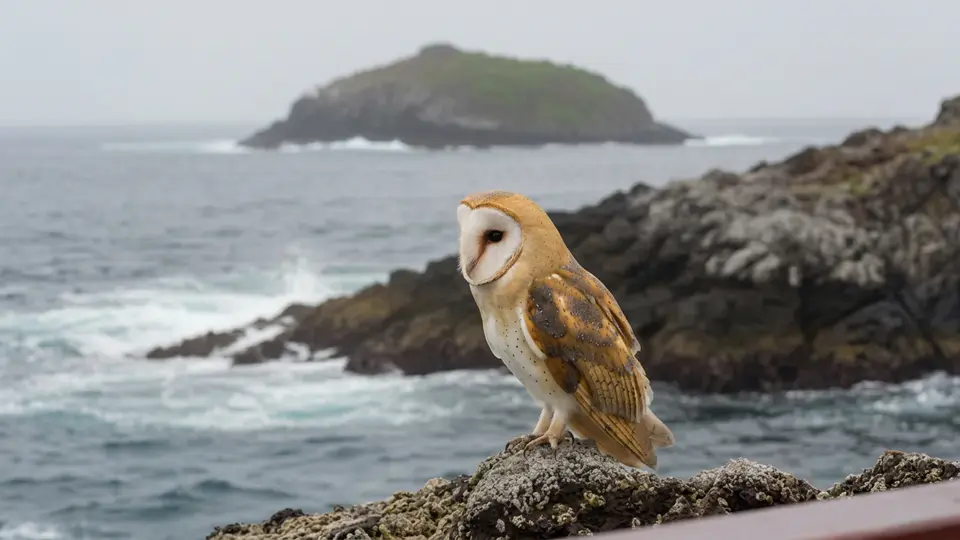
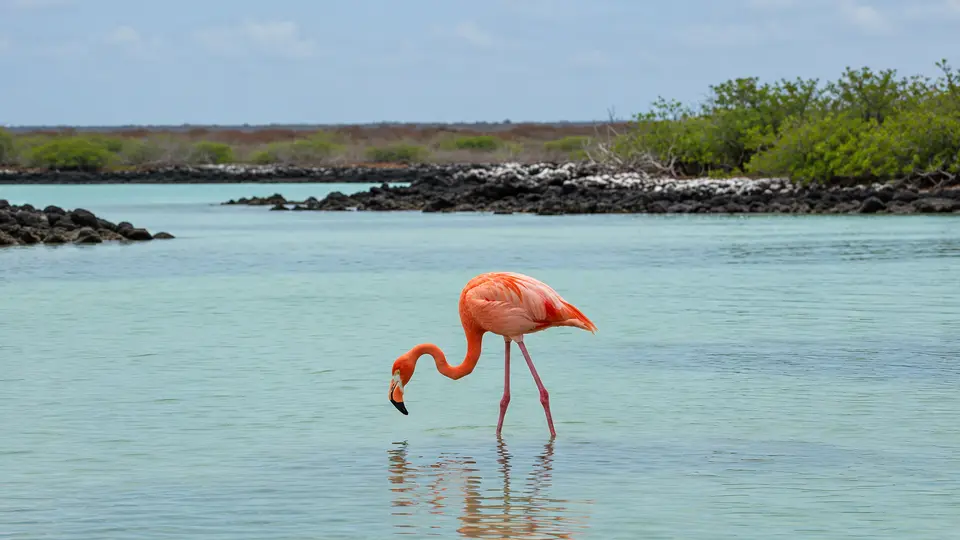
Galápagos HawkGalápagos HawkAmerican FlamingoAmerican FlamingoBarn OwlBarn Owl
Animal groupBirdsAnimal groupBirdsAnimal groupBirds
DestinationsGalapagosDestinationsGalapagos, MexicoDestinationsGalapagos
All wildlife destinations
Plan your trip

Find your next wildlife adventure

Compare destinations, shore programmes and dates with the animals and habitats you would love to see.

  • Naturalist-led shore excursions
  • Responsible wildlife watching
  • Small expedition ships

Newsletter

Take Blue Rides with you

Adventure cruise offers, last-minute deals and trip inspiration.

Free, unsubscribe anytime. Details: Privacy Policy

Partner with Blue Rides

Affiliate Program

Recommend adventure cruises and earn commission on every confirmed booking.

Share. Track. Earn.