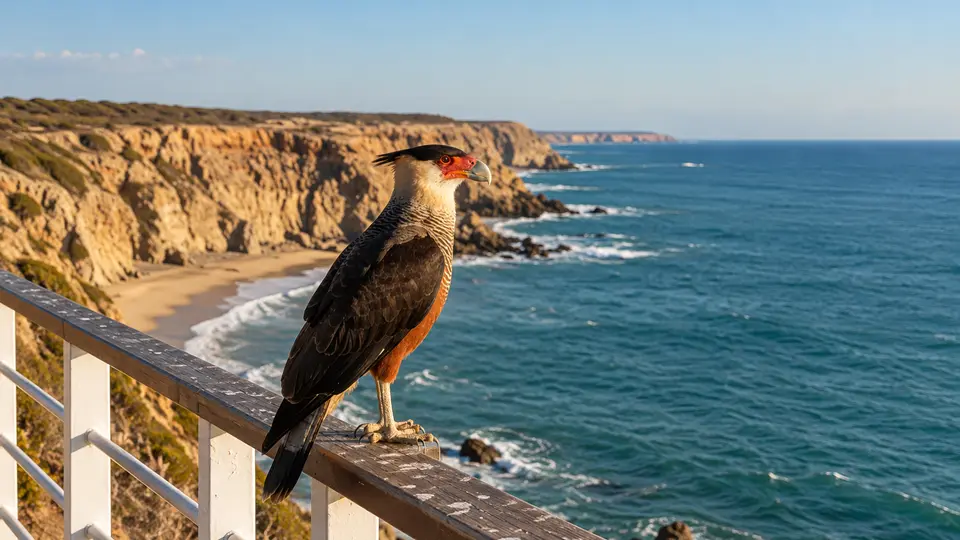
Crested Caracara in its natural habitat, AI illustration
Size49–58 cm longLifespanNot reliably establishedStatusLeast Concern

Crested Caracara: where and when to see them

Caracara plancus

Crested Caracara at a glance

The crested caracara is a long-legged falcon relative that often walks across the ground in search of food. Mexican birds occupy open landscapes, including ranchland, scrub and some coastal plains. A dark cap, bare facial skin and contrasting pale neck give adults a distinctive appearance. Current treatments commonly unite northern and southern populations as Caracara plancus, although older references may list Mexican birds separately under the name Caracara cheriway.

Behaviour & reproduction

Size
49–58 cm long
Weight
0.8–1.4 kg
Lifespan
Not reliably established
Status
Least Concern

Caracaras combine scavenging with active hunting, walking purposefully through short vegetation or watching from prominent perches. They may gather at a carcass, compete with other scavengers or exploit prey exposed by agricultural activity. Breeding pairs defend territories and build substantial stick nests, unlike many falcons that use existing ledges or cavities. Their broad wings support steady soaring, but their frequent ground movements are among their most characteristic behaviours. They are known for their strong family bonds, with young birds often remaining with their parents for an extended period, learning foraging techniques. Caracaras frequently cache food items, particularly larger pieces of carrion, for later consumption, demonstrating forward-thinking behavior.

Top wildlife locations

Mexico wildlife habitat

Mexico

Open coastal ranchland, scrub margins and sparsely wooded plains provide plausible viewing habitat. Some areas require inland excursions, and birds are not universal beach residents; use safe pull-offs or established walking routes.

Adventure cruises in Mexico
Destinations describe the species' habitat, not guaranteed cruise stops. Some animals require an optional inland excursion or are found in restricted reserves.

Fun facts about the Crested Caracara

  • It belongs to the falcon family despite its scavenger-like appearance.
  • It commonly hunts while walking on the ground.
  • Pairs construct stick nests rather than relying solely on existing nest sites.
  • Mexican populations were formerly widely treated as the separate northern crested caracara.

Best time to see the Crested Caracara

Resident Mexican populations can be observed throughout the year in suitable open country. Cooler morning hours often improve both bird activity and viewing comfort. Rainfall, agricultural schedules and local food supplies can influence visibility more than a single nationwide seasonal peak. In central and southern Mexico, the breeding season, typically from late fall through spring, can offer increased opportunities to observe pairs engaged in territorial displays. During the dry season, concentrated water sources can sometimes lead to localized gatherings of caracaras.

Crested Caracara: season matrix by destination

Travel and observation windows vary by region. Highlighted months are an orientation for planning, not confirmed sightings or a guarantee of access.

Mexico

This year-round window reflects resident populations, not uniform availability across Mexico or a nationwide breeding season.

JanFebMarAprMayJunJulAugSepOctNovDec
Cruise ships in Mexico

Where the Crested Caracara lives

Open country with scattered trees or other nesting supports is favoured. Mexican habitats include grassland, ranches, dry scrub, savanna and coastal plains. Dense continuous forest is less suitable, while quiet beach margins may attract birds when stranded food is available. They are often found in areas with some elevation, such as hills or mountains with open scrub, especially in the northern parts of their Mexican range. While primarily a bird of open landscapes, their adaptability allows them to persist near human settlements and pastures.

What the Crested Caracara eats

Carrion, insects, reptiles, small mammals and birds all contribute to a flexible diet. Caracaras may also take eggs or food stolen from other animals. Coastal individuals can investigate stranded marine material, but they remain terrestrial and aerial foragers rather than specialized seabirds. Their opportunistic foraging extends to preying on young or injured birds, sometimes even snatching them directly from nests. Caracaras also exhibit a clever behavior of flipping over cow dung and debris to uncover hidden insects and small invertebrates.

Species at a glance

Common name
Crested Caracara
Scientific name
Caracara plancus
Animal group
Birds
Size
49–58 cm long
Weight
0.8–1.4 kg
Lifespan
Not reliably established
Status
Least Concern
Identification
Its black cap, orange facial skin, pale neck and barred breast distinguish it from vultures, while its long yellow legs and heavy bill separate it from typical falcons. Note the Caracara's relatively flat head profile, unlike the rounded heads of many vultures. Juveniles can appear browner overall with streaked underparts, but still retain the distinctive long legs and heavy bill shape of adults.

Crested Caracara: frequently asked questions

Where can I see the Crested Caracara?
Mexico. Watch from established paths or safely parked vehicles, never stopping in traffic beside roadside carrion. Keep away from nests and do not bait birds; scavenging caracaras can be drawn into dangerous contact with vehicles and people. When observing these birds on adventure cruises, listen for their distinctive rattling or cackling calls, which can often betray their presence even before they are seen. Binoculars are essential to appreciate their facial details and leg structure, which are key identification features.
When is the best time to see the Crested Caracara?
Resident Mexican populations can be observed throughout the year in suitable open country. Cooler morning hours often improve both bird activity and viewing comfort. Rainfall, agricultural schedules and local food supplies can influence visibility more than a single nationwide seasonal peak. In central and southern Mexico, the breeding season, typically from late fall through spring, can offer increased opportunities to observe pairs engaged in territorial displays. During the dry season, concentrated water sources can sometimes lead to localized gatherings of caracaras.
How big does the Crested Caracara get?
49–58 cm long. Adult weight: 0.8–1.4 kg. Size varies with age, sex and population.
How should I behave around the Crested Caracara?
Watch from established paths or safely parked vehicles, never stopping in traffic beside roadside carrion. Keep away from nests and do not bait birds; scavenging caracaras can be drawn into dangerous contact with vehicles and people. When observing these birds on adventure cruises, listen for their distinctive rattling or cackling calls, which can often betray their presence even before they are seen. Binoculars are essential to appreciate their facial details and leg structure, which are key identification features.
What does the Crested Caracara eat?
Carrion, insects, reptiles, small mammals and birds all contribute to a flexible diet. Caracaras may also take eggs or food stolen from other animals. Coastal individuals can investigate stranded marine material, but they remain terrestrial and aerial foragers rather than specialized seabirds. Their opportunistic foraging extends to preying on young or injured birds, sometimes even snatching them directly from nests. Caracaras also exhibit a clever behavior of flipping over cow dung and debris to uncover hidden insects and small invertebrates.
Are wildlife sightings guaranteed on an adventure cruise?
No. Animals move freely and routes, weather, access restrictions and local conditions influence every outing. Confirm the actual itinerary and shore programme before booking.

Compare wildlife in the same destinations

Explore other birds recorded in these destinations. Similar surroundings do not mean the animals share the same habits or viewing season.

Species comparison by animal group and destination
Crested CaracaraCrested CaracaraAmerican FlamingoAmerican FlamingoBlue-footed BoobyBlue-footed Booby
Animal groupBirdsAnimal groupBirdsAnimal groupBirds
DestinationsMexicoDestinationsGalapagos, MexicoDestinationsCosta Rica, Galapagos, Mexico
All wildlife destinations
Plan your trip

Find your next wildlife adventure

Compare destinations, shore programmes and dates with the animals and habitats you would love to see.

  • Naturalist-led shore excursions
  • Responsible wildlife watching
  • Small expedition ships

Newsletter

Take Blue Rides with you

Adventure cruise offers, last-minute deals and trip inspiration.

Free, unsubscribe anytime. Details: Privacy Policy

Partner with Blue Rides

Affiliate Program

Recommend adventure cruises and earn commission on every confirmed booking.

Share. Track. Earn.