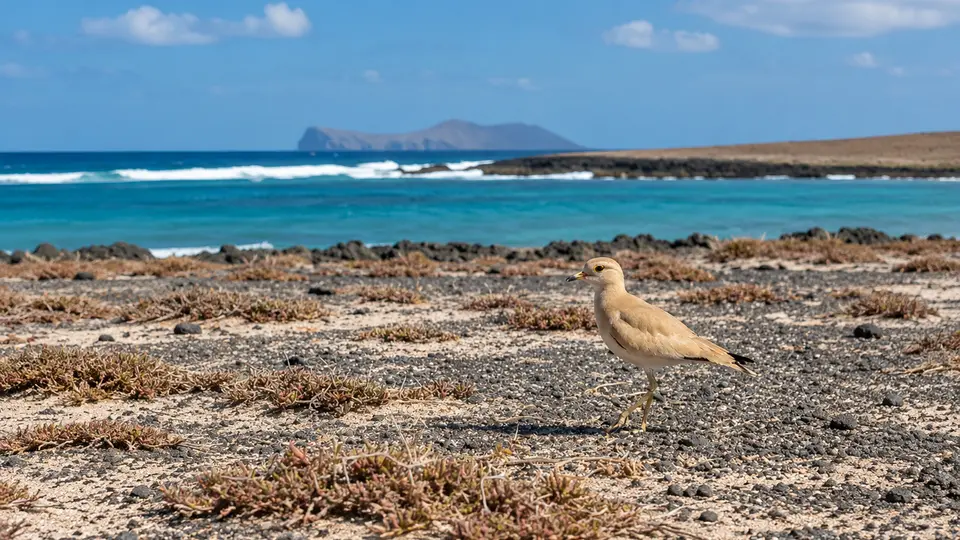
Cream-colored Courser in its natural habitatAI-modified

Cream-colored CourserCursorius cursorWhere and when to see them

Cream-colored Courser at a glance

The cream-colored courser is a desert-adapted wader that spends much of its time on dry ground rather than beside water. Its sandy plumage blends with stony plains and sparse grassland, while long legs support fast running between feeding stops. Cape Verde holds an island population traditionally assigned to the subspecies exsul. Despite occurring on coastal islands, the bird should be sought in open arid country, not assumed present on ordinary beaches.

Behaviour & reproduction

Size
19–24 cm (7.5–9.4 in) long
Weight
95–150 g (3.4–5.3 oz)
Lifespan
Not reliably established
Status
Least Concern

Coursers hunt by running quickly across open ground, stopping abruptly to inspect or seize prey. Their upright stance and sudden pauses can make them resemble small desert runners rather than familiar shorebirds. Pairs or small groups may remain inconspicuous until they move. Nesting takes place on bare ground, and chicks rely heavily on camouflage. Movements and breeding activity can respond to rainfall and the resulting changes in insect availability. Courser nests are shallow scrapes on open ground, often subtly lined with pebbles or small bits of vegetation. Both parents participate in incubating the 2-3 eggs and caring for the precocial chicks. Their cryptic coloration allows them to blend almost perfectly with their surroundings when motionless.

Top wildlife locations

Cape Verde wildlife habitatAI-modified

Cape Verde

Arid coastal plains and sparse stony lowlands on suitable islands offer plausible habitat. Birds are localized and easily overlooked; an inland excursion on established tracks is usually needed rather than shoreline watching.
Destinations describe the species' habitat, not guaranteed cruise stops. Some animals require an optional inland excursion or are found in restricted reserves.

Fun facts about the Cream-colored Courser

  • It belongs to the same family as pratincoles.
  • Its feet lack a hind toe.
  • The nest is a minimal scrape on open ground.
  • Cape Verde birds are traditionally recognized as the subspecies exsul.

Best time to see the Cream-colored Courser

Cape Verde birds are resident, so there is no simple migration-based viewing season. Drier travel months can make open-country excursions practical, but local rain alters vegetation, insects and nesting activity. A fixed breeding calendar should not be inferred from the islands' tourism season. Breeding activity on Cape Verde can intensify after significant rainfall events, leading to a temporary increase in visible activity. The dry season, typically between November and June, offers the most stable weather for ground excursions to their preferred habitats.

Cream-colored Courser: season matrix by destination

Travel and observation windows vary by region. Highlighted months are an orientation for planning, not confirmed sightings or a guarantee of access.

Cape Verde

This is a generally drier excursion window for a resident bird, not evidence of seasonal abundance or a fixed breeding period.

JanFebMarAprMayJunJulAugSepOctNovDec
Cruise ships in Cape Verde

Where the Cream-colored Courser lives

Suitable habitat includes sandy or stony semi-desert, sparsely vegetated plains and dry open ground with unobstructed running space. On Cape Verde, lowland arid landscapes may lie near the coast, but access often requires an inland excursion from waterfront settlements. While predominantly inland, Cream-colored coursers may occasionally venture closer to coastal areas if suitable arid and open conditions extend there. They prefer flat to gently undulating terrain, avoiding areas with dense scrub or tall vegetation that would obstruct their vision or movement.

What the Cream-colored Courser eats

Ground-dwelling insects and other small invertebrates form most of the diet. Beetles, ants, termites and similar prey are picked from the surface or shallow ground. Feeding birds cover substantial areas on foot, exploiting scattered food rather than concentrating at wetland edges. Coursers are opportunistic feeders, expanding their diet to include snails and small lizards if insect availability is low. They have excellent eyesight, which aids in spotting small prey items on the ground from a distance.

Species at a glance

Common name
Cream-colored Courser
Scientific name
Cursorius cursor
Animal group
Birds
Size
19–24 cm (7.5–9.4 in) long
Weight
95–150 g (3.4–5.3 oz)
Lifespan
Not reliably established
Status
Least Concern
Identification
Its sandy body, black-and-white eye stripes and pale grey crown distinguish it from plovers and the darker, more strongly patterned Temminck's courser. Juveniles are paler and less distinctly marked than adults, with a more mottled appearance. The long, slender legs and relatively short bill are also key identification features separating them from other ground birds in the region.

Cream-colored Courser: frequently asked questions

Where can I see the Cream-colored Courser?
Cape Verde. Scan open plains from existing tracks with binoculars, avoiding off-road driving. Do not follow running birds or approach distraction displays, which may indicate concealed chicks or eggs on ground that appears empty. Observing coursers often requires patience, as their camouflage and habit of freezing make them hard to spot. A high vantage point on a gentle slope can offer improved visibility across their preferred flat landscapes. If disturbed, they typically run away rather than taking flight immediately.
When is the best time to see the Cream-colored Courser?
Cape Verde birds are resident, so there is no simple migration-based viewing season. Drier travel months can make open-country excursions practical, but local rain alters vegetation, insects and nesting activity. A fixed breeding calendar should not be inferred from the islands' tourism season. Breeding activity on Cape Verde can intensify after significant rainfall events, leading to a temporary increase in visible activity. The dry season, typically between November and June, offers the most stable weather for ground excursions to their preferred habitats.
How big does the Cream-colored Courser get?
19–24 cm (7.5–9.4 in) long. Adult weight: 95–150 g (3.4–5.3 oz). Size varies with age, sex and population.
How should I behave around the Cream-colored Courser?
Scan open plains from existing tracks with binoculars, avoiding off-road driving. Do not follow running birds or approach distraction displays, which may indicate concealed chicks or eggs on ground that appears empty. Observing coursers often requires patience, as their camouflage and habit of freezing make them hard to spot. A high vantage point on a gentle slope can offer improved visibility across their preferred flat landscapes. If disturbed, they typically run away rather than taking flight immediately.
What does the Cream-colored Courser eat?
Ground-dwelling insects and other small invertebrates form most of the diet. Beetles, ants, termites and similar prey are picked from the surface or shallow ground. Feeding birds cover substantial areas on foot, exploiting scattered food rather than concentrating at wetland edges. Coursers are opportunistic feeders, expanding their diet to include snails and small lizards if insect availability is low. They have excellent eyesight, which aids in spotting small prey items on the ground from a distance.
Are wildlife sightings guaranteed on an adventure cruise?
No. Animals move freely and routes, weather, access restrictions and local conditions influence every outing. Confirm the actual itinerary and shore program before booking.

Compare wildlife in the same destinations

Explore other birds recorded in these destinations. Similar surroundings do not mean the animals share the same habits or viewing season.

Species comparison by animal group and destination
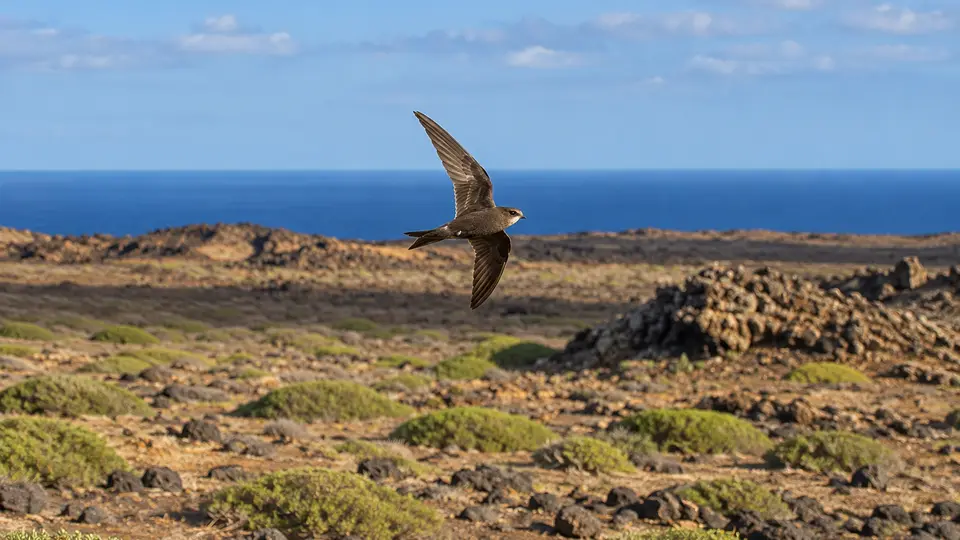
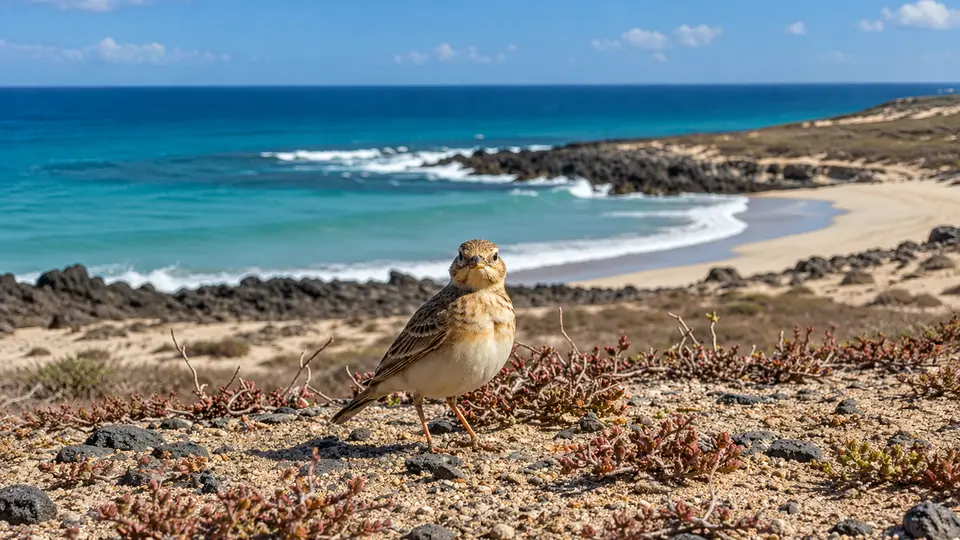
Cream-colored CourserAI-modifiedCream-colored CourserAlexander's SwiftAI-modifiedAlexander's SwiftBar-tailed LarkAI-modifiedBar-tailed Lark
Animal groupBirdsAnimal groupBirdsAnimal groupBirds
DestinationsCape VerdeDestinationsCape VerdeDestinationsCape Verde
Scientific nameCursorius cursorScientific nameScientific name
All wildlife destinations
AI-modified
Plan your trip

Find your next wildlife adventure

Compare destinations, shore programs and dates with the animals and habitats you would love to see.

  • Naturalist-led shore excursions
  • Responsible wildlife watching
  • Small expedition ships