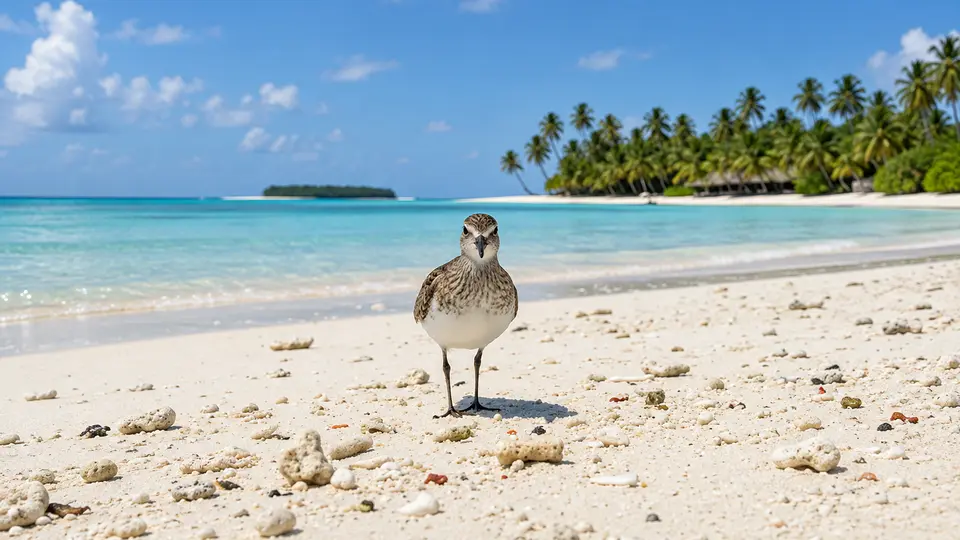
Common sandpiper in its natural habitat, AI illustration

Common sandpiper: where and when to see them

Actitis hypoleucos

Common sandpiper at a glance

The common sandpiper is a small migratory shorebird that links northern breeding grounds with tropical and subtropical watersides. Unlike many waders that gather on broad mudflats, it often works narrow margins alone, picking between stones, roots and stranded vegetation. Its constantly bobbing rear end makes it recognizable even at a distance. In the Maldives it is a nonbreeding visitor, using quiet coastal edges rather than nesting on the islands.

Behaviour & reproduction

Size
18–21 cm long
Weight
40–80 g
Lifespan
Not reliably established
Status
Least Concern

A feeding bird walks briskly, pauses to inspect the surface and snaps up exposed prey with a short, straight bill. It frequently teeters, lowering its front while lifting its tail. When disturbed, it usually flies low over water with stiff, shallow wingbeats and a sharp call. Breeding pairs defend waterside territories, but outside that season individuals may tolerate neighbours where food is concentrated, while still feeding more independently than flocking sandpipers. The constant head-bobbing and tail-pumping, known as 'teetering', is a key and almost continuous behaviour. When alarmed, it often raises its wings briefly before taking flight. Its distinctive flight pattern involves short glides on stiff, bowed wings, accompanied by its piping 'twee-wee-wee' call.

Top wildlife locations

Maldives wildlife habitat

Maldives

Quiet lagoon shores, exposed reef-island margins and sheltered waterfronts offer plausible viewing habitat. Birds are scattered seasonal visitors, not assured resort residents; watch accessible shores without entering protected or private areas.

Adventure cruises in Maldives
Destinations describe the species' habitat, not guaranteed cruise stops. Some animals require an optional inland excursion or are found in restricted reserves.

Fun facts about the Common sandpiper

  • The nest is on the ground near freshwater, often concealed by vegetation.
  • Both parents incubate the eggs.
  • Chicks leave the nest soon after hatching and feed themselves.
  • Its low flight often follows the bends of a shoreline rather than crossing open ground.

Best time to see the Common sandpiper

In the Maldives, northern autumn through early spring is the most plausible period for this migrant. November to March combines its nonbreeding presence with generally favourable shore-watching conditions. Local water levels, disturbance and available feeding margins matter more than any fixed daily timetable. Small numbers may be present year-round, but the main influx of wintering birds from northern latitudes occurs from October to April. Early morning and late afternoon are generally the most active feeding times, especially on falling tides. The specific tidal phase can significantly influence feeding opportunities and bird visibility.

Common sandpiper: season matrix by destination

Travel and observation windows vary by region. Highlighted months are an orientation for planning, not confirmed sightings or a guarantee of access.

Maldives

This window overlaps the regional nonbreeding season and generally drier travel weather; occurrence varies between islands and does not imply local breeding.

JanFebMarAprMayJunJulAugSepOctNovDec
Cruise ships in Maldives

Where the Common sandpiper lives

Breeding habitats include riverbanks, lake margins and streams with nearby vegetation across temperate Eurasia. Outside the breeding season it uses estuaries, mangroves, rocky shores and sheltered beaches. Maldivian birds can occur along lagoon margins and other quiet island waterfronts with exposed feeding edges. Though primarily a freshwater breeder, its strong preference for coastal and estuarine habitats during migration and winter makes it a common sight on many tropical shores. In the Maldives, it often favours sheltered inner lagoon areas or small sandflats adjacent to vegetated islands. It typically avoids open, wave-exposed coastlines.

What the Common sandpiper eats

Small invertebrates dominate its diet, especially insects and their larvae, spiders, worms and small crustaceans. Coastal birds pick prey from damp sand, stones and shallow margins. They mostly glean visible food rather than probing deeply like longer-billed waders. It is an opportunistic feeder, readily adapting its diet to available prey in various microhabitats. While mostly insectivorous, it will also consume small crabs, shrimp and occasionally tiny fish or plant matter. Its feeding strategy involves quick dabs and pecks rather than deep probing.

Species at a glance

Common name
Common sandpiper
Scientific name
Actitis hypoleucos
Animal group
Birds
Size
18–21 cm long
Weight
40–80 g
Lifespan
Not reliably established
Status
Least Concern
Identification
Its white shoulder wedge, brown upperparts and persistent teetering distinguish it from most small sandpipers, while a white wingbar helps separate it from the green sandpiper in flight. Its relatively short legs and tail, along with its unique jizz, help distinguish it from other small waders. The diagnostic white 'shoulder patch' is clearly visible even when the bird is at rest. In flight, the strong white wingbar contrasts sharply with the dark primaries and brown upperwing coverts.

Common sandpiper: frequently asked questions

Where can I see the Common sandpiper?
Maldives. Scan quiet lagoon edges from a path or settled position, allowing the bird to approach naturally. Avoid following a feeding individual along a narrow beach, where repeated flushing can remove access to its limited feeding strip. Use binoculars to observe its characteristic feeding and teetering actions from a respectful distance. Position yourself with the sun behind you for optimal viewing and photography of its plumage details. Look for individuals solitary or in small, loose groups rather than dense flocks.
When is the best time to see the Common sandpiper?
In the Maldives, northern autumn through early spring is the most plausible period for this migrant. November to March combines its nonbreeding presence with generally favourable shore-watching conditions. Local water levels, disturbance and available feeding margins matter more than any fixed daily timetable. Small numbers may be present year-round, but the main influx of wintering birds from northern latitudes occurs from October to April. Early morning and late afternoon are generally the most active feeding times, especially on falling tides. The specific tidal phase can significantly influence feeding opportunities and bird visibility.
How big does the Common sandpiper get?
18–21 cm long. Adult weight: 40–80 g. Size varies with age, sex and population.
How should I behave around the Common sandpiper?
Scan quiet lagoon edges from a path or settled position, allowing the bird to approach naturally. Avoid following a feeding individual along a narrow beach, where repeated flushing can remove access to its limited feeding strip. Use binoculars to observe its characteristic feeding and teetering actions from a respectful distance. Position yourself with the sun behind you for optimal viewing and photography of its plumage details. Look for individuals solitary or in small, loose groups rather than dense flocks.
What does the Common sandpiper eat?
Small invertebrates dominate its diet, especially insects and their larvae, spiders, worms and small crustaceans. Coastal birds pick prey from damp sand, stones and shallow margins. They mostly glean visible food rather than probing deeply like longer-billed waders. It is an opportunistic feeder, readily adapting its diet to available prey in various microhabitats. While mostly insectivorous, it will also consume small crabs, shrimp and occasionally tiny fish or plant matter. Its feeding strategy involves quick dabs and pecks rather than deep probing.
Are wildlife sightings guaranteed on an adventure cruise?
No. Animals move freely and routes, weather, access restrictions and local conditions influence every outing. Confirm the actual itinerary and shore program before booking.

Compare wildlife in the same destinations

Explore other birds recorded in these destinations. Similar surroundings do not mean the animals share the same habits or viewing season.

Species comparison by animal group and destination
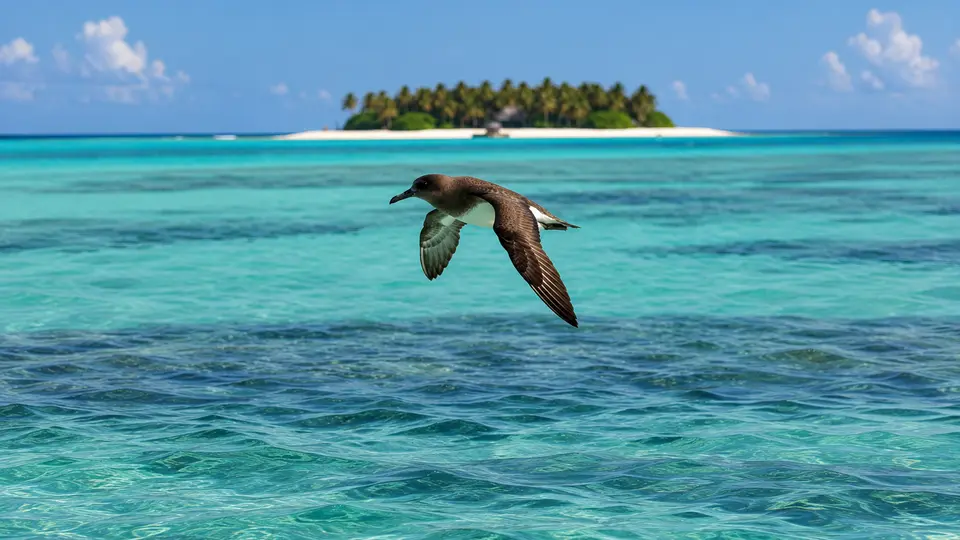
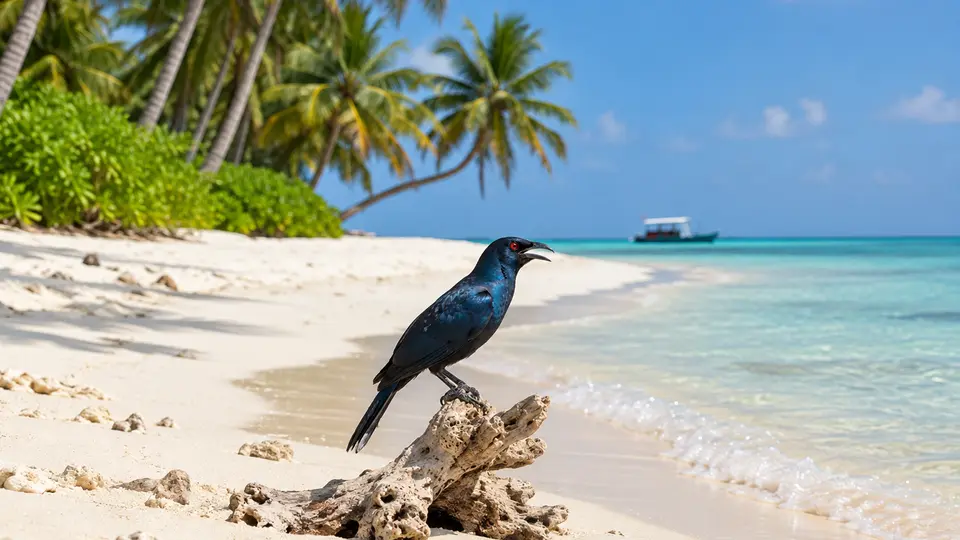
Common sandpiperCommon sandpiperAsian koelAsian koelAudubon's shearwaterAudubon's shearwater
Animal groupBirdsAnimal groupBirdsAnimal groupBirds
DestinationsMaldivesDestinationsMaldivesDestinationsMaldives
All wildlife destinations
Plan your trip

Find your next wildlife adventure

Compare destinations, shore programs and dates with the animals and habitats you would love to see.

  • Naturalist-led shore excursions
  • Responsible wildlife watching
  • Small expedition ships

Newsletter

Take Blue Rides with you

Adventure cruise offers, last-minute deals and trip inspiration.

Free, unsubscribe anytime. Details: Privacy Policy

Partner with Blue Rides

Affiliate Program

Recommend adventure cruises and earn commission on every confirmed booking.

Share. Track. Earn.

Your footage, our stage

Send us your videos or pictures.

Captured beautiful landscapes or wildlife? Share your videos and pictures with us, we may feature them on Blue Rides.