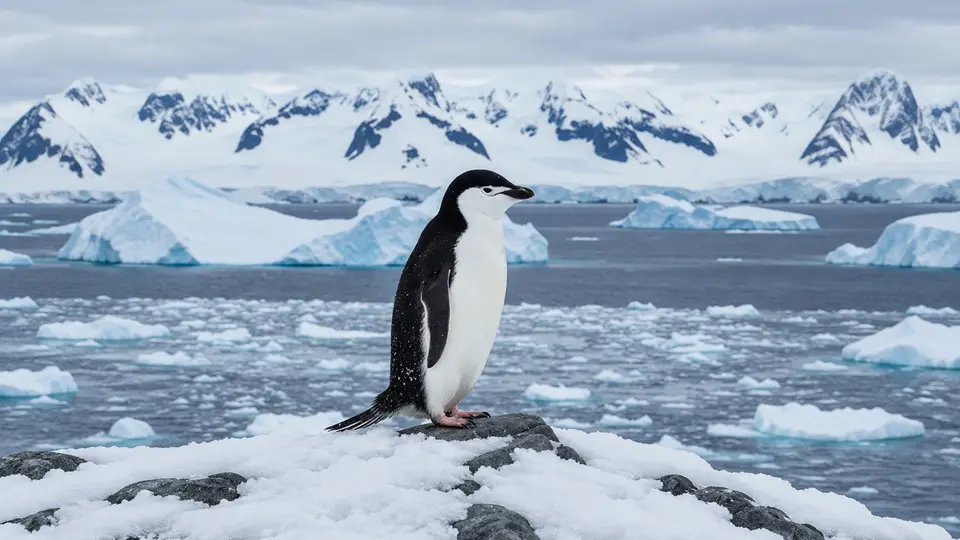
Chinstrap Penguin in its natural habitat, AI illustration

Chinstrap Penguin: where and when to see them

Pygoscelis antarcticus

Chinstrap Penguin at a glance

The chinstrap penguin is named for the narrow black line beneath its white face, giving it an unmistakable helmeted appearance. It breeds mainly around the Antarctic Peninsula and islands of the Scotia Sea, forming colonies on exposed rocky ground. Although globally numerous, some important populations have declined substantially. Its fortunes are closely linked to krill availability and changing Southern Ocean conditions, so a broad global assessment can conceal serious regional pressures.

Behaviour & reproduction

Size
68-76 cm tall
Weight
3-5 kg
Lifespan
15-20 years in the wild
Status
Least Concern

Chinstraps commute between feeding waters and crowded nesting slopes along well-used routes. On land they defend small stone nests with loud calls, postures and occasional pecking disputes. Both parents incubate the eggs and provision the chicks. Older chicks gather into groups while adults forage. Individuals may climb remarkably steep terrain to reach a nest, and their noisy colony life contrasts with the purposeful single-file movements often seen on access paths. Courtship involves head bowing, mutual preening, and trumpeting calls, strengthening pair bonds for the breeding season. The 'ecstatic display' is a characteristic loud call with the head thrown back, used to proclaim territory or as a general social greeting.

Top wildlife locations

Antarctica wildlife habitat

Antarctica

Authorised rocky shore viewpoints around the Antarctic Peninsula region and offshore islands offer plausible colony observation. Some colonies are inaccessible or closed, and landing decisions depend on permits, wildlife protection, ice and weather.

Adventure cruises in Antarctica
Destinations describe the species' habitat, not guaranteed cruise stops. Some animals require an optional inland excursion or are found in restricted reserves.

Fun facts about the Chinstrap Penguin

  • A typical clutch contains two eggs.
  • Nest-building birds collect small stones and may take them from neighbours.
  • Some colonies occupy steep slopes far above the beach.
  • Breeding birds can accumulate sleep through thousands of very short microsleeps.

Best time to see the Chinstrap Penguin

November to March is the practical Antarctic visitor season. Courtship and laying occur earlier within this period, followed by incubation and chick rearing through summer. Exact timing differs among colonies, and late-season access or attendance can change as birds moult and disperse. Early in the season, adult chinstraps arrive at colonies to establish territories and breed, with egg laying occurring from late November to early December. By February, most chicks are fledging, marking the end of the intense breeding cycle.

Chinstrap Penguin: season matrix by destination

Travel and observation windows vary by region. Highlighted months are an orientation for planning, not confirmed sightings or a guarantee of access.

Antarctica

The austral-summer travel window overlaps breeding, but colony stage, permitted access and local penguin attendance vary.

JanFebMarAprMayJunJulAugSepOctNovDec
Cruise ships in Antarctica

Where the Chinstrap Penguin lives

Breeding colonies occupy ice-free rocky beaches, headlands and slopes, sometimes well above the shoreline. At sea, chinstraps favour productive Southern Ocean waters and generally use more open conditions than strongly ice-associated penguins. Winter distribution extends beyond their summer breeding localities. Chinstrap penguins show a strong preference for nesting on volcanic islands with accessible shorelines, often sharing breeding grounds with other pygoscelid penguins. Their colonies are primarily found along the Antarctic Peninsula, Scotia Arc, and South Sandwich Islands.

What the Chinstrap Penguin eats

Antarctic krill dominates the diet in many colonies, with fish and other crustaceans making smaller contributions. Adults capture prey at sea and return to feed chicks by regurgitation. Local food availability affects foraging effort, breeding success and population trends. While krill is primary, chinstraps have a flexible diet, adapting their foraging to the most abundant prey available locally, which can include small fish like nototheniids. They are efficient divers, typically foraging in relatively shallow waters but capable of reaching depths over 70 meters.

Species at a glance

Common name
Chinstrap Penguin
Scientific name
Pygoscelis antarcticus
Animal group
Birds
Size
68-76 cm tall
Weight
3-5 kg
Lifespan
15-20 years in the wild
Status
Least Concern
Identification
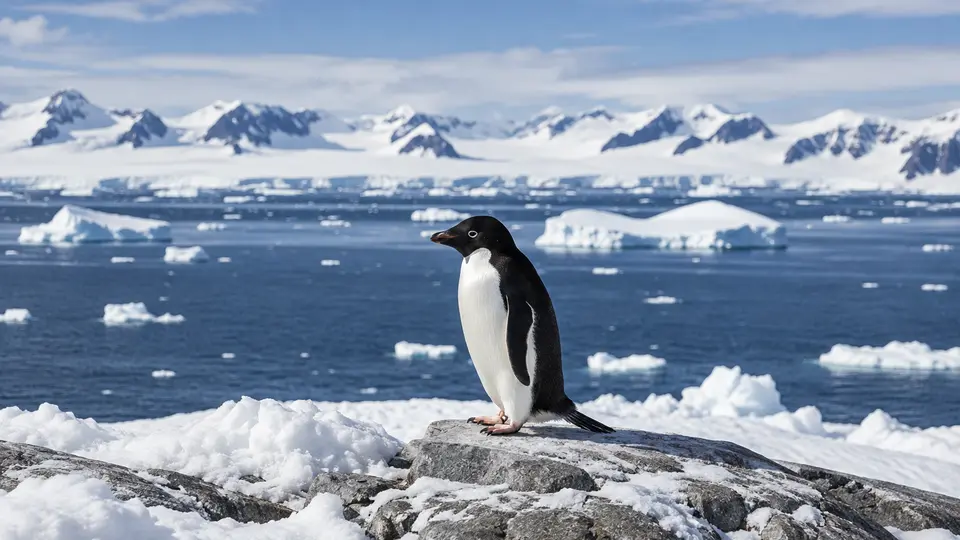
The thin black chin line distinguishes it from the white-eyed Adélie penguin and the larger, white-crowned gentoo penguin. Beyond the chinstrap line, observe their uniformly dark back and white belly, a common penguin pattern. Juveniles have a less distinct chinstrap and often a greyer appearance overall, but are still identifiable.

Chinstrap Penguin: frequently asked questions

Where can I see the Chinstrap Penguin?
Antarctica. Keep mandated distances and leave penguin commuting routes completely open. Remain still if birds approach, never step between adults and chicks, and take care on slippery rocks without using wildlife as a handhold or support. When observing chinstraps, note their distinct waddling gait on land and their agile swimming in water, often porpoising out of the sea. Keep binoculars handy to appreciate their unique facial marking and social interactions from a distance.
When is the best time to see the Chinstrap Penguin?
November to March is the practical Antarctic visitor season. Courtship and laying occur earlier within this period, followed by incubation and chick rearing through summer. Exact timing differs among colonies, and late-season access or attendance can change as birds moult and disperse. Early in the season, adult chinstraps arrive at colonies to establish territories and breed, with egg laying occurring from late November to early December. By February, most chicks are fledging, marking the end of the intense breeding cycle.
How big does the Chinstrap Penguin get?
68-76 cm tall. Adult weight: 3-5 kg. Size varies with age, sex and population.
How should I behave around the Chinstrap Penguin?
Keep mandated distances and leave penguin commuting routes completely open. Remain still if birds approach, never step between adults and chicks, and take care on slippery rocks without using wildlife as a handhold or support. When observing chinstraps, note their distinct waddling gait on land and their agile swimming in water, often porpoising out of the sea. Keep binoculars handy to appreciate their unique facial marking and social interactions from a distance.
What does the Chinstrap Penguin eat?
Antarctic krill dominates the diet in many colonies, with fish and other crustaceans making smaller contributions. Adults capture prey at sea and return to feed chicks by regurgitation. Local food availability affects foraging effort, breeding success and population trends. While krill is primary, chinstraps have a flexible diet, adapting their foraging to the most abundant prey available locally, which can include small fish like nototheniids. They are efficient divers, typically foraging in relatively shallow waters but capable of reaching depths over 70 meters.
Are wildlife sightings guaranteed on an adventure cruise?
No. Animals move freely and routes, weather, access restrictions and local conditions influence every outing. Confirm the actual itinerary and shore program before booking.

Compare wildlife in the same destinations

Explore other birds recorded in these destinations. Similar surroundings do not mean the animals share the same habits or viewing season.

Species comparison by animal group and destination
Chinstrap PenguinChinstrap PenguinAdélie PenguinAdélie PenguinAntarctic PetrelAntarctic Petrel
Animal groupBirdsAnimal groupBirdsAnimal groupBirds
DestinationsAntarcticaDestinationsAntarcticaDestinationsAntarctica
All wildlife destinations
Plan your trip

Find your next wildlife adventure

Compare destinations, shore programs and dates with the animals and habitats you would love to see.

  • Naturalist-led shore excursions
  • Responsible wildlife watching
  • Small expedition ships

Newsletter

Take Blue Rides with you

Adventure cruise offers, last-minute deals and trip inspiration.

Free, unsubscribe anytime. Details: Privacy Policy

Partner with Blue Rides

Affiliate Program

Recommend adventure cruises and earn commission on every confirmed booking.

Share. Track. Earn.

Your footage, our stage

Send us your videos or pictures.

Captured beautiful landscapes or wildlife? Share your videos and pictures with us, we may feature them on Blue Rides.