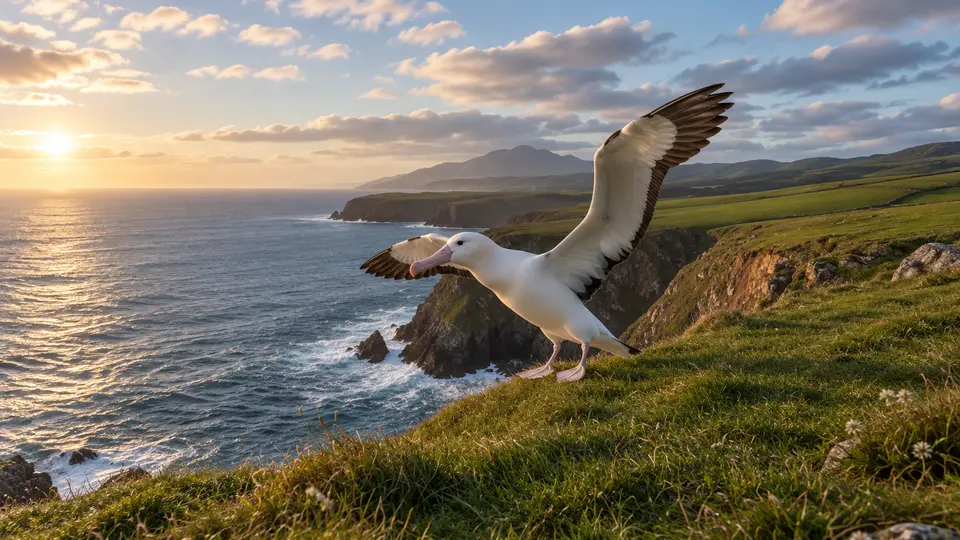
Northern royal albatross in its natural habitatAI-modified

Northern royal albatrossDiomedea sanfordiWhere and when to see them

Northern royal albatross at a glance

The northern royal albatross is an enormous ocean-going bird that breeds only in New Zealand territory. Most nesting occurs on islands in the Chatham group, while a small mainland colony at Taiaroa Head provides unusually accessible land-based viewing. Its slow reproduction and restricted breeding distribution make population recovery difficult. Longline fisheries, severe weather and changes at nesting sites are important threats to a species adapted to spending much of its life far offshore.

Behaviour & reproduction

Size
110–115 cm (43–45 in) long; 290–330 cm (114–130 in) wingspan
Weight
6–9 kg (13–20 lb)
Lifespan
20–40 years
Status
Endangered

These albatrosses exploit wind gradients above the sea, travelling long distances with remarkably little flapping. At breeding sites, elaborate courtship includes bill movements, wing displays and vocal exchanges. Established partners share incubation and chick feeding during a breeding cycle that takes almost a year. Successful pairs generally skip the following season. Young birds spend several years at sea before returning to land to begin the prolonged process of finding a mate. They are long-lived birds, capable of breeding for many decades once established. The complex, synchronized sky-pointing and Gaping displays are crucial elements of pair bonding and nest defense.

Top wildlife locations

New Zealand wildlife habitatAI-modified

New Zealand

Taiaroa Head on the Otago Peninsula offers managed shore-based colony viewing. Most other breeding sites lie on remote Chatham Islands rocks and are inaccessible to ordinary visitors; mainland viewing requires a dedicated excursion.
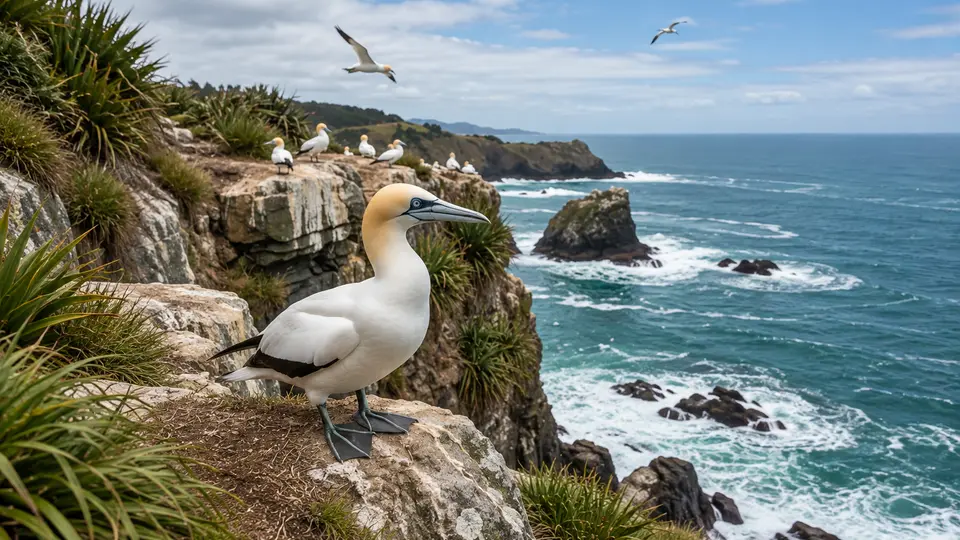
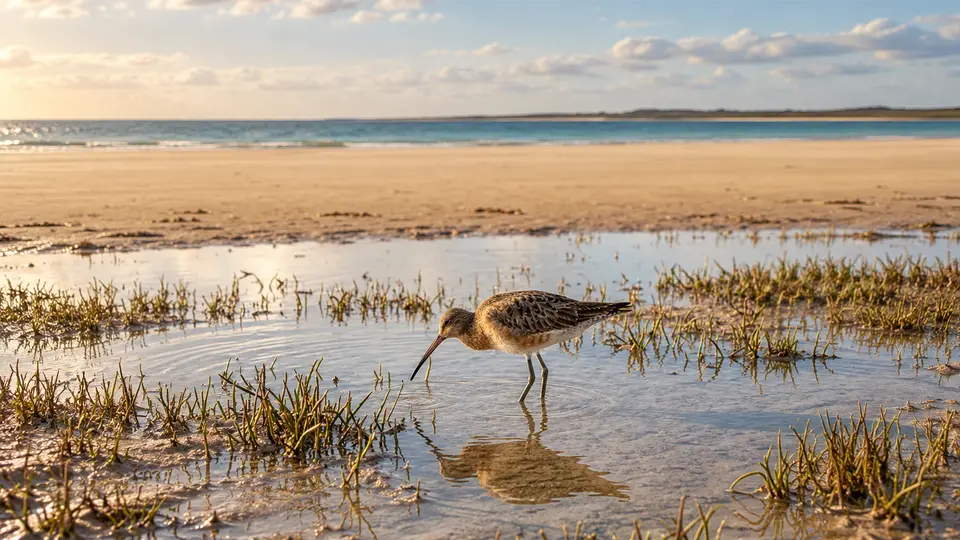
Destinations describe the species' habitat, not guaranteed cruise stops. Some animals require an optional inland excursion or are found in restricted reserves.

Fun facts about the Northern royal albatross

  • Taiaroa Head supports the species' only mainland breeding colony.
  • A successful breeding attempt generally occupies so much time that the pair breeds only every second year.
  • The single egg is incubated for about eleven weeks.
  • Young northern royals may remain at sea for several years before first returning to their natal colony.

Best time to see the Northern royal albatross

Taiaroa Head offers different viewing possibilities across much of the year, with adults returning in spring and chicks developing through autumn and winter. November through September broadly covers nesting activity, but weather, breeding outcomes and managed viewing arrangements determine what visitors can see. Prime chick-rearing occurs from late summer through winter, offering glimpses of growing young birds at the colony. Observing adults during courtship and egg-laying in early spring provides a different dynamic.

Northern royal albatross: season matrix by destination

Travel and observation windows vary by region. Highlighted months are an orientation for planning, not confirmed sightings or a guarantee of access.

New Zealand

This broad window spans adult nesting attendance and chick development at Taiaroa Head. October is often a quieter transition, and bookings, weather and annual breeding outcomes affect viewing.

JanFebMarAprMayJunJulAugSepOctNovDec
Cruise ships in New Zealand

Where the Northern royal albatross lives

Northern royal albatrosses nest on open, windswept ground with low vegetation and clear takeoff approaches. At sea they range widely across the Southern Ocean and temperate southern waters. Accessible shore observation is concentrated near their small mainland breeding colony rather than ordinary beaches. The main breeding colonies are restricted to just three remote, windswept islands: Middle Trio, North East, and Adams Island, all within the Auckland Islands archipelago. Taiaroa Head on the Otago Peninsula is their only mainland breeding colony in the world.

What the Northern royal albatross eats

Squid form a major part of the diet, alongside fish and other marine prey or carrion available near the surface. Adults travel far from the colony to feed and return with meals for chicks. Scavenging around fishing vessels creates a serious bycatch risk. They typically forage over continental shelves and oceanic waters, often making long feeding forays covering thousands of kilometers. This species is known to dive shallowly to catch prey, but primarily feeds at the surface.

Species at a glance

Common name
Northern royal albatross
Scientific name
Diomedea sanfordi
Animal group
Birds
Size
110–115 cm (43–45 in) long; 290–330 cm (114–130 in) wingspan
Weight
6–9 kg (13–20 lb)
Lifespan
20–40 years
Status
Endangered
Identification
Unlike the southern royal albatross, an adult northern royal has predominantly black upperwings with little white, contrasting with its white body and pink bill bearing a dark cutting edge. Juveniles are similar to adults but often have more dark markings on their underwing coverts and a less prominent pink on the bill. The northern royal albatross is generally slightly smaller and more slender-billed than its southern counterpart.

Northern royal albatross: frequently asked questions

Where can I see the Northern royal albatross?
New Zealand. Use the managed observatory and authorised public viewpoints at Taiaroa Head. Keep outside nesting areas, follow guide instructions and secure loose belongings in strong winds; flying birds are not assured during calm conditions. Binoculars are essential for detailed observation of individual birds and their behaviours at a distance. When viewing from a cruise ship, keep a lookout for their distinctive flight patterns over open water, especially near productive feeding grounds.
When is the best time to see the Northern royal albatross?
Taiaroa Head offers different viewing possibilities across much of the year, with adults returning in spring and chicks developing through autumn and winter. November through September broadly covers nesting activity, but weather, breeding outcomes and managed viewing arrangements determine what visitors can see. Prime chick-rearing occurs from late summer through winter, offering glimpses of growing young birds at the colony. Observing adults during courtship and egg-laying in early spring provides a different dynamic.
How big does the Northern royal albatross get?
110–115 cm (43–45 in) long; 290–330 cm (114–130 in) wingspan. Adult weight: 6–9 kg (13–20 lb). Size varies with age, sex and population.
How should I behave around the Northern royal albatross?
Use the managed observatory and authorised public viewpoints at Taiaroa Head. Keep outside nesting areas, follow guide instructions and secure loose belongings in strong winds; flying birds are not assured during calm conditions. Binoculars are essential for detailed observation of individual birds and their behaviours at a distance. When viewing from a cruise ship, keep a lookout for their distinctive flight patterns over open water, especially near productive feeding grounds.
What does the Northern royal albatross eat?
Squid form a major part of the diet, alongside fish and other marine prey or carrion available near the surface. Adults travel far from the colony to feed and return with meals for chicks. Scavenging around fishing vessels creates a serious bycatch risk. They typically forage over continental shelves and oceanic waters, often making long feeding forays covering thousands of kilometers. This species is known to dive shallowly to catch prey, but primarily feeds at the surface.
Are wildlife sightings guaranteed on an adventure cruise?
No. Animals move freely and routes, weather, access restrictions and local conditions influence every outing. Confirm the actual itinerary and shore program before booking.

Compare wildlife in the same destinations

Explore other birds recorded in these destinations. Similar surroundings do not mean the animals share the same habits or viewing season.

Species comparison by animal group and destination
Northern royal albatrossAI-modifiedNorthern royal albatrossAustralasian gannetAI-modifiedAustralasian gannetBar-tailed godwitAI-modifiedBar-tailed godwit
Animal groupBirdsAnimal groupBirdsAnimal groupBirds
DestinationsNew ZealandDestinationsNew ZealandDestinationsAustralia, New Zealand
Scientific nameDiomedea sanfordiScientific nameScientific name
All wildlife destinations
AI-modified
Plan your trip

Find your next wildlife adventure

Compare destinations, shore programs and dates with the animals and habitats you would love to see.

  • Naturalist-led shore excursions
  • Responsible wildlife watching
  • Small expedition ships