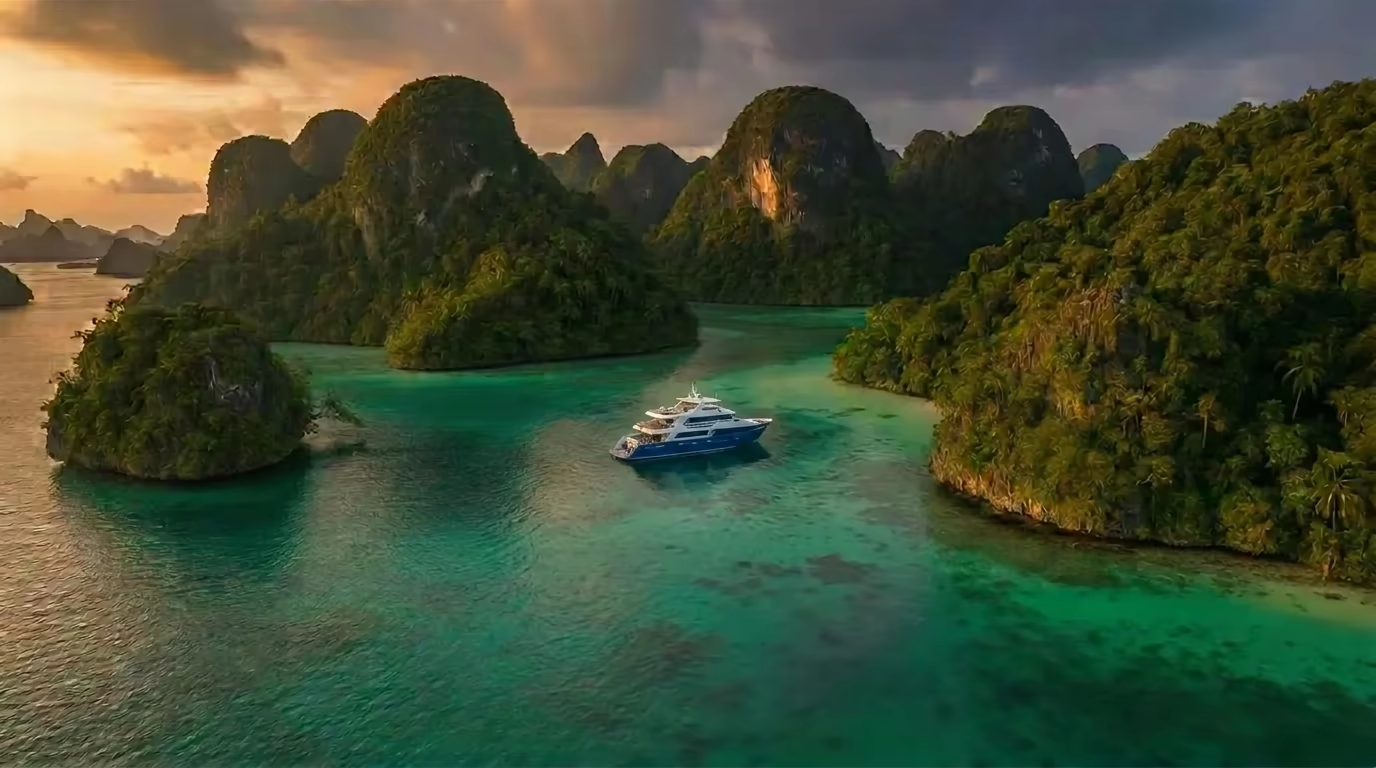
Australia's Queensland coast is a diver's paradise, boasting two of the world's most iconic underwater realms: the Great Barrier Reef (GBR) and the Coral Sea. While often mentioned in the same breath, these distinct destinations offer vastly different liveaboard experiences, catering to a spectrum of divers from beginners to seasoned pros.
The Great Barrier Reef, a UNESCO World Heritage site, is a sprawling, accessible wonderland of vibrant shallow reefs, diverse marine life, and sheltered conditions. It's the quintessential Australian dive, perfect for those seeking colorful coral gardens and abundant fish in a generally calm environment. Liveaboards here typically explore the outer reef sections, offering multi-day adventures to sites inaccessible from day boats.
Conversely, the Coral Sea lies further offshore, beyond the continental shelf. It's renowned for its dramatic drop-offs, pristine visibility, pelagic encounters, and deeper, more challenging diving. This remote frontier appeals to experienced divers seeking adrenaline-pumping drifts, shark action, and the thrill of exploring truly untouched underwater landscapes. Understanding these fundamental differences is key to choosing the liveaboard adventure that best suits your diving aspirations.
| Great Barrier Reef | Coral Sea |
|---|---|
| Best Season | |
| June - November (dry season, calmest seas) | August - December (calm seas, best visibility for pelagics) |
| Top Marine Life | |
| Reef sharks (white-tip, black-tip), turtles, clownfish, giant clams, vibrant hard & soft corals, diverse reef fish, Minke whales (June-July) | Hammerhead sharks, Grey reef sharks, Silvertip sharks, Potato cod, pelagic fish, pristine soft corals, massive gorgonian fans |
| Trip Length & Price (USD) | |
| 3-7 nights; $800 - $3,000+ | 7-10 nights; $2,500 - $6,000+ |
| Experience Level | |
| All levels (Open Water Diver minimum, some sites suitable for beginners) | Intermediate to Advanced (Advanced Open Water recommended, comfortable with drift/deep dives) |
| Access | |
| Cairns & Port Douglas (shorter boat transfers) | Cairns (longer boat transfers, often overnight steaming) |
| Visibility & Water Temp | |
| 15-30m; 24-30°C | 30-60m+; 24-28°C |
| Currents/Difficulty | |
| Generally mild, some moderate currents on outer reef | Moderate to strong currents common, drift diving prevalent |
| Liveaboard Fleet Size | |
| Larger, more diverse fleet, more frequent departures | Smaller, specialized fleet, fewer departures |
The Great Barrier Reef's diving is characterized by extensive, shallow reef systems, bommies, and channels. You'll find a kaleidoscope of hard and soft corals, providing shelter for countless species of reef fish. Depths typically range from 5 to 25 meters, making it ideal for multi-level dives and extended bottom times. Conditions are generally calm, especially during the dry season, making it accessible for divers of all experience levels.
In stark contrast, the Coral Sea is defined by dramatic underwater topography. Think sheer walls that plunge thousands of meters into the abyss, seamounts rising from deep ocean floors, and isolated reefs. These exposed sites are often subject to stronger currents, which in turn attract large pelagic species. Depths can easily exceed 30 meters, requiring good buoyancy control and often Advanced Open Water certification.
While both destinations boast incredible biodiversity, the type of marine life you'll encounter differs significantly. The Great Barrier Reef is a macro and medium-sized marine life paradise. Expect to see an abundance of colorful reef fish, various species of anemonefish, turtles, reef sharks (white-tip and black-tip), rays, and during winter months, dwarf Minke whales. It's a photographer's dream for vibrant, close-up shots.
The Coral Sea, due to its oceanic environment and strong currents, is a magnet for large pelagic action. Here, you're more likely to encounter schooling hammerhead sharks, grey reef sharks, silvertip sharks, tuna, barracuda, and massive potato cod at famous sites like the Cod Hole. The corals, while different from the GBR, are often pristine and include enormous gorgonian fans and soft corals thriving in the nutrient-rich currents.
Accessing the Great Barrier Reef for liveaboard trips is generally straightforward, with most vessels departing from Cairns or Port Douglas. The journey to the outer reef usually takes a few hours, allowing for multiple dives on the first day. There's a wider selection of liveaboard operators and vessel types, catering to different budgets and comfort levels, and departures are frequent.
Trips to the Coral Sea are more specialized and require longer travel times. Liveaboards typically depart from Cairns, and the journey to the remote Coral Sea can involve an overnight steam, often 10-14 hours. Due to the distance and more challenging conditions, there are fewer operators and departures are less frequent. These trips are often longer, typically 7-10 nights, to maximize the diving at these remote sites.
Liveaboard trips to the Great Barrier Reef are generally more affordable and offer a wider range of durations. You can find 3-day/2-night trips starting from around $800 USD, extending to 7-night expeditions for $3,000 USD or more, depending on the vessel and inclusions. This flexibility makes the GBR a great option for those with limited time or budget.
Coral Sea liveaboards, due to their remote nature, longer travel times, and specialized diving, come with a higher price tag. Expect to pay upwards of $2,500 USD for a 7-night trip, with some luxury options reaching $6,000 USD or more. These trips are an investment in a truly unique and often once-in-a-lifetime diving experience, offering unparalleled pelagic encounters and pristine conditions.
Choosing between a Great Barrier Reef and Coral Sea liveaboard hinges entirely on your diving experience, preferences, and what you hope to see. If you're an Open Water diver seeking vibrant, accessible reef systems teeming with colorful fish, turtles, and the chance for Minke whale encounters in generally calm conditions, the Great Barrier Reef is your ideal choice. It offers a fantastic introduction to Australian diving with a wide range of trip durations and budgets.
However, if you're an experienced Advanced Open Water diver with a passion for pelagic encounters, dramatic underwater topography, pristine visibility, and the thrill of challenging drift dives with schooling sharks, then the remote and rugged Coral Sea awaits. It's a more specialized, often more expensive, and less frequent trip, but it promises an unparalleled adventure into Australia's wild oceanic frontier. Consider your certification, comfort with currents, and desire for big animal action when making your decision.
While Open Water is technically sufficient for some dives, Advanced Open Water Diver certification is highly recommended for the Coral Sea due to deeper dives and potential currents.
Absolutely! Many Great Barrier Reef liveaboards cater to beginners, offering introductory dives and PADI Open Water courses on board in sheltered, shallow conditions.
Dwarf Minke whale encounters on the Great Barrier Reef typically occur between June and July. Dedicated liveaboard expeditions are available during this period.
No, the Coral Sea is a separate, deeper oceanic body beyond the continental shelf, distinct from the Great Barrier Reef's continental shelf reef system.
Great Barrier Reef dives are typically 5-25 meters. Coral Sea dives can range from 15 meters to beyond 40 meters, often involving drift dives along walls.
While day trips are common for the inner Great Barrier Reef, liveaboards are essential for reaching the best outer Great Barrier Reef sites and virtually all Coral Sea locations.
Great Barrier Reef visibility is generally 15-30 meters. The Coral Sea boasts exceptional visibility, often 30-60 meters or more, due to its clear oceanic waters.
You'll see reef sharks in both. However, the Coral Sea is famous for more consistent encounters with larger pelagic sharks like hammerheads, grey reef, and silvertips, often in schools.
Browse our handpicked liveaboards and find your perfect dive adventure.