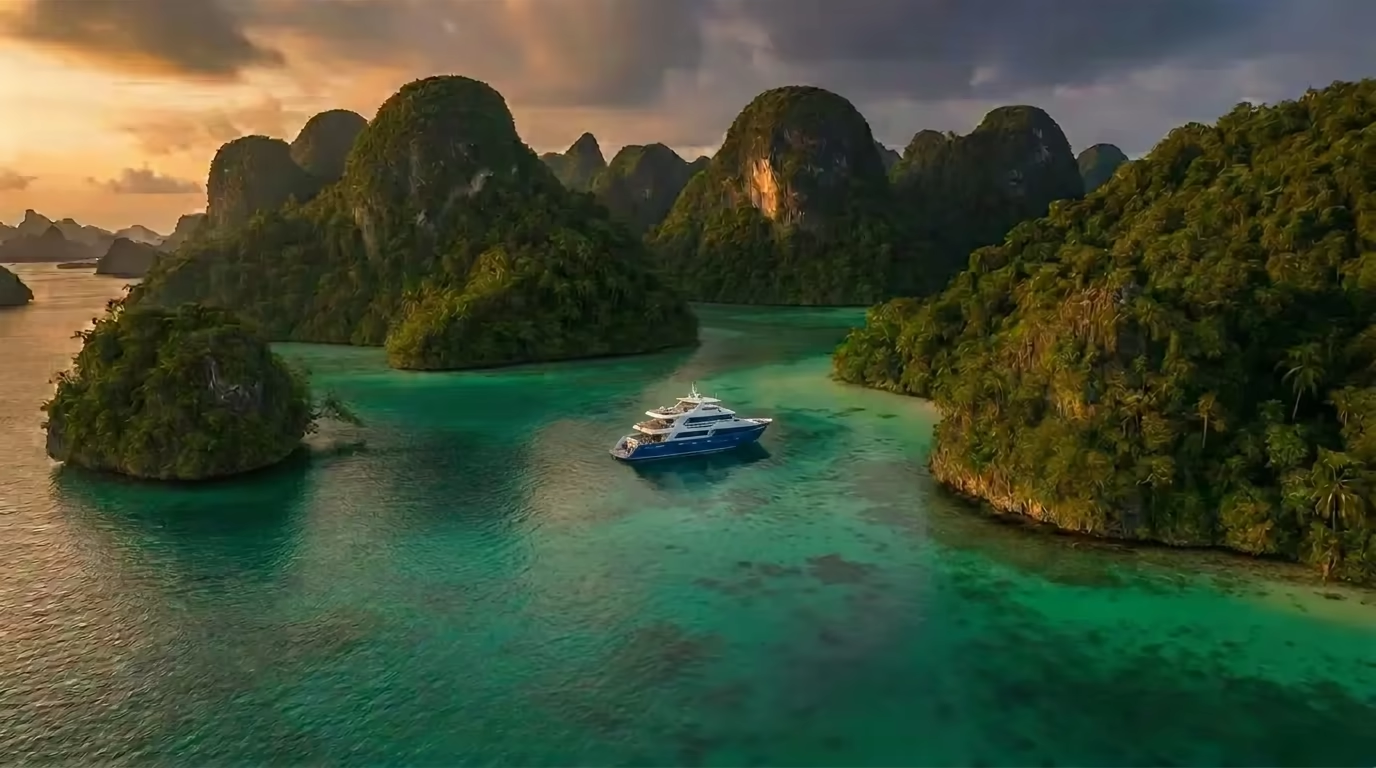
Choosing your next liveaboard adventure between Costa Rica and Panama can be a delightful dilemma for even the most seasoned diver. Both Central American nations boast exceptional marine biodiversity and offer unparalleled opportunities to encounter large pelagics, but their unique characteristics cater to different preferences and experience levels.
Costa Rica, often hailed as a pioneer in ecotourism, draws divers to its remote Cocos Island, a UNESCO World Heritage site renowned for its prolific shark populations and dramatic underwater topography. Panama, on the other hand, presents a dual-coast advantage with the Caribbean and Pacific, though liveaboard operations primarily focus on its Pacific gems like Coiba National Park and the remote Hannibal Bank.
This comprehensive comparison will delve into the specifics of each destination, helping you discern which liveaboard experience aligns best with your diving aspirations. We'll examine everything from marine life encounters and optimal diving seasons to trip costs and accessibility, providing you with the factual insights needed to make an informed decision for your next Blue Rides booking.
| Costa Rica | Panama |
|---|---|
| Best Season | |
| June to December (wet season for pelagics) | December to May (dry season, calmer seas) |
| Top Marine Life | |
| Hammerhead sharks, whale sharks, manta rays, white-tip reef sharks, dolphins | Humpback whales (seasonal), whale sharks, manta rays, hammerhead sharks, bull sharks, diverse reef fish |
| Trip Length & Price (USD) | |
| 8-10 nights, $5,000 - $8,000+ | 7-8 nights, $3,500 - $6,000+ |
| Experience Level | |
| Advanced (strong currents, deep dives) | Intermediate to Advanced (some currents, varying depths) |
| Access | |
| Fly into San José (SJO), then domestic flight or bus to Puntarenas for liveaboard departure. | Fly into Panama City (PTY), then domestic flight to David or ground transfer to Puerto Mutis/Boca Chica for liveaboard departure. |
| Visibility & Water Temp | |
| 15-30m (50-100ft), 24-28°C (75-82°F) with thermoclines down to 20°C (68°F) | 10-30m (30-100ft), 26-29°C (79-84°F) with occasional thermoclines |
| Currents/Difficulty | |
| Often strong and unpredictable, drift diving common. Requires excellent buoyancy and experience. | Moderate to strong, especially at offshore sites. Some drift diving, generally manageable for experienced divers. |
| Liveaboard Fleet Size | |
| Limited (approx. 3-5 dedicated Cocos liveaboards) | Smaller but growing (approx. 2-4 dedicated Coiba/Pacific liveaboards) |
Costa Rica's liveaboard diving is almost exclusively focused on Cocos Island, a remote oceanic outpost located approximately 340 miles (550 km) southwest of the mainland. This UNESCO site is world-renowned for its massive schools of hammerhead sharks, often numbering in the hundreds, alongside whale sharks, manta rays, and numerous other large pelagics. Dives here are typically deep and subject to strong, unpredictable currents, making it an advanced diver's dream. Sites like Bajo Alcyone and Dirty Rock are legendary for their shark action, often requiring divers to hold onto rocks to observe the spectacle.
Panama's primary liveaboard destination is Coiba National Park, another UNESCO World Heritage site, situated off its Pacific coast. While Coiba also boasts impressive pelagic encounters, including hammerheads, whale sharks, and manta rays, it's often considered a slightly less extreme environment than Cocos. The park's diverse ecosystem supports a rich array of reef fish, turtles, and seasonal humpback whale migrations. Offshore banks like Hannibal Bank and Montuosa offer opportunities for larger pelagic encounters and are often included on longer itineraries. Dive conditions can vary, with some sites experiencing strong currents but generally offering a wider range of dive profiles suitable for advanced to intermediate divers.
If your primary goal is to witness the sheer spectacle of hundreds of schooling hammerhead sharks, Costa Rica's Cocos Island is arguably unparalleled. The island's isolated location acts as a magnet for these majestic creatures, especially during the wet season (June to December) when the thermoclines bring nutrient-rich waters closer to the surface. Whale sharks are also a significant draw, particularly during the same period. Beyond the big sharks, you can expect to see large schools of jacks, tuna, and various reef sharks.
Panama's Coiba National Park also offers incredible pelagic action, with regular sightings of hammerhead sharks, whale sharks, and manta rays. However, the numbers might not consistently reach the epic scale of Cocos. What Coiba often excels in is its overall biodiversity and the potential for a wider variety of encounters, including bull sharks, tiger sharks, and numerous species of reef fish. During the migration season (typically July to October), humpback whales are a significant highlight, adding a unique dimension to the Panamanian liveaboard experience. Both destinations promise an unforgettable big fish experience, but Cocos leans towards sheer volume of specific pelagics, while Coiba offers a broader spectrum.
Reaching Costa Rica's liveaboards for Cocos Island typically involves flying into Juan Santamaría International Airport (SJO) in San José. From there, you'll usually have a domestic transfer (either a short flight or a bus ride) to Puntarenas, the departure port for most Cocos liveaboards. The journey to Cocos Island itself is a significant undertaking, involving a 30-36 hour crossing each way across open ocean. This adds to the remote and adventurous feel of the trip but also means longer travel times and potentially rougher seas.
For Panama, most liveaboards depart from ports like Puerto Mutis or Boca Chica on the Pacific coast. You'll typically fly into Tocumen International Airport (PTY) in Panama City. From Panama City, a domestic flight to David (the closest major city to the departure ports) is common, followed by a short ground transfer. Alternatively, some operators offer direct ground transfers from Panama City. The crossing to Coiba National Park is significantly shorter than to Cocos, usually taking 2-4 hours, making it a more accessible option for those sensitive to long sea journeys or with tighter schedules.
Liveaboard trips to Costa Rica's Cocos Island are generally among the most expensive in the world, reflecting the remote location, specialized vessels required, and the unparalleled diving experience. An 8-10 night itinerary typically ranges from $5,000 to over $8,000 per person, excluding international flights, park fees (which can be substantial, often $500+), and personal expenses. These trips are an investment in a once-in-a-lifetime diving adventure.
Panama's liveaboard options, while still premium, tend to be more budget-friendly compared to Cocos. A 7-8 night itinerary exploring Coiba National Park and offshore banks typically falls within the $3,500 to $6,000+ range. This price difference is partly due to the shorter travel distances and slightly less extreme operating conditions. While park fees are also applicable, they are generally lower than those for Cocos Island. Both destinations offer excellent value for the marine encounters, but Panama provides a more accessible entry point for those looking for a world-class pelagic experience without the top-tier price tag of Cocos.
Choosing between a liveaboard in Costa Rica and Panama boils down to your diving priorities, budget, and appetite for adventure. If your ultimate dream is to be engulfed by hundreds of schooling hammerhead sharks, brave strong currents, and embark on a truly remote expedition, Costa Rica's Cocos Island is your unparalleled destination. It's an advanced diver's pilgrimage, offering an intense, world-class pelagic experience, albeit at a higher price point and with a longer journey.
Panama, particularly Coiba National Park, offers a fantastic alternative that balances incredible pelagic encounters with broader biodiversity and slightly more accessible logistics. If you're an intermediate to advanced diver seeking hammerheads, whale sharks, mantas, and potentially seasonal humpback whales, without the extreme remoteness and cost of Cocos, Panama is an excellent choice. It provides a rich, diverse diving experience that is still profoundly rewarding. Ultimately, both promise unforgettable adventures, but Cocos is for the hardcore pelagic enthusiast, while Panama offers a more rounded, yet still thrilling, big-animal liveaboard experience.
The wet season, from June to December, is generally considered the best time for large schools of hammerhead sharks at Cocos Island due to increased nutrients in the water. Visibility can be slightly lower but marine life encounters are heightened.
For Cocos Island, an Advanced Open Water certification (or equivalent) with at least 50-100 logged dives is often recommended due to strong currents and deep dives. Panama's Coiba generally requires Advanced Open Water, but some itineraries might be suitable for experienced Open Water divers.
Yes, whale sharks can be encountered in both Costa Rica (Cocos Island) and Panama (Coiba National Park and offshore banks). Sightings are seasonal and not guaranteed, but the wet season often offers better chances in both locations.
In Cocos Island, water temperatures range from 24-28°C (75-82°F) but thermoclines can drop to 20°C (68°F), requiring a 5mm wetsuit. Panama's Coiba typically has warmer waters, 26-29°C (79-84°F), with a 3mm wetsuit usually sufficient, though thermoclines can occur.
The sea crossing from Puntarenas, Costa Rica, to Cocos Island is approximately 30-36 hours each way, covering about 340 miles (550 km) across the open Pacific Ocean.
Yes, Panama's Coiba National Park is a known breeding ground for humpback whales. The best time for humpback whale sightings is typically from July to October, though sightings are never guaranteed.
Dives in both destinations often include depths of 20-40 meters (65-130 feet), especially for pelagic encounters. Cocos Island frequently features deeper dives and requires excellent air consumption and nitrogen management.
No, park fees for both Cocos Island and Coiba National Park are typically not included in the liveaboard price and must be paid separately. These fees can be significant, especially for Cocos Island, so budget accordingly.
Browse our handpicked liveaboards and find your perfect dive adventure.