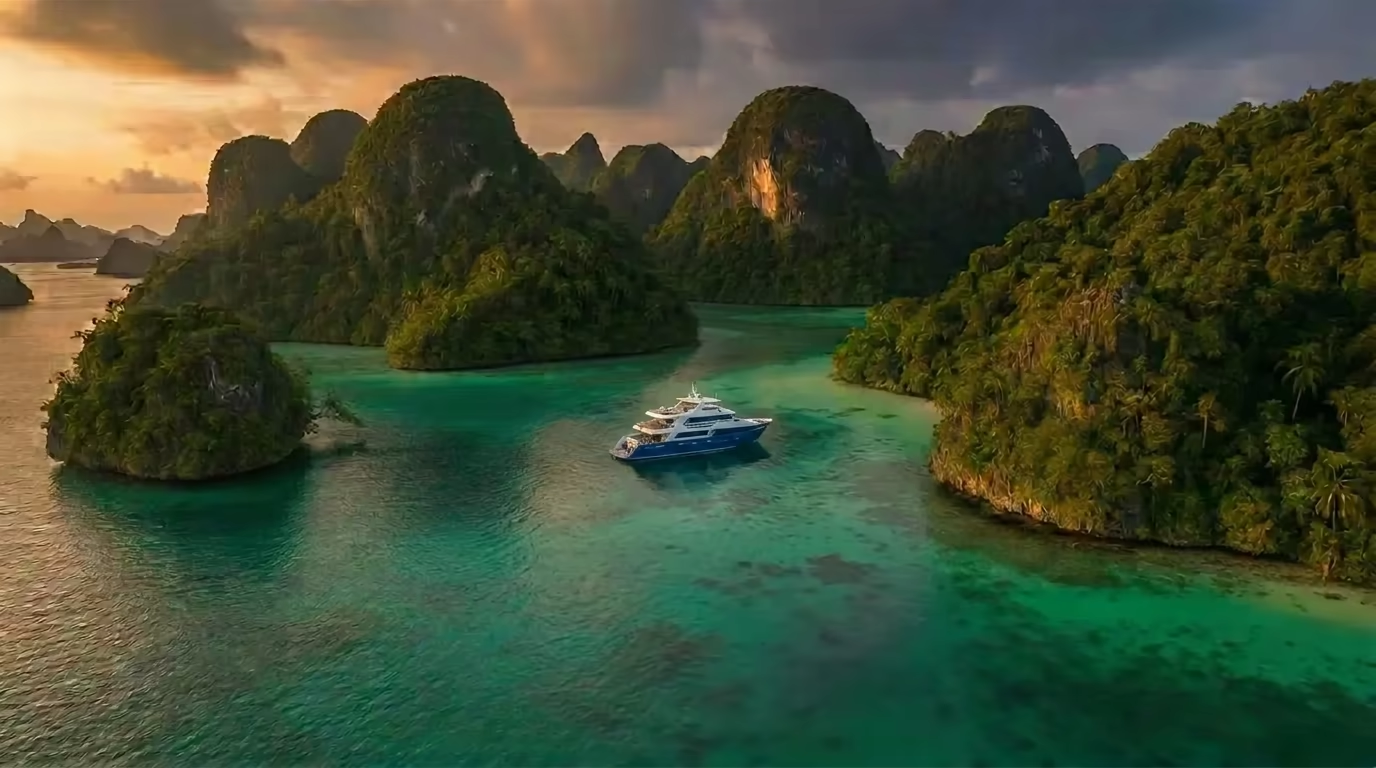
When it comes to truly extraordinary liveaboard expeditions, Antarctica and the Galápagos Islands stand as titans, each offering a dive experience unlike any other on Earth. Both destinations promise unparalleled wildlife encounters and breathtaking landscapes, but they cater to very different types of adventurers and divers. Understanding these distinctions is crucial for planning your dream trip.
Antarctica beckons with its pristine, icy wilderness, offering a chance to witness majestic icebergs, curious penguins, and a surprisingly vibrant cold-water ecosystem. It's a destination for the truly intrepid, where the elements play a significant role and every moment feels like an exploration into the unknown.
Conversely, the Galápagos Islands, a UNESCO World Heritage site, are a living laboratory of evolution, renowned for their fearless and endemic species both above and below the waves. Here, divers can expect exhilarating drifts through strong currents, surrounded by schooling hammerheads, manta rays, and a myriad of unique marine life in warmer, more accessible waters. This comparison will help you navigate the unique appeals and practical considerations of these two iconic liveaboard destinations.
| Antarctica | Galápagos |
|---|---|
| Best Season | |
| November - March (Austral Summer) | June - December (Cooler, nutrient-rich water) |
| Top Marine Life | |
| Leopard seals, Weddell seals, Crabeater seals, Gentoo penguins, Chinstrap penguins, Adelie penguins, Orcas, Humpback whales, Minke whales | Hammerhead sharks, Galápagos sharks, Whale sharks, Manta rays, Eagle rays, Marine iguanas, Galápagos sea lions, Sunfish (Mola Mola), Galápagos penguins |
| Trip Length & Price (USD) | |
| 10-14 days; $10,000 - $30,000+ | 7-10 days; $5,000 - $12,000+ |
| Experience Level | |
| Advanced (Dry suit certification highly recommended, 50+ dives) | Intermediate to Advanced (Comfortable with currents, 50+ dives recommended) |
| Access | |
| Fly to Ushuaia, Argentina, then cruise across Drake Passage | Fly to Quito or Guayaquil, Ecuador, then connect to Baltra (GPS) or San Cristóbal (SCY) |
| Visibility & Water Temp | |
| 10-30m (30-100ft); -1°C - 2°C (28-36°F) | 10-25m (30-80ft); 18°C - 24°C (65-75°F) |
| Currents/Difficulty | |
| Calm to moderate, often shore dives or ice dives. Cold is main challenge. | Strong to very strong currents, often drift dives. Advanced buoyancy control essential. |
| Liveaboard Fleet Size | |
| Limited, specialized expedition vessels (approx. 10-15 dedicated dive liveaboards) | Moderate, diverse fleet (approx. 20-30 dedicated dive liveaboards) |
Diving in Antarctica is an extreme sport, requiring specialized gear and training. A dry suit is mandatory, along with appropriate thermal undergarments, thick gloves, and a hood. Dives are typically shallow, often around 10-20 meters, focusing on the unique macro life, kelp forests, and ice formations. The primary challenge is managing the extreme cold and the logistical demands of diving in such a remote environment. Most operators require a dry suit certification and a significant number of logged dives (typically 50+) before embarking.
Galápagos diving, while not as cold, presents its own set of challenges, primarily strong and unpredictable currents. Divers must be proficient in drift diving techniques and comfortable with negative entries. A 5mm or 7mm wetsuit is generally recommended due to thermoclines and cooler water during the optimal season. Some operators may require a minimum of 50-75 logged dives. While not as gear-intensive as Antarctica, reliable and well-maintained equipment is crucial for safety and enjoyment in these dynamic waters.
Antarctica is a wildlife photographer's dream, both underwater and on land. While diving, you might encounter playful leopard seals, curious Weddell seals, various penguin species (Gentoo, Chinstrap, Adélie) swimming alongside you, and vibrant invertebrate life on the seafloor. Above water, the sheer abundance of penguins, seals, and whales (Humpback, Minke, Orca) in their natural, untouched habitat is truly awe-inspiring. Zodiac cruises offer intimate encounters with icebergs and wildlife.
Galápagos offers an unparalleled density of unique and endemic species. Underwater, the main draw is the large pelagic action: massive schools of hammerhead sharks, Galápagos sharks, and the majestic whale shark (seasonal). Manta rays, eagle rays, and playful sea lions are common companions. On land, iconic creatures like marine iguanas, giant tortoises, and blue-footed boobies are easily observed, often showing little fear of humans, a testament to their isolated evolution. Liveaboards often combine dive excursions with land visits to maximize these unique encounters.
Getting to Antarctica involves a significant journey, typically flying into Ushuaia, Argentina, and then enduring the infamous Drake Passage crossing (2 days each way) to reach the Antarctic Peninsula. This passage can be rough, adding to the expeditionary feel. Liveaboard itineraries usually range from 10 to 14 days, with some longer options. Booking well in advance (12-18 months) is essential due to limited capacity and high demand.
For the Galápagos, you'll fly into mainland Ecuador (Quito or Guayaquil) and then take a domestic flight to Baltra (for northern islands like Darwin and Wolf) or San Cristóbal. Liveaboard trips are generally 7 to 10 days, focusing on the prime dive sites. While less remote than Antarctica, Galápagos travel still requires careful planning, including national park fees and specific liveaboard permits. Peak season bookings also require advance reservations, often 6-12 months out.
Both destinations represent a significant investment, but the cost per day and overall experience differ. Antarctica liveaboards are typically more expensive due to the specialized nature of the vessels, the extended travel time, and the extreme logistical challenges of operating in such a remote environment. The comprehensive nature of an Antarctic expedition, including lectures, land excursions, and often kayaking or paddleboarding, contributes to its premium price point.
Galápagos liveaboards, while still premium, generally offer a lower entry point. The shorter itineraries and slightly less specialized vessel requirements contribute to this. However, the value lies in the sheer density and uniqueness of marine life encountered on nearly every dive, often delivering an unparalleled pelagic experience. Both destinations offer incredible value for the right traveler, with the choice often coming down to personal preference for cold-water wilderness versus warm-water biodiversity.
Choosing between an Antarctica and a Galápagos liveaboard depends entirely on your diving preferences, experience, and appetite for adventure. If you dream of an unparalleled expedition into a frozen wilderness, where the challenge of cold-water diving is met with awe-inspiring ice formations and intimate encounters with seals and penguins, Antarctica is your calling. It's a journey for the truly intrepid, demanding specialized gear and a significant budget, but promising a once-in-a-lifetime experience.
Conversely, if your passion lies in high-octane pelagic action, navigating strong currents amidst massive schools of hammerheads, whale sharks, and playful sea lions in warmer, yet still challenging, waters, then the Galápagos Islands await. It offers a unique blend of underwater thrills and iconic terrestrial wildlife. Both destinations deliver world-class diving and unforgettable memories, but one offers the raw majesty of the poles, while the other showcases the vibrant, evolutionary marvels of the tropics. Consider your comfort with cold, your current diving skill set, and your wildlife priorities to make the perfect choice for your next Blue Rides adventure.
No, a dry suit is not typically required. A 5mm or 7mm wetsuit is generally sufficient due to varying water temperatures and thermoclines, especially during the cooler season.
The best time to see whale sharks in the Galápagos is typically from June to December, during the cooler, nutrient-rich season when they aggregate around Darwin and Wolf Islands.
Diving in Antarctica is considered an advanced activity due to the extreme cold and remote location. However, professional liveaboard operators prioritize safety with experienced guides and strict protocols.
Neither destination is recommended for beginner divers. Both require at least an advanced open water certification and significant cold-water or strong current experience, respectively.
In Antarctica, it's typically 1-2 dives per day, often interspersed with land excursions and Zodiac cruises. In Galápagos, it's usually 3-4 dives per day, focusing heavily on underwater exploration.
Yes, many Galápagos dive liveaboards include guided land excursions to witness the unique terrestrial wildlife, such as giant tortoises and marine iguanas, in addition to diving.
The Drake Passage, between South America and Antarctica, is notorious for its rough seas, earning it the nickname 'Drake Shake.' However, it can also be calm, known as the 'Drake Lake.'
Minimum age requirements vary by operator, but generally, divers must be 15-18 years old and meet all certification and experience prerequisites.
Browse our handpicked liveaboards and find your perfect dive adventure.