Bluerides – Blue Rides - Boka dykkryssningar över hela världenOCEAN ADVENTURES
River CruisesRiversNature & WildlifeOur Promise
River CruisesRiversNature & WildlifeOur PromiseLogga in

Flodresmål

  • Flodresmål
  • Amazonas
  • Donau
  • Rhen
  • Mekong
  • Nilen

Fartyg och avgångar

  • Sök flodkryssning
  • Erbjudanden

Natur och djurliv

  • Natur och djurliv

Resesupport

  • Vårt löfte
  • Kontakt

Kontakt

Ta kontakt

Hör av dig när som helst, vi hjälper dig gärna med resan eller dina frågor.

E-postSkriv till oss, vi svarar oftast inom några timmar.
contact@bluerides.com
WhatsAppSkriv till oss på WhatsApp, mån–fre 10:00–16:00 (CET).
Starta WhatsApp-chatt
TelefonRing oss, vi hjälper dig gärna.
Gratis samtal, mån–fre 10:00–20:00 (CET).
Europa+49 800 1144 990USA+1 888 557 7735Storbritannien+44 800 707 4152Australien+61 2 8599 6113Kanada+1 888 557 7735
Which river journey is yours?Answer 8 quick questions and find the river cruise that fits you.
8 questions, 1 minute·Plus Gift
Säkra betalningsmetoderDina betalningar är helt säkrade med AES-256-kryptering.
Drivs avStripeWiseAMEXPayGoogle PaySEPABank
Impressum·Villkor·Integritetspolicy·Om oss·Kontakt·Ansvarsfriskrivning·Partnerprogram·Cruise·
Följ oss här

© 2026 Blue Rides. Alla rättigheter förbehållna.·

Bluerides – Blue Rides - Boka dykkryssningar över hela världenOCEAN ADVENTURES
River CruisesRiversNature & WildlifeOur Promise
River CruisesRiversNature & WildlifeOur PromiseLogga in
Eurasian coot i våtmark — Rhine, Seine, Nile, djurliv på flodkryssningar
Hem›River Cruises›River Wildlife›Eurasian Coot

Eurasian CootFulica atraVar och när du kan se dem

Previous speciesEurasian BeaverNext speciesEurasian Curlew

Eurasian Coot at a glance

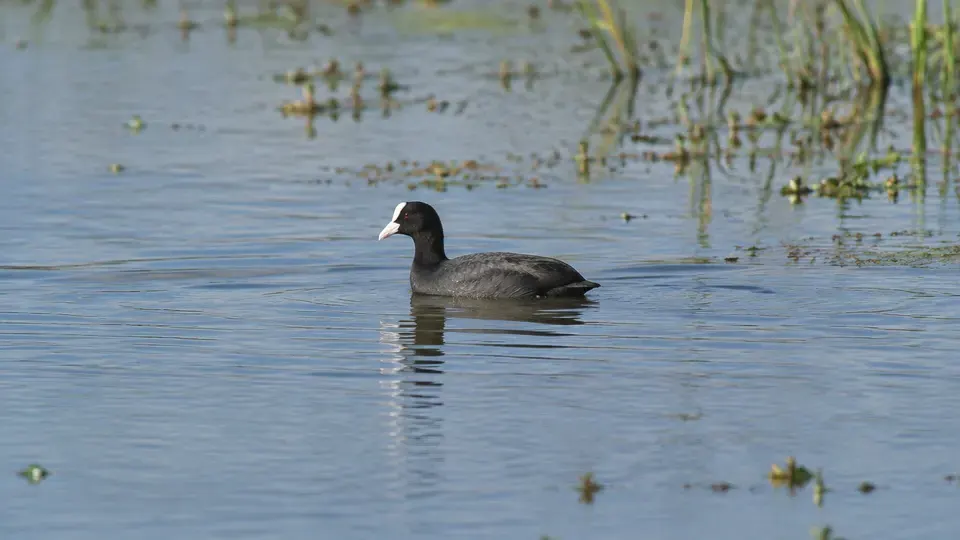
The Eurasian Coot is a widespread waterbird belonging to the rail family, rather than the duck family. Its dark plumage, white bill and white forehead shield make adults distinctive on open water. Its range extends across much of Europe and Asia into parts of Africa and Australasia. Along the Douro, Rhine, Saône and Seine, suitable backwaters, reservoirs and nearby wetlands provide habitat. It also occurs in the Nile region, where wetlands can support wintering birds.

Behaviour & reproduction

Size
36–42 cm long, with a wingspan of approximately 70–80 cm.
Weight
Usually 600–1,200 g, with males generally heavier than females.
Lifespan
Can live for more than 20 years in the wild, although most individuals live much shorter lives.
Status
Least Concern (IUCN).

Coots swim confidently, often moving their heads backwards and forwards as they travel. They feed at the surface, upend in shallow water and dive to reach submerged food. During the breeding season, pairs defend territories vigorously against other coots and sometimes other waterbirds. Disputes can involve chasing, splashing and fighting with their feet. Both adults help build a nest of plant material, usually among waterside vegetation or supported above shallow water. The chicks leave the nest soon after hatching but continue to receive food and protection from their parents. Outside the breeding season, coots often gather in flocks, and birds from colder regions may migrate to milder waters.

Top wildlife locations

Flodlandskap Rhine — livsmiljö på flodkryssningar

Rhine

Records refer to named Upper/Middle/Lower Rhine birding sites and optional riverside, vineyard or floodplain excursions. Several ducks are winter visitors; no animal is guaranteed on every Basel–Amsterdam sailing.


Explore river cruises
Flodlandskap Seine — livsmiljö på flodkryssningar

Seine

Bird records cover the Grande Noë floodplain reserve, lower-Seine marshes and the estuary. These are shore/wetland outings, not universal deck sightings; estuary birds require the appropriate lower-river itinerary. Winter visitors are clearly noted.

Explore river cruises
Flodlandskap Nile — livsmiljö på flodkryssningar

Nile

Birds are documented by a historical March Luxor–Aswan cruise report, with local reeds, riverbanks and nearby shore stops. These are occurrence records, not current sighting rates. No Nile crocodiles, hippos or Lake Nasser fauna are advertised.

Explore river cruises

Destinations describe the species' habitat, not guaranteed cruise stops. Some animals require an optional inland excursion or are found in restricted reserves.

Fun facts about the Eurasian Coot

  • Each toe has separate fleshy lobes that help propel the bird through water.
  • Coots belong to the same family as rails and crakes, not ducks.
  • Newly hatched chicks have conspicuous reddish-orange feathers around the head.
  • Taking flight from water often involves a running, splashing takeoff.

Best time to see the Eurasian Coot

Wildlife opportunities depend on the river reach, water levels and species. River-specific viewing months have not been confirmed; general species seasons are not a local sighting forecast.

Eurasian Coot: season matrix by destination

Travel and observation windows vary by region. Highlighted months are an orientation for planning, not confirmed sightings or a guarantee of access.

Rhine

No river-specific wildlife calendar is confirmed. Check the actual river reach, local conditions and excursion access with your operator.

jan.feb.marsapr.majjunijuliaug.sep.okt.nov.dec.
Explore river cruises

Seine

No river-specific wildlife calendar is confirmed. Check the actual river reach, local conditions and excursion access with your operator.

jan.feb.marsapr.majjunijuliaug.sep.okt.nov.dec.
Explore river cruises

Nile

No river-specific wildlife calendar is confirmed. Check the actual river reach, local conditions and excursion access with your operator.

jan.feb.marsapr.majjunijuliaug.sep.okt.nov.dec.
Explore river cruises

Where the Eurasian Coot lives

Eurasian Coots favour still or slow-moving water, particularly where aquatic plants provide food and nesting cover. They occupy lakes, ponds, reservoirs, marshes, canals and sheltered river margins. On large rivers, quieter side channels and connected wetlands are generally more suitable than fast-flowing stretches. They also use brackish lagoons and other sheltered coastal waters, especially outside the breeding season. Urban waters can support coots where suitable feeding and nesting conditions remain available.

What the Eurasian Coot eats

Aquatic vegetation, including leaves, shoots and seeds, forms a substantial part of the diet. Coots also take algae and graze on grasses beside the water. They supplement plant food with insects, snails, small crustaceans and other aquatic animals. Food is collected by pecking at the surface, reaching into shallow water or diving.

Species at a glance

Common name
Eurasian Coot
Scientific name
Fulica atra
Animal group
Birds
Size
36–42 cm long, with a wingspan of approximately 70–80 cm.
Weight
Usually 600–1,200 g, with males generally heavier than females.
Lifespan
Can live for more than 20 years in the wild, although most individuals live much shorter lives.
Status
Least Concern (IUCN).
Identification
Adults have a rounded, dark grey to black body, a black head, a white bill and a white frontal shield. Their eyes are red, and their large grey-green feet have lobed toes rather than fully webbed feet. Juveniles are browner and paler, with a whitish face and throat and a less developed frontal shield. Common Moorhens differ in having a red bill with a yellow tip, a white flank line and conspicuous white markings beneath the tail.

Eurasian Coot: frequently asked questions

Where can I see the Eurasian Coot?
Rhine, Seine, Nile. From a river ship, scan sheltered margins, reed edges and backwaters with binoculars rather than trying to approach birds closely. On excursions, remain on established paths and give nests and families plenty of space. If birds stop feeding, retreat or give repeated alarm calls, increase your distance. Avoid feeding coots, and follow local guidance around protected wetlands.
When is the best time to see the Eurasian Coot?
Ask about the specific river reach and shore excursion. No local monthly sighting calendar is confirmed.
How big does the Eurasian Coot get?
36–42 cm long, with a wingspan of approximately 70–80 cm.. Adult weight: Usually 600–1,200 g, with males generally heavier than females.. Size varies with age, sex and population.
How should I behave around the Eurasian Coot?
From a river ship, scan sheltered margins, reed edges and backwaters with binoculars rather than trying to approach birds closely. On excursions, remain on established paths and give nests and families plenty of space. If birds stop feeding, retreat or give repeated alarm calls, increase your distance. Avoid feeding coots, and follow local guidance around protected wetlands.
What does the Eurasian Coot eat?
Aquatic vegetation, including leaves, shoots and seeds, forms a substantial part of the diet. Coots also take algae and graze on grasses beside the water. They supplement plant food with insects, snails, small crustaceans and other aquatic animals. Food is collected by pecking at the surface, reaching into shallow water or diving.
Are wildlife sightings guaranteed on a river cruise?
No. Animals move freely and routes, weather, access restrictions and local conditions influence every outing. Confirm the actual itinerary and shore program before booking.

Compare wildlife in the same destinations

Explore other birds recorded in these destinations. Similar surroundings do not mean the animals share the same habits or viewing season.

Species comparison by animal group and destination
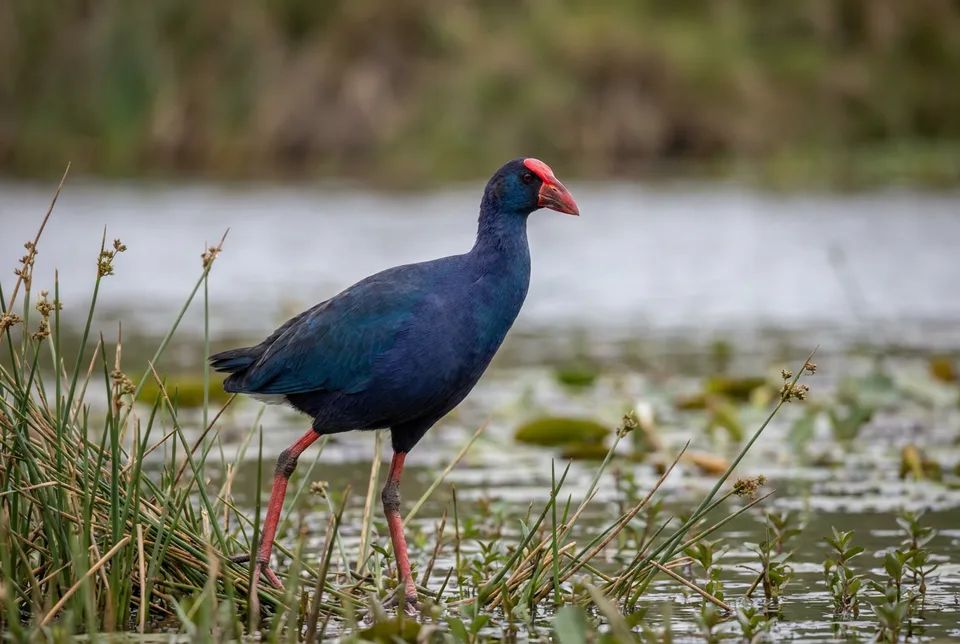
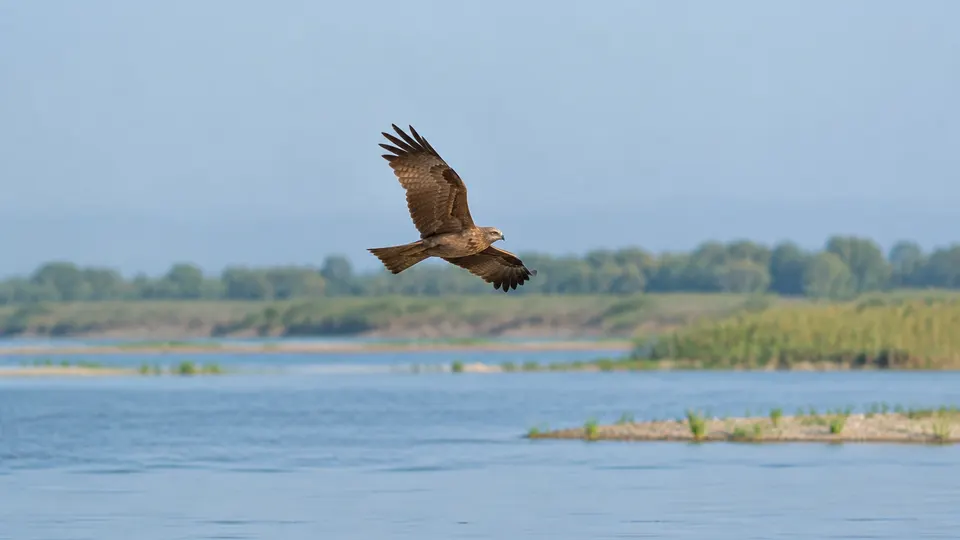
Eurasian coot i våtmark — Rhine, Seine, Nile, djurliv på flodkryssningarEurasian CootAfrikansk purpurhöna i våtmark — Nilen, Egypten, djurliv på flodkryssningarAfrican SwamphenBlack kite i våtmark — Danube, Rhine, djurliv på flodkryssningarBlack Kite
Animal groupBirdsAnimal groupBirdsAnimal groupBirds
DestinationsRhine, Seine, NileDestinationsNileDestinationsDanube, Rhine
Previous speciesEurasian BeaverNext speciesEurasian Curlew
All river wildlife
On this page
  • 01About
  • 02Behaviour & reproduction
  • 03Top wildlife locations
  • 04Fun facts
  • 05Best season
  • 06Season matrix by destination
  • 07Habitat
  • 08Diet
  • 09Species at a glance
  • 10Questions & answers
  • 11Compare

Find your river cruise

Planera din resa

Find your next river journey

Compare destinations, shore programs and dates with the animals and habitats you would love to see.

  • Daily shore excursions
  • Responsible wildlife watching
  • Boutique river ships
Explore river cruises