Bluerides – Blue Rides - Book Liveaboards worldwideOCEAN ADVENTURES
River CruisesRiversNature & WildlifeOur Promise
River CruisesRiversNature & WildlifeOur PromiseSign In

River destinations

  • River destinations
  • Amazon
  • Danube
  • Rhine
  • Mekong
  • Nile

Ships & departures

  • River Cruise Search
  • Deals

Nature & Wildlife

  • Nature & Wildlife

Travel support

  • Our Promise
  • Contact

Contact

Get in Touch

Get in touch anytime, we're happy to help you find the right trip or sort out any question.

EmailWrite us, we usually reply within a few hours.
contact@bluerides.com
WhatsAppChat with us on WhatsApp, Mon–Fri 10:00–16:00 (CET).
Start WhatsApp Chat
PhoneCall us, we're happy to help.
Free call, Mon–Fri 10 AM – 8 PM (CET).
Europe+49 800 1144 990USA+1 888 557 7735UK+44 800 707 4152Australia+61 2 8599 6113Canada+1 888 557 7735
Which river journey is yours?Answer 8 quick questions and find the river cruise that fits you.
8 questions, 1 minute·Plus Gift
Secure Payment MethodsYour payments are fully secured with AES-256 encryption.
Powered byStripeWiseAMEXPayGoogle PaySEPABank
Imprint·Terms & Conditions·Privacy Policy·About·Contact·Liability Waiver·Affiliate Program·Cruise·Blog·
Visit us here

© 2026 Blue Rides. All rights reserved.

Bluerides – Blue Rides - Book Liveaboards worldwideOCEAN ADVENTURES
River CruisesRiversNature & WildlifeOur Promise
River CruisesRiversNature & WildlifeOur PromiseSign In
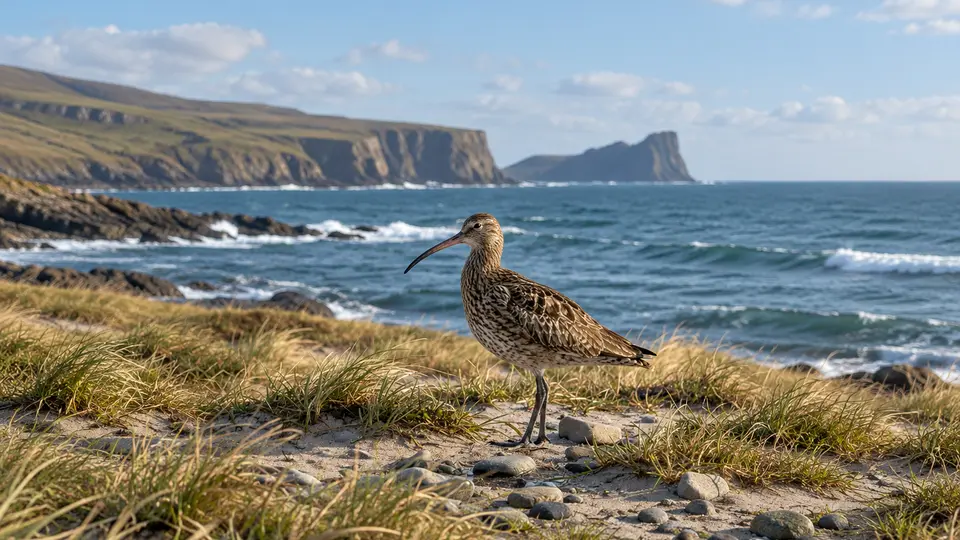
Eurasian curlew in wetland habitat — Douro, River Cruises wildlifeAI-modified
Home›River Cruises›River Wildlife›Eurasian Curlew

Eurasian CurlewNumenius arquataWhere and when to see them

Previous speciesEurasian Crag MartinNext speciesEurasian Nuthatch

Eurasian Curlew at a glance

The Eurasian curlew connects two very different landscapes: open breeding country and productive coastal feeding grounds. Its survival depends on both, rather than on a single protected nesting site. Rough pasture, moorland and bog offer nesting space, while estuarine mud and adjacent grassland sustain birds outside breeding. The long curved bill is a feeding tool for finding buried animals, not simply an ornamental identification feature. Females average larger than males, and differences in bill length can influence which prey they reach. The species is a ground-nesting wader whose mobile young leave the nest before they can fly. Consequently, successful hatching is only the beginning of the vulnerable chick-rearing period. Here its Douro association belongs specifically to the estuary at Porto and Vila Nova de Gaia, where coastal feeding ecology is relevant; it does not describe the inland vineyard reaches.

Behaviour & reproduction

Size
Species-specific measurement not verified in retrieved sources
Weight
Species-specific weight not verified
Lifespan
Species-specific lifespan not verified
Status
See sourced assessment

Curlews change from relatively dispersed breeding pairs to communal coastal flocks. On breeding grounds, bubbling display calls and aerial activity advertise territories; repeated alarm calls later in the season can indicate adults attending young. A solitary feeding adult need not be unattached: BTO notes that an off-duty parent may travel well away from its nest to forage. Eggs are laid in a ground scrape, normally in a clutch of four. Incubation lasts roughly four weeks. Down-covered chicks then leave the scrape and move through vegetation with their parents, taking another month or more to become airborne. Their ability to walk should not be confused with independence from adult protection. Outside breeding, the rhythm changes to feeding on exposed flats and moving together to secure roosting ground as the tide rises. Those estuarine movements are the behaviour most relevant to a Douro visit.

Top wildlife locations

Douro river landscape — River Cruises wildlife habitatAI-modified

Douro

Porto / Vila Nova de Gaia: Douro estuary reserve, Afurada–Cabedelo–São Paio; NOT a claim for inland Régua–Pinhão

Explore river cruises

Destinations describe the species' habitat, not guaranteed cruise stops. Some animals require an optional inland excursion or are found in restricted reserves.

Fun facts about the Eurasian Curlew

  • Ground scrapes normally hold four eggs.
  • Chicks leave the scrape before they can fly.
  • The chick-rearing period continues for roughly a month after hatching.
  • Off-duty breeding adults may travel far to feed.
  • Females average larger and longer-billed than males.
  • Coastal feeding flocks need separate high-water roosts.
  • Grassland feeding includes earthworms and insects.
  • Intertidal feeding includes buried worms and crustaceans.
  • Whimbrel has a more strongly striped crown.

Best time to see the Eurasian Curlew

For the Douro entry, the ecological emphasis is on nonbreeding estuarine use, not on the spring display of northern moorland birds. Curlews move between breeding landscapes and coastal wintering areas, but the proportions of residents, passage birds and winter visitors differ across Europe. British influxes from Fennoscandia documented by BTO cannot supply a Portuguese arrival calendar. The retained Douro source establishes an estuary association without providing a verified species-specific sequence of local monthly counts. Accordingly, no numbered viewing months are assigned. For planning within a visit, the tidal cycle is more actionable than a broad season label: exposed feeding ground and access to a high-water roost determine where birds may be visible. A current reserve report could refine the seasonal picture, but a single historical occurrence would still not establish abundance or a guaranteed return period.

Eurasian Curlew: season matrix by destination

Highlighted months reflect the stated local evidence, not guaranteed encounters. Neutral months mean no verified monthly viewing window, not absence. Observation records and recommended viewing windows are distinct.

Douro

Exact local species-specific monthly viewing evidence has not been verified; no monthly calendar is inferred.

JanFebMarAprMayJunJulAugSepOctNovDec
Explore river cruises

Where the Eurasian Curlew lives

A useful curlew feeding flat has accessible sediment, not merely water nearby. Soft mud and mixed intertidal surfaces expose buried prey when the tide falls; saltmarsh edges and adjoining damp farmland provide additional feeding options. As rising water covers the flats, birds need an undisturbed place above the tideline in which to rest. Feeding and roosting areas therefore form a linked habitat unit, even if a visitor sees only one of them. Breeding habitat is different: rough grassland, heather moor, wet pasture and bog provide open ground with vegetation in which nests and chicks can remain concealed. These breeding descriptions are general biology, not evidence of nesting beside the Douro. Within the registered Porto–Gaia estuary reach, concentrate on the mudflat–saltmarsh interface and nearby open shore rather than deep navigation channels, wooded banks or the steep inland river valley.

What the Eurasian Curlew eats

Curlews eat animal prey obtained both from the sediment surface and from beneath it. Worms, small crustaceans and molluscs are important on the shore; earthworms and terrestrial insects become relevant on grassland. The long bill allows a bird to probe below the surface while also picking up exposed items. A feeding sequence may include short steps, repeated insertions of the bill, a pause and the extraction of a prey item that was invisible to the observer. Different bill lengths mean that all members of a flock need not exploit exactly the same feeding opportunities. Tide and sediment condition affect access to food: a rich flat covered by deep water is temporarily unavailable. On the Douro, watch the exposed substrate rather than expecting a curlew to feed like a fish-catching heron in the main channel. Identification of individual prey usually requires close optical views.

Species at a glance

Common name
Eurasian Curlew
Scientific name
Numenius arquata
Animal group
Birds
Size
Species-specific measurement not verified in retrieved sources
Weight
Species-specific weight not verified
Lifespan
Species-specific lifespan not verified
Status
Current global category not independently verified; regional conservation statements must not be presented as a global assessment.
Identification
The combination of large size, mottled brown upperparts and a very long downward-curving bill is the strongest starting point. In flight, look for a conspicuous white rump contrasting with the darker back and outer wing. The bubbling voice is helpful but should be used alongside shape, especially when a distant bird is heard without being seen. Whimbrel is the important comparison: it has a shorter bill and a more strongly striped crown, whereas curlew generally looks larger and plainer-headed. Females tend to be larger and longer-billed than males, but there is overlap, so a single distant bird cannot reliably be sexed from apparent bill length. Young birds can look shorter-billed than full-grown adults. A folded-neck resting bird hides much of the most useful feature; wait for it to lift its head rather than identifying it from brown plumage alone.

Eurasian Curlew: frequently asked questions

Where can I see the Eurasian Curlew?
Douro. From an established viewpoint overlooking the Porto–Gaia flats, first scan the largest exposed areas for tall brown waders feeding with deliberate steps. Use a telescope to follow one bird through several probes; the change from searching to extracting prey is more informative than a still silhouette. As water advances, check where birds walk or fly rather than following them across the shore. A gathering at high tide may be a resting flock, not a feeding hotspot. Compare the bill and head pattern with any smaller curlews present, since whimbrel can be overlooked in a distant group. Listen for the characteristic voice during flights between patches. Record whether the bird was feeding, roosting or simply crossing the estuary, and keep the observation attached to the Porto–Vila Nova de Gaia reach rather than extending it to Régua or Pinhão.
When is the best time to see the Eurasian Curlew?
For the Douro entry, the ecological emphasis is on nonbreeding estuarine use, not on the spring display of northern moorland birds. Curlews move between breeding landscapes and coastal wintering areas, but the proportions of residents, passage birds and winter visitors differ across Europe. British influxes from Fennoscandia documented by BTO cannot supply a Portuguese arrival calendar. The retained Douro source establishes an estuary association without providing a verified species-specific sequence of local monthly counts. Accordingly, no numbered viewing months are assigned. For planning within a visit, the tidal cycle is more actionable than a broad season label: exposed feeding ground and access to a high-water roost determine where birds may be visible. A current reserve report could refine the seasonal picture, but a single historical occurrence would still not establish abundance or a guaranteed return period.
How big does the Eurasian Curlew get?
Species-specific measurement not verified in retrieved sources. Adult weight: Species-specific weight not verified. Size varies with age, sex and population.
How should I behave around the Eurasian Curlew?
From an established viewpoint overlooking the Porto–Gaia flats, first scan the largest exposed areas for tall brown waders feeding with deliberate steps. Use a telescope to follow one bird through several probes; the change from searching to extracting prey is more informative than a still silhouette. As water advances, check where birds walk or fly rather than following them across the shore. A gathering at high tide may be a resting flock, not a feeding hotspot. Compare the bill and head pattern with any smaller curlews present, since whimbrel can be overlooked in a distant group. Listen for the characteristic voice during flights between patches. Record whether the bird was feeding, roosting or simply crossing the estuary, and keep the observation attached to the Porto–Vila Nova de Gaia reach rather than extending it to Régua or Pinhão.
What does the Eurasian Curlew eat?
Curlews eat animal prey obtained both from the sediment surface and from beneath it. Worms, small crustaceans and molluscs are important on the shore; earthworms and terrestrial insects become relevant on grassland. The long bill allows a bird to probe below the surface while also picking up exposed items. A feeding sequence may include short steps, repeated insertions of the bill, a pause and the extraction of a prey item that was invisible to the observer. Different bill lengths mean that all members of a flock need not exploit exactly the same feeding opportunities. Tide and sediment condition affect access to food: a rich flat covered by deep water is temporarily unavailable. On the Douro, watch the exposed substrate rather than expecting a curlew to feed like a fish-catching heron in the main channel. Identification of individual prey usually requires close optical views.
Are wildlife sightings guaranteed on a river cruise?
No. Animals move freely and routes, weather, access restrictions and local conditions influence every outing. Confirm the actual itinerary and shore program before booking.

Compare wildlife in the same destinations

Explore other birds recorded in these destinations. Similar surroundings do not mean the animals share the same habits or viewing season.

Species comparison by animal group and destination
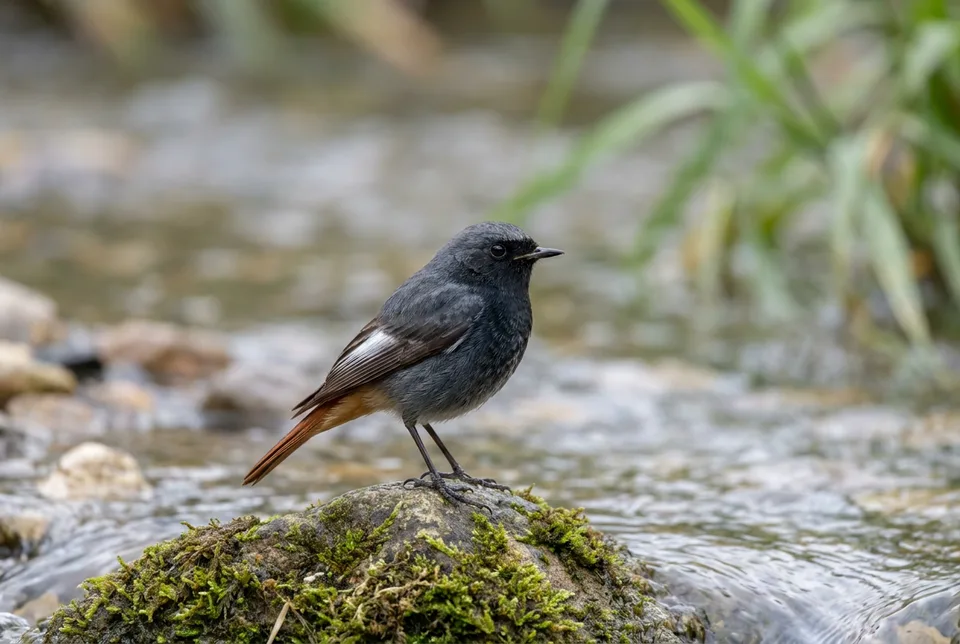
Eurasian curlew in wetland habitat — Douro, River Cruises wildlifeAI-modifiedEurasian CurlewBar-tailed godwit in wetland habitat — Douro, River Cruises wildlifeAI-modifiedBar-tailed godwitBlack Redstart in wetland habitat — Saone, Douro, River Cruises wildlifeAI-modifiedBlack Redstart
Animal groupBirdsAnimal groupBirdsAnimal groupBirds
DestinationsDouroDestinationsDouroDestinationsSaone, Douro
Scientific name
Numenius arquata
Scientific name
Scientific name
Previous speciesEurasian Crag MartinNext speciesEurasian Nuthatch
All river wildlife
On this page
  • 01About
  • 02Behaviour & reproduction
  • 03Top wildlife locations
  • 04Fun facts
  • 05Best season
  • 06Season matrix by destination
  • 07Habitat
  • 08Diet
  • 09Species at a glance
  • 10Questions & answers
  • 11Compare

Find your river cruise

AI-modified
Plan your trip

Find your next river journey

Compare destinations, shore programs and dates with the animals and habitats you would love to see.

  • Daily shore excursions
  • Responsible wildlife watching
  • Boutique river ships
Explore river cruises