Bluerides – Blue Rides - Boka dykkryssningar över hela världenOCEAN ADVENTURES
River CruisesRiversNature & WildlifeOur Promise
River CruisesRiversNature & WildlifeOur PromiseLogga in

Flodresmål

  • Flodresmål
  • Amazonas
  • Donau
  • Rhen
  • Mekong
  • Nilen

Fartyg och avgångar

  • Sök flodkryssning
  • Erbjudanden

Natur och djurliv

  • Natur och djurliv

Resesupport

  • Vårt löfte
  • Kontakt

Kontakt

Ta kontakt

Hör av dig när som helst, vi hjälper dig gärna med resan eller dina frågor.

E-postSkriv till oss, vi svarar oftast inom några timmar.
contact@bluerides.com
WhatsAppSkriv till oss på WhatsApp, mån–fre 10:00–16:00 (CET).
Starta WhatsApp-chatt
TelefonRing oss, vi hjälper dig gärna.
Gratis samtal, mån–fre 10:00–20:00 (CET).
Europa+49 800 1144 990USA+1 888 557 7735Storbritannien+44 800 707 4152Australien+61 2 8599 6113Kanada+1 888 557 7735
Which river journey is yours?Answer 8 quick questions and find the river cruise that fits you.
8 questions, 1 minute·Plus Gift
Säkra betalningsmetoderDina betalningar är helt säkrade med AES-256-kryptering.
Drivs avStripeWiseAMEXPayGoogle PaySEPABank
Impressum·Villkor·Integritetspolicy·Om oss·Kontakt·Ansvarsfriskrivning·Partnerprogram·Cruise·
Följ oss här

© 2026 Blue Rides. Alla rättigheter förbehållna.·

Bluerides – Blue Rides - Boka dykkryssningar över hela världenOCEAN ADVENTURES
River CruisesRiversNature & WildlifeOur Promise
River CruisesRiversNature & WildlifeOur PromiseLogga in
Oriental darter i våtmark — Mekong, djurliv på flodkryssningar
Hem›River Cruises›River Wildlife›Oriental darter

Oriental darterAnhinga melanogasterVar och när du kan se dem

Previous speciesNorthern ShovelerNext speciesOriental Pratincole

Oriental darter at a glance

The Oriental Darter is a long-necked diving bird often called a snakebird because so much of its body can remain submerged while the neck projects above water. Unlike a cormorant, it has a straight, pointed bill rather than a conspicuous terminal hook. Animal Diversity Web gives a general length of 85–90 centimetres. The registered Mekong location is Tra Su flooded forest, visited from Chau Doc, Vietnam. The forestry authority’s checklist names Darter there but supplies no current abundance estimate. BirdLife now lists the species as Least Concern in its 2024 assessment, so older Near Threatened labels should not be repeated unqualified: https://datazone.birdlife.org/species/factsheet/oriental-darter-anhinga-melanogaster. Source: https://animaldiversity.org/accounts/Anhinga_melanogaster/

Behaviour & reproduction

Size
85–90 cm (33.5–35.4 in) length; Animal Diversity Web.
Weight
Species-specific body mass not verified.
Lifespan
Species-specific lifespan not verified.
Status
Least Concern in BirdLife’s 2024 global assessment.

A swimming darter may show little more than its slender neck, then disappear into the water. Resting birds can spread their wings and reveal a much larger silhouette than the swimming profile suggests. Animal Diversity Web describes communal roosting near aquatic environments. That general habit does not establish a publicly accessible Tra Su colony or a fixed evening arrival time. Follow an individual’s natural surfacing and perching without steering towards it. The unusually long neck and pointed bill make a patient close optical view rewarding, but the bird should never be flushed merely to display its wings.

Top wildlife locations

Flodlandskap Mekong — livsmiljö på flodkryssningar

Mekong

Vietnam Mekong delta: Tra Su flooded forest, optional shore excursion from Chau Doc (not main-channel deck wildlife) Viewing context: Official 2016 BirdLife/IEBR survey checklist, not a current abundance claim. Boat/boardwalk/tower viewing; crakes, Watercock and coucals elusive. Migrant kingfishers, pond herons and waders seasonal.
Explore river cruises

Destinations describe the species' habitat, not guaranteed cruise stops. Some animals require an optional inland excursion or are found in restricted reserves.

Fun facts about the Oriental darter

  • It is also called a snakebird.
  • The bill is straight and pointed.
  • It has a very long neck.
  • Much of the swimming body can be submerged.
  • It has a long tail.
  • Resting birds can spread their wings.
  • BirdLife’s 2024 assessment is Least Concern.

Best time to see the Oriental darter

Tra Su’s official checklist documents Darter but gives no recurring monthly occurrence range. Its 2016 publication date cannot become a seasonal recommendation. BirdLife’s species-level description as non-migratory also does not establish permanent use of this individual forest. The Mekong location months array remains empty. Ask local staff about recent activity and authorised routes before planning a visit. Wetland conditions and visitor access may change, but climate alone is not evidence for a darter viewing season. A single dated sighting would add occurrence evidence without resolving the required recurring calendar.

Oriental darter: season matrix by destination

Highlighted months reflect the stated local evidence, not guaranteed encounters. Neutral months mean no verified monthly viewing window, not absence. Observation records and recommended viewing windows are distinct.

Mekong

The official Tra Su checklist documents historical occurrence, not monthly recurrence. Its April 2016 publication date does not establish an April viewing season.

jan.feb.marsapr.majjunijuliaug.sep.okt.nov.dec.
Explore river cruises

Where the Oriental darter lives

Trees and bamboo near water, together with water deep enough for diving and swimming, are the habitat context given by Animal Diversity Web. Rivers, ponds, lakes, marshes and estuaries can be used. Tra Su supplies a flooded-forest setting within that broader ecological range, but the checklist does not map roosting trees or feeding pools. A tower may reveal perched birds while a permitted boat route offers a different angle on open water. Neither establishes occupation of every forest section. Keep the cruise association restricted to this optional delta excursion rather than the whole Mekong main channel.

What the Oriental darter eats

Darters are aquatic predators, with fish central to their feeding ecology in the Animal Diversity Web account. Their pointed bill and underwater hunting distinguish them from birds that pick food off a bank. No Tra Su prey-species inventory, feeding frequency or diet proportions were verified. Do not transfer statistics from another darter species or wetland. A fish brought to the surface may still be impossible to identify from the visitor route. Watch natural handling without moving closer, and avoid baiting. The value of an observation lies in seeing an undisturbed hunting sequence, not forcing a visible capture.

Species at a glance

Common name
Oriental darter
Scientific name
Anhinga melanogaster
Animal group
Birds
Size
85–90 cm (33.5–35.4 in) length; Animal Diversity Web.
Weight
Species-specific body mass not verified.
Lifespan
Species-specific lifespan not verified.
Status
Least Concern in BirdLife’s 2024 global assessment.
Identification
Look for an exceptionally long, slender neck, long tail and straight spear-like bill. These features separate the darter from a cormorant with a hooked bill. The low swimming posture can hide the body almost completely, so neck shape alone may be all that is initially visible. A perched bird provides a better chance to assess the whole structure. Animal Diversity Web describes a long-tailed bird similar in overall size and shape to a cormorant, illustrating why distant silhouettes can be confusing. Wait for a clear side view and do not identify a dark swimming bird solely from the location.

Oriental darter: frequently asked questions

Where can I see the Oriental darter?
Mekong. Scan exposed branches and open water during an authorised Tra Su visit. A dark neck moving above the surface can initially resemble a snake, so check for the head and straight bill. From a tower, use binoculars or a telescope to inspect perched birds rather than approaching a roost by boat. Keep engines and conversation quiet where permitted routes pass wildlife. If birds straighten, turn repeatedly towards the boat or prepare to leave, increase the distance. This is an optional forest excursion from Chau Doc, not a guaranteed observation beside the cruise vessel.
When is the best time to see the Oriental darter?
Tra Su’s official checklist documents Darter but gives no recurring monthly occurrence range. Its 2016 publication date cannot become a seasonal recommendation. BirdLife’s species-level description as non-migratory also does not establish permanent use of this individual forest. The Mekong location months array remains empty. Ask local staff about recent activity and authorised routes before planning a visit. Wetland conditions and visitor access may change, but climate alone is not evidence for a darter viewing season. A single dated sighting would add occurrence evidence without resolving the required recurring calendar.
How big does the Oriental darter get?
85–90 cm (33.5–35.4 in) length; Animal Diversity Web.. Adult weight: Species-specific body mass not verified.. Size varies with age, sex and population.
How should I behave around the Oriental darter?
Scan exposed branches and open water during an authorised Tra Su visit. A dark neck moving above the surface can initially resemble a snake, so check for the head and straight bill. From a tower, use binoculars or a telescope to inspect perched birds rather than approaching a roost by boat. Keep engines and conversation quiet where permitted routes pass wildlife. If birds straighten, turn repeatedly towards the boat or prepare to leave, increase the distance. This is an optional forest excursion from Chau Doc, not a guaranteed observation beside the cruise vessel.
What does the Oriental darter eat?
Darters are aquatic predators, with fish central to their feeding ecology in the Animal Diversity Web account. Their pointed bill and underwater hunting distinguish them from birds that pick food off a bank. No Tra Su prey-species inventory, feeding frequency or diet proportions were verified. Do not transfer statistics from another darter species or wetland. A fish brought to the surface may still be impossible to identify from the visitor route. Watch natural handling without moving closer, and avoid baiting. The value of an observation lies in seeing an undisturbed hunting sequence, not forcing a visible capture.
Are wildlife sightings guaranteed on a river cruise?
No. Animals move freely and routes, weather, access restrictions and local conditions influence every outing. Confirm the actual itinerary and shore program before booking.

Compare wildlife in the same destinations

Explore other birds recorded in these destinations. Similar surroundings do not mean the animals share the same habits or viewing season.

Species comparison by animal group and destination
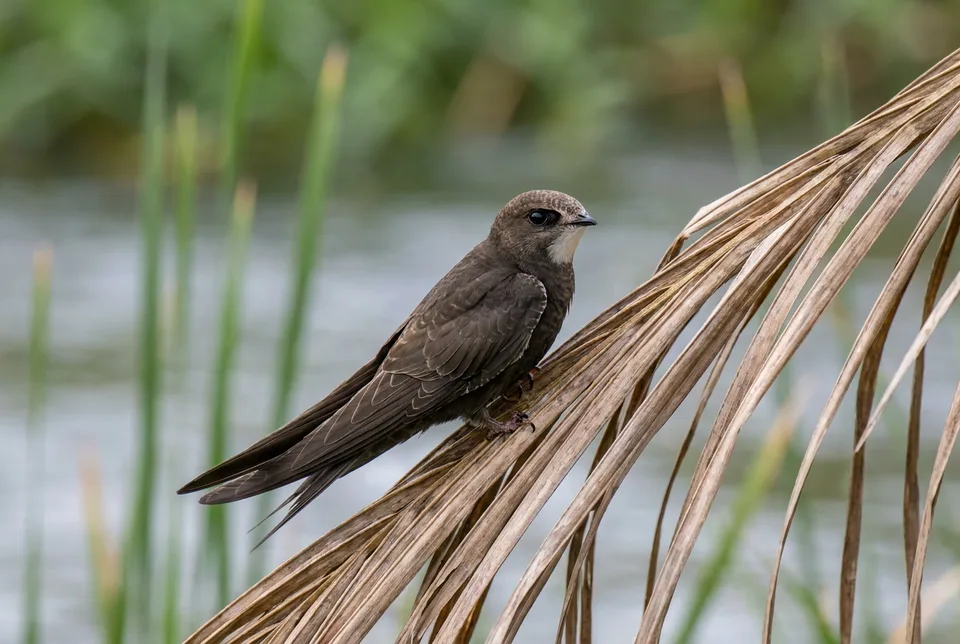
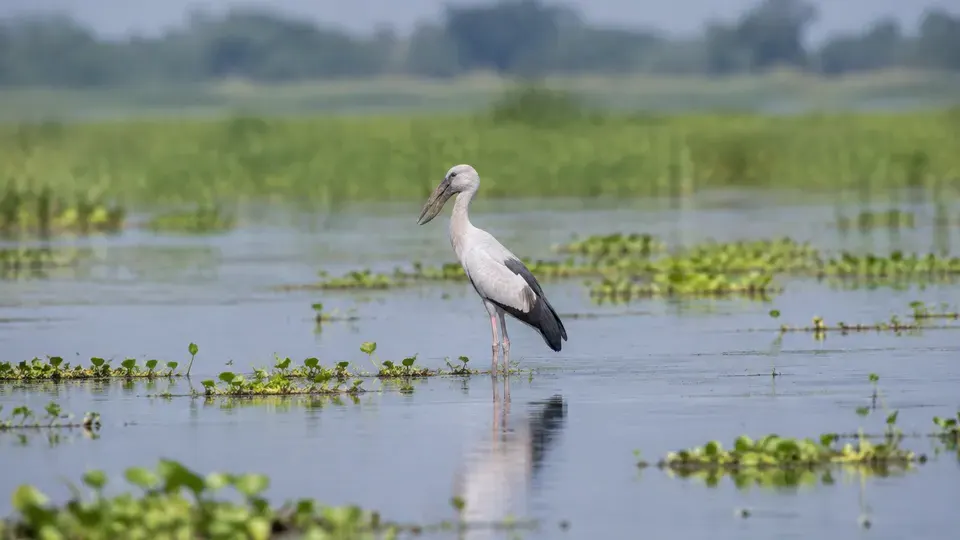
Oriental darter i våtmark — Mekong, djurliv på flodkryssningarOriental darterAsian openbill i våtmark — Mekong, djurliv på flodkryssningarAsian OpenbillAsian Palm Swift i våtmark — Mekong, djurliv på flodkryssningarAsian Palm Swift
Animal groupBirdsAnimal groupBirdsAnimal groupBirds
DestinationsMekongDestinationsMekongDestinationsMekong
Scientific name
Anhinga melanogaster
Scientific name
Scientific name
Previous speciesNorthern ShovelerNext speciesOriental Pratincole
All river wildlife
On this page
  • 01About
  • 02Behaviour & reproduction
  • 03Top wildlife locations
  • 04Fun facts
  • 05Best season
  • 06Season matrix by destination
  • 07Habitat
  • 08Diet
  • 09Species at a glance
  • 10Questions & answers
  • 11Compare

Find your river cruise

Planera din resa

Find your next river journey

Compare destinations, shore programs and dates with the animals and habitats you would love to see.

  • Daily shore excursions
  • Responsible wildlife watching
  • Boutique river ships
Explore river cruises