Bluerides – Blue Rides - Book Liveaboards worldwideOCEAN ADVENTURES
River CruisesRiversNature & WildlifeOur Promise
River CruisesRiversNature & WildlifeOur PromiseSign In

River destinations

  • River destinations
  • Amazon
  • Danube
  • Rhine
  • Mekong
  • Nile

Ships & departures

  • River Cruise Search
  • Deals

Nature & Wildlife

  • Nature & Wildlife

Travel support

  • Our Promise
  • Contact

Contact

Get in Touch

Get in touch anytime, we're happy to help you find the right trip or sort out any question.

EmailWrite us, we usually reply within a few hours.
contact@bluerides.com
WhatsAppChat with us on WhatsApp, Mon–Fri 10:00–16:00 (CET).
Start WhatsApp Chat
PhoneCall us, we're happy to help.
Free call, Mon–Fri 10 AM – 8 PM (CET).
Europe+49 800 1144 990USA+1 888 557 7735UK+44 800 707 4152Australia+61 2 8599 6113Canada+1 888 557 7735
Which river journey is yours?Answer 8 quick questions and find the river cruise that fits you.
8 questions, 1 minute·Plus Gift
Secure Payment MethodsYour payments are fully secured with AES-256 encryption.
Powered byStripeWiseAMEXPayGoogle PaySEPABank
Imprint·Terms & Conditions·Privacy Policy·About·Contact·Liability Waiver·Affiliate Program·Cruise·Blog·
Visit us here

© 2026 Blue Rides. All rights reserved.

Bluerides – Blue Rides - Book Liveaboards worldwideOCEAN ADVENTURES
River CruisesRiversNature & WildlifeOur Promise
River CruisesRiversNature & WildlifeOur PromiseSign In
Oriental Pratincole in wetland habitat — Mekong, River Cruises wildlifeAI-modified
Home›River Cruises›River Wildlife›Oriental Pratincole

Oriental PratincoleGlareola maldivarumWhere and when to see them

Previous speciesOriental darterNext speciesOsprey

Oriental Pratincole at a glance

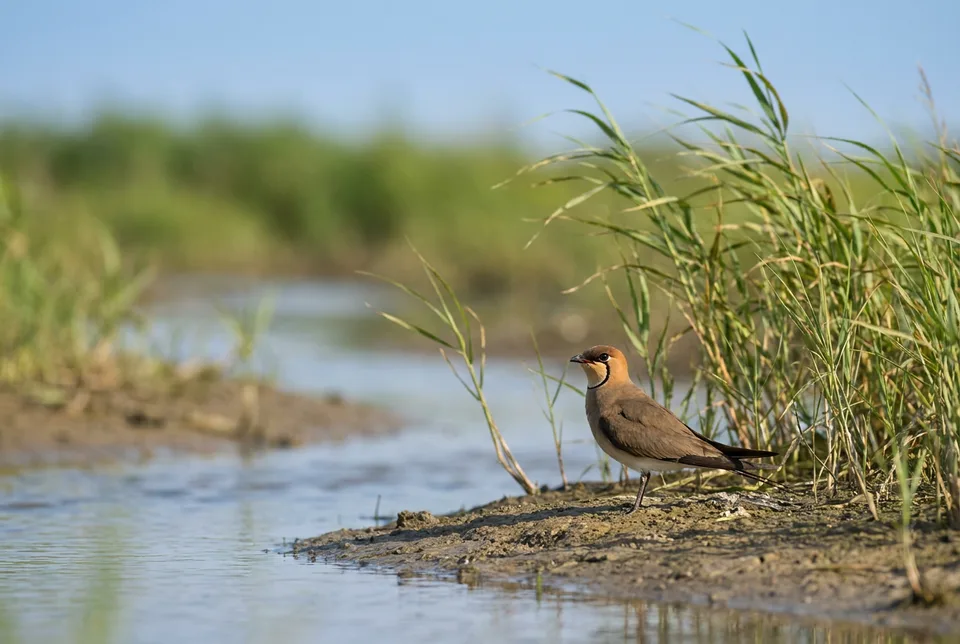
Oriental Pratincole is a shorebird whose feeding style can resemble that of a tern: it frequently catches insects in flight. The Hong Kong Bird Watching Society account also describes ground feeding, making it more versatile than that first impression suggests. Adults combine olive-brown upperparts with a buff throat enclosed by a dark line, white lower underparts and short legs. The registered Mekong association concerns a historical Tra Su survey, not the Hong Kong sites used in the biological account. Keeping those geographies separate matters especially for seasonality. A well-documented passage period in Hong Kong cannot establish a recurring viewing window at a Vietnamese flooded forest or along the main cruise channel.

Behaviour & reproduction

Size
Unknown
Weight
Unknown
Lifespan
Unknown
Status
Unknown

Pratincoles may alternate aerial insect hunting with running across the ground on short, stiff legs. The checked account describes flocks moving through grass with birds leapfrogging one another, feeding both above the surface and on it. Calls can reveal approaching birds before they become easy to see. Resting birds on damp mud can be remarkably difficult to count until they move, so a patch that appears empty deserves patient scanning. That observation is not a reason to flush a flock deliberately. Watch from an established viewpoint and let behaviour change naturally. The Hong Kong descriptions explain possible actions of the species; they do not document a flock size, activity schedule or breeding attempt at Tra Su.

Top wildlife locations

Mekong river landscape — River Cruises wildlife habitatAI-modified

Mekong

Thirty birds are evidenced at Tra Su wetland in Vietnam’s Mekong Delta, requiring a suitable shore excursion. Four larger waterbirds refer to a separate Prek Toal/Tonlé Sap excursion in Cambodia. Northern Cambodian dolphin pools are excluded.
Explore river cruises

Destinations describe the species' habitat, not guaranteed cruise stops. Some animals require an optional inland excursion or are found in restricted reserves.

Fun facts about the Oriental Pratincole

  • It is a shorebird that catches insects in flight.
  • It also pursues insects on the ground.
  • A dark line outlines the adult buff throat.
  • The adult bill has a red base.
  • The legs are short and grey.
  • The folded wings extend beyond the tail.
  • Orange-brown underwing coverts can show in flight.
  • Juveniles lack the adult red bill base.
  • Resting birds can be difficult to detect on damp mud.

Best time to see the Oriental Pratincole

No recurring monthly viewing window has been verified for the exact registered reach. The retained local evidence establishes historical occurrence rather than a sequence of repeat observations through the year. A trip date, a national residency description or a breeding season elsewhere cannot supply that missing local calendar. Accordingly, the location month arrays remain empty, and no season is labelled a guaranteed opportunity. For practical planning, consult the current site manager or a local guide about recent sightings and permitted access before arranging an excursion. Fresh information can guide a particular visit, but a single new sighting would still not establish an annual pattern. General biology in this profile should be read separately from local availability.

Oriental Pratincole: season matrix by destination

Highlighted months reflect the stated local evidence, not guaranteed encounters. Neutral months mean no verified monthly viewing window, not absence. Observation records and recommended viewing windows are distinct.

Mekong

No river-specific wildlife calendar is confirmed. Check the actual river reach, local conditions and excursion access with your operator.

JanFebMarAprMayJunJulAugSepOctNovDec
Explore river cruises

Where the Oriental Pratincole lives

The specialist account describes use of low-lying wetlands, freshwater marshes, fish ponds, exposed mud and muddy bunds in Hong Kong. Grassy areas can also be used. Damp muddy surfaces provide resting places, including temporarily drained ponds, showing that a bird may be present in a working landscape rather than an undisturbed marsh. These habitat examples help interpret the species’ needs but do not expand its registered Vietnamese distribution. For this profile the relevant local evidence remains Tra Su flooded forest and its historical survey context. Suitable-looking mud elsewhere along the Mekong is a reason to look carefully, not a verified occurrence record. Access and current water conditions determine what visitors can actually inspect.

What the Oriental Pratincole eats

The verified specialist account supports an insect-based diet and two distinct feeding methods. Oriental Pratincoles hawk insects in the air and also run after insects on the ground. Flocks may work the same grassy area at both levels, with individuals moving ahead of one another as they feed. A bird airborne above water is therefore not necessarily taking aquatic prey, and a bird standing on mud is not necessarily feeding at that moment. No insect-species list, prey proportion or local feeding rate is supplied for Tra Su because those details were not verified. Follow a single bird where possible and record whether an actual capture is visible rather than inferring food from habitat alone.

Species at a glance

Common name
Oriental Pratincole
Scientific name
Glareola maldivarum
Animal group
Birds
Size
Unknown; not independently verified for this profile
Weight
Unknown; not independently verified for this profile
Lifespan
Unknown; not independently verified for this profile
Status
Unknown; current global assessment not independently verified
Identification
Adults have olive-brown upperparts, dark wings and a buff throat outlined by a black line extending from the eye. The lower belly and undertail are white. Look for the short bill with a red base, short grey legs and a tail that falls noticeably short of the folded wing tips. In flight, orange-brown underwing coverts can show in good light. The specialist account notes the absence of an obvious white trailing edge to the secondaries, a useful comparison feature. Juveniles differ: their heads are streaked, breasts mottled and upperpart feathers pale-fringed, while the bill lacks the adult red base. Use several features together rather than treating a distant aerial silhouette as conclusive.

Oriental Pratincole: frequently asked questions

Where can I see the Oriental Pratincole?
Mekong. Begin with the exact registered setting: Vietnam Mekong delta: Tra Su flooded forest, optional shore excursion from Chau Doc (not main-channel deck wildlife). Check exposed muddy or grassy areas and the air above them, since resting and hunting birds can look very different. Use binoculars to separate a camouflaged bird from the substrate. Do not flush a resting flock to obtain a count. Keep enough distance for normal behaviour to continue. The retained occurrence is not a promise of present-day access, abundance or visibility; confirm current conditions locally before a dedicated visit.
When is the best time to see the Oriental Pratincole?
No recurring monthly viewing window has been verified for the exact registered reach. The retained local evidence establishes historical occurrence rather than a sequence of repeat observations through the year. A trip date, a national residency description or a breeding season elsewhere cannot supply that missing local calendar. Accordingly, the location month arrays remain empty, and no season is labelled a guaranteed opportunity. For practical planning, consult the current site manager or a local guide about recent sightings and permitted access before arranging an excursion. Fresh information can guide a particular visit, but a single new sighting would still not establish an annual pattern. General biology in this profile should be read separately from local availability.
How big does the Oriental Pratincole get?
Unknown; not independently verified for this profile. Adult weight: Unknown; not independently verified for this profile. Size varies with age, sex and population.
How should I behave around the Oriental Pratincole?
Begin with the exact registered setting: Vietnam Mekong delta: Tra Su flooded forest, optional shore excursion from Chau Doc (not main-channel deck wildlife). Check exposed muddy or grassy areas and the air above them, since resting and hunting birds can look very different. Use binoculars to separate a camouflaged bird from the substrate. Do not flush a resting flock to obtain a count. Keep enough distance for normal behaviour to continue. The retained occurrence is not a promise of present-day access, abundance or visibility; confirm current conditions locally before a dedicated visit.
What does the Oriental Pratincole eat?
The verified specialist account supports an insect-based diet and two distinct feeding methods. Oriental Pratincoles hawk insects in the air and also run after insects on the ground. Flocks may work the same grassy area at both levels, with individuals moving ahead of one another as they feed. A bird airborne above water is therefore not necessarily taking aquatic prey, and a bird standing on mud is not necessarily feeding at that moment. No insect-species list, prey proportion or local feeding rate is supplied for Tra Su because those details were not verified. Follow a single bird where possible and record whether an actual capture is visible rather than inferring food from habitat alone.
Are wildlife sightings guaranteed on a river cruise?
No. Animals move freely and routes, weather, access restrictions and local conditions influence every outing. Confirm the actual itinerary and shore program before booking.

Compare wildlife in the same destinations

Explore other birds recorded in these destinations. Similar surroundings do not mean the animals share the same habits or viewing season.

Species comparison by animal group and destination
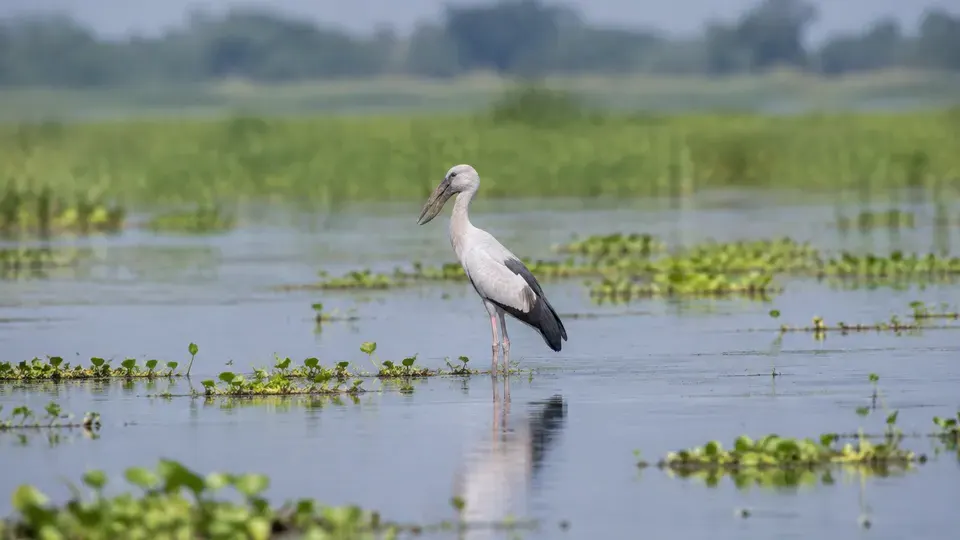
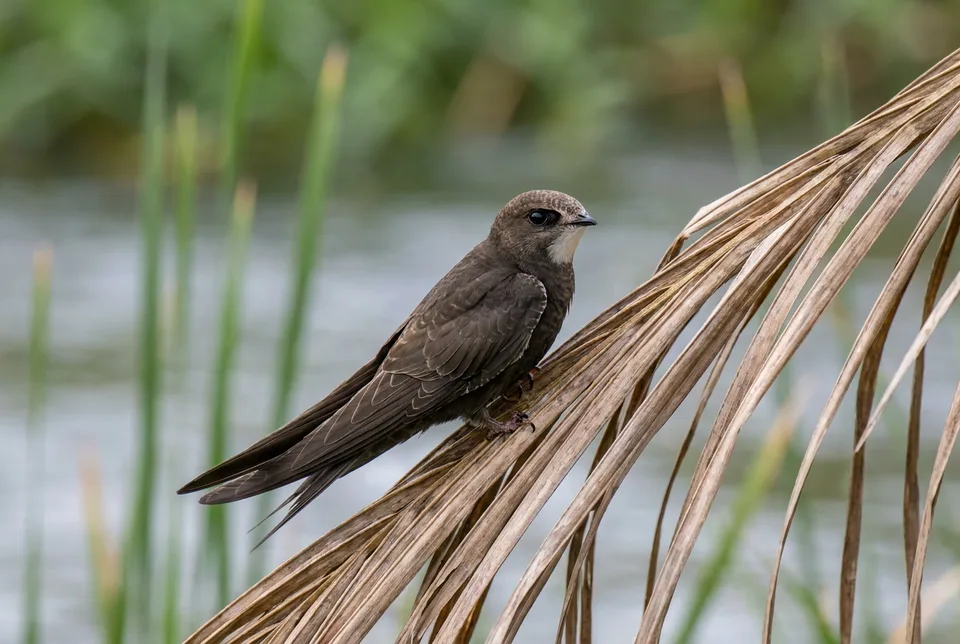
Oriental Pratincole in wetland habitat — Mekong, River Cruises wildlifeAI-modifiedOriental PratincoleAsian openbill in wetland habitat — Mekong, River Cruises wildlifeAI-modifiedAsian OpenbillAsian Palm Swift in wetland habitat — Mekong, River Cruises wildlifeAI-modifiedAsian Palm Swift
Animal groupBirdsAnimal groupBirdsAnimal groupBirds
DestinationsMekongDestinationsMekongDestinationsMekong
Scientific name
Glareola maldivarum
Scientific name
Scientific name
Previous speciesOriental darterNext speciesOsprey
All river wildlife
On this page
  • 01About
  • 02Behaviour & reproduction
  • 03Top wildlife locations
  • 04Fun facts
  • 05Best season
  • 06Season matrix by destination
  • 07Habitat
  • 08Diet
  • 09Species at a glance
  • 10Questions & answers
  • 11Compare

Find your river cruise

AI-modified
Plan your trip

Find your next river journey

Compare destinations, shore programs and dates with the animals and habitats you would love to see.

  • Daily shore excursions
  • Responsible wildlife watching
  • Boutique river ships
Explore river cruises