Bluerides – Blue Rides - Boka dykkryssningar över hela världenOCEAN ADVENTURES
River CruisesRiversNature & WildlifeOur Promise
River CruisesRiversNature & WildlifeOur PromiseLogga in

Flodresmål

  • Flodresmål
  • Amazonas
  • Donau
  • Rhen
  • Mekong
  • Nilen

Fartyg och avgångar

  • Sök flodkryssning
  • Erbjudanden

Natur och djurliv

  • Natur och djurliv

Resesupport

  • Vårt löfte
  • Kontakt

Kontakt

Ta kontakt

Hör av dig när som helst, vi hjälper dig gärna med resan eller dina frågor.

E-postSkriv till oss, vi svarar oftast inom några timmar.
contact@bluerides.com
WhatsAppSkriv till oss på WhatsApp, mån–fre 10:00–16:00 (CET).
Starta WhatsApp-chatt
TelefonRing oss, vi hjälper dig gärna.
Gratis samtal, mån–fre 10:00–20:00 (CET).
Europa+49 800 1144 990USA+1 888 557 7735Storbritannien+44 800 707 4152Australien+61 2 8599 6113Kanada+1 888 557 7735
Which river journey is yours?Answer 8 quick questions and find the river cruise that fits you.
8 questions, 1 minute·Plus Gift
Säkra betalningsmetoderDina betalningar är helt säkrade med AES-256-kryptering.
Drivs avStripeWiseAMEXPayGoogle PaySEPABank
Impressum·Villkor·Integritetspolicy·Om oss·Kontakt·Ansvarsfriskrivning·Partnerprogram·Cruise·
Följ oss här

© 2026 Blue Rides. Alla rättigheter förbehållna.·

Bluerides – Blue Rides - Boka dykkryssningar över hela världenOCEAN ADVENTURES
River CruisesRiversNature & WildlifeOur Promise
River CruisesRiversNature & WildlifeOur PromiseLogga in
Canvasback i våtmark — Mississippi, djurliv på flodkryssningar
Hem›River Cruises›River Wildlife›Canvasback

CanvasbackAythya valisineriaVar och när du kan se dem

Previous speciesCanada GooseNext speciesCommon Blackbird

Canvasback at a glance

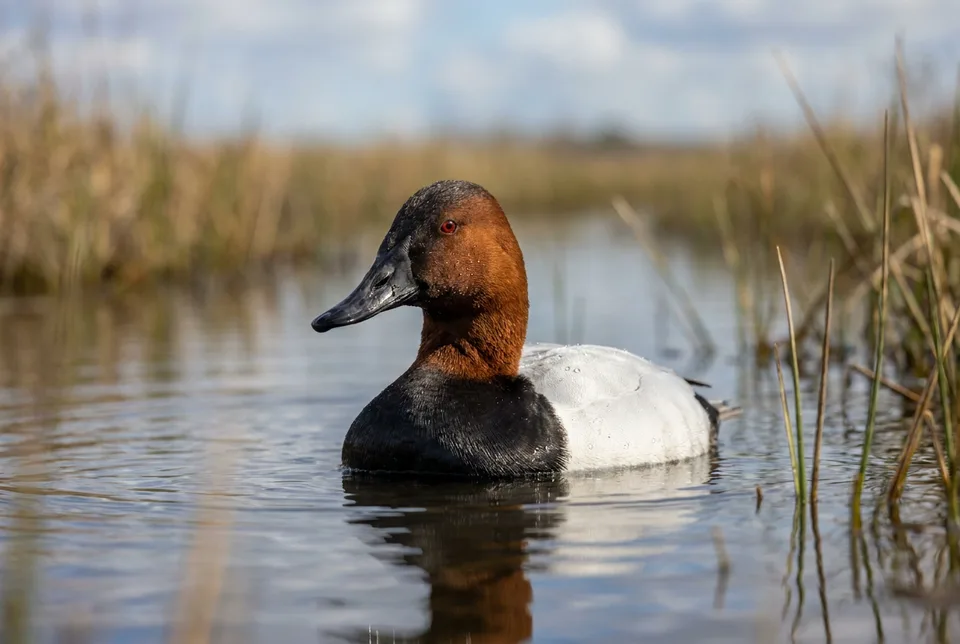
The Canvasback’s profile is as distinctive as its colours. A long sloping forehead runs into the bill, giving this substantial diving duck a stretched, wedge-headed appearance even when the light hides fine plumage detail. Breeding males combine a rusty head and neck with a pale body bounded by black at the front and rear; females carry the same characteristic outline in quieter browns. Beneath the surface, the species searches for aquatic plant parts as well as animal food. The registered river destination is the Upper Mississippi refuge, where sheltered water and submerged vegetation matter more than the mere presence of a broad river. A distant white-backed flock deserves careful study: the individual head shapes and feeding actions are more informative than a general impression of pale ducks on open water.
Behaviour & reproduction

Size
Not verified
Weight
Not verified
Lifespan
Not verified
Status
Not verified

Canvasbacks are diving ducks that spend much of their lives on water and seldom need to come ashore to feed. A foraging bird tips into a dive and can work below the surface for plant material before returning to breathe and handle food. Away from nesting, groups may assemble on open water, where resting birds can look deceptively static until feeding resumes. Females choose the nest site and construct a bulky platform from wetland plants, often fastening it among emergent stems so that it floats. The construction may include an overhead canopy of vegetation, and females add material during early incubation. Young are down-covered and able to leave soon after hatching. These concealed nesting arrangements are best understood from life-history information, not sought out by entering a marsh or separating resting birds.

Top wildlife locations

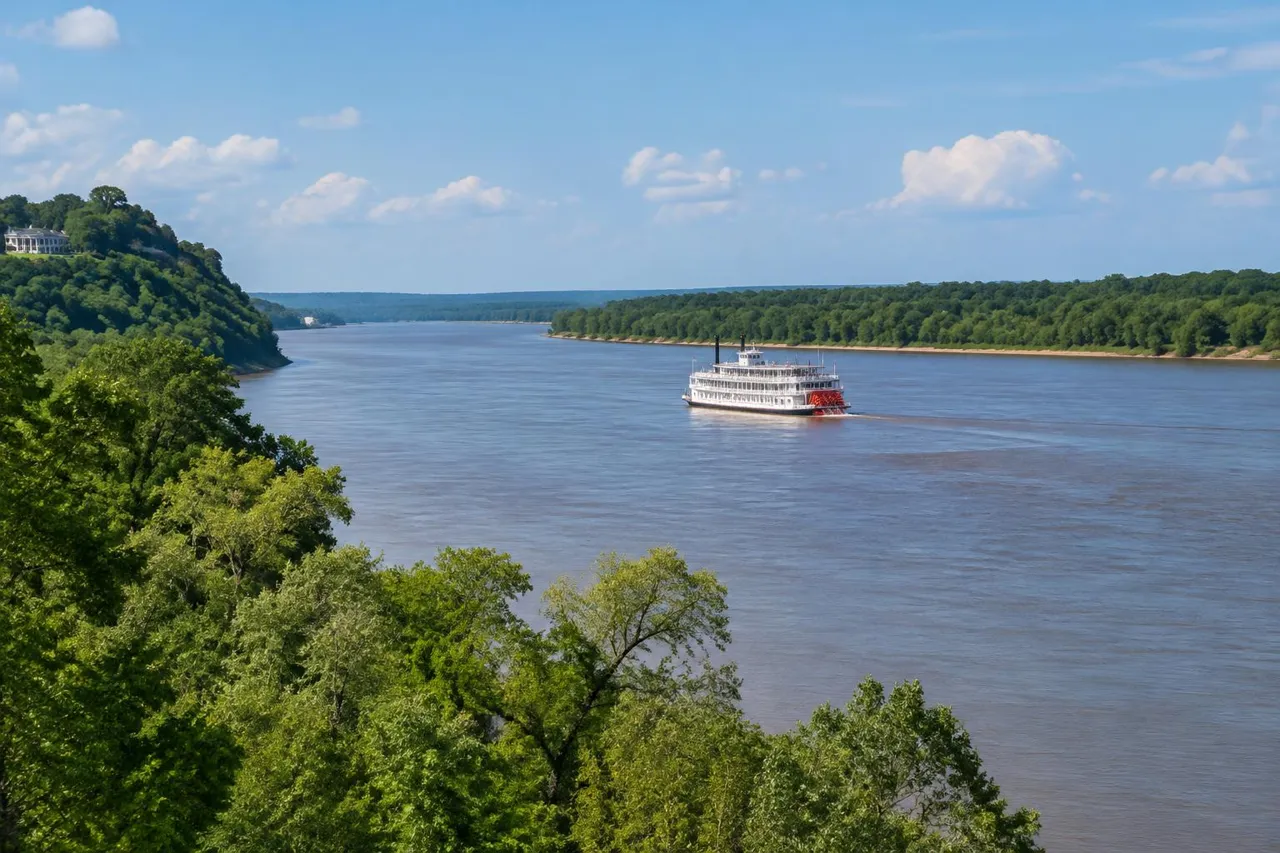
Flodlandskap Mississippi — livsmiljö på flodkryssningar

Mississippi

Upper Mississippi — Upper Mississippi River NWR, Wabasha MN–Rock Island IL
Explore river cruises

Destinations describe the species' habitat, not guaranteed cruise stops. Some animals require an optional inland excursion or are found in restricted reserves.

Fun facts about the Canvasback

  • The forehead slopes smoothly into the bill.
  • Females share the male’s distinctive head profile.
  • Canvasbacks dive for plant tubers.
  • The diet also includes mussels and insects.
  • Wild celery is reflected in the scientific name.
  • Nests are often floating platforms.
  • Emergent stems help anchor the nest.
  • Young leave the nest soon after hatching.
  • Resting flocks can be very wary.

Best time to see the Canvasback

No numerical local viewing calendar is verified for the registered Mississippi association. Cornell recommends looking on open water during migration and winter across much of the continental United States. That broad advice does not establish a recurring monthly peak at an Upper Mississippi overlook; the timing of other named dabbling ducks cannot be transferred to this diving species.

Canvasback: season matrix by destination

Highlighted months reflect the stated local evidence, not guaranteed encounters. Neutral months mean no verified monthly viewing window, not absence. Observation records and recommended viewing windows are distinct.

Mississippi

The official refuge checklist records this species in the listed locally defined seasons, including rare occurrences where coded, providing local guidance rather than a guarantee of sightings.

jan.feb.marsapr.majjunijuliaug.sep.okt.nov.dec.
Explore river cruises

Where the Canvasback lives

Breeding Canvasbacks use lakes, ponds, deep marshes and sheltered bays, often with cattails, rushes or reeds around the margins. Migration and winter use encompasses freshwater and coastal habitats, including rivers, estuaries, lagoons and lakes. This wider range does not make all open water equally suitable: food beneath the surface and safe resting space remain important. For the Upper Mississippi association, examine authorised views of backwaters and broad pools rather than assuming the navigation channel is the main attraction. Emergent plants can mark the transition from open water to nesting or sheltered habitat, while submerged vegetation may be invisible from the bank. Distance and glare can conceal feeding birds even in apparently open settings. Use local refuge advice to choose viewpoints rather than navigating into vegetation to test whether ducks are present.

What the Canvasback eats

Aquatic plant tubers and rhizomes are central foods during migration and winter, but Canvasbacks are not exclusively vegetarian. Cornell also lists seeds, mussels and insects, with both plant and animal foods important during the breeding season. The birds can dive down to extract plant pieces with their bills and also take food at or just below the surface. Their scientific name recalls wild celery, a submerged plant whose winter buds and stems are favoured foods. This relationship is a useful reminder that clear-looking open water can conceal an important feeding bed. A dive does not reveal exactly which item was swallowed, and a surfaced bird may have processed food underwater. Observe repeated feeding in relation to habitat without claiming a particular plant from bill movements alone or offering substitute food.

Species at a glance

Common name
Canvasback
Scientific name
Aythya valisineria
Animal group
Birds
Size
Not verified in the accessible source text.
Weight
Not verified in the accessible source text.
Lifespan
Wild lifespan not verified in the accessible source text.
Status
Current global conservation assessment not verified.
Identification
Look first at the continuous slope from forehead to bill, not merely the red-brown head of a breeding male. The male’s white-looking body contrasts strongly with the dark breast and rear, while females show a pale brown body and darker front with the same distinctive head shape. Nonbreeding males become browner and are less immediately striking. Redheads are a particularly important comparison: a head colour match alone is insufficient, and the Canvasback’s long wedge profile is more useful than a distant chestnut patch. In flight, pale body and underwings contrast with darker head, neck and rear, but lighting and flock overlap complicate this pattern. Wait for a side view or photographs that show bill and forehead together before calling an uncertain brown diving duck a Canvasback.

Canvasback: frequently asked questions

Where can I see the Canvasback?
Mississippi. Use a spotting scope from a stable overlook and begin with the whole flock. Locate pale bodies, then wait for birds to lift their heads so that the long sloping profile becomes visible. Feeding individuals repeatedly disappear, so a quick count can miss part of a group; make several slow scans before estimating numbers. Cornell warns that Canvasbacks can be wary and flush readily, making distance especially valuable. A vehicle where permitted, an established blind or a quiet bank-side position may yield better behaviour than approaching on foot. On the Upper Mississippi, allow time for a backwater stop rather than expecting a moving deck to resolve every duck. Never steer towards a raft to improve a photograph, and stop advancing if birds raise their heads together or swim persistently away.
When is the best time to see the Canvasback?
No numerical local viewing calendar is verified for the registered Mississippi association. Cornell recommends looking on open water during migration and winter across much of the continental United States. That broad advice does not establish a recurring monthly peak at an Upper Mississippi overlook; the timing of other named dabbling ducks cannot be transferred to this diving species.
How big does the Canvasback get?
Not verified in the accessible source text.. Adult weight: Not verified in the accessible source text.. Size varies with age, sex and population.
How should I behave around the Canvasback?
Use a spotting scope from a stable overlook and begin with the whole flock. Locate pale bodies, then wait for birds to lift their heads so that the long sloping profile becomes visible. Feeding individuals repeatedly disappear, so a quick count can miss part of a group; make several slow scans before estimating numbers. Cornell warns that Canvasbacks can be wary and flush readily, making distance especially valuable. A vehicle where permitted, an established blind or a quiet bank-side position may yield better behaviour than approaching on foot. On the Upper Mississippi, allow time for a backwater stop rather than expecting a moving deck to resolve every duck. Never steer towards a raft to improve a photograph, and stop advancing if birds raise their heads together or swim persistently away.
What does the Canvasback eat?
Aquatic plant tubers and rhizomes are central foods during migration and winter, but Canvasbacks are not exclusively vegetarian. Cornell also lists seeds, mussels and insects, with both plant and animal foods important during the breeding season. The birds can dive down to extract plant pieces with their bills and also take food at or just below the surface. Their scientific name recalls wild celery, a submerged plant whose winter buds and stems are favoured foods. This relationship is a useful reminder that clear-looking open water can conceal an important feeding bed. A dive does not reveal exactly which item was swallowed, and a surfaced bird may have processed food underwater. Observe repeated feeding in relation to habitat without claiming a particular plant from bill movements alone or offering substitute food.
Are wildlife sightings guaranteed on a river cruise?
No. Animals move freely and routes, weather, access restrictions and local conditions influence every outing. Confirm the actual itinerary and shore program before booking.

Compare wildlife in the same destinations

Explore other birds recorded in these destinations. Similar surroundings do not mean the animals share the same habits or viewing season.

Species comparison by animal group and destination
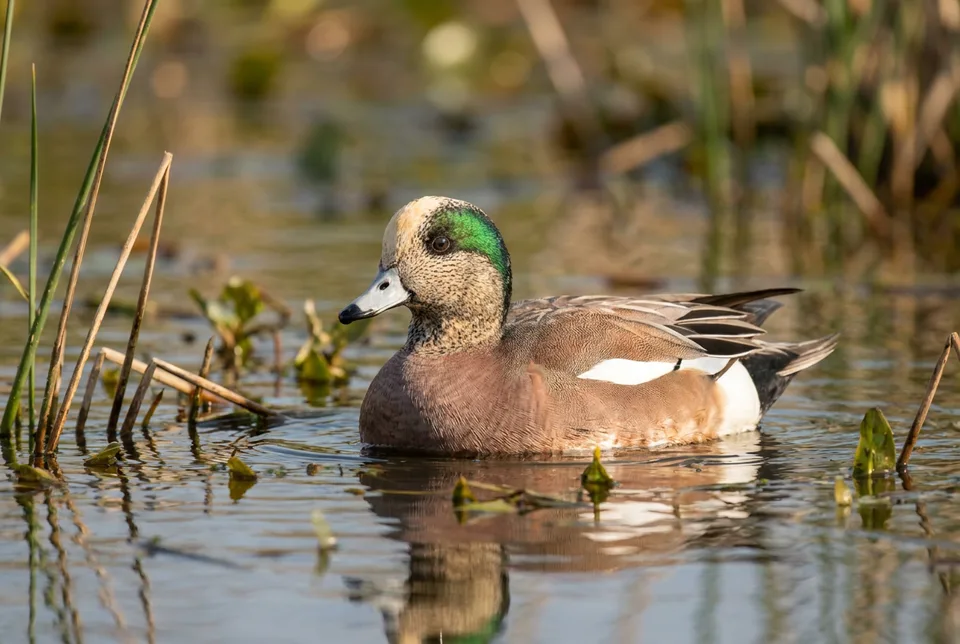
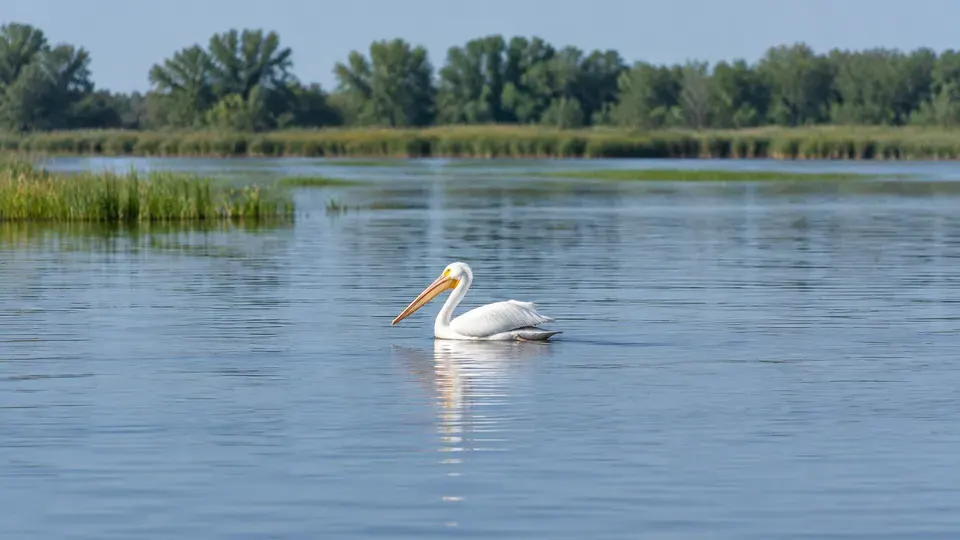
Canvasback i våtmark — Mississippi, djurliv på flodkryssningarCanvasbackAmerican white pelican i våtmark — Columbia, Mississippi, djurliv på flodkryssningarAmerican White PelicanAmerican Wigeon i våtmark — Columbia, Mississippi, djurliv på flodkryssningarAmerican Wigeon
Animal groupBirdsAnimal groupBirdsAnimal groupBirds
DestinationsMississippiDestinationsColumbia, MississippiDestinationsColumbia, Mississippi
Scientific name
Aythya valisineria

Aythya valisineria

Scientific name
Scientific name
Size
Not verified
Size
Size
Weight
Not verified
Weight
Weight
Lifespan
Not verified
Lifespan
Lifespan
Status
Not verified
Status
Status
Identification
Look first at the continuous slope from forehead to bill, not merely the red-brown head of a breeding male.

Look first at the continuous slope from forehead to bill, not merely the red-brown head of a breeding male. The male’s white-looking body contrasts strongly with the dark breast and rear, while females show a pale brown body and darker front with the same distinctive head shape. Nonbreeding males become browner and are less immediately striking. Redheads are a particularly important comparison: a head colour match alone is insufficient, and the Canvasback’s long wedge profile is more useful than a distant chestnut patch. In flight, pale body and underwings contrast with darker head, neck and rear, but lighting and flock overlap complicate this pattern. Wait for a side view or photographs that show bill and forehead together before calling an uncertain brown diving duck a Canvasback.

Identification
Identification
Habitat
Breeding Canvasbacks use lakes, ponds, deep marshes and sheltered bays, often with cattails, rushes or reeds around the margins.

Breeding Canvasbacks use lakes, ponds, deep marshes and sheltered bays, often with cattails, rushes or reeds around the margins. Migration and winter use encompasses freshwater and coastal habitats, including rivers, estuaries, lagoons and lakes. This wider range does not make all open water equally suitable: food beneath the surface and safe resting space remain important. For the Upper Mississippi association, examine authorised views of backwaters and broad pools rather than assuming the navigation channel is the main attraction. Emergent plants can mark the transition from open water to nesting or sheltered habitat, while submerged vegetation may be invisible from the bank. Distance and glare can conceal feeding birds even in apparently open settings. Use local refuge advice to choose viewpoints rather than navigating into vegetation to test whether ducks are present.

Habitat
Habitat
Diet
Aquatic plant tubers and rhizomes are central foods during migration and winter, but Canvasbacks are not exclusively vegetarian.

Aquatic plant tubers and rhizomes are central foods during migration and winter, but Canvasbacks are not exclusively vegetarian. Cornell also lists seeds, mussels and insects, with both plant and animal foods important during the breeding season. The birds can dive down to extract plant pieces with their bills and also take food at or just below the surface. Their scientific name recalls wild celery, a submerged plant whose winter buds and stems are favoured foods. This relationship is a useful reminder that clear-looking open water can conceal an important feeding bed. A dive does not reveal exactly which item was swallowed, and a surfaced bird may have processed food underwater. Observe repeated feeding in relation to habitat without claiming a particular plant from bill movements alone or offering substitute food.

Diet
Diet
Best season
No numerical local viewing calendar is verified for the registered Mississippi association.

No numerical local viewing calendar is verified for the registered Mississippi association. Cornell recommends looking on open water during migration and winter across much of the continental United States. That broad advice does not establish a recurring monthly peak at an Upper Mississippi overlook; the timing of other named dabbling ducks cannot be transferred to this diving species.

Best season
Best season
Season matrix by destination
Mississippijan. · feb. · mars · apr. · maj · juni · juli · aug. · sep. · okt. · nov. · dec.

The official refuge checklist records this species in the listed locally defined seasons, including rare occurrences where coded, providing local guidance rather than a guarantee of sightings.

Season matrix by destinationSeason matrix by destination
Previous speciesCanada GooseNext speciesCommon Blackbird
All river wildlife
On this page
  • 01About
  • 02Behaviour & reproduction
  • 03Top wildlife locations
  • 04Fun facts
  • 05Best season
  • 06Season matrix by destination
  • 07Habitat
  • 08Diet
  • 09Species at a glance
  • 10Questions & answers
  • 11Compare

Find your river cruise

Planera din resa

Find your next river journey

Compare destinations, shore programs and dates with the animals and habitats you would love to see.

  • Daily shore excursions
  • Responsible wildlife watching
  • Boutique river ships
Explore river cruises