Bluerides – Blue Rides - Book Liveaboards worldwideOCEAN ADVENTURES
River CruisesRiversNature & WildlifeOur Promise
River CruisesRiversNature & WildlifeOur PromiseSign In

River destinations

  • River destinations
  • Amazon
  • Danube
  • Rhine
  • Mekong
  • Nile

Ships & departures

  • River Cruise Search
  • Deals

Nature & Wildlife

  • Nature & Wildlife

Travel support

  • Our Promise
  • Contact

Contact

Get in Touch

Get in touch anytime, we're happy to help you find the right trip or sort out any question.

EmailWrite us, we usually reply within a few hours.
contact@bluerides.com
WhatsAppChat with us on WhatsApp, Mon–Fri 10:00–16:00 (CET).
Start WhatsApp Chat
PhoneCall us, we're happy to help.
Free call, Mon–Fri 10 AM – 8 PM (CET).
Europe+49 800 1144 990USA+1 888 557 7735UK+44 800 707 4152Australia+61 2 8599 6113Canada+1 888 557 7735
Which river journey is yours?Answer 8 quick questions and find the river cruise that fits you.
8 questions, 1 minute·Plus Gift
Secure Payment MethodsYour payments are fully secured with AES-256 encryption.
Powered byStripeWiseAMEXPayGoogle PaySEPABank
Imprint·Terms & Conditions·Privacy Policy·About·Contact·Liability Waiver·Affiliate Program·Cruise·
Visit us here

© 2026 Blue Rides. All rights reserved.·

Bluerides – Blue Rides - Book Liveaboards worldwideOCEAN ADVENTURES
River CruisesRiversNature & WildlifeOur Promise
River CruisesRiversNature & WildlifeOur PromiseSign In
Little egret in wetland habitat — Danube, Rhine, Seine, Nile, Douro, Mekong, River Cruises wildlife
Home›River Cruises›River Wildlife›Little Egret

Little EgretEgretta garzettaWhere and when to see them

Previous speciesLittle CormorantNext speciesLittle Grebe

Little Egret at a glance

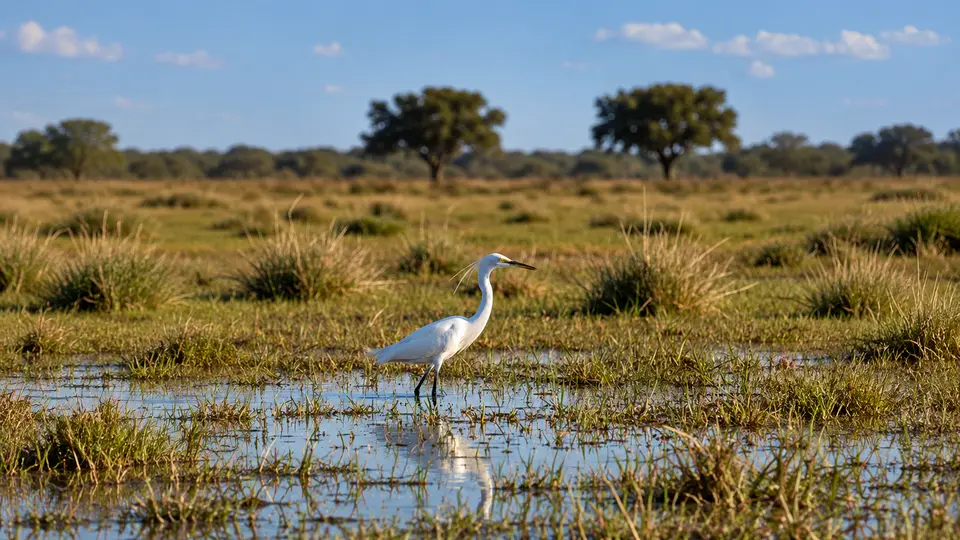
The Little Egret is a small white heron whose dark bill and legs contrast with yellow feet. Fine ornamental feathers can extend from the head, back and chest, giving an adult a delicate outline. It belongs to the heron family and feeds by wading, not by swimming after fish like a cormorant. Its combination of shallow-water hunting and a tolerance of different wetland types helps explain why it appears in several River destinations. The registered reaches include the Danube Delta, Basel-area Rhine wetlands, the lower Seine estuary, the Nile cruise corridor, the Douro estuary and Tra Su in the Mekong delta. These are separate observation settings, not one continuous population or a promise of identical access. The Nile’s March 2007 cruise checklist includes Egretta garzetta. A white heron seen elsewhere still needs identification, especially where several egret species occur together in the same feeding area.

Behaviour & reproduction

Size
Species-specific length not verified in the original sources read
Weight
Species-specific weight not verified
Lifespan
Species-specific lifespan not verified
Status
See sourced assessment

Little Egrets often feed actively, wading or running through shallow water before stabbing at prey with the pointed bill. Biodiversity Explorer also describes hovering followed by a downward dive and feeding on prey disturbed by other animals. These techniques make a feeding bird more animated than a heron simply waiting motionless beside a pool. The account describes monogamous colonial nesting, sometimes among other waterbirds. The male supplies material and the female builds a platform of sticks and reeds, usually above water in vegetation. Both sexes incubate and care for the young. In the southern African account, chicks leave the nest before they are fully capable of flight, so a youngster away from the platform is not automatically abandoned. Colonial behaviour also means that repeated close approaches can disturb more than one family. Watch feeding birds away from nesting vegetation whenever possible.

Top wildlife locations

Danube river landscape — River Cruises wildlife habitat

Danube

Romania: Danube Delta around Mahmudia and delta lakes/channels; separate lower-Danube/delta itinerary, NOT Passau–Vienna–Bratislava–Budapest.


Explore river cruises
Rhine river landscape — River Cruises wildlife habitat

Rhine

Basel vicinity: Rhine at Augst–Whylen / Ergolz mouth and Altrhein, upstream of Basel; optional shore/hide excursion.

Explore river cruises
Seine river landscape — River Cruises wildlife habitat

Seine

OPTIONAL ESTUARY: ZPS Estuaire et marais de la Basse-Seine, lower tidal Seine toward Honfleur/Le Havre; includes protected flats beyond port, not Paris freshwater reaches.

Explore river cruises
Nile river landscape — River Cruises wildlife habitat

Nile

Luxor–Esna–Edfu–Kom Ombo–Aswan; exact observation context in quote

Explore river cruises
Douro river landscape — River Cruises wildlife habitat

Douro

Porto / Vila Nova de Gaia: Douro estuary reserve, Afurada–Cabedelo–São Paio; NOT a claim for inland Régua–Pinhão

Explore river cruises
Mekong river landscape — River Cruises wildlife habitat

Mekong

Vietnam Mekong delta: Tra Su flooded forest, optional shore excursion from Chau Doc (not main-channel deck wildlife)

Explore river cruises

Destinations describe the species' habitat, not guaranteed cruise stops. Some animals require an optional inland excursion or are found in restricted reserves.

Fun facts about the Little Egret

  • It has yellow feet contrasting with black legs.
  • The bill is dark and slender.
  • Adults can carry fine plumes on the head, chest and back.
  • Fish form the main food in the southern African account.
  • It can exploit prey disturbed by other animals.
  • The female builds with material supplied by the male.
  • Both parents incubate the eggs.
  • It can nest in mixed-species colonies.
  • Its registered River habitats include both freshwater and estuarine margins.

Best time to see the Little Egret

Romanian Danube Delta only: local specialist Ibis Tours identifies June as viewing recommendations for this species. This is operator guidance, not a statistical sighting forecast; it does not extend to Passau, Vienna or Budapest. Colonies must be watched from permitted routes without close nest approaches. Other registered reaches retain their separate evidence and unknown months. These highlighted windows are recommendations, not the only months when the species may occur. Ask the guide about recent observations, current water access and local restrictions before choosing an excursion. Historical records and breeding dates elsewhere are not used to fill gaps in the local calendar.

Little Egret: season matrix by destination

Highlighted months reflect the stated local evidence, not guaranteed encounters. Neutral months mean no verified monthly viewing window, not absence. Observation records and recommended viewing windows are distinct.

Danube

Romanian Danube Delta only: local specialist Ibis Tours identifies June as viewing recommendations for this species. This is operator guidance, not a statistical sighting forecast; it does not extend to Passau, Vienna or Budapest. Colonies must be watched from permitted routes without close nest approaches.

JanFebMarAprMayJunJulAugSepOctNovDec
Explore river cruises

Rhine

No recurring local viewing-month window established. The Nile checklist is a single 19–26 March 2007 trip, not an annual calendar; other river reaches require their own local monthly evidence.

JanFebMarAprMayJunJulAugSepOctNovDec
Explore river cruises

Seine

No recurring local viewing-month window established. The Nile checklist is a single 19–26 March 2007 trip, not an annual calendar; other river reaches require their own local monthly evidence.

JanFebMarAprMayJunJulAugSepOctNovDec
Explore river cruises

Nile

No recurring local viewing-month window established. The Nile checklist is a single 19–26 March 2007 trip, not an annual calendar; other river reaches require their own local monthly evidence.

JanFebMarAprMayJunJulAugSepOctNovDec
Explore river cruises

Douro

No recurring local viewing-month window established. The Nile checklist is a single 19–26 March 2007 trip, not an annual calendar; other river reaches require their own local monthly evidence.

JanFebMarAprMayJunJulAugSepOctNovDec
Explore river cruises

Mekong

No recurring local viewing-month window established. The Nile checklist is a single 19–26 March 2007 trip, not an annual calendar; other river reaches require their own local monthly evidence.

JanFebMarAprMayJunJulAugSepOctNovDec
Explore river cruises

Where the Little Egret lives

Shallow margins are more important to a Little Egret than the width of the river itself. Biodiversity Explorer lists rivers, lakes, estuaries, marshes, pans and saltpans, as well as mangroves, coastal flats, canals and dams. This variety connects naturally with the registered River settings: the Danube Delta provides freshwater channels and lakes, while the Seine and Douro associations concern estuarine habitats. The Rhine record is specifically around Augst–Whylen, the Ergolz mouth and Altrhein near Basel, not the entire Rhine corridor. Tra Su is a flooded-forest excursion from Chau Doc rather than a main-channel Mekong sighting. At any of these places, a narrow accessible edge may offer better feeding habitat than deep open water. Vegetation above water can support nesting platforms, while exposed shallows provide hunting opportunities. Keep local access arrangements separate from the bird’s ability to use a habitat.

What the Little Egret eats

Fish are the principal food described for the Little Egret by Biodiversity Explorer. Its recorded prey also include amphibians, reptiles, small birds and mammals, together with insects, worms, crustaceans and molluscs. These records describe dietary breadth rather than a measured menu for any registered river. A feeding bird may move briskly through shallows, pause to aim and then stab with its bill. It can also take advantage of prey disturbed by other waterbirds or larger animals. Watching these movements reveals more than simply counting white birds on a bank: the same individual may alternate searching, pursuit and swallowing within a short period. Water depth and clarity affect how much of that sequence is visible. Do not offer food or move through the shallows to provoke feeding. Natural hunting provides the useful observation, while baiting replaces it with behaviour shaped by the observer.

Species at a glance

Common name
Little Egret
Scientific name
Egretta garzetta
Animal group
Birds
Size
Species-specific length not verified in the original sources read
Weight
Species-specific weight not verified
Lifespan
Species-specific lifespan not verified
Status
Biodiversity Explorer describes the species as not threatened in its southern African account; this is not a newly verified global assessment.
Identification
The classic Little Egret combination is white plumage, a slender dark bill, black legs and yellow feet. The RSPB highlights white ornamental plumes on the crest, back and chest. These fine feathers can be difficult to see at distance and should not be treated as essential in every brief view. Concentrate first on the bill and leg pattern, then on overall size and the bird’s active shallow-water feeding. A white heron with hidden feet remains less securely identified than one showing the full combination. Several herons and egrets share river margins, so whiteness alone is inadequate. In poor light the feet can look dark, and mud may mask their colour. Wait for the bird to step onto a clearer patch instead of approaching to force a better view. Photographs showing the bill profile, legs and feet are more useful than a close crop of white body feathers.

Little Egret: frequently asked questions

Where can I see the Little Egret?
Danube, Rhine, Seine, Nile, Douro, Mekong. Begin by scanning the shallow edge rather than the middle of the channel. A Little Egret may be walking quickly, standing with its neck poised or following other feeding birds. Check the bill and legs through binoculars, then wait for a lifted foot to reveal the yellow colour. Mud, water and vegetation can conceal this helpful feature. On the Douro and lower Seine, use permitted estuary viewpoints; at Tra Su, recognise that the encounter belongs to a shore excursion rather than the main Mekong navigation channel. The Danube association is the Romanian delta, not an expectation for Budapest or Vienna. From a boat, keep watching when a bird changes direction, because a side view often reveals more structure than a head-on white shape. Stay away from colony vegetation and avoid making a feeding bird retreat along the bank. A patient distant view is usually the most informative one.
When is the best time to see the Little Egret?
Romanian Danube Delta only: local specialist Ibis Tours identifies June as viewing recommendations for this species. This is operator guidance, not a statistical sighting forecast; it does not extend to Passau, Vienna or Budapest. Colonies must be watched from permitted routes without close nest approaches. Other registered reaches retain their separate evidence and unknown months. These highlighted windows are recommendations, not the only months when the species may occur. Ask the guide about recent observations, current water access and local restrictions before choosing an excursion. Historical records and breeding dates elsewhere are not used to fill gaps in the local calendar.
How big does the Little Egret get?
Species-specific length not verified in the original sources read. Adult weight: Species-specific weight not verified. Size varies with age, sex and population.
How should I behave around the Little Egret?
Begin by scanning the shallow edge rather than the middle of the channel. A Little Egret may be walking quickly, standing with its neck poised or following other feeding birds. Check the bill and legs through binoculars, then wait for a lifted foot to reveal the yellow colour. Mud, water and vegetation can conceal this helpful feature. On the Douro and lower Seine, use permitted estuary viewpoints; at Tra Su, recognise that the encounter belongs to a shore excursion rather than the main Mekong navigation channel. The Danube association is the Romanian delta, not an expectation for Budapest or Vienna. From a boat, keep watching when a bird changes direction, because a side view often reveals more structure than a head-on white shape. Stay away from colony vegetation and avoid making a feeding bird retreat along the bank. A patient distant view is usually the most informative one.
What does the Little Egret eat?
Fish are the principal food described for the Little Egret by Biodiversity Explorer. Its recorded prey also include amphibians, reptiles, small birds and mammals, together with insects, worms, crustaceans and molluscs. These records describe dietary breadth rather than a measured menu for any registered river. A feeding bird may move briskly through shallows, pause to aim and then stab with its bill. It can also take advantage of prey disturbed by other waterbirds or larger animals. Watching these movements reveals more than simply counting white birds on a bank: the same individual may alternate searching, pursuit and swallowing within a short period. Water depth and clarity affect how much of that sequence is visible. Do not offer food or move through the shallows to provoke feeding. Natural hunting provides the useful observation, while baiting replaces it with behaviour shaped by the observer.
Are wildlife sightings guaranteed on a river cruise?
No. Animals move freely and routes, weather, access restrictions and local conditions influence every outing. Confirm the actual itinerary and shore program before booking.

Compare wildlife in the same destinations

Explore other birds recorded in these destinations. Similar surroundings do not mean the animals share the same habits or viewing season.

Species comparison by animal group and destination
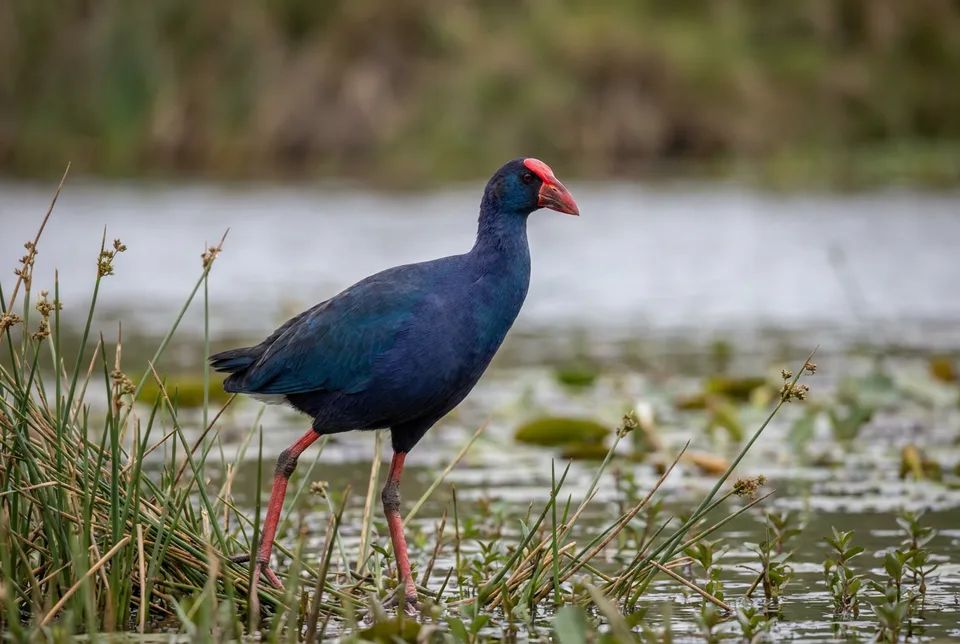
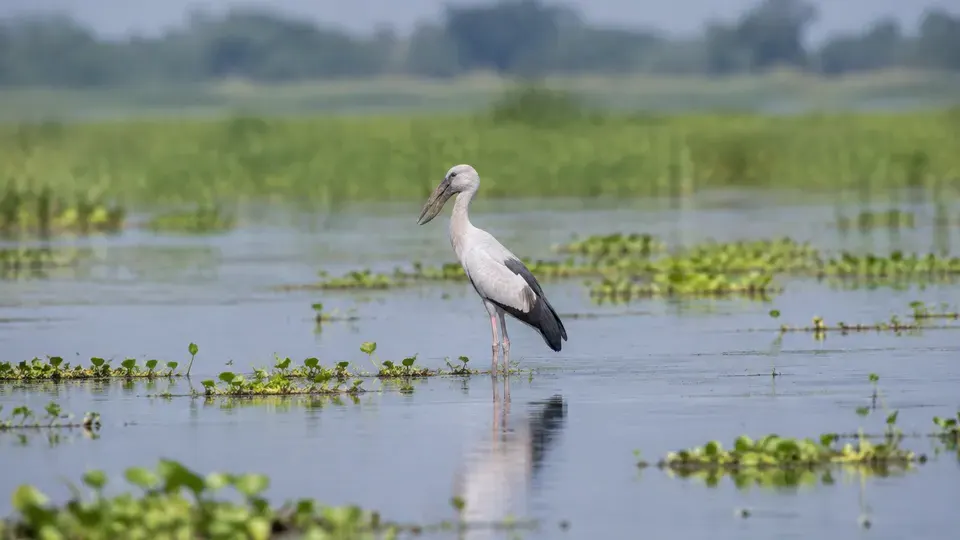
Little egret in wetland habitat — Danube, Rhine, Seine, Nile, Douro, Mekong, River Cruises wildlifeLittle EgretAfrican Swamphen in wetland habitat — Nile, Egypt, River Cruises wildlifeAfrican SwamphenAsian openbill in wetland habitat — Mekong, River Cruises wildlifeAsian Openbill
Animal groupBirdsAnimal groupBirdsAnimal groupBirds
DestinationsDanube, Rhine, Seine, Nile, Douro, MekongDestinationsNileDestinationsMekong
Scientific name
Egretta garzetta
Scientific name
Scientific name
Previous speciesLittle CormorantNext speciesLittle Grebe
All river wildlife
On this page
  • 01About
  • 02Behaviour & reproduction
  • 03Top wildlife locations
  • 04Fun facts
  • 05Best season
  • 06Season matrix by destination
  • 07Habitat
  • 08Diet
  • 09Species at a glance
  • 10Questions & answers
  • 11Compare

Find your river cruise

Plan your trip

Find your next river journey

Compare destinations, shore programs and dates with the animals and habitats you would love to see.

  • Daily shore excursions
  • Responsible wildlife watching
  • Boutique river ships
Explore river cruises