Bluerides – Blue Rides - दुनिया भर में लिवअबोर्ड डाइविंग बुक करेंOCEAN ADVENTURES
River CruisesRiversNature & WildlifeOur Promise
River CruisesRiversNature & WildlifeOur Promiseसाइन इन करें

नदी यात्रा गंतव्य

  • नदी यात्रा गंतव्य
  • अमेज़न
  • डेन्यूब
  • राइन
  • मेकोंग
  • नील

जहाज़ और प्रस्थान

  • नदी क्रूज़ खोजें
  • ऑफ़र

प्रकृति और वन्यजीवन

  • प्रकृति और वन्यजीवन

यात्रा सहायता

  • हमारा वादा
  • संपर्क

संपर्क करें

संपर्क करें

कभी भी संपर्क करें, हम आपकी यात्रा चुनने या किसी भी सवाल में मदद करने को तैयार हैं।

ईमेलहमें लिखें, आमतौर पर कुछ ही घंटों में जवाब देते हैं।
contact@bluerides.com
व्हाट्सएपव्हाट्सएप पर हमसे चैट करें, सोम–शुक्र 10:00–16:00 (CET)।
WhatsApp चैट शुरू करें
फ़ोनहमें कॉल करें, हम खुशी से मदद करेंगे।
फ्री कॉल, सोम–शुक्र 10:00–20:00 (CET)।
यूरोप+49 800 1144 990यूएसए+1 888 557 7735यूके+44 800 707 4152ऑस्ट्रेलिया+61 2 8599 6113कनाडा+1 888 557 7735
Which river journey is yours?Answer 8 quick questions and find the river cruise that fits you.
8 questions, 1 minute·Plus Gift
सुरक्षित भुगतान विधियाँआपके भुगतान AES-256 एन्क्रिप्शन द्वारा पूरी तरह सुरक्षित हैं।
द्वारा संचालितStripeWiseAMEXPayGoogle PaySEPABank
छाप·नियम और शर्तें·गोपनीयता नीति·हमारे बारे में·संपर्क करें·दायित्व अस्वीकरण·संबद्ध कार्यक्रम·Cruise·
यहाँ हमसे जुड़ें

© 2026 Blue Rides. सर्वाधिकार सुरक्षित।·

Bluerides – Blue Rides - दुनिया भर में लिवअबोर्ड डाइविंग बुक करेंOCEAN ADVENTURES
River CruisesRiversNature & WildlifeOur Promise
River CruisesRiversNature & WildlifeOur Promiseसाइन इन करें
आर्द्रभूमि में Grey heron — Danube, Seine, Nile, Douro, Mekong, नदी क्रूज़ के वन्यजीव
होम›River Cruises›River Wildlife›Grey Heron

Grey HeronArdea cinereaइन्हें कहाँ और कब देखें

Previous speciesGreen-winged TealNext speciesGrey Wagtail

Grey Heron at a glance

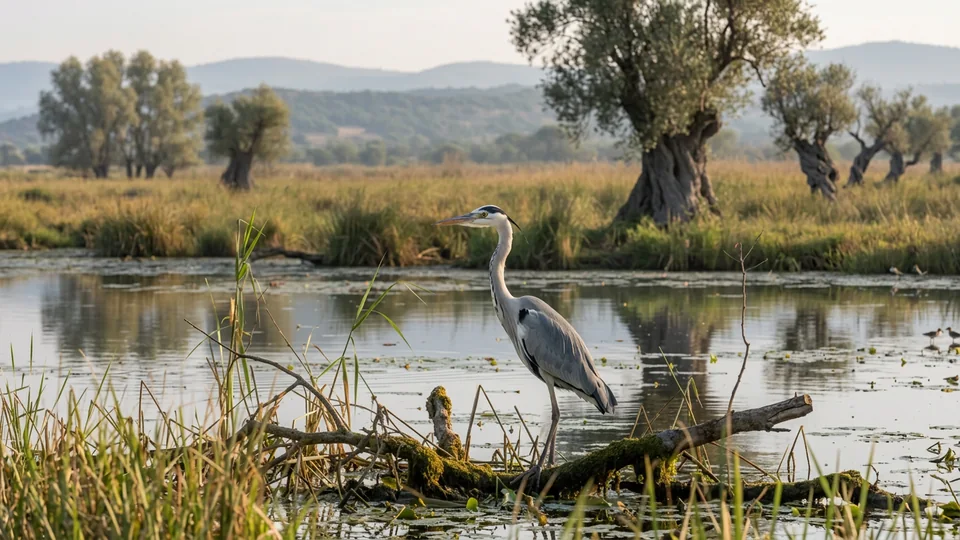
The Grey Heron is a large, grey-and-white waterside predator with a silhouette that is often easier to recognise than its colours. Standing birds can look remarkably different depending on whether the neck is stretched or folded against the chest. BTO describes birds along river and lake margins and in flooded fields, with treetop nesting gatherings known as heronries. The five river associations in this batch are separate viewing situations: Romania's Danube Delta, a Seine-loop gravel-pit reserve, the Egyptian Nile cruise corridor, the Douro estuary at Porto and Tra Su in Vietnam's Mekong Delta. None establishes continuous occurrence along an entire river. The Grey Heron's broad ecological familiarity should not obscure those distinctions, especially where a shore excursion rather than main-channel cruising supplies the relevant access. Species account: https://www.bto.org/learn/about-birds/birdfacts/grey-heron

Behaviour & reproduction

Size
not verified
Weight
About 1.5 kg; BTO species account.
Lifespan
not verified
Status
Least Concern globally, as reported by BTO.

A feeding heron often waits with its attention fixed on shallow water, then changes position slowly rather than constantly searching by flight. The neck may remain contracted until a sudden strike. Flying birds retract the neck and trail the legs, creating the characteristic shape highlighted by BTO. A harsh kraank call may accompany flight, although BTO describes birds as largely silent away from nesting colonies. Heronries are a different social setting from a solitary fishing station: birds gather to breed in treetop sites, sometimes reused over many decades. A bird on a channel bank is not evidence that a nesting colony is nearby. Give hunting birds room to remain at their chosen edge, and do not approach a colony merely to see whether occupied nests are present.

Top wildlife locations

Danube का नदी दृश्य — नदी क्रूज़ के वन्यजीवों का आवास

Danube

Romania: Danube Delta around Mahmudia and delta lakes/channels; separate lower-Danube/delta itinerary, NOT Passau–Vienna–Bratislava–Budapest. Year-round possible; channel banks. Checklist establishes occurrence, not guaranteed daily sightings.


Explore river cruises
Seine का नदी दृश्य — नदी क्रूज़ के वन्यजीवों का आवास

Seine

Grande Noë reserve, Val-de-Reuil, inside Seine loop at Léry-Poses between Les Andelys and Rouen; shore excursion to floodplain gravel-pit lake, not main-channel deck evidence. Year-round; bank edges. Use public hides; sightings not guaranteed.

Explore river cruises
Nile का नदी दृश्य — नदी क्रूज़ के वन्यजीवों का आवास

Nile

Luxor–Esna–Edfu–Kom Ombo–Aswan; exact observation context in quote Wild birds from cruise deck or normal temple/riverbank visits; dated March 2007 observations, not year-round guarantees. Waterfowl and passage birds seasonal; small reed birds require binoculars.

Explore river cruises
Douro का नदी दृश्य — नदी क्रूज़ के वन्यजीवों का आवास

Douro

Porto / Vila Nova de Gaia: Douro estuary reserve, Afurada–Cabedelo–São Paio; NOT a claim for inland Régua–Pinhão Accessible Porto shore visit with paths and hides; waders/gulls concentrated at low tide and migration/winter. Osprey and Short-eared Owl irregular/seasonal; no guaranteed sightings.

Explore river cruises
Mekong का नदी दृश्य — नदी क्रूज़ के वन्यजीवों का आवास

Mekong

Vietnam Mekong delta: Tra Su flooded forest, optional shore excursion from Chau Doc (not main-channel deck wildlife) Official 2016 BirdLife/IEBR survey checklist, not a current abundance claim. Boat/boardwalk/tower viewing; crakes, Watercock and coucals elusive. Migrant kingfishers, pond herons and waders seasonal.

Explore river cruises

Destinations describe the species' habitat, not guaranteed cruise stops. Some animals require an optional inland excursion or are found in restricted reserves.

Fun facts about the Grey Heron

  • Heron nesting gatherings are called heronries.
  • Some treetop sites are used for decades.
  • The neck is usually folded during flight.
  • The long legs trail behind the body.
  • BTO reports a typical weight around 1.5 kg.
  • Flooded fields can be feeding habitat.
  • A tidal viewing opportunity is not a monthly season.
  • The registered Danube reach is the Romanian delta.

Best time to see the Grey Heron

Seasonal evidence varies across the five reaches and cannot be pooled into one global best month. The Danube and Seine registry entries describe year-round possibilities, but an independently verified monthly local calendar was not retrieved. The Nile records derive from a dated March 2007 visit and do not justify selecting March as a recurring season. Tra Su's survey checklist similarly establishes historical occurrence rather than a current timetable. At the Douro estuary, a local viewing guide connects Grey Heron with exposed margins at low tide, a tidal opportunity rather than numbered months. Consequently all five month arrays remain empty. Choose the correct excursion first, then ask the local reserve or guide about current water levels, access and viewing conditions without translating that advice into unsupported annual seasonality.

Grey Heron: season matrix by destination

Highlighted months reflect the stated local evidence, not guaranteed encounters. Neutral months mean no verified monthly viewing window, not absence. Observation records and recommended viewing windows are distinct.

Danube

A recurring local source with an explicit monthly observation calendar was not verified. Registry guidance: Year-round possible; channel banks. Checklist establishes occurrence, not guaranteed daily sightings.
जन॰फ़र॰मार्चअप्रैलमईजूनजुल॰अग॰सित॰अक्टू॰नव॰दिस॰
Explore river cruises

Seine

A recurring local source with an explicit monthly observation calendar was not verified. Registry guidance: Year-round; bank edges. Use public hides; sightings not guaranteed.

जन॰फ़र॰मार्चअप्रैलमईजूनजुल॰अग॰सित॰अक्टू॰नव॰दिस॰
Explore river cruises

Nile

A recurring local source with an explicit monthly observation calendar was not verified. Registry guidance: Wild birds from cruise deck or normal temple/riverbank visits; dated March 2007 observations, not year-round guarantees. Waterfowl and passage birds seasonal; small reed birds require binoculars.

जन॰फ़र॰मार्चअप्रैलमईजूनजुल॰अग॰सित॰अक्टू॰नव॰दिस॰
Explore river cruises

Douro

A recurring local source with an explicit monthly observation calendar was not verified. Registry guidance: Accessible Porto shore visit with paths and hides; waders/gulls concentrated at low tide and migration/winter. Osprey and Short-eared Owl irregular/seasonal; no guaranteed sightings.

जन॰फ़र॰मार्चअप्रैलमईजूनजुल॰अग॰सित॰अक्टू॰नव॰दिस॰
Explore river cruises

Mekong

A recurring local source with an explicit monthly observation calendar was not verified. Registry guidance: Official 2016 BirdLife/IEBR survey checklist, not a current abundance claim. Boat/boardwalk/tower viewing; crakes, Watercock and coucals elusive. Migrant kingfishers, pond herons and waders seasonal.

जन॰फ़र॰मार्चअप्रैलमईजूनजुल॰अग॰सित॰अक्टू॰नव॰दिस॰
Explore river cruises

Where the Grey Heron lives

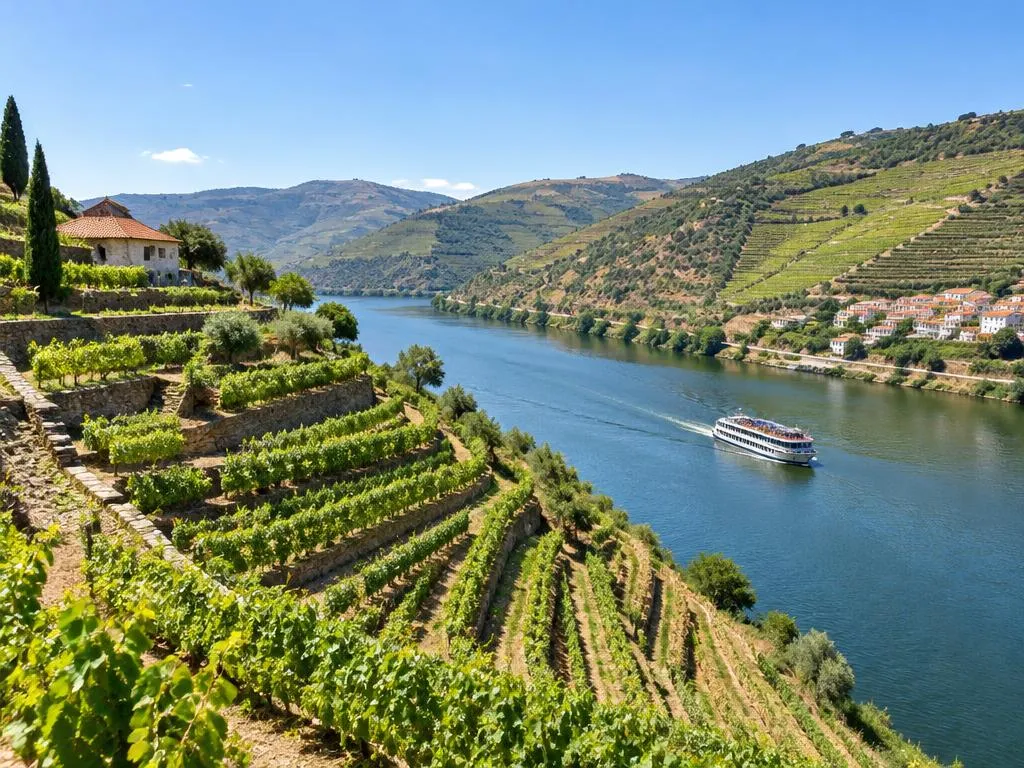
The useful habitat is often the shallow margin rather than the deepest or widest water. A lake bank at Grande Noë, a delta channel near Mahmudia and exposed estuary margins at Porto can each provide feeding opportunities, but their access arrangements differ. Grande Noë is a floodplain gravel-pit lake within the Seine loop at Léry-Poses; it is not main-channel deck evidence. The Danube association is a separate lower-river itinerary, not the familiar Passau–Budapest route. Tra Su requires an optional visit from Chau Doc, while the Nile entry refers to normal cruise and temple visits between Luxor and Aswan. These distinctions matter because a suitable species habitat somewhere in a river basin does not establish visibility from a particular landing or vessel.

What the Grey Heron eats

Grey Herons hunt animal prey, especially fish in accessible water, and also take other small animals when opportunities arise. Their long bill and rapid neck extension are suited to seizing prey at close range rather than filtering food from the water. The BTO source retrieved for this profile focuses on occurrence, identification and nesting, not a quantified food study for any of the five registered reaches. No local prey percentages, average fish size or feeding-success rate were verified. An observer may see swallowing without seeing the original capture, so the identity of a meal should not be guessed. Do not offer fish to draw a bird closer or mistake tolerance of people for a reason to feed it. Natural hunting along a margin is the appropriate behaviour to watch.

Species at a glance

Common name
Grey Heron
Scientific name
Ardea cinerea
Animal group
Birds
Size
not verified
Weight
About 1.5 kg; BTO species account.
Lifespan
not verified
Status
Least Concern globally, as reported by BTO.
Identification
The combination of long legs, a long pointed bill and grey, black and white plumage is characteristic. Adults show a pale head with darker markings, but the overall posture and proportions are particularly useful at cruise-deck distances. In flight, check the folded neck and long legs extending behind the tail. An extended-neck silhouette may instead suggest another large waterbird, although a single instant during take-off is not a reliable test. Juvenile birds can look less crisply marked, and harsh light over water can erase colour differences. Compare several characters rather than relying on apparent height against an unfamiliar bank. The harsh flight call can support the observation, but a distant sound alone should not replace a clear view when several herons are present.

Grey Heron: frequently asked questions

Where can I see the Grey Heron?
Danube, Seine, Nile, Douro, Mekong. Use binoculars to inspect banks, isolated posts, shallow pools and the edges of reedbeds before moving closer. A motionless heron can blend into a grey bank, while a folded neck may make it look shorter than expected. At Porto, public viewpoints around the estuary are more relevant than inland vineyard-cruise scenery. At Grande Noë, use the public hides and recognise that the lake is off the main channel. In the Danube Delta, watch channel margins from the authorised excursion route. On the Nile, do not trespass into cultivated banks while pursuing a bird first noticed from a temple stop. At Tra Su, follow the boat or boardwalk operator's rules. If the bird stretches upright and prepares to leave, stop approaching rather than forcing a flight photograph.
When is the best time to see the Grey Heron?
Seasonal evidence varies across the five reaches and cannot be pooled into one global best month. The Danube and Seine registry entries describe year-round possibilities, but an independently verified monthly local calendar was not retrieved. The Nile records derive from a dated March 2007 visit and do not justify selecting March as a recurring season. Tra Su's survey checklist similarly establishes historical occurrence rather than a current timetable. At the Douro estuary, a local viewing guide connects Grey Heron with exposed margins at low tide, a tidal opportunity rather than numbered months. Consequently all five month arrays remain empty. Choose the correct excursion first, then ask the local reserve or guide about current water levels, access and viewing conditions without translating that advice into unsupported annual seasonality.
How big does the Grey Heron get?
not verified. Adult weight: About 1.5 kg; BTO species account.. Size varies with age, sex and population.
How should I behave around the Grey Heron?
Use binoculars to inspect banks, isolated posts, shallow pools and the edges of reedbeds before moving closer. A motionless heron can blend into a grey bank, while a folded neck may make it look shorter than expected. At Porto, public viewpoints around the estuary are more relevant than inland vineyard-cruise scenery. At Grande Noë, use the public hides and recognise that the lake is off the main channel. In the Danube Delta, watch channel margins from the authorised excursion route. On the Nile, do not trespass into cultivated banks while pursuing a bird first noticed from a temple stop. At Tra Su, follow the boat or boardwalk operator's rules. If the bird stretches upright and prepares to leave, stop approaching rather than forcing a flight photograph.
What does the Grey Heron eat?
Grey Herons hunt animal prey, especially fish in accessible water, and also take other small animals when opportunities arise. Their long bill and rapid neck extension are suited to seizing prey at close range rather than filtering food from the water. The BTO source retrieved for this profile focuses on occurrence, identification and nesting, not a quantified food study for any of the five registered reaches. No local prey percentages, average fish size or feeding-success rate were verified. An observer may see swallowing without seeing the original capture, so the identity of a meal should not be guessed. Do not offer fish to draw a bird closer or mistake tolerance of people for a reason to feed it. Natural hunting along a margin is the appropriate behaviour to watch.
Are wildlife sightings guaranteed on a river cruise?
No. Animals move freely and routes, weather, access restrictions and local conditions influence every outing. Confirm the actual itinerary and shore program before booking.

Compare wildlife in the same destinations

Explore other birds recorded in these destinations. Similar surroundings do not mean the animals share the same habits or viewing season.

Species comparison by animal group and destination
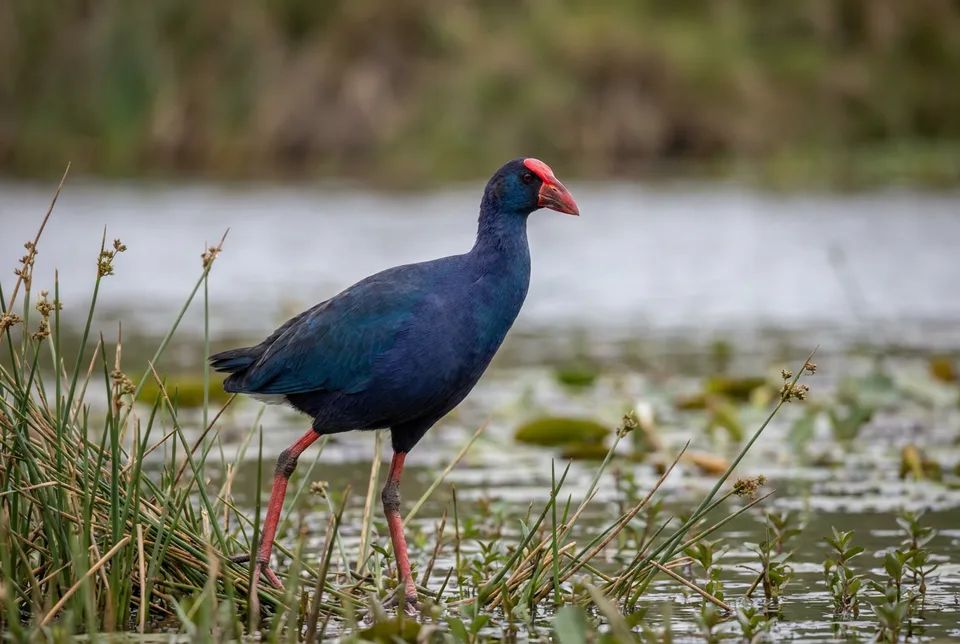
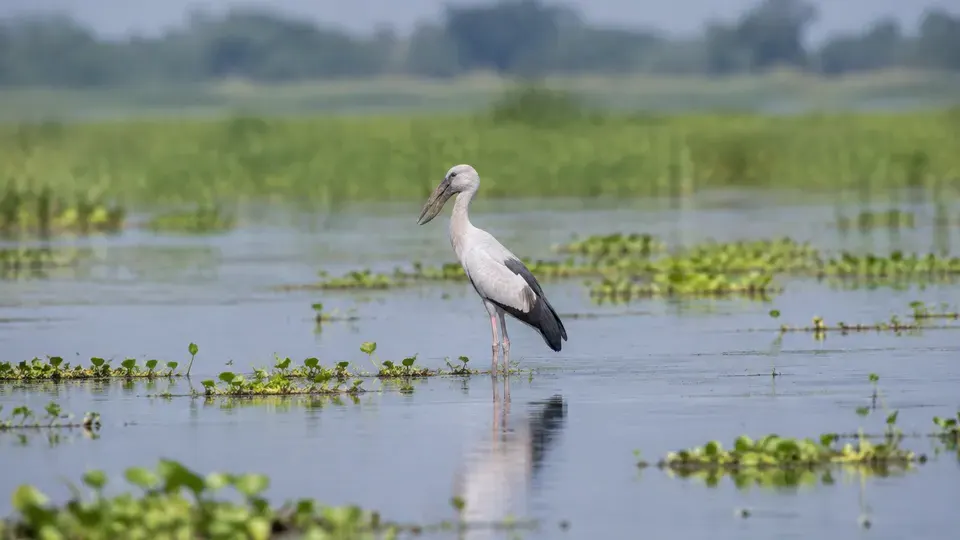
आर्द्रभूमि में Grey heron — Danube, Seine, Nile, Douro, Mekong, नदी क्रूज़ के वन्यजीवGrey Heronआर्द्रभूमि में अफ्रीकी स्वैम्पहेन — नील, मिस्र, नदी क्रूज़ के वन्यजीवAfrican Swamphenआर्द्रभूमि में Asian openbill — Mekong, नदी क्रूज़ के वन्यजीवAsian Openbill
Animal groupBirdsAnimal groupBirdsAnimal groupBirds
DestinationsDanube, Seine, Nile, Douro, MekongDestinationsNileDestinationsMekong
Scientific name
Ardea cinerea

Ardea cinerea

Scientific name
Scientific name
Size
not verified
Size
Size
Weight
About 1.5 kg; BTO species account.
Weight
Weight
Lifespan
not verified
Lifespan
Lifespan
Status
Least Concern globally, as reported by BTO.
Status
Status
Identification
The combination of long legs, a long pointed bill and grey, black and white plumage is characteristic.

The combination of long legs, a long pointed bill and grey, black and white plumage is characteristic. Adults show a pale head with darker markings, but the overall posture and proportions are particularly useful at cruise-deck distances. In flight, check the folded neck and long legs extending behind the tail. An extended-neck silhouette may instead suggest another large waterbird, although a single instant during take-off is not a reliable test. Juvenile birds can look less crisply marked, and harsh light over water can erase colour differences. Compare several characters rather than relying on apparent height against an unfamiliar bank. The harsh flight call can support the observation, but a distant sound alone should not replace a clear view when several herons are present.

Identification
Identification
Habitat
The useful habitat is often the shallow margin rather than the deepest or widest water.

The useful habitat is often the shallow margin rather than the deepest or widest water. A lake bank at Grande Noë, a delta channel near Mahmudia and exposed estuary margins at Porto can each provide feeding opportunities, but their access arrangements differ. Grande Noë is a floodplain gravel-pit lake within the Seine loop at Léry-Poses; it is not main-channel deck evidence. The Danube association is a separate lower-river itinerary, not the familiar Passau–Budapest route. Tra Su requires an optional visit from Chau Doc, while the Nile entry refers to normal cruise and temple visits between Luxor and Aswan. These distinctions matter because a suitable species habitat somewhere in a river basin does not establish visibility from a particular landing or vessel.

Habitat
Habitat
Diet
Grey Herons hunt animal prey, especially fish in accessible water, and also take other small animals when opportunities arise.

Grey Herons hunt animal prey, especially fish in accessible water, and also take other small animals when opportunities arise. Their long bill and rapid neck extension are suited to seizing prey at close range rather than filtering food from the water. The BTO source retrieved for this profile focuses on occurrence, identification and nesting, not a quantified food study for any of the five registered reaches. No local prey percentages, average fish size or feeding-success rate were verified. An observer may see swallowing without seeing the original capture, so the identity of a meal should not be guessed. Do not offer fish to draw a bird closer or mistake tolerance of people for a reason to feed it. Natural hunting along a margin is the appropriate behaviour to watch.

Diet
Diet
Best season
Seasonal evidence varies across the five reaches and cannot be pooled into one global best month.

Seasonal evidence varies across the five reaches and cannot be pooled into one global best month. The Danube and Seine registry entries describe year-round possibilities, but an independently verified monthly local calendar was not retrieved. The Nile records derive from a dated March 2007 visit and do not justify selecting March as a recurring season. Tra Su's survey checklist similarly establishes historical occurrence rather than a current timetable. At the Douro estuary, a local viewing guide connects Grey Heron with exposed margins at low tide, a tidal opportunity rather than numbered months. Consequently all five month arrays remain empty. Choose the correct excursion first, then ask the local reserve or guide about current water levels, access and viewing conditions without translating that advice into unsupported annual seasonality.

Best season
Best season
Season matrix by destination
DanubeNo verified monthly viewing evidence

A recurring local source with an explicit monthly observation calendar was not verified. Registry guidance: Year-round possible; channel banks. Checklist establishes occurrence, not guaranteed daily sightings.

SeineNo verified monthly viewing evidence

A recurring local source with an explicit monthly observation calendar was not verified. Registry guidance: Year-round; bank edges. Use public hides; sightings not guaranteed.

NileNo verified monthly viewing evidence

A recurring local source with an explicit monthly observation calendar was not verified. Registry guidance: Wild birds from cruise deck or normal temple/riverbank visits; dated March 2007 observations, not year-round guarantees. Waterfowl and passage birds seasonal; small reed birds require binoculars.

DouroNo verified monthly viewing evidence

A recurring local source with an explicit monthly observation calendar was not verified. Registry guidance: Accessible Porto shore visit with paths and hides; waders/gulls concentrated at low tide and migration/winter. Osprey and Short-eared Owl irregular/seasonal; no guaranteed sightings.

MekongNo verified monthly viewing evidence

A recurring local source with an explicit monthly observation calendar was not verified. Registry guidance: Official 2016 BirdLife/IEBR survey checklist, not a current abundance claim. Boat/boardwalk/tower viewing; crakes, Watercock and coucals elusive. Migrant kingfishers, pond herons and waders seasonal.

Season matrix by destinationSeason matrix by destination
Previous speciesGreen-winged TealNext speciesGrey Wagtail
All river wildlife
On this page
  • 01About
  • 02Behaviour & reproduction
  • 03Top wildlife locations
  • 04Fun facts
  • 05Best season
  • 06Season matrix by destination
  • 07Habitat
  • 08Diet
  • 09Species at a glance
  • 10Questions & answers
  • 11Compare

Find your river cruise

अपनी यात्रा की योजना बनाएं

Find your next river journey

Compare destinations, shore programs and dates with the animals and habitats you would love to see.

  • Daily shore excursions
  • Responsible wildlife watching
  • Boutique river ships
Explore river cruises