Le meilleur de Palau (Koror - Koror)
Palau Aggressor II · Micronésie · 10N
À propos de cet itinéraire
Cet itinéraire de croisière-plongée à Palau explore les divers sites de plongée de Koror, connus pour leurs récifs vibrants et leur vie marine abondante. Les participants peuvent s'attendre à des rencontres avec de majestueuses raies manta, surtout pendant la haute saison de février à mars, ainsi qu'avec diverses espèces de requins. Le voyage offre la chance d'explorer des sites renommés comme Blue Corner et Siaes Tunnel, promettant des plongées dérivantes palpitantes et de superbes formations coralliennes. Les plongeurs découvriront une grande variété de topographies sous-marines, des murs spectaculaires aux cavernes complexes.
Régions sur cet itinéraire
Points forts
Big Drop-Off
Big Drop-Off is a dramatic wall dive that plummets from 2 feet to over 600 feet, showcasing an incredible vertical reef. The wall is adorned with an abundance of hard and soft corals, alongside sea fans and schools of butterflyfish. This site offers breathtaking panoramics and diverse marine life along its sheer face.
- Dramatic wall dive
- Abundant soft corals
- Schooling butterflyfish
- Deep drop-offs
Blue Corner
Blue Corner is a highly rated dive site in Micronesia, featuring a shallow coral shelf that progresses into a deep wall. It is considered a prime location for observing grey reef sharks, snappers, trevallies, and barracudas, along with manta rays, Napoleon wrasse, and turtles. The site often has strong currents.
- Grey reef sharks
- Schooling fish
- Strong currents
- Napoleon wrasse
Chandelier Caves
Chandelier Caves feature a stunning swim-through experience in a complex of five chambers. Divers can explore these beautiful formations that are filled with air pockets, allowing for surfacing within the caves. The entrance is at approximately 10 meters, leading to a unique dark environment illuminated by dive lights. It's an excellent site for adventurous divers.
- Underwater cavern system
- Swim-throughs
- Air pockets
- Unique geological formations
German Channel
The German Channel is a natural cleaning station for various marine creatures, particularly manta rays and reef sharks. The area is characterized by vibrant soft corals, abundant fish life including snappers and barracudas, and numerous invertebrates such as shrimps, crabs, and nudibranchs. It is a key location for observing feeding and cleaning behaviors.
- Manta ray cleaning station
- Abundant reef fish
- Soft coral gardens
- Macro life
Iro Maru Wreck
The Iro Maru is a 140-meter long merchant ship that sank during WWII. This significant wreck lies upright at a depth of 25 meters, providing a thriving artificial reef. It is encrusted with corals and sponges, hosting diverse marine life including barracudas, jacks, and snappers. The wreck offers opportunities for both exploration and photography.
- WWII wreck dive
- Coral-encrusted structure
- Abundant fish life
- Historical significance
Jellyfish Lake
Jellyfish Lake is a unique marine lake allowing for swimming and snorkeling among millions of non-stinging jellyfish. This brackish water environment offers a surreal experience, distinct from the ocean dives, showcasing a rare biological phenomenon. The lake is a popular non-diving attraction.
- Non-stinging jellyfish
- Unique marine lake
- Snorkeling opportunity
- Surreal experience
Koror
Koror encompasses a wide range of dive sites, from vibrant reefs to historical wrecks and intricate cavern systems. It serves as the primary hub for liveaboards in Palau, offering access to numerous world-class diving opportunities. The area's diverse topography and rich marine biodiversity make it a highlight of any Palau dive trip.
- Diverse dive sites
- Reef and wreck diving
- Cavern exploration
- Rich marine biodiversity
New Drop-Off
New Drop-Off, situated between Blue Corner and Big Drop-Off, is a vertical wall offering stunning visuals. This site is particularly known for its abundance of butterflyfish and barracudas, along with numerous species of reef sharks. The steep wall provides excellent exploration opportunities.
- Vertical wall diving
- Abundant barracudas
- Reef shark sightings
- Vibrant reef ecosystem
Ngedebus Coral Gardens
Ngedebus Coral Gardens is considered one of the best coral formations in the Pacific. This dive features a rich spur and groove reef structure that supports various corals, anemones, and diverse marine life. Critter enthusiasts will find a variety of nudibranchs and small schooling fish.
- Stunning coral formations
- Spur and groove reef
- Colorful anemones
- Macro life
Ngemelis
Ngemelis is an expansive natural channel located in Palau, serving as a renowned dive site. It is recognized for its unique topography and abundant marine life, particularly a variety of sharks and schooling fish. This area often experiences currents, making it an ideal spot for drift dives.
- Natural channel diving
- Shark encounters
- Schooling fish
- Drift diving
Ngerchong
Ngerchong features two main dive sites: Ngerchong Outside and Ngerchong Coral Gardens. Ngerchong Outside is a sloping wall dive popular for seeing sea fans, anemones, and soft corals, with potential manta ray sightings. Ngerchong Coral Gardens boasts diverse hard corals, staghorn coral, table coral, and healthy populations of anemonefish and butterflies.
- Sloping wall dives
- Soft coral gardens
- Hard coral formations
- Anemonefish
Palau
Palau is a world-renowned dive destination, especially popular during the manta ray season from February to March. Its waters are home to schools of fish, unique coral formations, and diverse marine species. The area is particularly known for encounters with manta rays and various shark species.
- Manta ray encounters
- Shark sightings
- Vibrant coral reefs
- Dramatic drop-offs
Peleliu
Peleliu offers a variety of dive sites, primarily characterized by steep walls and drift dives. The area is known for its strong currents which attract large pelagic species such as sharks, tuna, and barracudas. Healthy coral gardens and numerous invertebrates also define the reefs here. Visibility is generally excellent.
- Steep wall dives
- Strong currents
- Pelagic encounters
- Vibrant coral gardens
Short Drop-Off
Short Drop-Off is a shallow wall dive extending into Koror Harbor, offering a rich environment for tropical fish and invertebrates. This site is easily accessible and provides a good introduction to Palau's reef ecosystems, with clear waters and abundant small marine life.
- Shallow wall diving
- Tropical reef fish
- Invertebrate spotting
- Accessible dive site
Siaes Tunnel
Siaes Tunnel is a spectacular deep dive into an underwater tunnel that begins on a reef wall. The tunnel extends for approximately 200 meters, with depths ranging from 10 to 45 meters. Inside, divers can admire stingrays, turtles, and schools of jacks. The tunnel features a large cavern with a window that allows light to penetrate.
- Underwater tunnel exploration
- Stingray sightings
- Schooling jacks
- Unique cavern with window
Ulong Channel
Ulong Channel is a large channel in Palau known for its strong currents and abundant marine life, particularly sharks. The channel's maximum depth is about 60 feet and it features a large plateau filled with lettuce leaf corals, sponges, and anemones. Visibility is often excellent, allowing clear views of the diverse ecosystem.
- Strong currents
- Shark encounters
- Lettuce leaf corals
- Diverse ecosystem
Wonder Channel
Wonder Channel is located near the Rock Islands and is considered a best-kept secret dive site. It is a drift dive along a wall that begins as a shallow reef and drops off. Divers can expect to see soft corals, sea fans, anemones, yellowtail snappers, and a variety of reef fish. This site offers a vibrant and often pristine environment.
- Secret dive site
- Drift diving
- Pristine soft corals
- Vibrant reef fish
Prérequis
- Niveau requisOpen Water
- ExpérienceAucune plongée enregistrée minimale requise.
Excursions à terre
- Profitez de deux excursions à terre pendant la semaine à Peleliu et Ulong Beach.
Bon à savoir
- Diving services are carried out from the 35-foot dive tender.
- 4-5 dives per day are typically conducted.
- A staff member will meet guests arriving at Koror (ROR) International Airport on Sunday evening.
Program jour par jour
Jour 1: Embarquement – Koror, Palau
Les passagers arrivant à l'aéroport international de Koror (ROR) le dimanche soir sont accueillis par un membre de l'équipage et transférés vers le Palau Aggressor II. L'embarquement commence à 16h30, le navire étant amarré dans le port de Neco Marine (Malakal). Le dîner est servi à bord, suivi d'un briefing de bienvenue et de l'attribution des cabines.
Jour 2: Palaos – Sites de Plongée Diversifiés
Aujourd'hui marque le premier jour complet de plongée, explorant divers sites à travers les Palaos. La région est réputée pour sa riche biodiversité, présentant un mélange de plongées sur mur, de plongées dérivantes et d'explorations de récifs. Les plongeurs peuvent s'attendre à rencontrer de grands bancs de poissons, des espèces pélagiques et des formations coralliennes vibrantes.
Jour 3: Palaos – Exploration de Récifs et de Cavernes
Cette journée continue l'exploration des sites de plongée célèbres des Palaos, se concentrant sur les systèmes de récifs complexes et les cavernes sous-marines captivantes. La région présente souvent des tombants impressionnants, des passages et une abondance de macrofaune aux côtés de plus grands pélagiques. Les courants peuvent varier, offrant des expériences de dérive à la fois relaxantes et exaltantes.
Jour 4: Palaos – Action pélagique et plongées récifales
La plongée d'aujourd'hui se concentre sur des sites connus pour l'action pélagique et les structures récifales spectaculaires. La zone est caractérisée par de forts courants qui attirent les bancs de poissons et les grands prédateurs. Les plongeurs peuvent s'attendre à rencontrer une variété d'espèces de requins et éventuellement des raies manta, en particulier dans les stations de nettoyage. Les récifs sont ornés de coraux durs et mous, soutenant un écosystème sain.
Jour 5: Palaos – Topographie unique et créatures marines
Les plongées d'aujourd'hui mettent en lumière la topographie sous-marine unique des Palaos, y compris des murs profonds, des tunnels et des plateaux récifaux vibrants. Les sites regorgent souvent de poissons de récif colorés, d'invertébrés et de diverses espèces de nudibranches. La visibilité est généralement excellente, offrant des vues claires sur l'environnement marin diversifié et les formations coralliennes complexes.
Jour 6: Palaos – Épaves de la Seconde Guerre mondiale et récifs
Le programme de plongée d'aujourd'hui comprend un accent sur les épaves historiques de la Seconde Guerre mondiale dispersées autour des Palaos, ainsi que d'autres explorations récifales. Ces épaves offrent des habitats uniques pour la vie marine et sont souvent recouvertes de coraux. Les plongeurs explorent les vestiges structurels tout en observant les poissons résidents et les invertébrés qui habitent ces récifs artificiels. Les plongées récifales complètent l'expérience avec leurs écosystèmes vibrants.
Jour 7: Palaos – Sites emblématiques et plongées dérivantes
Ce jour-là, l'itinéraire revisite certains des sites de plongée les plus emblématiques des Palaos, connus pour leurs forts courants et leur vie marine abondante. La plongée dérivante est un mode d'exploration courant ici, permettant aux plongeurs de glisser sans effort le long des murs et des récifs. Ces sites sont fréquemment visités par diverses espèces de requins, de grands pélagiques et des bancs de poissons, ce qui en fait des plongées exaltantes.
Jour 8: Palaos – Dernières plongées
Cette journée offre la dernière opportunité de plonger, avec deux plongées prévues avant que le navire ne retourne au quai. Les plongées du matin explorent une dernière sélection des divers paysages sous-marins des Palaos, offrant une chance de capturer les derniers souvenirs de ses récifs vibrants et de ses habitants marins. Après les plongées, le bateau retourne au quai de Koror.
Jour 9: Débarquement – Koror, Palau
Les passagers quittent le Palau Aggressor II avant 8h00 après un dernier petit-déjeuner à bord. Les transferts vers l'aéroport ou un hôtel local sont assurés selon les arrangements individuels. L'aventure en croisière-plongée à Palau se termine ici.
Jour 10: Débarquement – Koror, Palau
Les passagers quittent le Palau Aggressor II avant 8h00 après un dernier petit-déjeuner à bord. Les transferts vers l'aéroport ou un hôtel local sont assurés selon les arrangements individuels. L'aventure en croisière-plongée à Palau se termine ici.
Prochains départs
Tous les itinéraires de ce bateau
À propos du bateau
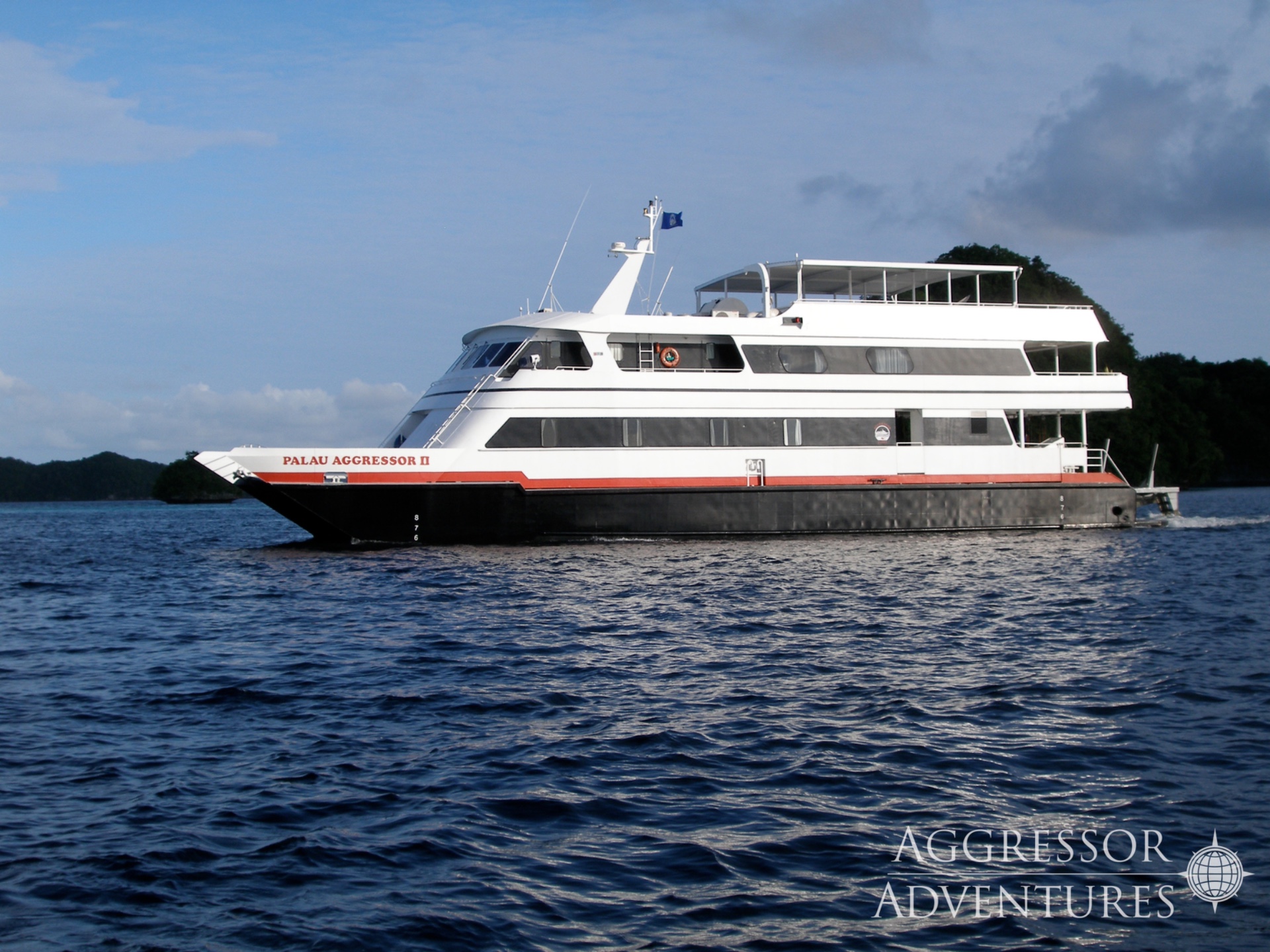 Palau Aggressor IIMicronésie