Premium Expedition (Port Ghalib - Hurghada)
Odyssey · Égypte · 10 nuits
À propos de cet itinéraire
Seafari présente son itinéraire le plus prestigieux, la Premium Expedition, conçu pour les plongeurs exigeants qui souhaitent découvrir l'essence même de la mer Rouge. Ce circuit exclusif offre l'opportunité d'explorer les richesses sous-marines du nord jusqu'au Blue Hole de Dahab, incluant les récifs spectaculaires de Daedalus, plus au sud, et Elphinstone. Axé sur des écosystèmes coralliens vibrants, des tombants spectaculaires et une vie marine diversifiée, ce voyage promet une aventure immersive. Chaque plongée révèle de nouveaux spectacles, des murs colorés et des canyons mystérieux aux observations palpitantes de requins, en faisant une expérience unique pour ceux qui recherchent à la fois beauté et adrénaline.
Régions sur cet itinéraire
Points forts
Big Brothers Plateau
The Big Brothers Plateau is one of the most beautiful dive areas around the Brothers Islands. Divers can encounter thresher sharks, hammerhead sharks, and oceanic whitetip sharks here. The plateau features spectacular oceanic drop-offs and deep hard coral formations, complemented by magnificent gorgonians, making it a prime spot for pelagic encounters.
- Thresher sharks
- Hammerhead sharks
- Oceanic whitetip sharks
- Magnificent gorgonians
Blue Hole
The Blue Hole is a legendary dive site in the Egyptian Sinai, widely considered one of the most dangerous yet fascinating dives in the world. It's a massive submarine sinkhole that plunges to over 130 meters, known for its unique experience for experienced divers. The area's natural habitat supports diverse marine biodiversity, including rare pelagic species and intricate coral formations along its edges.
- Submarine sinkhole
- Deep diving potential
- Rare pelagic species
- Intricate coral formations
Carless Reef
Carless Reef is an isolated coral reef in the Red Sea, recognized for its stunning hard coral gardens and beautiful soft corals. The reef features impressive drop-offs and large schools of various fish, including groupers, snappers, and schools of barracuda. It is an excellent spot for drift diving with good visibility and opportunities to observe diverse marine life.
- Stunning hard corals
- Beautiful soft corals
- Large fish schools
- Drift diving
Dunraven Wreck
The Dunraven is an 80-meter British steam ship that sank in 1876, now lying upside down at around 15 to 29 meters. The wreck is covered in corals and serves as a bustling ecosystem for various marine species, including glassfish, scorpionfish, and moray eels. Its open holds allow for exciting penetration dives, revealing the ship's structure and its resident inhabitants.
- Historic steamship wreck
- Open for penetration
- Rich marine life habitat
- Coral-encrusted structure
Garb Bent
Garb Bent is a spectacular dive site located near Dahab, known for its increased biodiversity and abundant hard and soft corals. The area is composed of a steep drop-off and a shallow plateau, offering a clear spot for macro and wide-angle photography. It's an excellent location for observing small reef inhabitants and vibrant coral ecosystems.
- Increased biodiversity
- Hard and soft corals
- Steep drop-off
- Shallow plateau
Gordon Reef
Gordon Reef is located at the northern tip of the Sinai Peninsula, known for its unique 'shark anenome' often found along its eastern drop-off. The reef features a diverse topography with sandy bottoms, coral gardens, and small gorgonian forests. It's a prime location for spotting various reef fish and occasional larger pelagic species, including triggerfish and blue triggerfish.
- Shark anemone
- Coral gardens
- Diverse reef fish
- Sandy bottoms
Jackson Island
Jackson Island is an iconic reef in Ras Mohammed National Park, characterized by spectacular underwater canyons. It offers diverse dive sites between 5 and 30 meters, providing experiences for all levels. The site features abundant gorgonian and soft corals, with a high chance of encountering barracudas, jacks, and occasional grey sharks. It is easily accessible with moderate currents.
- Underwater canyons
- Abundant gorgonians
- Schooling barracudas
- Occasional grey sharks
Jackson Reef
Jackson Reef is one of the spectacular reefs found in Ras Mohammed National Park, famous for its abundant gorgonian corals and rich pelagic life. Divers often encounter turtles and various shark species here. The reef offers a mix of wall dives and plateau areas, with diverse topography that caters to both wide-angle and macro photography enthusiasts.
- Abundant gorgonian corals
- Turtle encounters
- Pelagic sightings
- Diverse topography
Sha'ab Ali El Ero
Sha'ab Ali El Ero is a beautiful horseshoe-shaped reef characterized by schools of dolphins frequently visiting its waters. The reef offers diverse diving, from gentle slopes to vibrant coral patches, providing excellent opportunities for observing reef life in a relaxed setting. It's a favored spot for both calm dives and potential dolphin encounters.
- Dolphin encounters
- Horseshoe-shaped reef
- Vibrant coral patches
- Relaxed diving
Small Brother's Southern Plateau
The Southern Plateau of Small Brother offers excellent chances for observing grey reef sharks and hammerhead sharks. Divers may also encounter a manta ray or sunfish, particularly along the plateau from 35 to 40 meters and the deep zone. The area features a very rich ecosystem with groupers, barracudas, and fusiliers, and is frequented by various shark species, including silky and thresher sharks.
- Grey reef sharks
- Hammerhead encounters
- Manta ray sightings
- Rich reef ecosystem
The Canyon
The Canyon is a spectacular geological formation in the Red Sea, featuring a deep underwater gorge. This site is characterized by vertical wall formations and rich marine biodiversity, with numerous small caves and crevices providing shelter for various fish and invertebrate species. Technical diving opportunities are available, allowing exploration of its deeper sections.
- Underwater gorge
- Vertical wall formations
- Rich biodiversity
- Technical diving
The Knee
The Knee is a beautiful, curved wall dive in the Red Sea's northern section, abundant with colorful gorgonian corals. This site is known for attracting schooling hammerhead sharks and other pelagic species along its impressive drop-offs. The visibility is usually excellent, making it a vibrant site for observing a diverse range of marine life.
- Curved wall dive
- Colorful gorgonians
- Schooling hammerheads
- Excellent visibility
Thegianis D (Wreck)
The Thegianis D is a 104-meter cargo ship wreck that sank in 1983, now resting between Croatia and Yemen. This wreck offers impressive structures and is home to a variety of marine life, providing fascinating exploration for divers. The cargo ship's remains are well-preserved and act as an artificial reef, teeming with fish.
- Cargo ship wreck
- Well-preserved structure
- Artificial reef habitat
- Teeming with fish
Thistlegorm
The SS Thistlegorm is one of the most famous and well-preserved wrecks in the world, a British armed merchant navy ship sunk in 1941. Lying at approximately 30 meters, the wreck is a time capsule of World War II cargo, including motorcycles, trucks, and ammunition. It has become an artificial reef, attracting a rich variety of marine life and offering thrilling penetration opportunities for experienced divers.
- Historic WWII wreck
- Cargo penetration
- Artificial reef ecosystem
- Photogenic structure
Prérequis
- Niveau requisAdvanced Open Water
- Plongées minimum enregistrées50
- ExpérienceLes plongeurs doivent avoir au moins 50 plongées enregistrées pour participer à ce voyage.
Bon à savoir
- A waiting period of 24 hours is recommended before flying after the last dive.
- Route and dive sites are subject to change based on local regulations, guest experience, weather, and logistics.
Program jour par jour
Jour 1: Embarquement – Port Ghalib
Aujourd'hui marque le jour de l'embarquement à Port Ghalib. Les invités sont accueillis à bord du navire Odyssey à partir de 17h00. Après s'être installés dans leurs cabines, il y aura un briefing de bienvenue et une présentation de l'équipage, suivis du dîner.
Jour 2: Nord de la Mer Rouge – Récifs et Murs
Le voyage commence par des plongées dans le nord de la Mer Rouge, une zone réputée pour ses récifs vibrants et ses impressionnantes plongées sur mur. Ces sites présentent souvent des coraux mous colorés et une variété de poissons de récif. Les plongeurs bénéficient d'une douce introduction à la topographie sous-marine de la région.
Jour 3: Parc National Ras Mohammed – Sites emblématiques
Cette journée est dédiée à l'exploration des sites de plongée emblématiques du Parc National Ras Mohammed, une zone protégée connue pour ses forts courants et sa riche biodiversité marine. La topographie comprend des murs impressionnants et des récifs vibrants, attirant de nombreuses espèces pélagiques. La visibilité est généralement excellente, offrant des vues claires de l'environnement sous-marin.
Jour 4: Nord de la Mer Rouge – Épaves et Récifs Célèbres
La plongée du jour se concentre sur des épaves bien connues et des récifs diversifiés dans le nord de la Mer Rouge. Ces sites sont célèbres pour leur signification historique et la vie marine qui les a adoptés. Attendez-vous à une topographie variée, des pentes douces aux tombants spectaculaires, avec des opportunités pour la photographie macro et grand-angle.
Jour 5: Centre de la Mer Rouge – Canyons et Récifs Colorés
L'exploration continue dans le centre de la Mer Rouge, connue pour ses canyons complexes et ses jardins de coraux vibrants. Ces sites offrent généralement une excellente visibilité et sont fréquentés par des bancs de barracudas, de carangues et de vivaneaux. La topographie comprend souvent des pinacles impressionnants et des passages spectaculaires.
Jour 6: Extrême Sud de la Mer Rouge – Rencontres avec les Requins
La plongée dans l'extrême sud de la Mer Rouge offre des rencontres palpitantes avec les requins, en particulier les requins-marteaux. Les récifs y sont immaculés, présentant de magnifiques murs verticaux et des tombants spectaculaires. Les courants forts sont courants, ce qui permet des plongées dérivantes excitantes avec une vie pélagique abondante.
Jour 7: Île Jackson – Vie marine diversifiée
L'île Jackson, située dans une zone protégée, offre d'excellentes opportunités de rencontrer une vie marine diversifiée, y compris diverses espèces de requins. Les sites de plongée sont caractérisés par d'incroyables formations rocheuses et de vibrants jardins de coraux, soutenant un écosystème riche. Des courants doux permettent souvent une observation détendue.
Jour 8: Épaves de la Mer Rouge – Sites historiques
Cette journée est dédiée à l'exploration d'épaves historiques qui reposent sous la surface de la Mer Rouge, offrant des opportunités uniques de pénétration. Ces sites sont réputés pour leurs structures complexes et la vie marine diversifiée qui les a colonisées. Attendez-vous à un mélange de plongée sur récif et sur épave avec une bonne visibilité.
Jour 9: Îles Brothers – Rencontres océaniques
Les îles Brothers sont des pinacles isolés dans la Mer Rouge, célèbres pour attirer de grandes espèces pélagiques, en particulier les requins océaniques à pointes blanches et les requins-marteaux. La topographie dramatique comprend des parois abruptes et des plateaux couverts de coraux mous vibrants. Des courants forts sont courants autour de ces récifs exposés.
Jour 10: Récif de Daedalus – Action pélagique
Le récif de Daedalus est un récif isolé en pleine mer, célèbre pour sa forte probabilité de rencontres avec des bancs de requins-marteaux et d'autres grands pélagiques. Les vastes jardins de corail sur son plateau et ses parois abruptes offrent un décor à couper le souffle pour les plongées dérivantes. Les courants peuvent être forts, attirant une abondance de vie marine.
Jour 11: Débarquement – Hurghada
Le voyage se termine ce matin à Hurghada. Les clients profitent d'un dernier petit-déjeuner à bord avant de débarquer de l'Odyssey entre 08h00 et 09h00.
Prochains départs
Aucun départ prévu pour cet itinéraire pour le moment.
Tous les itinéraires de ce bateau
- The Golden Loop : Nord - Brother - Safaga (Hurghada - Port Ghalib) · 7 nuits
- Zabargad - Rocky - St John's - Elphinstone (Port Ghalib - Port Ghalib) · 7 Nuits / 8 Jours
- La Boucle d'Or : Nord - Brother - Safaga (Hurghada - Hurghada) · 7 nuits
- Daedalus - Rocky - Zabargad - Elphinstone (Port Ghalib - Port Ghalib) · 7 Nuits / 8 Jours
- Best of Tiran · 8J/7N
- La Boucle d'Or - Nord/Brother/Safaga · 7 nuits
- Brothers - Daedalus - Elphinstone (Port Ghalib - Hurghada) · 7 Nuits / 8 Jours
- Brothers - Daedalus - Elphinstone (Hurghada - Port Ghalib) · 7 Nuits / 8 Jours
- Brothers - Daedalus - Elphinstone (Hurghada - Hurghada) · 7 nuits
- Trésors du Nord (Hurghada - Hurghada) · 8J/7N
- Fury Shoal (Port Ghalib - Port Ghalib) · 7 Nuits / 8 Jours
- Parc Marin - Le Meilleur, tout simplement · 14 nuits
- Brothers, Daedalus, Elphinstone · 7 Nuits / 8 Jours
- Premium Expedition (Hurghada - Port Ghalib) · 10 nuits
- Premium Expedition (Port Ghalib - Hurghada) · 10 nuits
- Premium Expedition (Hurghada - Hurghada) · 11D/10N
- Le meilleur de Dahab et Tiran · 8 Jours / 7 Nuits
- La Boucle d'Or : Nord - Brother - Safaga (Port Ghalib - Hurghada) · 7 nuits
À propos du bateau
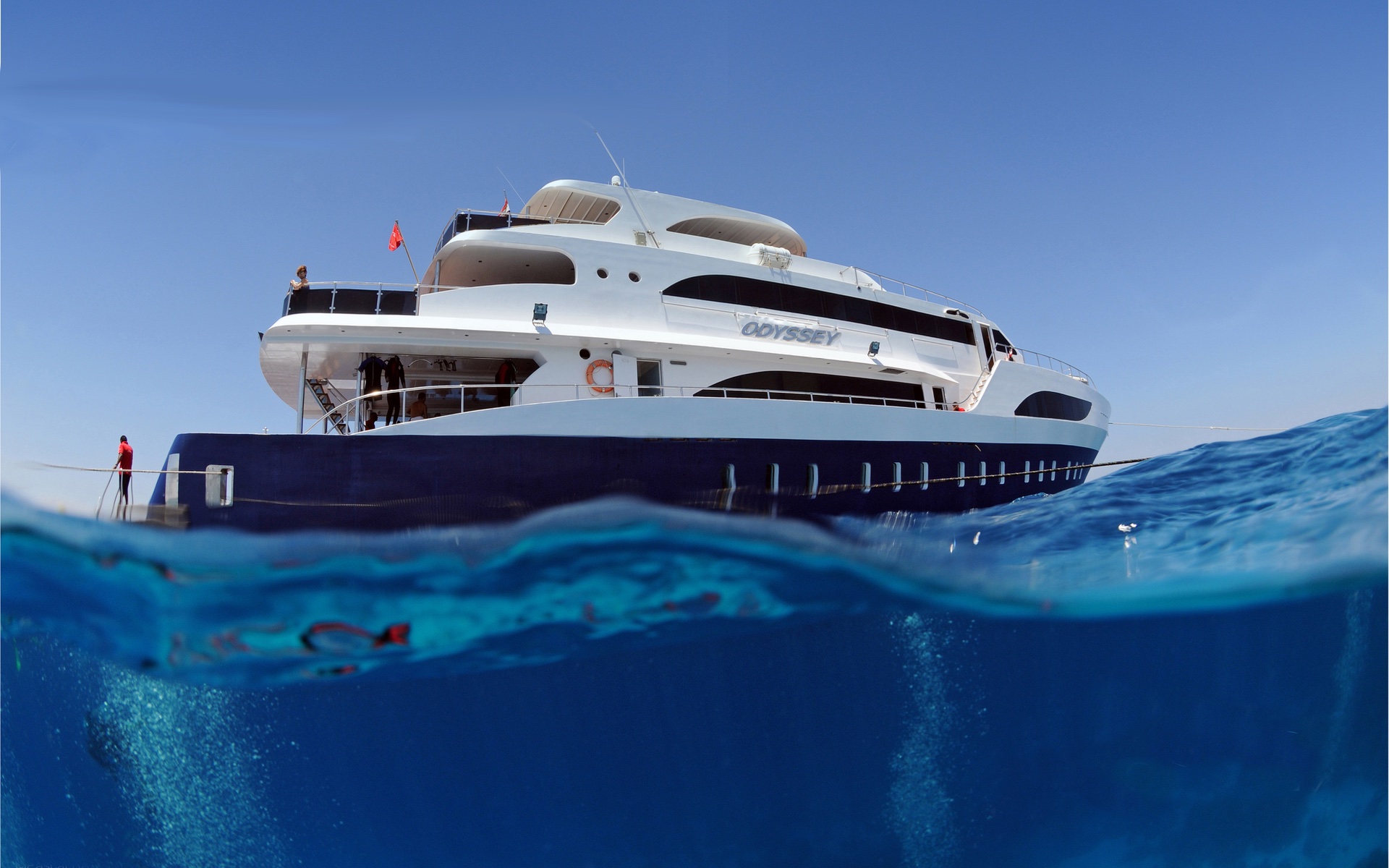 OdysseyÉgypte