Épaves du Nord, Ras Mohamed, Tiran, Brothers, Safaga (Hurghada - Hurghada)
Discovery I · Égypte · 8J/7N
À propos de cet itinéraire
Cette croisière-plongée en mer Rouge est une aventure captivante qui explore un mélange d'épaves du nord, de récifs animés et d'îles au large. L'itinéraire emmène les plongeurs à travers les célèbres zones de Ras Mohammed et Tiran, plus au sud jusqu'aux îles Brothers, et les récifs près de Safaga. Des rencontres avec une vie marine diversifiée sont prévues, y compris diverses espèces de requins, des raies manta et des bancs de poissons, sur fond de topographie sous-marine spectaculaire et d'épaves historiques. Une semaine de plongée incroyable est au programme dans les eaux emblématiques de l'Égypte.
Régions sur cet itinéraire
Points forts
Carnatic
The Carnatic, a 90-meter-long sail and engine steamer, sank in 1869 while carrying a cargo of wine and 'London soda water'. The wreck is largely intact and lies at approximately 26 meters, offering excellent penetrations into its cargo holds. Its wooden hull has decayed, revealing its iron framework, which is now heavily adorned with soft corals, attracting various marine life including groupers and octopuses.
- 19th-century steamer
- Intact structure
- Penetration opportunities
- Soft coral growth
Dunraven
The Dunraven wreck, a 72m-long English steamer, sank in 1876 on Sha'ab Mahmoud. It lies upside down at a maximum depth of 29m. The wreck is heavily encrusted with corals, attracting a wide variety of marine life including glassfish and moray eels. It offers an excellent opportunity for exploring a historical site that has become a thriving artificial reef.
- 19th-century steamer
- Upside-down position
- Coral encrusted
- Abundant marine life
Giannis D
The Giannis D is a large Greek freighter that sank in 1983. The wreck is split into two sections, lying at a maximum depth of 28m. Divers can explore the engine room, bridge, and cabins, which are now heavily encrusted with soft corals. The wreck is teeming with glassfish, snapper, jacks, and moray eels, making it a captivating dive site for both its historical aspect and marine life.
- Greek freighter wreck
- Penetration dives
- Engine room exploration
- Abundant glassfish
Ras Mohamed
Ras Mohamed National Park is celebrated for its exceptional reef ecosystems, found at the tip of the Sinai where the Red Sea meets the Gulf of Suez and the Gulf of Aqaba. This national park offers some of the best diving in the region, known for its healthy reefs, abundant marine life, and dramatic underwater topography. It's an ideal location for both vibrant reef exploration and wall diving.
- Pristine reefs
- Diverse marine life
- Wall diving
- National park status
Red Sea
The Red Sea is globally renowned for its exceptional marine biodiversity, crystal-clear waters, and stunning coral reefs. It is home to thousands of invertebrate species and over a thousand types of fish, many of which are endemic. The nutrient-rich waters support vibrant ecosystems, making it a prime destination for divers seeking encounters with reef sharks, dugongs, and a myriad of colorful reef fish.
- Exceptional biodiversity
- Crystal-clear waters
- Endemic species
- Vibrant coral reefs
Safaga
Safaga is a port town known for its accessible and diverse dive sites, offering a mix of vibrant reefs and historical wrecks. The sites around Safaga generally feature rich hard and soft coral formations, with a variety of reef fish and occasional larger marine life. It's a key area for exploring both natural reef beauty and submerged history in the Red Sea.
- Coral diversity
- Reef exploration
- Accessible wrecks
- Varied marine habitats
Salam Express
The Salam Express is a relatively recent wreck, sinking in 1976 after an overnight journey from Hurghada to Safaga. The vessel, lying on its side, extends to a maximum depth of 29m. It is completely covered in corals and is home to a wide variety of marine life, including glassfish and moray eels. This wreck offers an excellent deep reef dive experience.
- Recent wreck
- Coral-covered structure
- Glassfish schools
- Moray eels
Sha'ab Ali Abu Nuhas
Sha'ab Ali, near Abu Nuhas, is a great reef area offering diverse marine habitats. This site is known for its shallow, healthy reef systems that provide excellent opportunities for observing a variety of reef fish and some larger pelagic species. The area is particularly famous for its 'Yellow Fish Reef', which is often blanketed by schools of yellow fish, creating stunning visual displays.
- Healthy reef systems
- Diverse fish species
- Shallow depths
- Yellow Fish Reef
SS Thistlegorm
The SS Thistlegorm is one of the most famous and best-preserved wrecks in the world. This British war vessel, sunk in 1941, carried a significant cargo of wartime supplies like trucks, motorbikes, and rifles. Lying at a depth of 30 meters, the wreck offers incredible penetration possibilities and is now home to a diverse marine ecosystem, making it a highlight for any Red Sea itinerary.
- World War II wreck
- Cargo holds
- Motorbikes and trucks
- Penetration opportunities
The Brothers Islands
The Brother Islands are renowned for their twin pinnacles emerging from the deep abyss, located about 60 miles offshore from El Quseir. As part of the Marine Park Islands National Park, these islands offer spectacular wall diving with vibrant soft corals and dense gorgonian forests. The area is a hotspot for large pelagics, including various shark species and manta rays, with occasional thresher sharks sighted on the North and South plateaus of Small Brother.
- Pelagic encounters
- Shark schools
- Soft coral walls
- Gorgonian forests
Thomas Reef
Thomas Reef is part of the Tiran Strait, recognized for its stunning wall dives and deep canyon. The reef boasts impressive hard and soft coral gardens, attracting a wide array of reef fish and pelagic species. Strong currents often characterize this site, making it an exciting drift dive with abundant marine life.
- Deep canyon
- Wall dives
- Coral gardens
- Drift diving
Prérequis
- Niveau requisAdvanced Open Water
- Plongées minimum enregistrées10
- ExpérienceLes plongeurs doivent avoir un minimum de 10 plongées enregistrées.
Bon à savoir
- An Advanced Open Water certification is recommended to maximize enjoyment of the trip, especially for deeper sites and potential currents.
- Beginner divers may find some dives challenging and might be asked by the Cruise Director to skip certain dives.
- Divers are recommended to wait for 24 hours before flying after their last dive.
- Transfers are generally from/to Hurghada or RMF airport for Saturday, the first and last day of the trip. Additional charges may apply for transfers on other days or from Marsa Alam.
- Guests must be on board by Sunday before 05:00. The boat typically departs on Sunday and returns to port on Friday at about 15:30.
Program jour par jour
Jour 1: Embarquement – Hurghada
L'embarquement commence à Hurghada. Les passagers s'installent dans leurs cabines et reçoivent un briefing de sécurité complet avant que le navire ne se prépare au départ. La première soirée se passe à la marina, permettant de se détendre et d'anticiper la semaine de plongée à venir.
Jour 2: Épaves du Nord et Ras Mohamed – Aventures de Plongée
La plongée d'aujourd'hui se concentre sur le nord de la mer Rouge, incluant potentiellement des épaves célèbres comme le SS Thistlegorm, considéré comme l'une des meilleures plongées sur épave au monde. La zone offre de riches aperçus historiques et des opportunités d'explorer d'incroyables récifs artificiels. Après les plongées sur épave, le voyage continue vers le Parc National Ras Mohamed, connu pour ses récifs immaculés et ses écosystèmes marins diversifiés, offrant des plongées sur mur et des jardins de corail vibrants.
Jour 3: Tiran – Exploration des Récifs
La journée est dédiée à l'exploration des impressionnants récifs de la zone de Tiran, incluant les récifs Gordon, Thomas, Woodhouse et Jackson. Ces sites sont réputés pour leurs tombants spectaculaires, leurs jardins de corail vibrants et leurs forts courants qui attirent les espèces pélagiques. Les plongeurs peuvent s'attendre à un environnement dynamique avec des plongées dérivantes potentielles le long de superbes formations murales, offrant une chance d'observer des bancs de poissons et une vie marine plus grande attirée par les eaux riches en nutriments.
Jour 4: Îles Brothers – Rencontres Océaniques
Aujourd'hui marque l'arrivée aux emblématiques Îles Brothers, comprenant Big Brother et Small Brother. Ces pinacles isolés s'élèvent des profondeurs et sont célèbres pour leurs rencontres pélagiques et leurs murs immaculés ornés de coraux mous et de forêts de gorgones. La zone est connue pour ses forts courants et offre des opportunités de plongée dérivante spectaculaires où les plongeurs rencontrent couramment diverses espèces de requins, y compris des requins-marteaux et des requins océaniques à pointes blanches.
Jour 5: Îles Brothers – Épaves et Récifs
Poursuivant l'exploration des Îles Brothers, les plongeurs ont davantage d'opportunités d'explorer la riche vie marine autour de ces monts sous-marins isolés. La journée peut également inclure des plongées sur les épaves de l'Aida II et du Numidia à Big Brother, offrant un mélange fascinant d'exploration historique et d'écosystèmes récifaux vibrants. Ces sites abritent souvent de grands bancs de poissons et une variété de requins de récif.
Jour 6: Safaga – Récifs et Épaves du Nord
Le voyage se poursuit vers le sud en direction de la région de Safaga, offrant divers sites de plongée connus pour leurs magnifiques formations coralliennes et leurs potentielles plongées sur épaves. Cette zone présente souvent des systèmes récifaux vibrants avec une abondance de poissons de récif, et certains sites sont caractérisés par une topographie spectaculaire telle que des murs et des pinacles. L'exploration peut inclure des récifs locaux populaires et des épaves moins profondes, offrant une expérience de plongée détendue mais engageante.
Jour 7: Safaga – Exploration Finale
La dernière journée complète de plongée se poursuit dans la région de Safaga, se concentrant sur l'exploration approfondie de ses sites de plongée renommés. Cette région est célèbre pour ses conditions relativement calmes par rapport à la pleine mer, ce qui la rend idéale pour profiter de vastes systèmes récifaux, y compris des coraux durs et mous. Les plongeurs découvrent des habitats marins variés, des jardins de coraux peu profonds aux pinacles plus profonds grouillant de macro-vie et de bancs de poissons colorés avant que le navire ne commence son voyage de retour.
Jour 8: Débarquement – Hurghada
Après le petit-déjeuner, les passagers débarquent à Hurghada. Les transferts sont organisés en fonction des plans de voyage individuels, concluant un voyage inoubliable en croisière-plongée à travers la mer Rouge.
Prochains départs
- 2027-01-09 – 2027-01-16à partir de 930 USDRéserver
- 2027-01-23 – 2027-01-30à partir de 930 USDRéserver
- 2027-02-13 – 2027-02-20à partir de 930 USDRéserver
- 2027-02-27 – 2027-03-06à partir de 930 USDRéserver
- 2027-04-17 – 2027-04-24à partir de 1,037 USDRéserver
- 2027-05-22 – 2027-05-29à partir de 1,037 USDRéserver
- 2027-09-25 – 2027-10-02à partir de 1,277 USDRéserver
- 2027-10-16 – 2027-10-23à partir de 1,277 USDRéserver
- 2027-11-13 – 2027-11-20à partir de 1,277 USDRéserver
- 2028-01-08 – 2028-01-15à partir de 988 USDRéserver
- 2028-01-22 – 2028-01-29à partir de 988 USDRéserver
- 2028-02-12 – 2028-02-19à partir de 988 USDRéserver
Tous les itinéraires de ce bateau
- Épaves du Nord, Ras Mohamed, Tiran (Hurghada - Hurghada) · 8J7N
- Brothers - Daedalus - Elphinstone (Port Ghalib) (Port Ghalib → Port Ghalib) · 8D7N
- Brothers - Daedalus - Elphinstone (Hurghada) (Hurghada → Hurghada) · 8J7N
- St. John's, Fury Shoal, Elphinstone (Port Ghalib - Port Ghalib) · 8J/7N
- Brothers - Daedalus - Elphinstone (Hurghada → Port Ghalib) · 8D7N
- Brothers - Daedalus - Elphinstone (Port Ghalib → Hurghada) · 8D7N
- Brothers - Daedalus - Elphinstone · 7 nuits
- Brothers, Daedalus, Elphinstone (Hurghada - Hurghada) · 7 nuits
- Daedalus, Rocky, Zabargad, Elphinstone (Port Ghalib - Port Ghalib) · 7 nuits
À propos du bateau
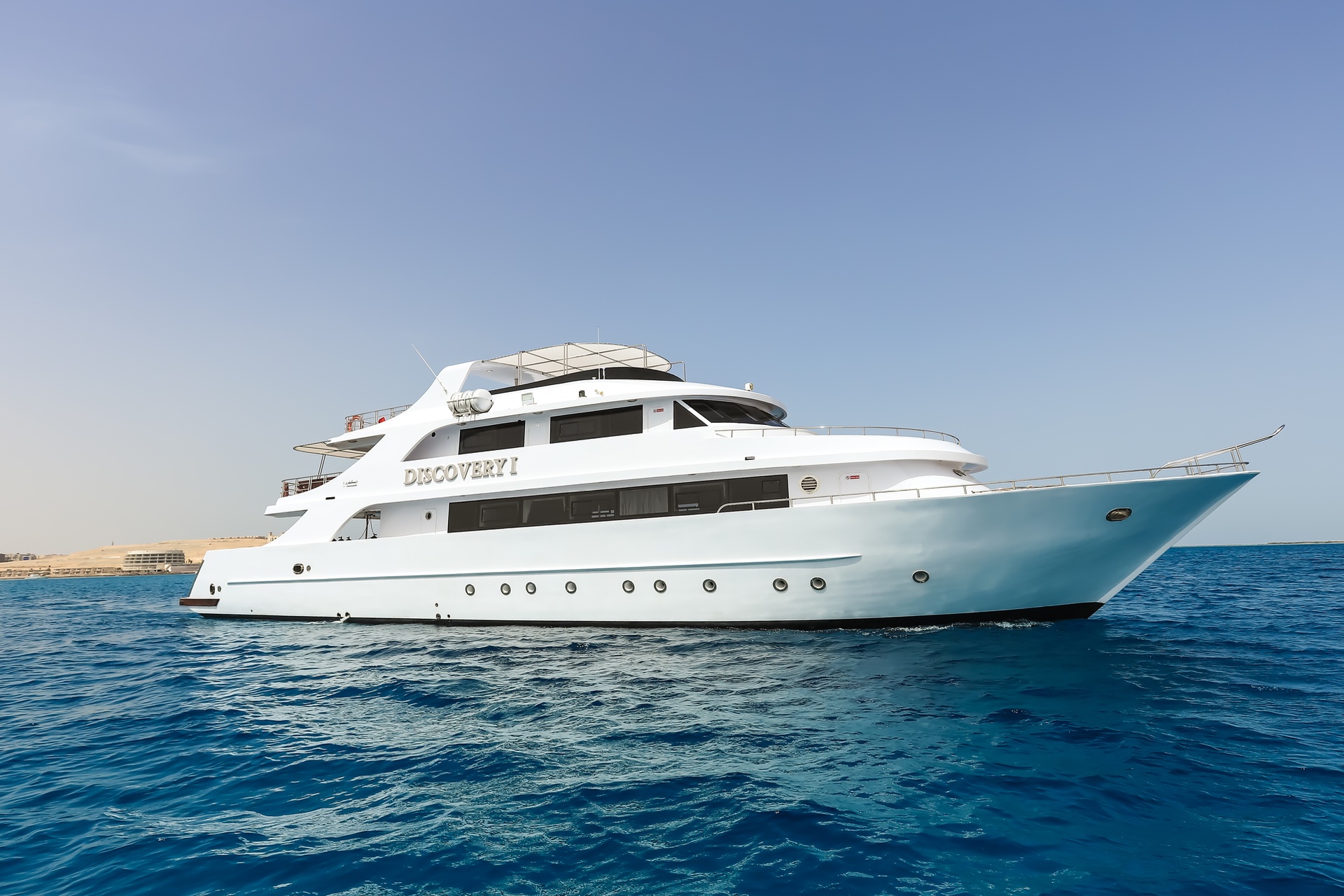 Discovery IÉgypte