Tout Raja Ampat - Haut lieu de la biodiversité (Sorong - Sorong)
Dewi Nusantara · Indonésie · 9 nuits
À propos de cet itinéraire
Cette croisière-plongée explore Raja Ampat, une région reconnue comme un haut lieu mondial de la biodiversité marine. Les plongeurs peuvent s'attendre à rencontrer une variété étonnante de coraux, de poissons et d'autres formes de vie marine à travers des écosystèmes récifaux dynamiques. L'itinéraire navigue à travers divers archipels, des lagons cachés et des formations géologiques uniques, offrant à la fois des paysages sous-marins spectaculaires et des excursions terrestres passionnantes. Chaque jour promet de nouvelles découvertes dans une région réputée pour son monde sous-marin riche et dynamique.
Régions sur cet itinéraire
Points forts
Batanta
Batanta island is well-known for its excellent muck diving opportunities, particularly in its rich black sand areas. These sites are perfect for macro enthusiasts, offering a chance to spot rare and unusual critters, including various nudibranchs, frogfish, and other fascinating small creatures.
- Muck diving
- Macro critters
- Black sand environments
Dampier Strait
The Dampier Strait is renowned for its strong currents which act as nutrient highways, attracting a spectacular array of marine life. This area often features schooling fish, manta rays, and various shark species, making it a highlight for pelagic encounters and dynamic drift dives.
- Strong currents
- Schooling fish
- Manta rays
Darom
Darom is situated in the easternmost boundary of the Misool region, characterized by its remote location and pristine dive sites. The area features vibrant coral reefs and abundant marine life, offering a truly wild and untouched diving experience with healthy ecosystems.
- Remote dive sites
- Pristine coral reefs
- Abundant marine life
Fiabacet & Boo
Fiabacet and Boo are renowned for their exceptional coral growth and vibrant reef systems, often featuring schooling pelagic fish and rich macro life. The area is particularly known for its stunning soft coral gardens and the high density of marine species, including various shark and ray species.
- Exceptional coral growth
- Schooling pelagic fish
- Rich macro life
- Shark and ray encounters
Jeff Pele & Lily
The area around Jeff Pele and Lily offers rich reefs and a variety of dive experiences. It's known for its abundant fish life and healthy coral growth, contributing significantly to the overall marine diversity of Raja Ampat. The sites are often characterized by vibrant soft corals and schooling fish.
- Rich reef systems
- Abundant fish life
- Vibrant soft corals
Kalig
Kalig is a region offering impressive underwater landscapes with a focus on marine life transitions, from nutrient-rich currents to deeper reef ecosystems. It's an area where diverse habitats support both macro and wider pelagic species.
- Diverse underwater habitats
- Macro and pelagic life
Misool
Misool, located in the southern part of Raja Ampat, is celebrated for its stunning limestone karst islands and exceptionally rich soft coral gardens. This area is renowned for its pristine reefs, abundant fish life, and the unique topography of its underwater landscapes, including dramatic walls and healthy reefs teeming with life.
- Soft coral gardens
- Limestone karst islands
- Pristine reef systems
- Abundant fish life
Pamana
Pamana is an area within Raja Ampat known for its diverse underwater topography and rich marine ecosystems. It offers opportunities to explore healthy coral reefs and encounter a variety of reef fish, contributing to the overall biodiversity of the region.
Penemu
Penemu offers a diverse range of dive sites, often featuring vibrant coral gardens and unique underwater formations. This area is known for its picturesque landscapes both above and below the water, making it a popular spot for both diving and scenic excursions.
- Vibrant coral gardens
- Picturesque landscapes
- Underwater formations
Raja Ampat
Raja Ampat is a globally recognized epicentre of marine biodiversity, boasting hundreds of islands and an incredible density of habitats. This region is famous for its vibrant coral reefs, crystal-clear waters, and a staggering variety of marine species, from tiny pygmy seahorses to large pelagics. The strong currents often found here contribute to the health and richness of its ecosystems.
- World-class biodiversity
- Vibrant coral reefs
- Healthy ecosystems
- Diverse marine species
Sagewin Strait, Batanta
The Sagewin Strait, particularly near Batanta, is celebrated for its pristine reef systems and unique macro diving opportunities. The area benefits from freshwater runoff creating distinct habitats, attracting a variety of critters and offering a different diving experience from typical reef dives.
- Pristine reef systems
- Unique macro life
- Critter spotting
- Blackwater diving potential
Salawati
Salawati is one of the larger islands in Raja Ampat, offering a variety of dive experiences from vibrant coral reefs to potential macro sites. The surrounding waters are rich in biodiversity, supporting a healthy ecosystem of reef fish and invertebrates.
Waisai
Waisai serves as a key gateway to the Raja Ampat archipelago, offering access to numerous dive sites within the West Papua region. The area is characterized by vibrant reef systems and unique island formations, providing excellent opportunities for both diving and exploration.
Wajil
The Wayil islands are known for their exceptional biodiversity and stunning underwater topography. This area boasts incredible coral gardens, a variety of reef fish, and opportunities for drift dives along vibrant reef systems, making it a highlight for comprehensive Raja Ampat diving.
- Incredible coral gardens
- Diverse reef fish
- Drift diving
Prérequis
- Niveau requisOpen Water
- Plongées minimum enregistrées20
- ExpérienceLes plongeurs doivent avoir au moins 20 plongées enregistrées pour participer à ce voyage.
Bon à savoir
- Guests arriving on embarkation day should consider arriving a day early and staying overnight in a hotel to mitigate risks of flight delays affecting the cruise departure.
- Divers are recommended to wait 24 hours after their last dive before flying to reduce the risk of decompression sickness.
Program jour par jour
Jour 1: Jour d'embarquement – Sorong
Les passagers arrivent au port d'embarquement de Sorong, où ils sont accueillis à bord du Dewi Nusantara. Après l'installation dans les cabines et un bref briefing de sécurité, la soirée se termine par un dîner de bienvenue. Le bateau part ensuite pour sa première destination, commençant le voyage dans les eaux riches en biodiversité de Raja Ampat.
Jour 2: Plongée à Raja Ampat – Exploration de la Biodiversité
Les journées sont dédiées à l'exploration des riches sites de plongée de Raja Ampat, une région mondialement reconnue pour sa biodiversité marine exceptionnelle. Les plongeurs rencontrent divers jardins de coraux, des systèmes récifaux vibrants et une abondance d'espèces de poissons. La zone est connue pour ses forts courants qui apportent souvent de grandes espèces pélagiques et créent des plongées dérivantes dynamiques, offrant des paysages sous-marins en constante évolution.
Jour 3: Plongée à Raja Ampat – Exploration de la Biodiversité
Les journées sont dédiées à l'exploration des riches sites de plongée de Raja Ampat, une région mondialement reconnue pour sa biodiversité marine exceptionnelle. Les plongeurs rencontrent divers jardins de coraux, des systèmes récifaux vibrants et une abondance d'espèces de poissons. La zone est connue pour ses forts courants qui apportent souvent de grandes espèces pélagiques et créent des plongées dérivantes dynamiques, offrant des paysages sous-marins en constante évolution.
Jour 4: Plongée à Raja Ampat – Exploration de la Biodiversité
Les journées sont consacrées à l'exploration des riches sites de plongée de Raja Ampat, une région mondialement reconnue pour son exceptionnelle biodiversité marine. Les plongeurs rencontrent divers jardins de corail, des systèmes récifaux vibrants et une abondance d'espèces de poissons. La zone est connue pour ses forts courants qui attirent souvent de grandes espèces pélagiques et créent des plongées dérivantes dynamiques, offrant des paysages sous-marins en constante évolution.
Jour 5: Plongée à Raja Ampat – Exploration de la Biodiversité
Les journées sont consacrées à l'exploration des riches sites de plongée de Raja Ampat, une région mondialement reconnue pour son exceptionnelle biodiversité marine. Les plongeurs rencontrent divers jardins de corail, des systèmes récifaux vibrants et une abondance d'espèces de poissons. La zone est connue pour ses forts courants qui attirent souvent de grandes espèces pélagiques et créent des plongées dérivantes dynamiques, offrant des paysages sous-marins en constante évolution.
Jour 6: Plongée à Raja Ampat – Exploration de la Biodiversité
Les journées sont consacrées à l'exploration des riches sites de plongée de Raja Ampat, une région mondialement reconnue pour son exceptionnelle biodiversité marine. Les plongeurs rencontrent divers jardins de corail, des systèmes récifaux vibrants et une abondance d'espèces de poissons. La zone est connue pour ses forts courants qui attirent souvent de grandes espèces pélagiques et créent des plongées dérivantes dynamiques, offrant des paysages sous-marins en constante évolution.
Jour 7: Plongée à Raja Ampat – Exploration de la Biodiversité
Les journées sont consacrées à l'exploration des riches sites de plongée de Raja Ampat, une région mondialement reconnue pour sa biodiversité marine exceptionnelle. Les plongeurs rencontrent divers jardins de coraux, des systèmes récifaux vibrants et une abondance d'espèces de poissons. La zone est connue pour ses forts courants qui apportent souvent de grandes espèces pélagiques et créent des plongées dérivantes dynamiques, offrant des paysages sous-marins en constante évolution.
Jour 8: Plongée à Raja Ampat – Exploration de la Biodiversité
Les journées sont consacrées à l'exploration des riches sites de plongée de Raja Ampat, une région mondialement reconnue pour sa biodiversité marine exceptionnelle. Les plongeurs rencontrent divers jardins de coraux, des systèmes récifaux vibrants et une abondance d'espèces de poissons. La zone est connue pour ses forts courants qui apportent souvent de grandes espèces pélagiques et créent des plongées dérivantes dynamiques, offrant des paysages sous-marins en constante évolution.
Jour 9: Dernières Plongées – Retour au Port
Le dernier jour de plongée comprend une à deux plongées programmées avant que le navire ne commence son voyage de retour vers le port. Cela offre une dernière chance de découvrir les merveilles sous-marines de Raja Ampat. Ensuite, les invités se préparent pour le débarquement le lendemain.
Jour 10: Débarquement – Sorong
Les passagers débarquent du navire à Sorong, marquant la fin de leur croisière-plongée. Les transferts vers l'aéroport sont organisés par annexe puis en voiture, en fonction des horaires de vol.
Prochains départs
Tous les itinéraires de ce bateau
- Flores à Alor - Route I : Maumere Bay, Adonara, Lembata, Pantar, Alor (Maumere - Maumere) · 10 nuits
- Cenderawasih Bay (Manokwari - Manokwari) · 10 nuits
- Tout Raja Ampat – Point chaud de la biodiversité (Sorong - Sorong) · 10 nuits
- La péninsule de Birdshead et la baie de Cenderawasih (Sorong - Manokwari) · 11 jours / 10 nuits
- Ambon, les îles Banda, Koon & Misool, sud de Raja Ampat (Ambon → Sorong, 12J/11N) · 12J11N
- Cenderawasih Bay & The Birdshead Peninsula (Manokwari - Sorong) · 10 nuits
- Indonesia Oceania Route II – Triton Bay, The Bomberai Peninsula, Banda Islands & Ambon (Kaimana → Ambon) · 12D11N
- Sud de Raja Ampat, Misool, la péninsule de Bomberai et la baie de Triton (Sorong - Kaimana) · 11 nuits
- Alor & The Forgotten Islands - Pantar Strait, Damar, Dai, Dawera & Daweloor (Kalabahi - Saumlaki) · 10 nuits
- Raja Ampat, Misool & Sud-Ouest Halmahera (Sorong → Ternate) · 12D11N
- Tout le nord de Raja Ampat (Sorong - Sorong) · 12 jours / 11 nuits
- L'intégralité de Raja Ampat - Point chaud de biodiversité (Sorong - Sorong) · 12 jours / 11 nuits
- South Raja Ampat, Misool, The Bomberai Peninsula & Central Raja Ampat (Sorong - Sorong) · 12 Jours / 11 Nuits
- Baie de Cenderawasih (Manokwari - Manokwari) · 10 Jours / 9 Nuits
- Sud de Raja Ampat, Misool, la péninsule de Bomberai et la baie de Triton (Sorong - Kaimana) · 11 jours / 10 nuits
- Triton Bay-The Bomberai Peninsula-Misool & South Raja Ampat (Kaimana - Sorong) · 11 Jours / 10 Nuits
- Halmahera Ouest - Teluk Loloda, Îles aux Épices, Ganone & Détroit de Pantinti (Ternate - Ternate) · 11 jours / 10 nuits
- Dragons et volcans - Komodo et l'est de Sumbawa (Labuan Bajo - Labuan Bajo) · 10 jours / 9 nuits
- Dragons, volcans et requins-baleines – Komodo & Sumbawa - Baie de Saleh (Labuan Bajo - Bima) · 10 Jours / 9 Nuits
- Dragons, volcans et requins-baleines - Saleh Bay - Sumbawa & Komodo (Bima - Labuan Bajo) · 10 Jours / 9 Nuits
- De Flores à Alor - Itinéraire I : Baie de Maumere, Adonara, Lembata, Pantar, Alor (Maumere - Maumere) · 10 jours / 9 nuits
- Flores à Alor - Route II : Maumere Bay, Adonara, Lembata, Pantar, Alor (Maumere - Kalabahi) · 11 Jours / 10 Nuits
- Alor à Flores : Alor, Pantar, Lembata, Adonara, Maumere Bay (Kalabahi - Maumere) · 12 Jours / 11 Nuits
- The Flores Sea Route I: Maumere Bay, Taka Bonerate, Selayar & South Sulawesi (Maumere - Makassar) · 12 Jours / 11 Nuits
- La Route de la Mer de Flores II – La Péninsule de Bina, Selayar, l'Atoll de Taka Bonerate & Komodo (Makassar - Labuan Bajo) · 12 Jours / 11 Nuits
- Alor & The Forgotten Islands - Pantar Strait, Damar, Dai, Dawera & Daweloor (Kalabahi - Saumlaki) · 12 Jours / 11 Nuits
- The Forgotten Islands - Historic Banda & Ambon (Saumlaki - Ambon) · 11 Jours / 10 Nuits
- Ambon, les îles historiques de Banda, les îles Oubliées & Alor (Ambon - Kalabahi) · 12 Jours / 11 Nuits
- L'intégralité de Raja Ampat - Haut lieu de la biodiversité · 10 nuits
À propos du bateau
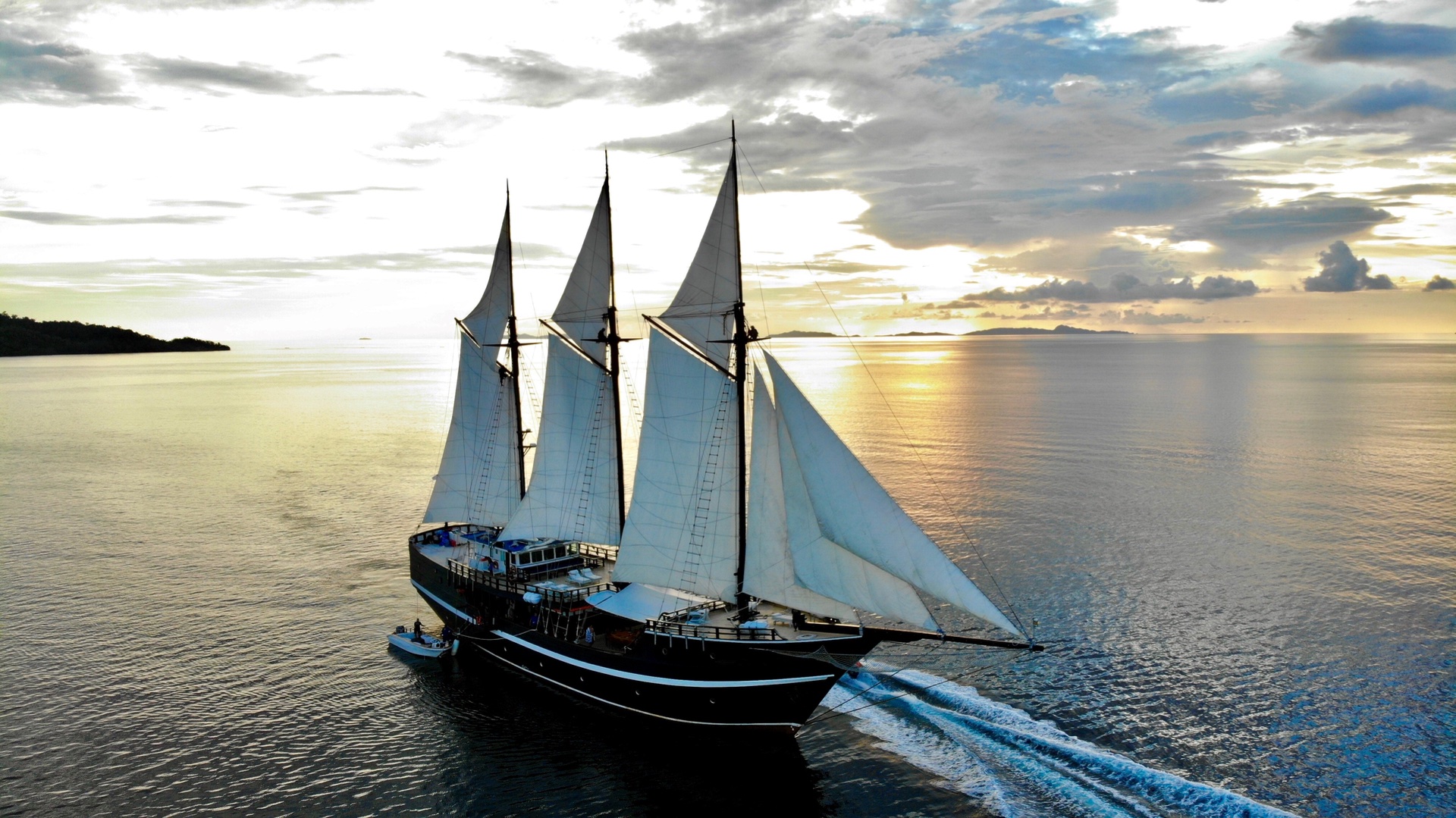 Dewi NusantaraIndonésie