Le meilleur de Hurghada (Hurghada - Hurghada)
Amelie · Égypte · 8J/7N
À propos de cet itinéraire
Cet itinéraire offre un accès pratique aux meilleurs sites de plongée de Hurghada et du nord de la mer Rouge, mettant en valeur ses nombreuses îles, ses lagons peu profonds, ses tombants et ses jardins de coraux éclatants. Le voyage est idéal pour les plongeurs débutants et expérimentés de tous les niveaux de certification, y compris les amateurs d'épaves et les photographes. Il promet des opportunités de plongée à couper le souffle tout en garantissant un safari détendu.
Régions sur cet itinéraire
Points forts
Abu Hasheesh Island and all the area around Makadi Bay
Abu Hasheesh Island and the Makadi Bay area offer a mix of reef dives, including shallow fringing reefs and deeper wall dives. The sites are known for their clear waters and vibrant coral formations, providing habitat for a diverse array of reef fish and occasional larger marine animals. It's an ideal spot for both new and experienced divers.
- Fringing reefs
- Wall dives
- Vibrant coral formations
- Clear waters
Abu Ramada Island and all the reefs around
Abu Ramada Island and its surrounding reefs feature a range of dive sites, including vibrant coral walls and sheltered bays. The area is known for its healthy hard and soft corals, attracting a multitude of reef fish and invertebrates. It often provides excellent visibility and gentle currents, making it a pleasant diving experience.
- Vibrant coral walls
- Sheltered bays
- Healthy hard corals
- Abundant reef fish
Blind Reef
Blind Reef is a submerged reef characterized by its dramatic drop-offs and strong currents, which attract schooling fish and larger pelagics. The walls are covered in colorful soft corals, making for a visually stunning dive. Advanced divers can enjoy exhilarating drift dives along its extensive reef system.
- Dramatic drop-offs
- Schooling fish
- Soft coral walls
- Strong currents
Bluff Point (small Gubal Island)
Located off Gubal Island, Bluff Point is a dynamic dive site characterized by its sloping reef and strong currents. It is particularly known for a small wreck and various reef formations that attract pelagic fish. The currents often bring in nutrients, contributing to a healthy ecosystem and diverse marine encounters.
- Sinking patrol boat wreck
- Pelagic encounters
- Current diving
Carless Reef
Carless Reef is a famous offshore reef distinguished by its two large pinnacles rising from the seabed. The site is known for strong currents that attract schooling fish, including tuna and trevally, and offers good chances to spot sharks. Its vibrant soft corals and abundant marine life make it a highly regarded dive spot.
- Two large pinnacles
- Strong currents
- Schooling pelagics
- Shark sightings
El Fanadir
El Fanadir is a long, narrow reef known for its wall dives and opportunities for drift diving. The wall is adorned with various corals and sponges, providing shelter for numerous reef inhabitants. It's a popular site for night dives due to the abundance of nocturnal creatures.
- Wall diving
- Drift diving
- Nocturnal creatures
- Night dives
Giftun Islands and all the reefs around
The Giftun Islands are a protected marine park offering a variety of dive sites with diverse reef structures, from shallow coral gardens to dramatic drop-offs. The area is rich in marine life, including colorful reef fish, turtles, and occasional pelagic visitors. It's suitable for all levels of divers and is popular for its pristine conditions.
- Protected marine park
- Diverse reef structures
- Rich marine life
- Suitable for all levels
Red Sea
The Red Sea is globally renowned for its exceptional biodiversity, vibrant coral reefs, and crystal-clear waters. Its unique oceanographic conditions support a rich ecosystem, featuring a wide array of endemic species. Divers can expect dramatic drop-offs, extensive coral gardens, and encounters with both pelagic and reef inhabitants, making it a world-class diving destination.
- High biodiversity
- Vibrant coral reefs
- Clear visibility
- Endemic marine life
Shaab Abu Nugar
Shaab Abu Nugar features a series of shallow reefs and pinnacles, ideal for relaxed diving and snorkeling. The area is characterized by its healthy hard coral formations and abundant small reef fish. It's a great spot for beginners and photographers looking for vibrant reef scenes.
- Shallow reefs
- Hard coral formations
- Abundant reef fish
Shaab El Erg (Dolphin House)
Shaab El Erg, affectionately known as 'Dolphin House,' is a horseshoe-shaped reef famous for its resident pod of spinner dolphins. Divers often have the chance to observe these playful creatures in their natural habitat. The reef itself offers beautiful coral gardens and a good variety of reef fish.
- Dolphin encounters
- Horseshoe reef
- Beautiful coral gardens
Shaab Galawa
Shaab Galawa is a complex reef system offering a mix of walls, plateaus, and channels. The site is known for its diverse topography and the possibility of encountering pelagic species in the deeper sections. The reef is healthy and supports a wide range of marine life.
- Walls and plateaus
- Diverse topography
- Pelagic sightings
Shabur Umm Gamar
Shabur Umm Gamar is a satellite reef near Umm Gamar Island, characterized by its deep walls and healthy coral formations. It's a prime location for encountering pelagic fish as well as a rich diversity of reef species. The site provides excellent visibility and a challenging yet rewarding dive.
- Deep walls
- Healthy corals
- Pelagic encounters
Siyul Islands
The Siyul Islands present a collection of dive sites with diverse reef structures and channels. These islands are known for their clear waters and a mix of hard and soft corals. The area attracts a variety of marine life, from small reef dwellers to occasional larger pelagics passing through the channels.
- Clear waters
- Diverse reef structures
- Channels with currents
The Wrecks of Shaab Abu Nuhas
Shaab Abu Nuhas hosts several famous wrecks including the Giannis D, the Carnatic, the Chrisoula K, and the Kimon M. Each wreck offers a distinct diving experience, from penetrable cargo holds to engine rooms. These sites are teeming with soft corals, glassfish, and larger pelagics, providing a diverse underwater landscape for wreck enthusiasts.
- Multiple shipwrecks
- Penetration opportunities
- Abundant reef fish
Umm Gamar Island
Umm Gamar Island offers impressive wall dives and a small cave system, providing a thrilling experience for divers. The walls are covered in colorful soft corals and host a variety of fish, including schooling barracuda. Strong currents can be present, offering exciting drift opportunities.
- Impressive wall dives
- Small cave system
- Schooling barracuda
- Soft corals
Umm Usk
Umm Usk is a reef known for its vibrant coral gardens and a healthy population of reef fish. It offers varied topography with gentle slopes and occasional small pinnacles, making it suitable for relaxed dives. The site is often bustling with macro life and colorful schooling fish, providing a picturesque diving experience.
- Vibrant coral gardens
- Healthy reef fish
- Macro life
Wreck of Balena
The Balena wreck, a cargo ship, is an interesting dive that has become a thriving artificial reef. It is encrusted with corals and home to various marine species, offering a glimpse into both maritime history and underwater ecology. The wreck's structure provides shelter and hunting grounds for many fish.
- Cargo ship wreck
- Artificial reef
- Coral encrusted
- Thriving marine life
Wreck of Hebat Allah
The Hebat Allah wreck is a modern cargo ship that sank in 2004, offering a relatively intact and challenging dive site. Due to its depth and potential currents, it is typically recommended for Deep Diver Specialty certified divers. The wreck features penetrable sections and has become a habitat for various marine species.
- Modern cargo ship
- Intact wreck
- Deep dive
- Penetration opportunities
Wreck of Rosalie Moller
The Rosalie Moller is a historic British cargo ship sunk in 1941, lying at considerable depth. It is a world-class wreck dive, highly prized for its pristine condition and the abundance of marine life it supports. Accessing this wreck requires advanced certification, such as Deep Diver Specialty, given its depth and often challenging conditions.
- Historic British cargo ship
- World-class wreck
- Pristine condition
- Deep dive
Wreck of Ulysses
The Ulysses wreck, a British cargo ship that sank in 1887, lies in relatively shallow waters, making it accessible to a wide range of divers. It offers historical exploration with well-preserved sections and has become an established artificial reef, attracting a variety of fish and corals. The wreck provides excellent photographic opportunities.
- Historic cargo ship
- Accessible depth
- Rich marine life
Prérequis
- Niveau requisOpen Water expérimenté
- ExpérienceAucun nombre minimum de plongées enregistrées requis.
Bon à savoir
- Your last dive will be on the final day of the trip at 11:00 AM.
- Divers are recommended to wait for 24 hours before flying after the last dive.
- Check out of disembarkation is in the morning on the last day.
- Hotel pick up time may vary for transfers.
- The boat operates Hurghada in the morning on the following day.
- DIN/INT adaptors are available onboard.
- Towels and soap are included.
- The vessel is equipped with European (2 pins) power sockets.
- Accepted payment methods onboard include VISA, Mastercard, Cash (USD), Cash (EUR), Cash (GBP), and local currency.
Program jour par jour
Jour 1: Jour d'embarquement – Hurghada
Les passagers sont transférés au bateau pour l'embarquement, suivi d'un accueil chaleureux à bord, de l'installation en cabine et d'une présentation complète du bateau. La journée est consacrée à l'installation et à la préparation pour la semaine de plongée à venir.
Jour 2: Nord de la Mer Rouge – Premières Plongées
Après le petit-déjeuner, le navire se déplace vers le premier site de plongée du voyage. La journée comprend deux plongées de jour et une passionnante plongée de nuit. Cette région est connue pour sa topographie sous-marine variée, offrant un mélange de formations récifales et la chance d'apercevoir diverses espèces marines.
Jour 3: Nord de la Mer Rouge – Aventures de Plongée Quotidiennes
Aujourd'hui, un programme complet de plongée est prévu avec trois plongées de jour et une plongée de nuit supplémentaire. Les sites de plongée de la région présentent souvent des écosystèmes coralliens vibrants, des opportunités de plongée dérivante le long de murs impressionnants et une variété de poissons de récif. La visibilité est généralement excellente, offrant des vues sous-marines panoramiques.
Jour 4: Nord de la Mer Rouge – Exploration des Récifs
Poursuivant l'exploration de la région d'Hurghada et du Nord de la Mer Rouge, les plongeurs profitent de trois plongées de jour et d'une plongée de nuit. Les sites de cette zone présentent souvent des formations de coraux durs et mous en bonne santé, attirant une forte densité de poissons de récif. Les courants peuvent varier, offrant des dérives douces et des opportunités d'observer des espèces pélagiques.
Jour 5: Nord de la Mer Rouge – Sites de Plongée Diversifiés
Le programme de plongée de la journée comprend trois plongées de jour et une plongée de nuit, ciblant certains des sites de plongée uniques de la Mer Rouge. Ces lieux sont connus pour leurs tombants spectaculaires et un mélange de pinacles et de patates de corail où l'on trouve un large éventail de sujets macro et grand-angle. La visibilité reste constamment bonne, améliorant l'expérience de plongée.
Jour 6: Nord de la Mer Rouge – Dernière Journée Complète de Plongée
La dernière journée complète de plongée offre trois plongées de jour et une plongée de nuit, se concentrant sur certains des meilleurs sites restants du Nord de la Mer Rouge. Les plongeurs s'attendent à explorer des récifs vibrants qui offrent souvent des observations de poissons de récif résidents, de pélagiques occasionnels et de divers invertébrés. La topographie variée assure des plongées captivantes pour tous les niveaux de compétence.
Jour 7: Nord de la Mer Rouge – Dernières Plongées et Retour à la Marina
Cette journée comprend deux dernières plongées avant le retour à la marina. Après les plongées, les invités peuvent se détendre à bord ou participer à une activité terrestre optionnelle, permettant un bon intervalle de surface avant de prendre l'avion. Cela conclut la partie plongée du voyage, laissant le temps de réfléchir aux aventures de la semaine.
Jour 8: Jour de débarquement – Hurghada
Après le petit-déjeuner, les passagers quittent le bateau et bénéficient de transferts pour la suite de leur voyage. Ceci marque la fin de l'aventure en croisière-plongée en mer Rouge.
Prochains départs
Aucun départ prévu pour cet itinéraire pour le moment.
Tous les itinéraires de ce bateau
À propos du bateau
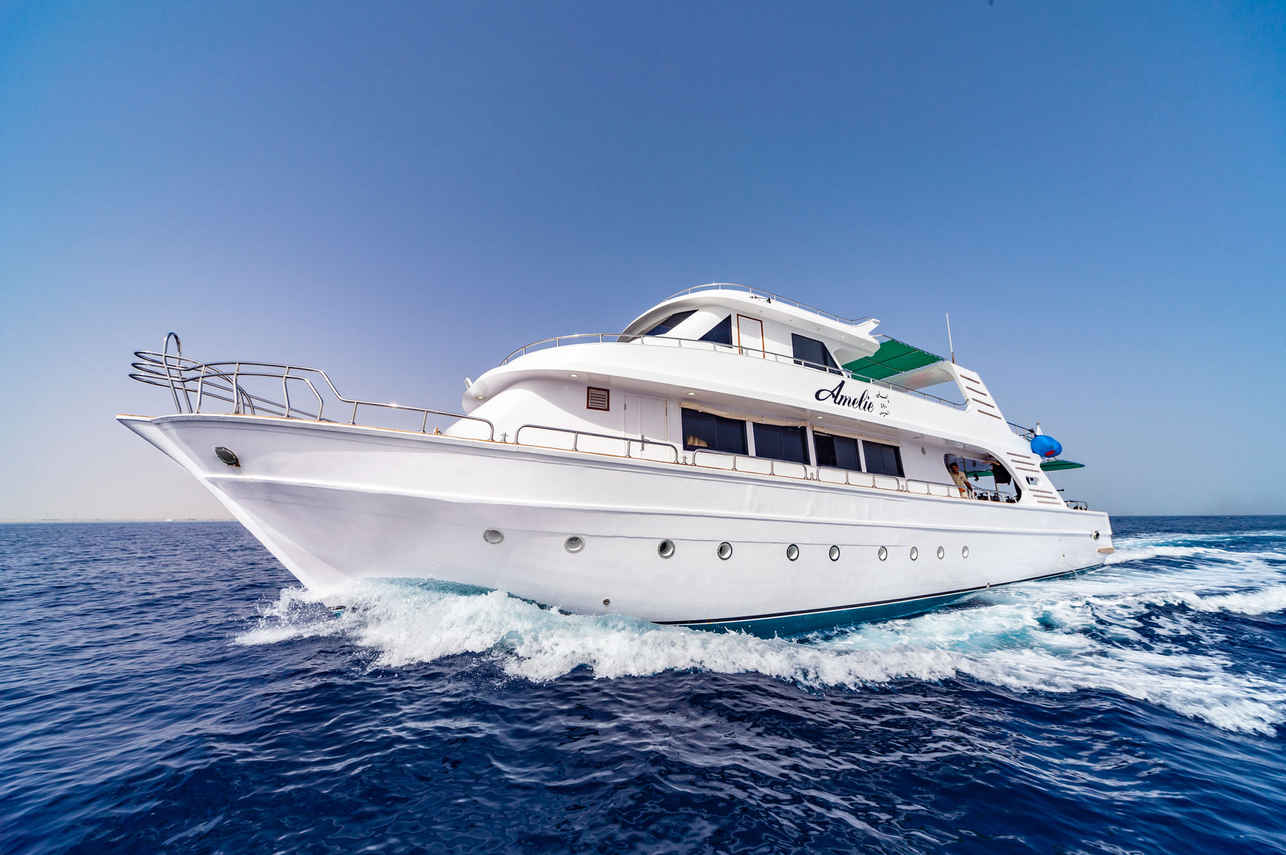 AmelieÉgypte