Bluerides – Blue Rides - Rezervujte potápěčské safari po celém světěOCEAN ADVENTURES
River CruisesRiversNature & WildlifeOur Promise
River CruisesRiversNature & WildlifeOur PromisePřihlásit se

Říční destinace

  • Říční destinace
  • Amazonka
  • Dunaj
  • Rýn
  • Mekong
  • Nil

Lodě a odjezdy

  • Vyhledávání říčních plaveb
  • Nabídky

Příroda a divoká zvěř

  • Příroda a divoká zvěř

Cestovní podpora

  • Náš závazek
  • Kontakt

Kontakt

Kontaktujte nás

Ozvěte se kdykoli, rádi pomůžeme s výběrem cesty i s jakýmkoli dotazem.

E-mailNapište nám, obvykle odpovíme během několika hodin.
contact@bluerides.com
WhatsAppNapište nám na WhatsApp, po–pá 10:00–16:00 (CET).
Zahájit WhatsApp chat
TelefonZavolejte nám, rádi pomůžeme.
Volání zdarma, po–pá 10:00–20:00 (CET).
Evropa+49 800 1144 990USA+1 888 557 7735Velká Británie+44 800 707 4152Austrálie+61 2 8599 6113Kanada+1 888 557 7735
Which river journey is yours?Answer 8 quick questions and find the river cruise that fits you.
8 questions, 1 minute·Plus Gift
Bezpečné platební metodyVaše platby jsou plně zabezpečeny šifrováním AES-256.
ZajišťujeStripeWiseAMEXPayGoogle PaySEPABank
Impressum·Obchodní podmínky·Ochrana osobních údajů·O nás·Kontakt·Zřeknutí se odpovědnosti·Partnerský program·Cruise·
Sledujte nás zde

© 2026 Blue Rides. Všechna práva vyhrazena.·

Bluerides – Blue Rides - Rezervujte potápěčské safari po celém světěOCEAN ADVENTURES
River CruisesRiversNature & WildlifeOur Promise
River CruisesRiversNature & WildlifeOur PromisePřihlásit se
Garganey v mokřadu — Nile, zvířata na říčních plavbách
Domů›River Cruises›River Wildlife›Garganey

GarganeySpatula querquedulaKde a kdy je můžete spatřit

Previous speciesGadwallNext speciesGlossy Ibis

Garganey at a glance

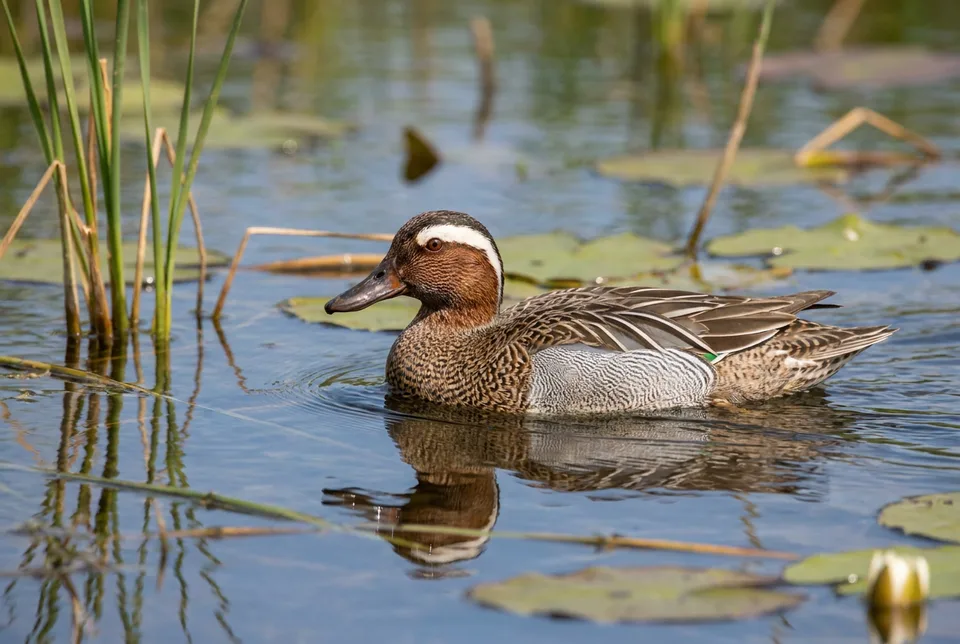
The Garganey is a small dabbling duck whose male’s sweeping white eyebrow can be much easier to recognise than the more subdued female. RSPB places it between Teal and Mallard in size. The source uses the older scientific combination Anas querquedula; this profile retains the batch’s Spatula querquedula. Source: https://www.rspb.org.uk/birds-and-wildlife/garganey/

Behaviour & reproduction

Size
Species-specific body-length measurement not verified.
Weight
Species-specific weight not verified.
Lifespan
Species-specific lifespan not verified.
Status
Least Concern globally; BirdLife assessment 2025, with a decreasing trend. https://datazone.birdlife.org/species/factsheet/garganey-spatula-querquedula

RSPB describes a secretive duck that feeds by dabbling. Watch a bird working quietly along a shallow margin, dipping its bill rather than assuming that every feeding duck will dive. Secretiveness makes a sheltered flock worth patient inspection, but should never be used as a reason to force birds into open water.

Top wildlife locations

Říční krajina Nile — prostředí říčních plaveb

Nile

Luxor–Esna–Edfu–Kom Ombo–Aswan; exact observation context in quote Viewing guidance: Wild birds from cruise deck or normal temple/riverbank visits; dated March 2007 observations, not year-round guarantees. Waterfowl and passage birds seasonal; small reed birds require binoculars.
Explore river cruises

Destinations describe the species' habitat, not guaranteed cruise stops. Some animals require an optional inland excursion or are found in restricted reserves.

Fun facts about the Garganey

  • The batch uses the genus Spatula.
  • RSPB uses the older combination Anas querquedula.
  • The male has a broad white eyebrow.
  • The forewing can look pale blue in flight.
  • It feeds by dabbling.
  • BirdLife lists it globally as Least Concern.

Best time to see the Garganey

BirdLife classifies Garganey as a full migrant, but a global migration category is not a local monthly calendar. The registered Nile evidence concerns a dated March 2007 trip. It cannot establish that March is consistently best, or that the species is absent in other months. Location months remain unfilled.

Garganey: season matrix by destination

Highlighted months reflect the stated local evidence, not guaranteed encounters. Neutral months mean no verified monthly viewing window, not absence. Observation records and recommended viewing windows are distinct.

Nile

No qualifying local recurring monthly observation calendar was verified. Registry guidance is retained as qualitative context only; dated sightings, breeding dates and general migration patterns are not converted into months.

ledúnobředubkvěčvnčvcsrpzářříjlispro
Explore river cruises

Where the Garganey lives

Within the Nile itinerary, sheltered shallows and vegetated margins are more relevant search areas than the centre of a busy navigation channel. That viewing advice does not establish presence at any particular temple landing. The registry’s evidence belongs to the Luxor–Aswan corridor and should not be extended to the delta.

What the Garganey eats

The verified RSPB account specifically describes dipping the bill into the water to catch insects. A comprehensive diet, relative quantities of plant and animal food, and a Nile-specific prey inventory were not verified. The feeding method can nevertheless be observed without identifying every item swallowed.

Species at a glance

Common name
Garganey
Scientific name
Spatula querquedula
Animal group
Birds
Size
Species-specific body-length measurement not verified.
Weight
Species-specific weight not verified.
Lifespan
Species-specific lifespan not verified.
Status
Least Concern globally; BirdLife assessment 2025, with a decreasing trend. https://datazone.birdlife.org/species/factsheet/garganey-spatula-querquedula
Identification
The male’s broad white stripe over the eye is the strongest feature in the retrieved RSPB description. A pale blue forewing can be visible in flight, and the bird is smaller than a Mallard but slightly larger than a Teal. Female-specific criteria were not verified from the retrieved passage; do not apply the male’s head pattern to every individual.

Garganey: frequently asked questions

Where can I see the Garganey?
Nile. Inspect small ducks near river-edge cover during a normal riverbank visit or from a stable deck position. Look for the male’s white eyebrow when the head is raised. Avoid entering reeds or throwing food to draw out concealed birds. Female or distant birds should remain unidentified if essential details are missing.
When is the best time to see the Garganey?
BirdLife classifies Garganey as a full migrant, but a global migration category is not a local monthly calendar. The registered Nile evidence concerns a dated March 2007 trip. It cannot establish that March is consistently best, or that the species is absent in other months. Location months remain unfilled.
How big does the Garganey get?
Species-specific body-length measurement not verified.. Adult weight: Species-specific weight not verified.. Size varies with age, sex and population.
How should I behave around the Garganey?
Inspect small ducks near river-edge cover during a normal riverbank visit or from a stable deck position. Look for the male’s white eyebrow when the head is raised. Avoid entering reeds or throwing food to draw out concealed birds. Female or distant birds should remain unidentified if essential details are missing.
What does the Garganey eat?
The verified RSPB account specifically describes dipping the bill into the water to catch insects. A comprehensive diet, relative quantities of plant and animal food, and a Nile-specific prey inventory were not verified. The feeding method can nevertheless be observed without identifying every item swallowed.
Are wildlife sightings guaranteed on a river cruise?
No. Animals move freely and routes, weather, access restrictions and local conditions influence every outing. Confirm the actual itinerary and shore program before booking.

Compare wildlife in the same destinations

Explore other birds recorded in these destinations. Similar surroundings do not mean the animals share the same habits or viewing season.

Species comparison by animal group and destination
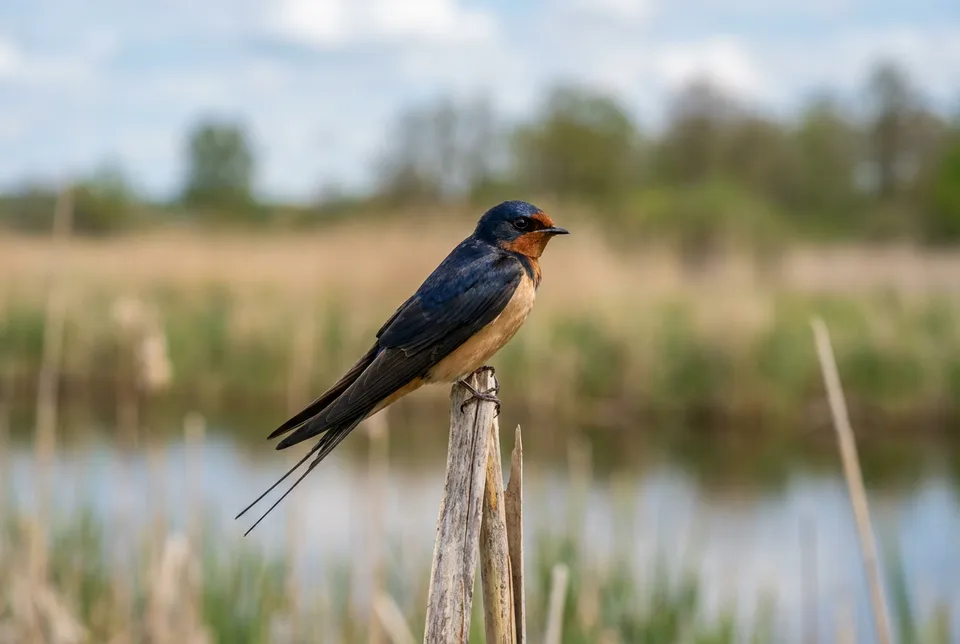
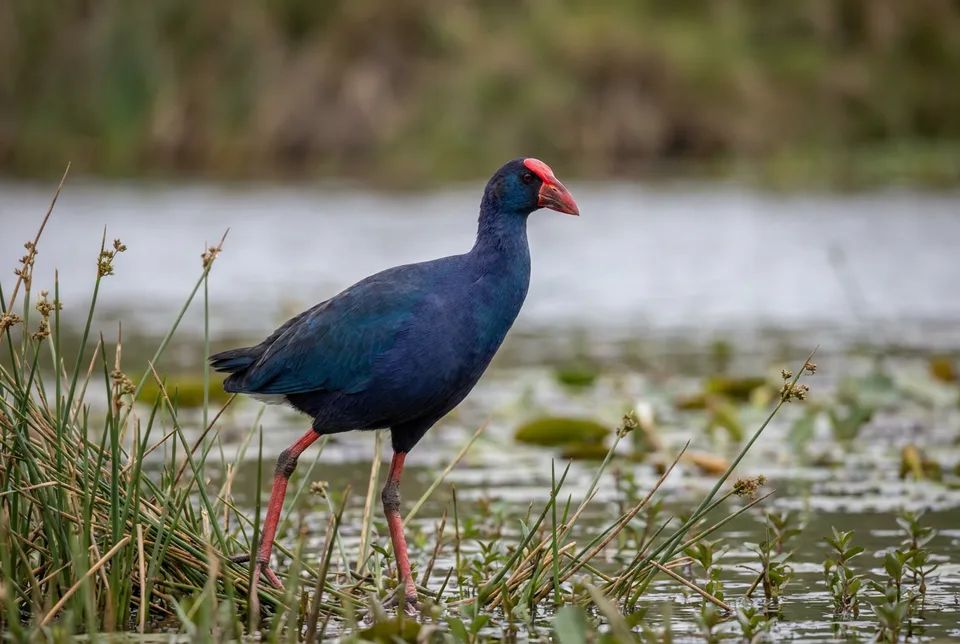
Garganey v mokřadu — Nile, zvířata na říčních plavbáchGarganeySlípka africká v mokřadu — Nil, Egypt, zvířata na říčních plavbáchAfrican SwamphenBarn Swallow v mokřadu — Mississippi, Nile, zvířata na říčních plavbáchBarn Swallow
Animal groupBirdsAnimal groupBirdsAnimal groupBirds
DestinationsNileDestinationsNileDestinationsMississippi, Nile
Scientific name
Spatula querquedula

Spatula querquedula

Scientific name
Scientific name
Size
Species-specific body-length measurement not verified.
Size
Size
Weight
Species-specific weight not verified.
Weight
Weight
Lifespan
Species-specific lifespan not verified.
Lifespan
Lifespan
Status
Least Concern globally; BirdLife assessment 2025, with a decreasing trend. https://datazone.birdlife.org/species/factsheet/garganey-spatula-querquedula
Status
Status
Identification
The male’s broad white stripe over the eye is the strongest feature in the retrieved RSPB description.

The male’s broad white stripe over the eye is the strongest feature in the retrieved RSPB description. A pale blue forewing can be visible in flight, and the bird is smaller than a Mallard but slightly larger than a Teal. Female-specific criteria were not verified from the retrieved passage; do not apply the male’s head pattern to every individual.

Identification
Identification
Habitat
Within the Nile itinerary, sheltered shallows and vegetated margins are more relevant search areas than the centre of a busy navigation channel.

Within the Nile itinerary, sheltered shallows and vegetated margins are more relevant search areas than the centre of a busy navigation channel. That viewing advice does not establish presence at any particular temple landing. The registry’s evidence belongs to the Luxor–Aswan corridor and should not be extended to the delta.

Habitat
Habitat
Diet
The verified RSPB account specifically describes dipping the bill into the water to catch insects.

The verified RSPB account specifically describes dipping the bill into the water to catch insects. A comprehensive diet, relative quantities of plant and animal food, and a Nile-specific prey inventory were not verified. The feeding method can nevertheless be observed without identifying every item swallowed.

Diet
Diet
Best season
BirdLife classifies Garganey as a full migrant, but a global migration category is not a local monthly calendar.

BirdLife classifies Garganey as a full migrant, but a global migration category is not a local monthly calendar. The registered Nile evidence concerns a dated March 2007 trip. It cannot establish that March is consistently best, or that the species is absent in other months. Location months remain unfilled.

Best season
Best season
Season matrix by destination
NileNo verified monthly viewing evidence

No qualifying local recurring monthly observation calendar was verified. Registry guidance is retained as qualitative context only; dated sightings, breeding dates and general migration patterns are not converted into months.

Season matrix by destinationSeason matrix by destination
Previous speciesGadwallNext speciesGlossy Ibis
All river wildlife
On this page
  • 01About
  • 02Behaviour & reproduction
  • 03Top wildlife locations
  • 04Fun facts
  • 05Best season
  • 06Season matrix by destination
  • 07Habitat
  • 08Diet
  • 09Species at a glance
  • 10Questions & answers
  • 11Compare

Find your river cruise

Naplánuj si cestu

Find your next river journey

Compare destinations, shore programs and dates with the animals and habitats you would love to see.

  • Daily shore excursions
  • Responsible wildlife watching
  • Boutique river ships
Explore river cruises