Bluerides – Blue Rides - Book Liveaboards worldwideOCEAN ADVENTURES
River CruisesRiversNature & WildlifeOur Promise
River CruisesRiversNature & WildlifeOur PromiseSign In

River destinations

  • River destinations
  • Amazon
  • Danube
  • Rhine
  • Mekong
  • Nile

Ships & departures

  • River Cruise Search
  • Deals

Nature & Wildlife

  • Nature & Wildlife

Travel support

  • Our Promise
  • Contact

Contact

Get in Touch

Get in touch anytime, we're happy to help you find the right trip or sort out any question.

EmailWrite us, we usually reply within a few hours.
contact@bluerides.com
WhatsAppChat with us on WhatsApp, Mon–Fri 10:00–16:00 (CET).
Start WhatsApp Chat
PhoneCall us, we're happy to help.
Free call, Mon–Fri 10 AM – 8 PM (CET).
Europe+49 800 1144 990USA+1 888 557 7735UK+44 800 707 4152Australia+61 2 8599 6113Canada+1 888 557 7735
Which river journey is yours?Answer 8 quick questions and find the river cruise that fits you.
8 questions, 1 minute·Plus Gift
Secure Payment MethodsYour payments are fully secured with AES-256 encryption.
Powered byStripeWiseAMEXPayGoogle PaySEPABank
Imprint·Terms & Conditions·Privacy Policy·About·Contact·Liability Waiver·Affiliate Program·Cruise·Blog·
Visit us here

© 2026 Blue Rides. All rights reserved.

Bluerides – Blue Rides - Book Liveaboards worldwideOCEAN ADVENTURES
River CruisesRiversNature & WildlifeOur Promise
River CruisesRiversNature & WildlifeOur PromiseSign In
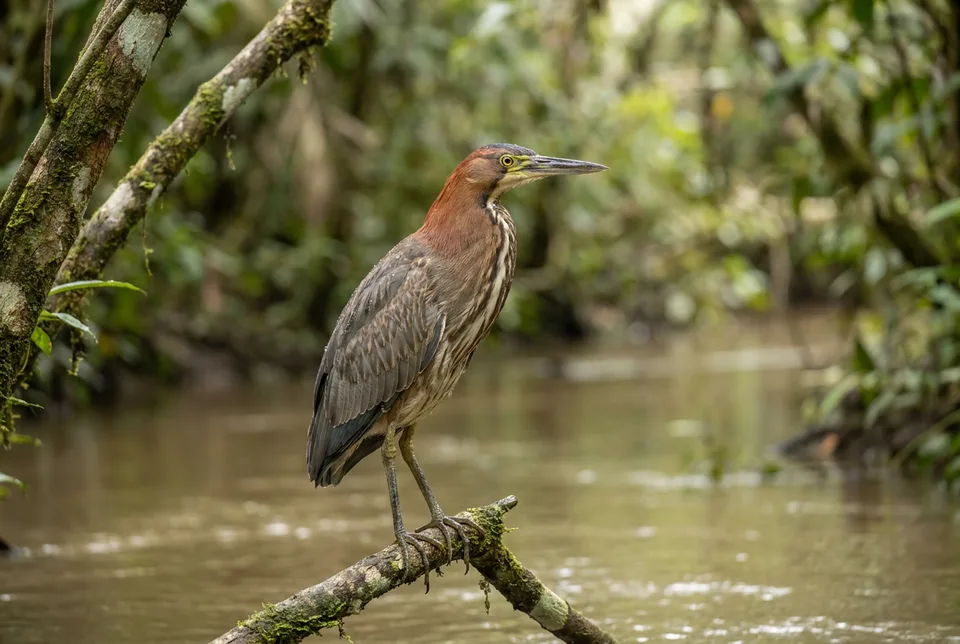
Rufescent Tiger Heron in wetland habitat — Amazon, River Cruises wildlifeAI-modified
Home›River Cruises›River Wildlife›Rufescent Tiger Heron

Rufescent Tiger HeronTigrisoma lineatumWhere and when to see them

Previous speciesRuddy-breasted CrakeNext speciesSand Martin

Rufescent Tiger Heron at a glance

The Rufescent Tiger Heron is a cryptic wetland heron with a rich chestnut head and neck in adulthood. Young birds are strongly barred and can look strikingly different. Its Amazon association is the Peruvian Iquitos–Nauta and Ucayali tributary route documented by the registered 2017 cruise. Species reference: https://heronconservation.org/herons-of-the-world/list/rufescent-tiger-heron/

Behaviour & reproduction

Size
66–76 cm (26–30 in) long.
Weight
Species-specific weight not verified.
Lifespan
Species-specific lifespan not verified.
Status
A current formal global assessment was not verified.

It often feeds by standing and waiting, but can advance slowly over floating vegetation. The specialist account reports feeding at night as well as by day and notes that the daily schedule is incompletely understood. A stationary bird should be allowed to remain concealed rather than being flushed for a full-body photograph.

Top wildlife locations

Amazon river landscape — River Cruises wildlife habitatAI-modified

Amazon

Peru — Iquitos/Nauta, Ucayali and connected tributaries (2017 cruise) Guided skiff/side-channel viewing; not guaranteed from main ship. Scan river-edge trees, banks and open water.


Explore river cruises

Destinations describe the species' habitat, not guaranteed cruise stops. Some animals require an optional inland excursion or are found in restricted reserves.

Fun facts about the Rufescent Tiger Heron

  • Adults have rich chestnut heads and necks.
  • Juveniles are strongly barred.
  • It can feed by standing motionless.
  • The throat has a vertical contrasting pattern.
  • Fish and aquatic insects are reported prey.
  • Its detailed population biology remains poorly documented.

Best time to see the Rufescent Tiger Heron

The local cruise list represents March 2017 only. HeronConservation stresses gaps in breeding and population knowledge, and scattered reproductive observations elsewhere cannot establish visitor months here. The location month array remains empty. Concentrate on patient guided viewing rather than an unsupported seasonal promise.

Rufescent Tiger Heron: season matrix by destination

Highlighted months reflect the stated local evidence, not guaranteed encounters. Neutral months mean no verified monthly viewing window, not absence. Observation records and recommended viewing windows are distinct.

Amazon

The March 2017 cruise list is a single dated itinerary, not a recurring seasonal source. No months assigned.

JanFebMarAprMayJunJulAugSepOctNovDec
Explore river cruises

Where the Rufescent Tiger Heron lives

Tree-lined streams, wooded wetlands and sheltered water margins are the relevant search settings. On a skiff outing, scan beneath overhanging vegetation as well as exposed banks. Its cryptic posture means apparently empty shoreline can hold a bird. The registered route does not imply presence beside every river channel.

What the Rufescent Tiger Heron eats

The specialist account includes fish, insects, crustaceans and other small animals. A published Paraná floodplain study reports aquatic insects, small fish and occasional snakes, but that study is Argentine and not an Amazon diet sample. No Peruvian reach-specific dietary proportions were verified.

Species at a glance

Common name
Rufescent Tiger Heron
Scientific name
Tigrisoma lineatum
Animal group
Birds
Size
66–76 cm (26–30 in) long.
Weight
Species-specific weight not verified.
Lifespan
Species-specific lifespan not verified.
Status
A current formal global assessment was not verified.
Identification
Adults have a chestnut head and thick neck, a pale-bordered vertical throat pattern and darker finely marked body. Juveniles are buff and dark-barred, so adult colour alone is inadequate. Similar tiger-herons require comparison of head, throat and body pattern; geographic expectation should support, not replace, visible diagnostic features.

Rufescent Tiger Heron: frequently asked questions

Where can I see the Rufescent Tiger Heron?
Amazon. Ask the skiff guide to check shaded water margins and low branches. When a bird is found, hold position at a respectful distance and let the group inspect it without crowding. Avoid entering small nesting channels or trying to elicit the booming voice. A clear photograph can help resolve the very different juvenile plumage.
When is the best time to see the Rufescent Tiger Heron?
The local cruise list represents March 2017 only. HeronConservation stresses gaps in breeding and population knowledge, and scattered reproductive observations elsewhere cannot establish visitor months here. The location month array remains empty. Concentrate on patient guided viewing rather than an unsupported seasonal promise.
How big does the Rufescent Tiger Heron get?
66–76 cm (26–30 in) long.. Adult weight: Species-specific weight not verified.. Size varies with age, sex and population.
How should I behave around the Rufescent Tiger Heron?
Ask the skiff guide to check shaded water margins and low branches. When a bird is found, hold position at a respectful distance and let the group inspect it without crowding. Avoid entering small nesting channels or trying to elicit the booming voice. A clear photograph can help resolve the very different juvenile plumage.
What does the Rufescent Tiger Heron eat?
The specialist account includes fish, insects, crustaceans and other small animals. A published Paraná floodplain study reports aquatic insects, small fish and occasional snakes, but that study is Argentine and not an Amazon diet sample. No Peruvian reach-specific dietary proportions were verified.
Are wildlife sightings guaranteed on a river cruise?
No. Animals move freely and routes, weather, access restrictions and local conditions influence every outing. Confirm the actual itinerary and shore program before booking.

Compare wildlife in the same destinations

Explore other birds recorded in these destinations. Similar surroundings do not mean the animals share the same habits or viewing season.

Species comparison by animal group and destination
Rufescent Tiger Heron in wetland habitat — Amazon, River Cruises wildlifeAI-modifiedRufescent Tiger HeronAmazon kingfisher in wetland habitat — Amazon, River Cruises wildlifeAI-modifiedAmazon KingfisherAnhinga in wetland habitat — Amazon, River Cruises wildlifeAI-modifiedAnhinga
Animal groupBirdsAnimal groupBirdsAnimal groupBirds
DestinationsAmazonDestinationsAmazonDestinationsAmazon
Scientific name
Tigrisoma lineatum
Scientific name
Scientific name
Previous speciesRuddy-breasted CrakeNext speciesSand Martin
All river wildlife
On this page
  • 01About
  • 02Behaviour & reproduction
  • 03Top wildlife locations
  • 04Fun facts
  • 05Best season
  • 06Season matrix by destination
  • 07Habitat
  • 08Diet
  • 09Species at a glance
  • 10Questions & answers
  • 11Compare

Find your river cruise

AI-modified
Plan your trip

Find your next river journey

Compare destinations, shore programs and dates with the animals and habitats you would love to see.

  • Daily shore excursions
  • Responsible wildlife watching
  • Boutique river ships
Explore river cruises