Bluerides – Blue Rides - Book Liveaboards worldwideOCEAN ADVENTURES
River CruisesRiversNature & WildlifeOur Promise
River CruisesRiversNature & WildlifeOur PromiseSign In

River destinations

  • River destinations
  • Amazon
  • Danube
  • Rhine
  • Mekong
  • Nile

Ships & departures

  • River Cruise Search
  • Deals

Nature & Wildlife

  • Nature & Wildlife

Travel support

  • Our Promise
  • Contact

Contact

Get in Touch

Get in touch anytime, we're happy to help you find the right trip or sort out any question.

EmailWrite us, we usually reply within a few hours.
contact@bluerides.com
WhatsAppChat with us on WhatsApp, Mon–Fri 10:00–16:00 (CET).
Start WhatsApp Chat
PhoneCall us, we're happy to help.
Free call, Mon–Fri 10 AM – 8 PM (CET).
Europe+49 800 1144 990USA+1 888 557 7735UK+44 800 707 4152Australia+61 2 8599 6113Canada+1 888 557 7735
Which river journey is yours?Answer 8 quick questions and find the river cruise that fits you.
8 questions, 1 minute·Plus Gift
Secure Payment MethodsYour payments are fully secured with AES-256 encryption.
Powered byStripeWiseAMEXPayGoogle PaySEPABank
Imprint·Terms & Conditions·Privacy Policy·About·Contact·Liability Waiver·Affiliate Program·Cruise·Blog·
Visit us here

© 2026 Blue Rides. All rights reserved.

Bluerides – Blue Rides - Book Liveaboards worldwideOCEAN ADVENTURES
River CruisesRiversNature & WildlifeOur Promise
River CruisesRiversNature & WildlifeOur PromiseSign In
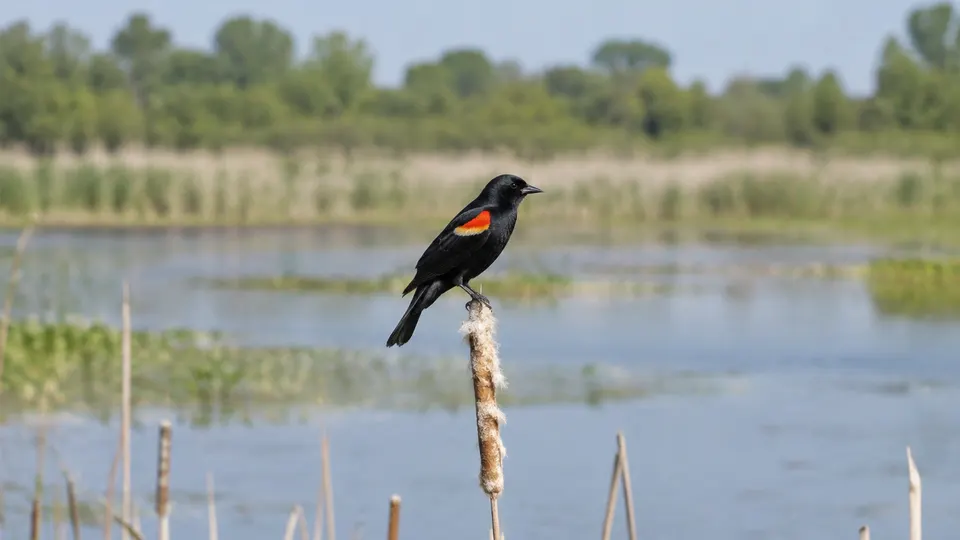
Red-winged blackbird in wetland habitat — Columbia, Mississippi, River Cruises wildlifeAI-modified
Home›River Cruises›River Wildlife›Red-winged Blackbird

Red-winged BlackbirdAgelaius phoeniceusWhere and when to see them

Previous speciesRed-crested PochardNext speciesRedhead

Red-winged Blackbird at a glance

The Red-winged Blackbird brings sound and colour to a river marsh. Males perch above the vegetation and display scarlet-and-yellow shoulder patches against black plumage; females are streaky brown and easily overlooked in the same habitat. Cornell highlights both the familiar song and the contrast between the sexes. This is not simply a black bird with red wings: the coloured patches sit at the shoulders and can be concealed or displayed. The Columbia and Upper Mississippi associations direct attention to marsh vegetation and nearby feeding ground. A moving vessel may pass the habitat without resolving its smaller birds, so a quiet shore-based wetland stop can be particularly rewarding.

Behaviour & reproduction

Size
Not verified
Weight
Not verified
Lifespan
Not verified
Status
Not verified

Males sing from exposed perches and can alter the prominence of their shoulder patches. Females spend more time concealed in vegetation, including around low nests, so a count of visible black males is not a count of all birds present. Cornell describes females weaving nests around upright stems and adding a mud-supported cup lined with fine grasses. Outside breeding, the species joins feeding flocks in open land, sometimes alongside other blackbirds. These social settings require a different search method from listening for a lone marsh singer. Do not use repeated playback to draw birds out of cover or approach a nest hidden among reeds; the concealed activity is part of the species’ normal life.

Top wildlife locations

Columbia river landscape — River Cruises wildlife habitatAI-modified

Columbia

Most records cover Umatilla refuge backwaters along the Columbia near Boardman–Irrigon. Seasonal waterfowl may be best in winter rather than the sailing season. Bighorn sheep require a separate Hells Canyon excursion on the Snake River.
Explore river cruises
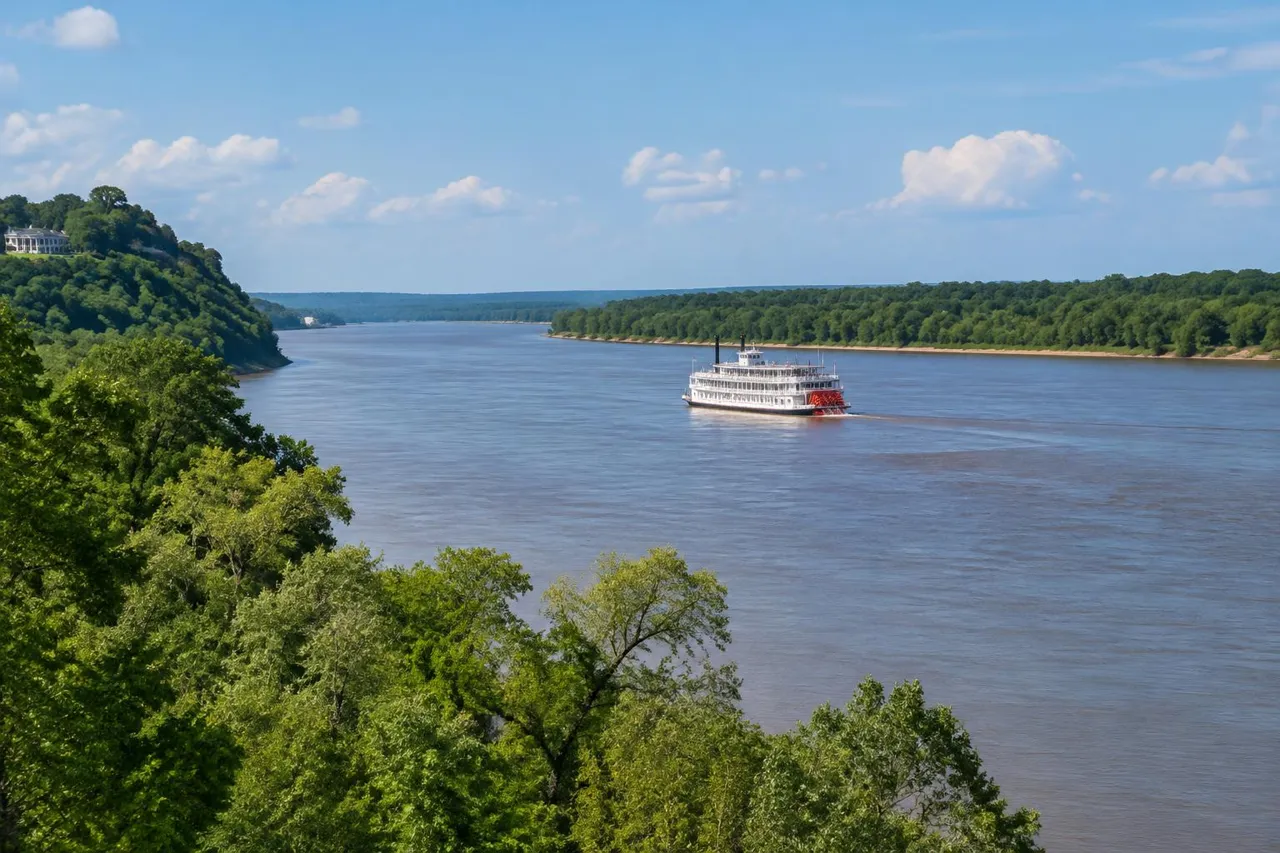
Mississippi river landscape — River Cruises wildlife habitatAI-modified

Mississippi

Upper Mississippi — Upper Mississippi River NWR, Wabasha MN–Rock Island IL

Explore river cruises

Destinations describe the species' habitat, not guaranteed cruise stops. Some animals require an optional inland excursion or are found in restricted reserves.

Fun facts about the Red-winged Blackbird

  • Males have scarlet-and-yellow shoulder patches.
  • The patches can be displayed or concealed.
  • Females are streaky brown.
  • The familiar song is often rendered conk-la-lee.
  • Females weave nests around upright stems.
  • Mud helps support the nest cup.
  • Insects are important summer food.
  • Seeds are prominent winter food.
  • Birds also forage in agricultural fields.

Best time to see the Red-winged Blackbird

No numerical local viewing calendar is verified for the registered Columbia, Mississippi associations. Cornell describes conspicuous breeding males at marshes and mixed feeding flocks in the nonbreeding season. These behaviours help choose a search method but do not provide explicit viewing months for the registered river sites.

Red-winged Blackbird: season matrix by destination

Highlighted months reflect the stated local evidence, not guaranteed encounters. Neutral months mean no verified monthly viewing window, not absence. Observation records and recommended viewing windows are distinct.

Columbia

No river-specific wildlife calendar is confirmed. Check the actual river reach, local conditions and excursion access with your operator.

JanFebMarAprMayJunJulAugSepOctNovDec
Explore river cruises

Mississippi

Refuge guidance explicitly describes the local March return of red-winged blackbirds; this is local guidance, not a guarantee of sightings.

JanFebMarAprMayJunJulAugSepOctNovDec
Explore river cruises

Where the Red-winged Blackbird lives

Breeding habitat includes freshwater and saltwater marshes, rice fields, wet meadows and some drier fields. Cornell also records occasional nesting along wooded waterways. Outside breeding, agricultural fields, pastures, feedlots and grasslands support flocks. A river corridor can therefore connect several useful habitats without the birds spending much time over open water. At the registered refuge reaches, scan cattails, bulrushes and other upright vegetation from trails or boardwalks. A patch that appears too small for ducks may still support blackbirds. Avoid pushing through reeds to locate a singer: nest supports and concealed young can be damaged before the observer sees them, and close approach changes territorial behaviour.

What the Red-winged Blackbird eats

Insects are important summer food, while seeds, including agricultural grains, become prominent in winter. Cornell describes birds probing and prying at aquatic plant bases to expose hidden insects. Ragweed, cocklebur, native sunflower and waste grain are among the recorded seed resources. These choices link marsh edges and nearby open fields rather than confining the species to one feeding surface. A bird clinging low in vegetation may be feeding rather than tending a nest, and a field flock may include several species. Watch actual probing, picking and movement where possible. There is no need to scatter seed in a refuge to obtain a closer photograph or demonstrate that the birds eat grain.

Species at a glance

Common name
Red-winged Blackbird
Scientific name
Agelaius phoeniceus
Animal group
Birds
Size
Not verified in the accessible source text.
Weight
Not verified in the accessible source text.
Lifespan
Wild lifespan not verified in the accessible source text.
Status
Current global conservation assessment not verified.
Identification
Adult males are black with scarlet-and-yellow shoulder patches, although the red can be partly hidden. Females are brown and heavily streaked, with a shape and bill unlike the small sparrows they may superficially resemble. The male’s familiar conk-la-lee song is useful supporting evidence, not a replacement for careful attention to a confusing flock. Immature birds and partially concealed patches can complicate quick identifications. Look at the whole body, bill and wing area, especially when other blackbirds are present. A dark bird on a marsh wire is not automatically a male Red-winged Blackbird, and a streaky female should not be discarded as an unrelated sparrow without a second view.

Red-winged Blackbird: frequently asked questions

Where can I see the Red-winged Blackbird?
Columbia, Mississippi. Listen first, then locate the singing male on a reed, shrub or wire. Watch long enough to see the shoulder patch change visibility as posture shifts. Search below the conspicuous bird for streaked females, taking care not to walk into nesting cover. Binoculars generally offer better tracking than a scope for short flights between nearby stems; a scope helps with distant field flocks. At river viewpoints, spend time with small marsh patches rather than scanning only the water surface. Keep to boardwalks and paths, and move away from persistent alarm behaviour. In mixed nonbreeding flocks, identify individuals rather than assuming every dark bird belongs to the loudest species.
When is the best time to see the Red-winged Blackbird?
No numerical local viewing calendar is verified for the registered Columbia, Mississippi associations. Cornell describes conspicuous breeding males at marshes and mixed feeding flocks in the nonbreeding season. These behaviours help choose a search method but do not provide explicit viewing months for the registered river sites.
How big does the Red-winged Blackbird get?
Not verified in the accessible source text.. Adult weight: Not verified in the accessible source text.. Size varies with age, sex and population.
How should I behave around the Red-winged Blackbird?
Listen first, then locate the singing male on a reed, shrub or wire. Watch long enough to see the shoulder patch change visibility as posture shifts. Search below the conspicuous bird for streaked females, taking care not to walk into nesting cover. Binoculars generally offer better tracking than a scope for short flights between nearby stems; a scope helps with distant field flocks. At river viewpoints, spend time with small marsh patches rather than scanning only the water surface. Keep to boardwalks and paths, and move away from persistent alarm behaviour. In mixed nonbreeding flocks, identify individuals rather than assuming every dark bird belongs to the loudest species.
What does the Red-winged Blackbird eat?
Insects are important summer food, while seeds, including agricultural grains, become prominent in winter. Cornell describes birds probing and prying at aquatic plant bases to expose hidden insects. Ragweed, cocklebur, native sunflower and waste grain are among the recorded seed resources. These choices link marsh edges and nearby open fields rather than confining the species to one feeding surface. A bird clinging low in vegetation may be feeding rather than tending a nest, and a field flock may include several species. Watch actual probing, picking and movement where possible. There is no need to scatter seed in a refuge to obtain a closer photograph or demonstrate that the birds eat grain.
Are wildlife sightings guaranteed on a river cruise?
No. Animals move freely and routes, weather, access restrictions and local conditions influence every outing. Confirm the actual itinerary and shore program before booking.

Compare wildlife in the same destinations

Explore other birds recorded in these destinations. Similar surroundings do not mean the animals share the same habits or viewing season.

Species comparison by animal group and destination
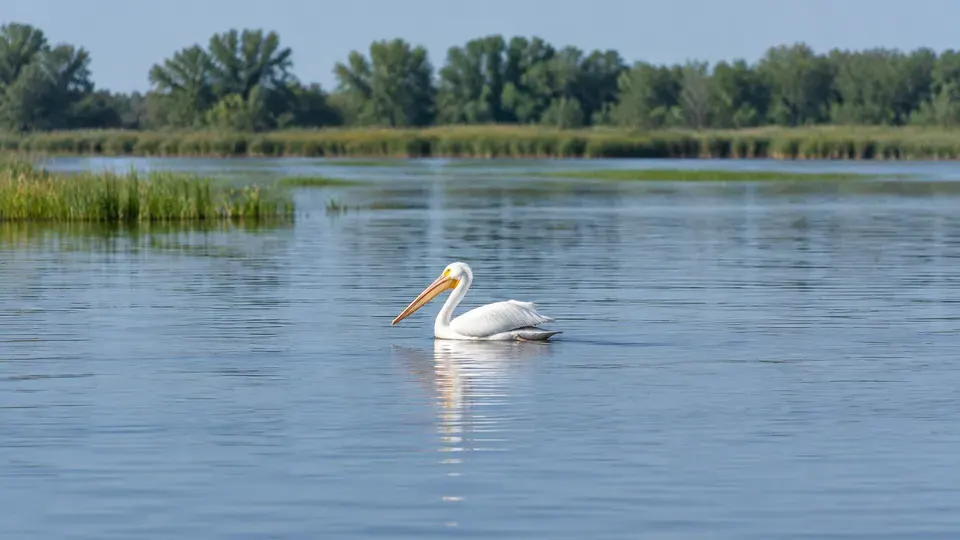
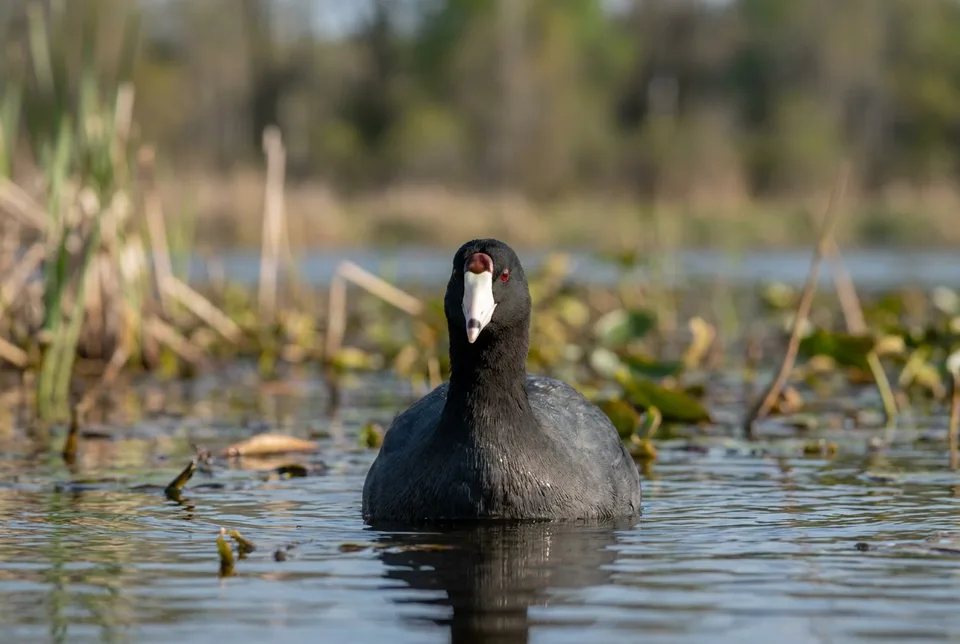
Red-winged blackbird in wetland habitat — Columbia, Mississippi, River Cruises wildlifeAI-modifiedRed-winged BlackbirdAmerican Coot in wetland habitat — Columbia, River Cruises wildlifeAI-modifiedAmerican CootAmerican white pelican in wetland habitat — Columbia, Mississippi, River Cruises wildlifeAI-modifiedAmerican White Pelican
Animal groupBirdsAnimal groupBirdsAnimal groupBirds
DestinationsColumbia, MississippiDestinationsColumbiaDestinationsColumbia, Mississippi
Scientific name
Agelaius phoeniceus
Scientific name
Scientific name
Previous speciesRed-crested PochardNext speciesRedhead
All river wildlife
On this page
  • 01About
  • 02Behaviour & reproduction
  • 03Top wildlife locations
  • 04Fun facts
  • 05Best season
  • 06Season matrix by destination
  • 07Habitat
  • 08Diet
  • 09Species at a glance
  • 10Questions & answers
  • 11Compare

Find your river cruise

AI-modified
Plan your trip

Find your next river journey

Compare destinations, shore programs and dates with the animals and habitats you would love to see.

  • Daily shore excursions
  • Responsible wildlife watching
  • Boutique river ships
Explore river cruises