Bluerides – Blue Rides - Book Liveaboards worldwideOCEAN ADVENTURES
River CruisesRiversNature & WildlifeOur Promise
River CruisesRiversNature & WildlifeOur PromiseSign In

River destinations

  • River destinations
  • Amazon
  • Danube
  • Rhine
  • Mekong
  • Nile

Ships & departures

  • River Cruise Search
  • Deals

Nature & Wildlife

  • Nature & Wildlife

Travel support

  • Our Promise
  • Contact

Contact

Get in Touch

Get in touch anytime, we're happy to help you find the right trip or sort out any question.

EmailWrite us, we usually reply within a few hours.
contact@bluerides.com
WhatsAppChat with us on WhatsApp, Mon–Fri 10:00–16:00 (CET).
Start WhatsApp Chat
PhoneCall us, we're happy to help.
Free call, Mon–Fri 10 AM – 8 PM (CET).
Europe+49 800 1144 990USA+1 888 557 7735UK+44 800 707 4152Australia+61 2 8599 6113Canada+1 888 557 7735
Which river journey is yours?Answer 8 quick questions and find the river cruise that fits you.
8 questions, 1 minute·Plus Gift
Secure Payment MethodsYour payments are fully secured with AES-256 encryption.
Powered byStripeWiseAMEXPayGoogle PaySEPABank
Imprint·Terms & Conditions·Privacy Policy·About·Contact·Liability Waiver·Affiliate Program·Cruise·Blog·
Visit us here

© 2026 Blue Rides. All rights reserved.

Bluerides – Blue Rides - Book Liveaboards worldwideOCEAN ADVENTURES
River CruisesRiversNature & WildlifeOur Promise
River CruisesRiversNature & WildlifeOur PromiseSign In
Peregrine falcon in wetland habitat — Rhine, Seine, River Cruises wildlifeAI-modified
Home›River Cruises›River Wildlife›Peregrine Falcon

Peregrine FalconFalco peregrinusWhere and when to see them

Previous speciesPainted StorkNext speciesPied Avocet

Peregrine Falcon at a glance

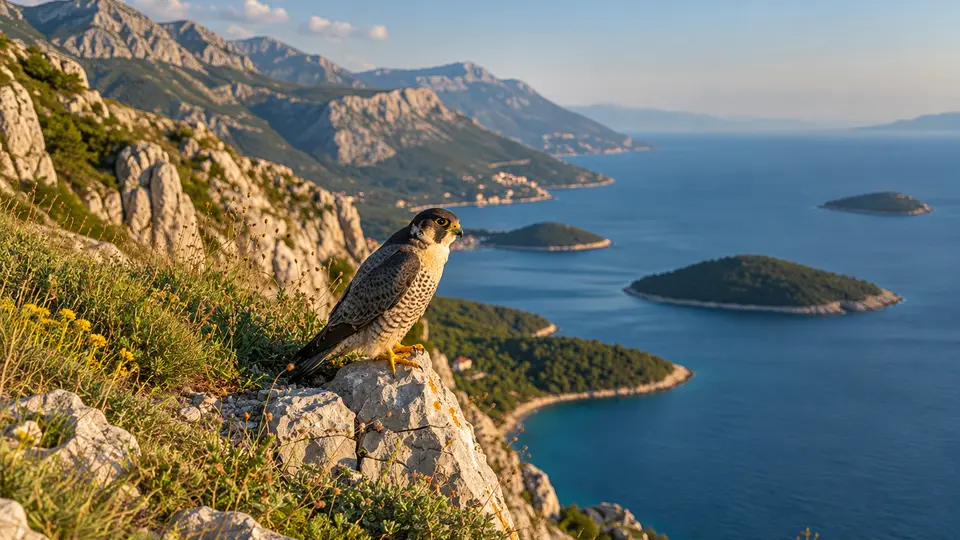
The Peregrine Falcon is a powerful aerial hunter with pointed wings, a dark facial moustache and a compact, muscular profile. Females are larger than males, so size varies substantially even within a pair. BTO gives a reference mass of 889.3 grams and lists the global status as Least Concern. Its recovery from pesticide-related declines is an important conservation story, but persecution remains a concern in the RSPB account. The registered locations are precise: vineyard slopes between Rüdesheim and Lorchhausen on the Middle Rhine, and the lower tidal Seine estuary towards Honfleur and Le Havre. Neither is a general promise for every river cliff. BTO reference: https://www.bto.org/learn/about-birds/birdfacts/peregrine. Source: https://www.rspb.org.uk/birds-and-wildlife/peregrine-falcon

Behaviour & reproduction

Size
Body length not verified.
Weight
889.3 g (31.37 oz) reference value; BTO BirdFacts.
Lifespan
Species-specific lifespan not verified.
Status
Least Concern globally, as listed by BTO.

Peregrines pursue birds in flight and can alternate long periods of perching with rapid hunting movements. A fast pass may offer less identification detail than a stationary bird on a distant ledge. BTO describes the use of urban and industrial structures as well as more traditional settings, so a falcon’s perch need not look completely natural. The local Rhine monitoring identifies breeding occurrence, but its survey period does not define a visitor season. Watch from an established viewpoint and avoid waiting directly beneath a suspected nest. Alarm or repeated defensive flights are reasons to leave.

Top wildlife locations

Rhine river landscape — River Cruises wildlife habitatAI-modified

Rhine

Middle Rhine: Rüdesheim–Lorchhausen vineyard slopes; optional uphill shore excursion, not boat-deck expectation. Viewing context: Spring/summer; search vineyard and scrub paths; uncommon/local; no guaranteed sightings.

Explore river cruises
Seine river landscape — River Cruises wildlife habitatAI-modified

Seine

OPTIONAL ESTUARY: ZPS Estuaire et marais de la Basse-Seine, lower tidal Seine toward Honfleur/Le Havre; includes protected flats beyond port, not Paris freshwater reaches. Viewing context: Breeding/resident cliffs; scarce, scan ledges. Tide-dependent; use authorized shore viewpoints; monitoring evidence 2015–2018, not a current sighting promise.

Explore river cruises

Destinations describe the species' habitat, not guaranteed cruise stops. Some animals require an optional inland excursion or are found in restricted reserves.

Fun facts about the Peregrine Falcon

  • Females are larger than males.
  • Adults have a dark facial moustache.
  • Juvenile underparts are streaked.
  • It hunts birds in flight.
  • It can use urban structures.
  • Pesticides contributed to historical declines.
  • The Rhine location is an optional hillside excursion.

Best time to see the Peregrine Falcon

The registry suggests spring and summer for the Rhine excursion and resident or breeding-cliff watching in the Seine estuary. Retrieved local monitoring supports occurrence but does not supply a recurring numerical observation calendar suitable for either reach. Survey work carried out during particular months is not a species season. Both months arrays remain empty. Plan around current path access and conservation restrictions, and ask local guides about respectful viewpoints. Do not convert general residency or nesting dates into a monthly matrix. An occupied territory also does not guarantee that the bird will be in view when visitors arrive.

Peregrine Falcon: season matrix by destination

Highlighted months reflect the stated local evidence, not guaranteed encounters. Neutral months mean no verified monthly viewing window, not absence. Observation records and recommended viewing windows are distinct.

Rhine

A recurring species-specific numerical month range for this exact reach was not verified. Months are left empty; occurrence, broad residency, breeding dates and single trips are not treated as a calendar.

JanFebMarAprMayJunJulAugSepOctNovDec
Explore river cruises

Seine

A recurring species-specific numerical month range for this exact reach was not verified. Months are left empty; occurrence, broad residency, breeding dates and single trips are not treated as a calendar.

JanFebMarAprMayJunJulAugSepOctNovDec
Explore river cruises

Where the Peregrine Falcon lives

The Middle Rhine entry concerns the Rüdesheim–Lorchhausen vineyard-slope landscape, visited on an optional uphill walk. Official Hessian monitoring includes Peregrine among the protected area’s regular breeding species. The Seine entry instead concerns coastal cliffs and the lower tidal estuary within the protected Basse-Seine landscape, not freshwater Paris. These habitats can provide elevated resting or nesting places and open airspace, but no current nest ledge is advertised here. Keep to authorised paths and viewpoints. Do not infer that every visible rock face is occupied or that nesting evidence guarantees a bird will be visible during a short visit.

What the Peregrine Falcon eats

The RSPB describes an agile hunter chasing prey, while BTO links some urban populations with plentiful urban prey. Birds are the principal prey context of these accounts. No local prey percentages or named Rhine and Seine prey inventories were verified. A falcon carrying something at speed may not allow identification of the item, and nearby pigeons or waterbirds do not prove a particular capture. Avoid baiting, releasing prey or encouraging disturbance of flocks for the sake of seeing a hunt. A quiet perched falcon is as valid an observation as a dramatic aerial pursuit.

Species at a glance

Common name
Peregrine Falcon
Scientific name
Falco peregrinus
Animal group
Birds
Size
Body length not verified.
Weight
889.3 g (31.37 oz) reference value; BTO BirdFacts.
Lifespan
Species-specific lifespan not verified.
Status
Least Concern globally, as listed by BTO.
Identification
Adults are blue-grey above with pale underparts marked by dark barring, a dark crown and an obvious moustache contrasting with the pale face. The wings are broad-based and pointed, and the tail relatively short. Juveniles show browner upperparts and streaked rather than neatly barred underparts. The RSPB notes yellow legs and bare skin around the bill base and eyes in adults. Fast flight alone is not diagnostic: several falcons can pass rapidly through the same landscape. Combine wing shape, body proportions and facial pattern, ideally over several views, rather than relying on apparent speed.

Peregrine Falcon: frequently asked questions

Where can I see the Peregrine Falcon?
Rhine, Seine. On the Rhine, use authorised vineyard and hillside paths rather than expecting reliable views from the ship. In the Seine estuary, scan cliffs and open airspace from permitted shore viewpoints, keeping well clear of nesting ledges. A telescope helps locate a perched bird; binoculars are easier for a passing falcon. Never approach a nest, fly a drone near cliffs or use playback. If a bird circles and calls insistently near visitors, withdraw. Avoid publicising precise nest coordinates, and keep uncertain distant raptor sightings provisional until structure and plumage have been checked.
When is the best time to see the Peregrine Falcon?
The registry suggests spring and summer for the Rhine excursion and resident or breeding-cliff watching in the Seine estuary. Retrieved local monitoring supports occurrence but does not supply a recurring numerical observation calendar suitable for either reach. Survey work carried out during particular months is not a species season. Both months arrays remain empty. Plan around current path access and conservation restrictions, and ask local guides about respectful viewpoints. Do not convert general residency or nesting dates into a monthly matrix. An occupied territory also does not guarantee that the bird will be in view when visitors arrive.
How big does the Peregrine Falcon get?
Body length not verified.. Adult weight: 889.3 g (31.37 oz) reference value; BTO BirdFacts.. Size varies with age, sex and population.
How should I behave around the Peregrine Falcon?
On the Rhine, use authorised vineyard and hillside paths rather than expecting reliable views from the ship. In the Seine estuary, scan cliffs and open airspace from permitted shore viewpoints, keeping well clear of nesting ledges. A telescope helps locate a perched bird; binoculars are easier for a passing falcon. Never approach a nest, fly a drone near cliffs or use playback. If a bird circles and calls insistently near visitors, withdraw. Avoid publicising precise nest coordinates, and keep uncertain distant raptor sightings provisional until structure and plumage have been checked.
What does the Peregrine Falcon eat?
The RSPB describes an agile hunter chasing prey, while BTO links some urban populations with plentiful urban prey. Birds are the principal prey context of these accounts. No local prey percentages or named Rhine and Seine prey inventories were verified. A falcon carrying something at speed may not allow identification of the item, and nearby pigeons or waterbirds do not prove a particular capture. Avoid baiting, releasing prey or encouraging disturbance of flocks for the sake of seeing a hunt. A quiet perched falcon is as valid an observation as a dramatic aerial pursuit.
Are wildlife sightings guaranteed on a river cruise?
No. Animals move freely and routes, weather, access restrictions and local conditions influence every outing. Confirm the actual itinerary and shore program before booking.

Compare wildlife in the same destinations

Explore other birds recorded in these destinations. Similar surroundings do not mean the animals share the same habits or viewing season.

Species comparison by animal group and destination
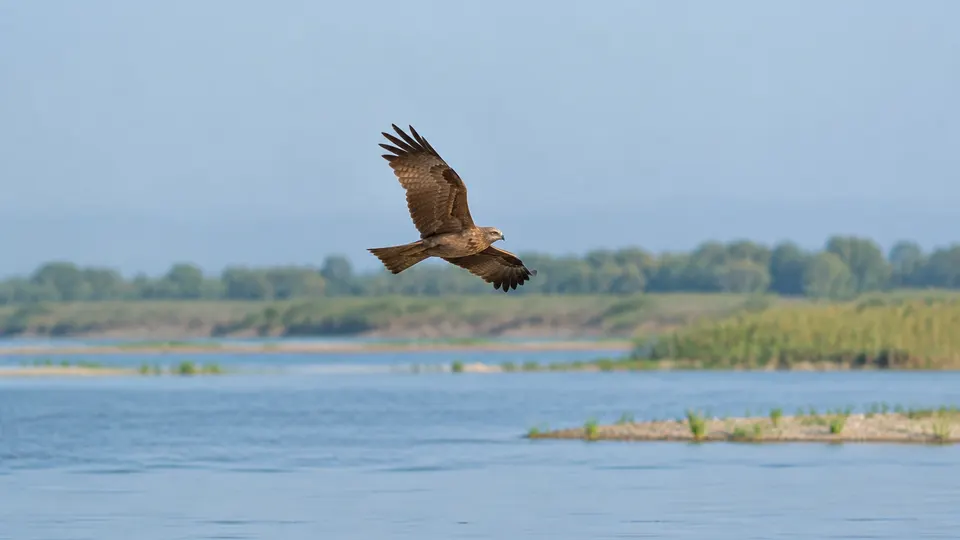
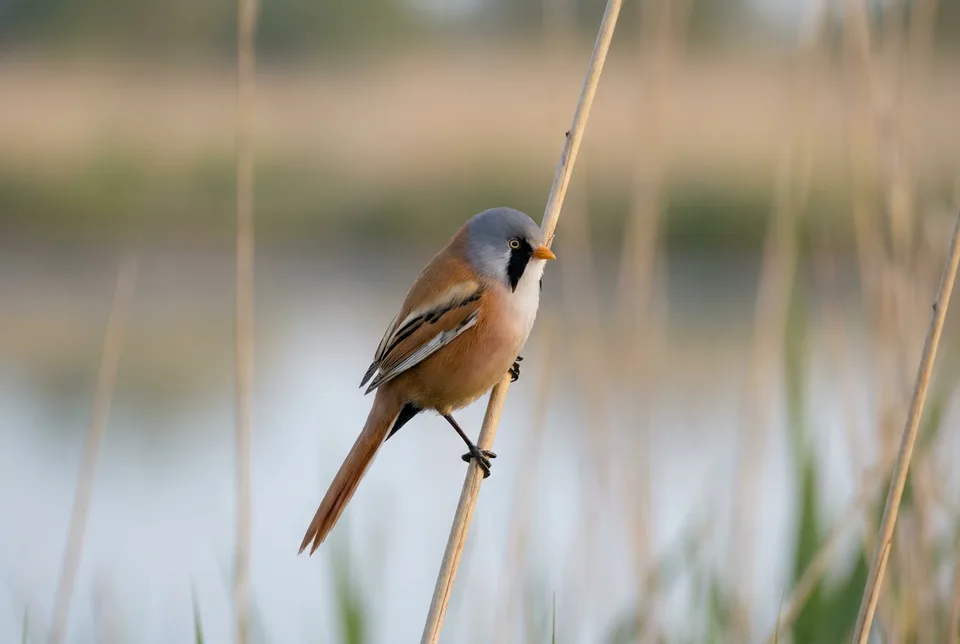
Peregrine falcon in wetland habitat — Rhine, Seine, River Cruises wildlifeAI-modifiedPeregrine FalconBearded Reedling in wetland habitat — Seine, River Cruises wildlifeAI-modifiedBearded ReedlingBlack kite in wetland habitat — Danube, Rhine, River Cruises wildlifeAI-modifiedBlack Kite
Animal groupBirdsAnimal groupBirdsAnimal groupBirds
DestinationsRhine, SeineDestinationsSeineDestinationsDanube, Rhine
Scientific name
Falco peregrinus
Scientific name
Scientific name
Previous speciesPainted StorkNext speciesPied Avocet
All river wildlife
On this page
  • 01About
  • 02Behaviour & reproduction
  • 03Top wildlife locations
  • 04Fun facts
  • 05Best season
  • 06Season matrix by destination
  • 07Habitat
  • 08Diet
  • 09Species at a glance
  • 10Questions & answers
  • 11Compare

Find your river cruise

AI-modified
Plan your trip

Find your next river journey

Compare destinations, shore programs and dates with the animals and habitats you would love to see.

  • Daily shore excursions
  • Responsible wildlife watching
  • Boutique river ships
Explore river cruises