Bluerides – Blue Rides - Book Liveaboards worldwideOCEAN ADVENTURES
River CruisesRiversNature & WildlifeOur Promise
River CruisesRiversNature & WildlifeOur PromiseSign In

River destinations

  • River destinations
  • Amazon
  • Danube
  • Rhine
  • Mekong
  • Nile

Ships & departures

  • River Cruise Search
  • Deals

Nature & Wildlife

  • Nature & Wildlife

Travel support

  • Our Promise
  • Contact

Contact

Get in Touch

Get in touch anytime, we're happy to help you find the right trip or sort out any question.

EmailWrite us, we usually reply within a few hours.
contact@bluerides.com
WhatsAppChat with us on WhatsApp, Mon–Fri 10:00–16:00 (CET).
Start WhatsApp Chat
PhoneCall us, we're happy to help.
Free call, Mon–Fri 10 AM – 8 PM (CET).
Europe+49 800 1144 990USA+1 888 557 7735UK+44 800 707 4152Australia+61 2 8599 6113Canada+1 888 557 7735
Which river journey is yours?Answer 8 quick questions and find the river cruise that fits you.
8 questions, 1 minute·Plus Gift
Secure Payment MethodsYour payments are fully secured with AES-256 encryption.
Powered byStripeWiseAMEXPayGoogle PaySEPABank
Imprint·Terms & Conditions·Privacy Policy·About·Contact·Liability Waiver·Affiliate Program·Cruise·
Visit us here

© 2026 Blue Rides. All rights reserved.·

Bluerides – Blue Rides - Book Liveaboards worldwideOCEAN ADVENTURES
River CruisesRiversNature & WildlifeOur Promise
River CruisesRiversNature & WildlifeOur PromiseSign In
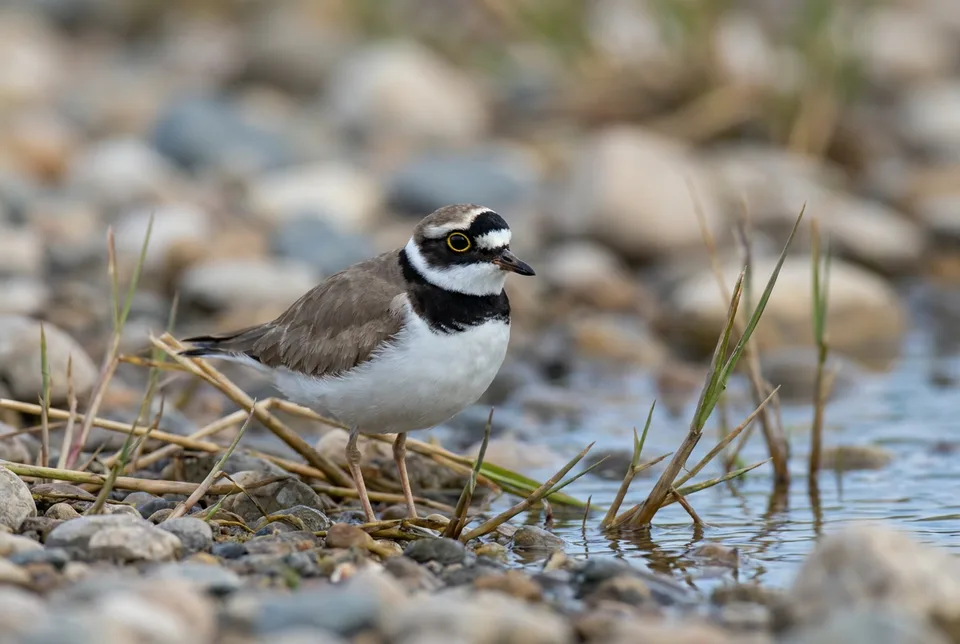
Little Ringed Plover in wetland habitat — Rhine, River Cruises wildlife
Home›River Cruises›River Wildlife›Little Ringed Plover

Little Ringed PloverCharadrius dubiusWhere and when to see them

Previous speciesLittle GrebeNext speciesLong-Tailed Tit

Little Ringed Plover at a glance

The Little Ringed Plover is a small freshwater wader associated with open gravel and sparsely vegetated ground. Its bright yellow eye-ring rewards a clear binocular view, but the bird can disappear visually against stones even when standing in the open. The registered Rhine reach is narrowly defined as Grafenwerth–Königswinter, south of Bonn and Cologne. The local Birdingplaces account names it as a breeding bird there; this does not establish a colony at every gravel bank or guarantee a sighting on a passing ship. BTO gives a reference weight of 37.5 grams and lists the global status as Least Concern. The species' history of using gravel workings illustrates its ability to use newly available bare ground, while also explaining why seemingly empty shorelines can be sensitive wildlife habitat. Source: https://www.bto.org/learn/about-birds/birdfacts/little-ringed-plover

Behaviour & reproduction

Size
Body length not verified.
Weight
37.5 g (1.32 oz) reference value; BTO BirdFacts.
Lifespan
Species-specific lifespan not verified.
Status
Least Concern globally, as listed by BTO; UK Green is a separate national category.

A plover's stop-start movements can be easier to follow than its camouflage. Watch a bird pause, scan the ground and move again without trying to approach each stopping point. The species breeds on exposed substrate, where eggs and young are difficult to distinguish from the surrounding gravel. The registered reach account identifies breeding occurrence but supplies no mapped nesting positions or reliable schedule for courtship and chick-rearing. Treat repeated alarm calls or distraction behaviour as a reason to withdraw, not a photographic opportunity. BTO notes the species' use of both artificial gravel workings and river gravels, showing that the same basic reproductive requirements can occur in different landscapes. A bare bank should therefore never be assumed safe to cross simply because it lacks visible vegetation or an obvious nest.

Top wildlife locations

Rhine river landscape — River Cruises wildlife habitat

Rhine

Rhine: Grafenwerth–Königswinter, south of Bonn/Cologne. Viewing context: Breeding season; watch banks and skies from paths; kingfisher fleeting.
Explore river cruises

Destinations describe the species' habitat, not guaranteed cruise stops. Some animals require an optional inland excursion or are found in restricted reserves.

Fun facts about the Little Ringed Plover

  • A yellow eye-ring is a key feature.
  • The bill is black.
  • The legs are pale, not orange.
  • Its flight lacks a prominent white wing stripe.
  • It uses freshwater gravel habitats.
  • Gravel workings can provide breeding habitat.
  • The registered Rhine site has a breeding association.

Best time to see the Little Ringed Plover

The local Grafenwerth–Königswinter account explicitly identifies Little Ringed Plover as a breeding bird, which gives a qualitative reason to consider the reproductive season when planning a visit. It does not provide a recurring numerical observation range for the species. Dates from British arrival accounts, or from breeding biology elsewhere in Europe, cannot fill that gap on the Rhine. The location months array is therefore empty. Ask a local birdwatching guide about permitted viewpoints and current restrictions before visiting gravel-bank habitat. Changes in exposed substrate and nesting protection can affect access between visits. An observation made during one spring would confirm that year's occurrence, but would not establish an annual start or end month. The profile retains the verified local breeding association without turning it into a calendar.

Little Ringed Plover: season matrix by destination

Highlighted months reflect the stated local evidence, not guaranteed encounters. Neutral months mean no verified monthly viewing window, not absence. Observation records and recommended viewing windows are distinct.

Rhine

A recurring species-specific numerical month range for this exact reach was not verified. Months are left empty; occurrence, broad residency, breeding dates and single trips are not treated as a calendar.

JanFebMarAprMayJunJulAugSepOctNovDec
Explore river cruises

Where the Little Ringed Plover lives

Freshwater shores and river gravels distinguish this plover from the more coastal impression often associated with Ringed Plover. At Grafenwerth–Königswinter, the relevant setting is the Rhine's exposed bank and gravel habitat, viewed from the riverside route. Water levels can alter the amount of available substrate, but no local hydrological threshold or preferred water level was verified. BTO describes colonisation of gravel workings and seasonally wet post-industrial areas in Britain; these examples explain habitat flexibility rather than proving occupation of similar sites along the German reach. The public river path provides the appropriate observation line. Avoid stepping onto gravel islands or bank patches merely because they appear accessible. Small nesting birds can be present on ground that looks completely unoccupied from a visitor's standing height.

What the Little Ringed Plover eats

A detailed species-specific food inventory was not verified in the retrieved BTO and RSPB accounts. This profile therefore does not assign prey species, dietary percentages or a Rhine feeding calendar. The useful observational point is that a small ground-foraging wader must be watched at the substrate surface, where feeding movements can be subtle and brief. A tiny item taken from gravel is unlikely to be identifiable from a distant bank, and an apparent peck is not evidence of a particular insect or crustacean. Claims about local prey should require either a suitable published study or direct identification, rather than inference from other plovers. Leave stones, vegetation and shallow margins undisturbed. Turning gravel to reveal food would alter the feeding area and could also endanger a camouflaged nest.

Species at a glance

Common name
Little Ringed Plover
Scientific name
Charadrius dubius
Animal group
Birds
Size
Body length not verified.
Weight
37.5 g (1.32 oz) reference value; BTO BirdFacts.
Lifespan
Species-specific lifespan not verified.
Status
Least Concern globally, as listed by BTO; UK Green is a separate national category.
Identification
The RSPB describes a small plover with a black-and-white head pattern, a black bill and pale rather than orange legs. A clear yellow orbital ring is the key close-range feature. In flight, Little Ringed Plover lacks the conspicuous white wing stripe shown by Ringed Plover. The latter is an important comparison because a distant head pattern alone can look very similar. BTO also characterises Little Ringed Plover as the daintier species, although relative size is difficult to judge without a comparison bird. Use the combination of bill colour, leg colour, eye-ring and wing pattern rather than habitat alone. If the bird never turns its head or flies, some criteria may remain unavailable; that is preferable to approaching a possible nesting territory for confirmation.

Little Ringed Plover: frequently asked questions

Where can I see the Little Ringed Plover?
Rhine. Use the riverside path between the Grafenwerth area and Königswinter and scan open gravel from a distance. A telescope is useful for eye-ring and bill details without leaving the authorised route. Search slowly: a stationary plover may be harder to detect than a moving one, and its body colour can match stones extremely well. Keep dogs close and obey any temporary nesting exclusions. Do not walk towards an alarmed bird, follow a chick or cross a gravel patch in search of a better angle. From a cruise deck, bank distance and vessel motion can make the diagnostic details impossible to see, so this is better presented as a shore-watching opportunity. Record uncertain sightings conservatively when only a small, pale-bellied wader was visible.
When is the best time to see the Little Ringed Plover?
The local Grafenwerth–Königswinter account explicitly identifies Little Ringed Plover as a breeding bird, which gives a qualitative reason to consider the reproductive season when planning a visit. It does not provide a recurring numerical observation range for the species. Dates from British arrival accounts, or from breeding biology elsewhere in Europe, cannot fill that gap on the Rhine. The location months array is therefore empty. Ask a local birdwatching guide about permitted viewpoints and current restrictions before visiting gravel-bank habitat. Changes in exposed substrate and nesting protection can affect access between visits. An observation made during one spring would confirm that year's occurrence, but would not establish an annual start or end month. The profile retains the verified local breeding association without turning it into a calendar.
How big does the Little Ringed Plover get?
Body length not verified.. Adult weight: 37.5 g (1.32 oz) reference value; BTO BirdFacts.. Size varies with age, sex and population.
How should I behave around the Little Ringed Plover?
Use the riverside path between the Grafenwerth area and Königswinter and scan open gravel from a distance. A telescope is useful for eye-ring and bill details without leaving the authorised route. Search slowly: a stationary plover may be harder to detect than a moving one, and its body colour can match stones extremely well. Keep dogs close and obey any temporary nesting exclusions. Do not walk towards an alarmed bird, follow a chick or cross a gravel patch in search of a better angle. From a cruise deck, bank distance and vessel motion can make the diagnostic details impossible to see, so this is better presented as a shore-watching opportunity. Record uncertain sightings conservatively when only a small, pale-bellied wader was visible.
What does the Little Ringed Plover eat?
A detailed species-specific food inventory was not verified in the retrieved BTO and RSPB accounts. This profile therefore does not assign prey species, dietary percentages or a Rhine feeding calendar. The useful observational point is that a small ground-foraging wader must be watched at the substrate surface, where feeding movements can be subtle and brief. A tiny item taken from gravel is unlikely to be identifiable from a distant bank, and an apparent peck is not evidence of a particular insect or crustacean. Claims about local prey should require either a suitable published study or direct identification, rather than inference from other plovers. Leave stones, vegetation and shallow margins undisturbed. Turning gravel to reveal food would alter the feeding area and could also endanger a camouflaged nest.
Are wildlife sightings guaranteed on a river cruise?
No. Animals move freely and routes, weather, access restrictions and local conditions influence every outing. Confirm the actual itinerary and shore program before booking.

Compare wildlife in the same destinations

Explore other birds recorded in these destinations. Similar surroundings do not mean the animals share the same habits or viewing season.

Species comparison by animal group and destination
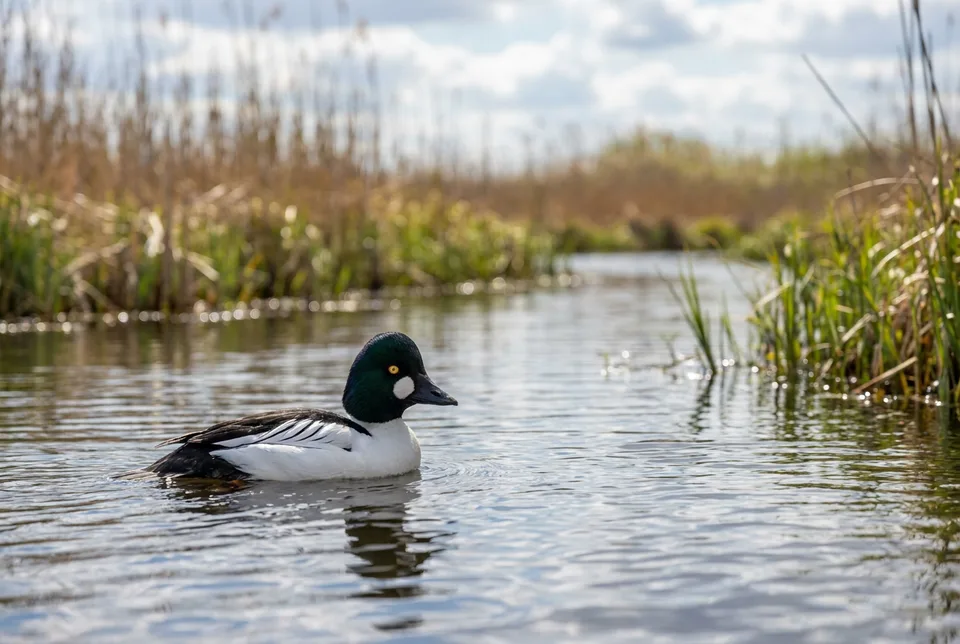
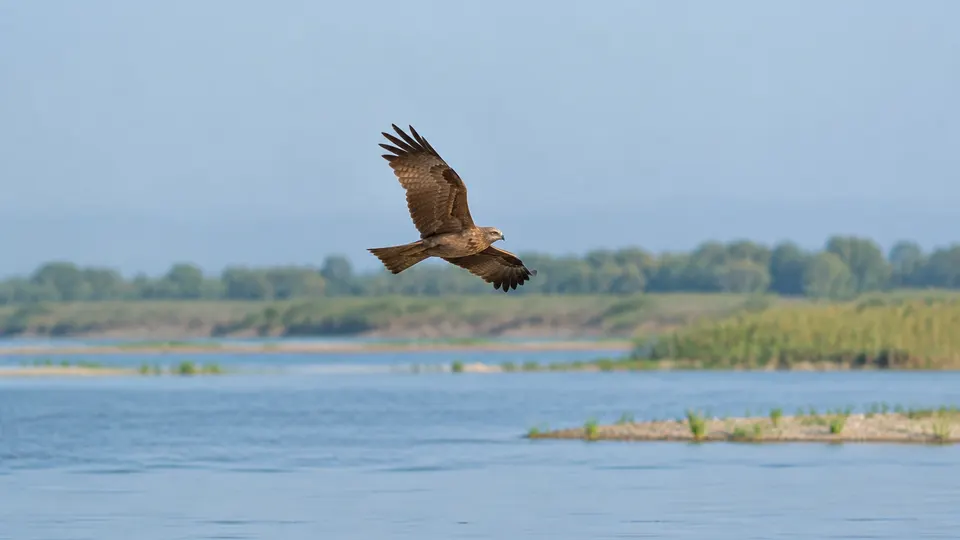
Little Ringed Plover in wetland habitat — Rhine, River Cruises wildlifeLittle Ringed PloverBlack kite in wetland habitat — Danube, Rhine, River Cruises wildlifeBlack KiteCommon Goldeneye in wetland habitat — Rhine, River Cruises wildlifeCommon Goldeneye
Animal groupBirdsAnimal groupBirdsAnimal groupBirds
DestinationsRhineDestinationsDanube, RhineDestinationsRhine
Scientific name
Charadrius dubius
Scientific name
Scientific name
Previous speciesLittle GrebeNext speciesLong-Tailed Tit
All river wildlife
On this page
  • 01About
  • 02Behaviour & reproduction
  • 03Top wildlife locations
  • 04Fun facts
  • 05Best season
  • 06Season matrix by destination
  • 07Habitat
  • 08Diet
  • 09Species at a glance
  • 10Questions & answers
  • 11Compare

Find your river cruise

Plan your trip

Find your next river journey

Compare destinations, shore programs and dates with the animals and habitats you would love to see.

  • Daily shore excursions
  • Responsible wildlife watching
  • Boutique river ships
Explore river cruises