Bluerides – Blue Rides - Book Liveaboards worldwideOCEAN ADVENTURES
River CruisesRiversNature & WildlifeOur Promise
River CruisesRiversNature & WildlifeOur PromiseSign In

River destinations

  • River destinations
  • Amazon
  • Danube
  • Rhine
  • Mekong
  • Nile

Ships & departures

  • River Cruise Search
  • Deals

Nature & Wildlife

  • Nature & Wildlife

Travel support

  • Our Promise
  • Contact

Contact

Get in Touch

Get in touch anytime, we're happy to help you find the right trip or sort out any question.

EmailWrite us, we usually reply within a few hours.
contact@bluerides.com
WhatsAppChat with us on WhatsApp, Mon–Fri 10:00–16:00 (CET).
Start WhatsApp Chat
PhoneCall us, we're happy to help.
Free call, Mon–Fri 10 AM – 8 PM (CET).
Europe+49 800 1144 990USA+1 888 557 7735UK+44 800 707 4152Australia+61 2 8599 6113Canada+1 888 557 7735
Which river journey is yours?Answer 8 quick questions and find the river cruise that fits you.
8 questions, 1 minute·Plus Gift
Secure Payment MethodsYour payments are fully secured with AES-256 encryption.
Powered byStripeWiseAMEXPayGoogle PaySEPABank
Imprint·Terms & Conditions·Privacy Policy·About·Contact·Liability Waiver·Affiliate Program·Cruise·Blog·
Visit us here

© 2026 Blue Rides. All rights reserved.

Bluerides – Blue Rides - Book Liveaboards worldwideOCEAN ADVENTURES
River CruisesRiversNature & WildlifeOur Promise
River CruisesRiversNature & WildlifeOur PromiseSign In
Laughing Dove in wetland habitat — Nile, River Cruises wildlifeAI-modified
Home›River Cruises›River Wildlife›Laughing Dove

Laughing DoveSpilopelia senegalensisWhere and when to see them

Previous speciesKentish PloverNext speciesLesser adjutant

Laughing Dove at a glance

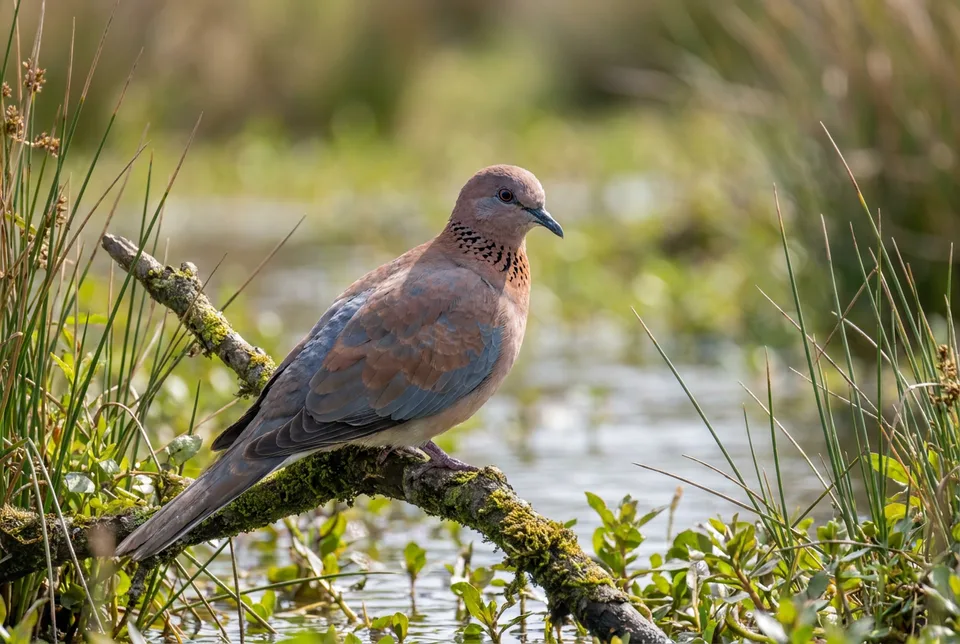
The Laughing Dove is a small dove with soft brown and pink plumage, a long tail and a spotted dark collar. Cornell’s identification account uses Spilopelia senegalensis, while the southern African Biodiversity Explorer account retains the older combination Streptopelia senegalensis. Those names refer to the same species here. Its biology is not that of a specialised waterbird: it commonly uses human-modified landscapes where trees remain. The Nile association is a historical occurrence record, not evidence that the dove feeds in the river or can be expected beside every landing. Watching natural activity on adjacent ground and in trees is more appropriate than concentrating entirely on open water.

Behaviour & reproduction

Size
Unknown
Weight
Unknown
Lifespan
Unknown
Status
Unknown

Much activity takes place on the ground, where Laughing Doves search for food. Repeated cooing also helps locate birds that are partly hidden in trees. The southern African account describes a division of nesting work: the male collects material and the female incorporates it into a small, rather frail nest. Both parents incubate. Chicks initially receive crop milk, followed by seeds as they develop. Young can leave the nest before they are capable of sustained flight, so a recently emerged youngster should not automatically be regarded as abandoned. These observations describe the species, with nesting details drawn from southern Africa; they do not establish breeding dates or nest sites along the registered Nile reach.

Top wildlife locations

Nile river landscape — River Cruises wildlife habitatAI-modified

Nile

Birds are documented by a historical March Luxor–Aswan cruise report, with local reeds, riverbanks and nearby shore stops. These are occurrence records, not current sighting rates. No Nile crocodiles, hippos or Lake Nasser fauna are advertised.
Explore river cruises

Destinations describe the species' habitat, not guaranteed cruise stops. Some animals require an optional inland excursion or are found in restricted reserves.

Fun facts about the Laughing Dove

  • Its current Cornell genus is Spilopelia.
  • Older accounts use Streptopelia.
  • The neck carries a spotted black collar.
  • The long tail has white corners.
  • The tail appears white underneath.
  • Ground foraging supplies much of its food.
  • Seeds are its main food category.
  • Both parents incubate in the checked regional account.
  • Young initially receive crop milk.

Best time to see the Laughing Dove

No recurring monthly viewing window has been verified for the exact registered reach. The retained local evidence establishes historical occurrence rather than a sequence of repeat observations through the year. A trip date, a national residency description or a breeding season elsewhere cannot supply that missing local calendar. Accordingly, the location month arrays remain empty, and no season is labelled a guaranteed opportunity. For practical planning, consult the current site manager or a local guide about recent sightings and permitted access before arranging an excursion. Fresh information can guide a particular visit, but a single new sighting would still not establish an annual pattern. General biology in this profile should be read separately from local availability.

Laughing Dove: season matrix by destination

Highlighted months reflect the stated local evidence, not guaranteed encounters. Neutral months mean no verified monthly viewing window, not absence. Observation records and recommended viewing windows are distinct.

Nile

No river-specific wildlife calendar is confirmed. Check the actual river reach, local conditions and excursion access with your operator.

JanFebMarAprMayJunJulAugSepOctNovDec
Explore river cruises

Where the Laughing Dove lives

Cornell associates Laughing Dove with plantations, gardens and urban areas as long as some trees are present. The southern African account adds woodland, farmland, suburban parks and gardens, and describes benefits from some human changes to habitat. These are regional descriptions of habitat use, not a claim that every disturbed place supports the species. For a Nile visit, the relevant search is the landward mosaic of trees and open feeding ground at a permitted stop, within the scope of the existing historical record. A bare stretch of deep water is not an equivalent habitat. Retain the distinction between a bird seen beside a river and a bird ecologically dependent on that river.

What the Laughing Dove eats

Seeds are the main food category in the checked Biodiversity Explorer account, and most foraging occurs on the ground. Recorded additions include small fruit, bulbs and invertebrates; nectar is also reported. Its detailed plant and animal list comes from southern Africa and should not be presented as a measured Egyptian menu. The general lesson is a broad, predominantly seed-based diet rather than dependence on fish or other aquatic prey. Observe what a bird picks up naturally, without scattering grain or crumbs. A pecking movement does not identify the food item by itself. No proportions, daily intake or local seasonal changes are supplied because none was verified for this Nile profile.

Species at a glance

Common name
Laughing Dove
Scientific name
Spilopelia senegalensis
Animal group
Birds
Size
Unknown; not independently verified for this profile
Weight
Unknown; not independently verified for this profile
Lifespan
Unknown; not independently verified for this profile
Status
Unknown; current global assessment not independently verified
Identification
Cornell describes pastel brown and pink body colours and a spotted black collar. The tail is strikingly long, with white corners and a grey centre when seen from above, but appears white underneath. Those features should be checked together because a distant pale dove can lose its subtler pattern in glare. The repeated cooing phrase provides supporting evidence, although a sound without a clear view may leave uncertainty. The current Cornell name is Spilopelia senegalensis; an older source headed Streptopelia senegalensis does not indicate a different bird. Wait for a natural change of angle to examine the neck and tail. Do not approach a nest or flush a resting bird for a diagnostic flight photograph.

Laughing Dove: frequently asked questions

Where can I see the Laughing Dove?
Nile. Search adjacent ground and trees from permitted paths during Luxor–Aswan riverbank or temple visits, rather than expecting an open-water sighting. Watch naturally feeding birds and check the spotted collar and long tail when they turn. Avoid feeding birds to draw them closer. Keep enough distance for normal behaviour to continue, especially when a bird is resting or attending young. The local record comes from a March 2007 cruise and does not specify a currently occupied feeding patch. Consult recent local observations before a dedicated outing. A nearby tree and open ground can provide a useful search setting without guaranteeing that a Laughing Dove will be present.
When is the best time to see the Laughing Dove?
No recurring monthly viewing window has been verified for the exact registered reach. The retained local evidence establishes historical occurrence rather than a sequence of repeat observations through the year. A trip date, a national residency description or a breeding season elsewhere cannot supply that missing local calendar. Accordingly, the location month arrays remain empty, and no season is labelled a guaranteed opportunity. For practical planning, consult the current site manager or a local guide about recent sightings and permitted access before arranging an excursion. Fresh information can guide a particular visit, but a single new sighting would still not establish an annual pattern. General biology in this profile should be read separately from local availability.
How big does the Laughing Dove get?
Unknown; not independently verified for this profile. Adult weight: Unknown; not independently verified for this profile. Size varies with age, sex and population.
How should I behave around the Laughing Dove?
Search adjacent ground and trees from permitted paths during Luxor–Aswan riverbank or temple visits, rather than expecting an open-water sighting. Watch naturally feeding birds and check the spotted collar and long tail when they turn. Avoid feeding birds to draw them closer. Keep enough distance for normal behaviour to continue, especially when a bird is resting or attending young. The local record comes from a March 2007 cruise and does not specify a currently occupied feeding patch. Consult recent local observations before a dedicated outing. A nearby tree and open ground can provide a useful search setting without guaranteeing that a Laughing Dove will be present.
What does the Laughing Dove eat?
Seeds are the main food category in the checked Biodiversity Explorer account, and most foraging occurs on the ground. Recorded additions include small fruit, bulbs and invertebrates; nectar is also reported. Its detailed plant and animal list comes from southern Africa and should not be presented as a measured Egyptian menu. The general lesson is a broad, predominantly seed-based diet rather than dependence on fish or other aquatic prey. Observe what a bird picks up naturally, without scattering grain or crumbs. A pecking movement does not identify the food item by itself. No proportions, daily intake or local seasonal changes are supplied because none was verified for this Nile profile.
Are wildlife sightings guaranteed on a river cruise?
No. Animals move freely and routes, weather, access restrictions and local conditions influence every outing. Confirm the actual itinerary and shore program before booking.

Compare wildlife in the same destinations

Explore other birds recorded in these destinations. Similar surroundings do not mean the animals share the same habits or viewing season.

Species comparison by animal group and destination
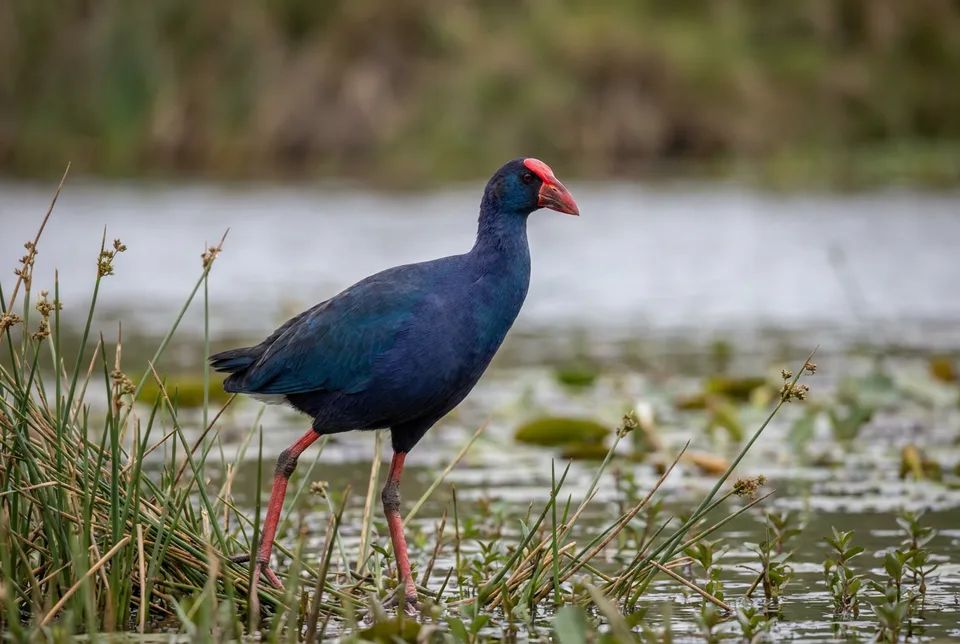
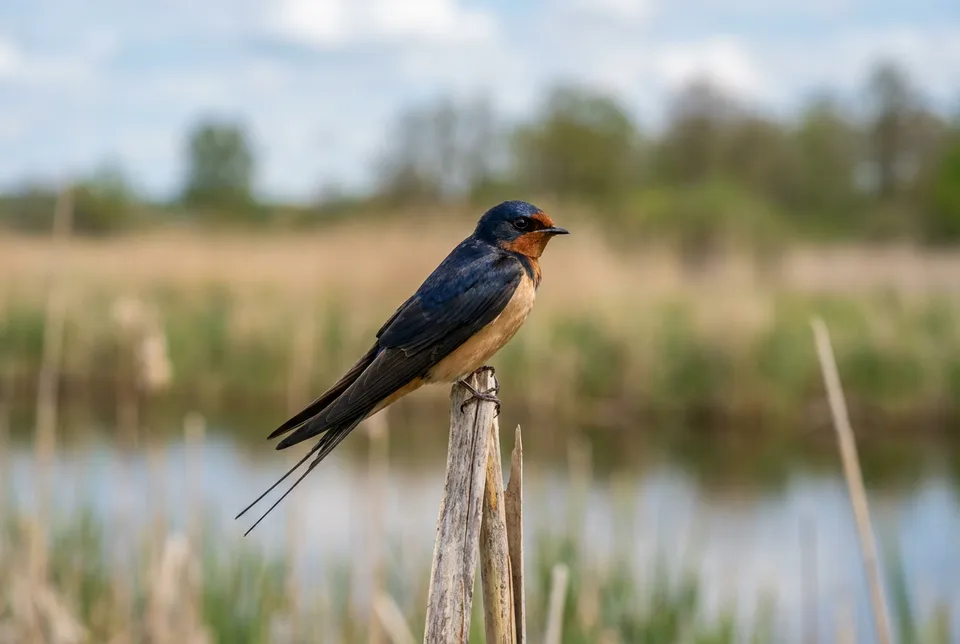
Laughing Dove in wetland habitat — Nile, River Cruises wildlifeAI-modifiedLaughing DoveAfrican Swamphen in wetland habitat — Nile, Egypt, River Cruises wildlifeAI-modifiedAfrican SwamphenBarn Swallow in wetland habitat — Mississippi, Nile, River Cruises wildlifeAI-modifiedBarn Swallow
Animal groupBirdsAnimal groupBirdsAnimal groupBirds
DestinationsNileDestinationsNileDestinationsMississippi, Nile
Scientific name
Spilopelia senegalensis
Scientific name
Scientific name
Previous speciesKentish PloverNext speciesLesser adjutant
All river wildlife
On this page
  • 01About
  • 02Behaviour & reproduction
  • 03Top wildlife locations
  • 04Fun facts
  • 05Best season
  • 06Season matrix by destination
  • 07Habitat
  • 08Diet
  • 09Species at a glance
  • 10Questions & answers
  • 11Compare

Find your river cruise

AI-modified
Plan your trip

Find your next river journey

Compare destinations, shore programs and dates with the animals and habitats you would love to see.

  • Daily shore excursions
  • Responsible wildlife watching
  • Boutique river ships
Explore river cruises