Bluerides – Blue Rides - Book Liveaboards worldwideOCEAN ADVENTURES
River CruisesRiversNature & WildlifeOur Promise
River CruisesRiversNature & WildlifeOur PromiseSign In

River destinations

  • River destinations
  • Amazon
  • Danube
  • Rhine
  • Mekong
  • Nile

Ships & departures

  • River Cruise Search
  • Deals

Nature & Wildlife

  • Nature & Wildlife

Travel support

  • Our Promise
  • Contact

Contact

Get in Touch

Get in touch anytime, we're happy to help you find the right trip or sort out any question.

EmailWrite us, we usually reply within a few hours.
contact@bluerides.com
WhatsAppChat with us on WhatsApp, Mon–Fri 10:00–16:00 (CET).
Start WhatsApp Chat
PhoneCall us, we're happy to help.
Free call, Mon–Fri 10 AM – 8 PM (CET).
Europe+49 800 1144 990USA+1 888 557 7735UK+44 800 707 4152Australia+61 2 8599 6113Canada+1 888 557 7735
Which river journey is yours?Answer 8 quick questions and find the river cruise that fits you.
8 questions, 1 minute·Plus Gift
Secure Payment MethodsYour payments are fully secured with AES-256 encryption.
Powered byStripeWiseAMEXPayGoogle PaySEPABank
Imprint·Terms & Conditions·Privacy Policy·About·Contact·Liability Waiver·Affiliate Program·Cruise·Blog·
Visit us here

© 2026 Blue Rides. All rights reserved.

Bluerides – Blue Rides - Book Liveaboards worldwideOCEAN ADVENTURES
River CruisesRiversNature & WildlifeOur Promise
River CruisesRiversNature & WildlifeOur PromiseSign In
European Goldfinch in wetland habitat — Saone, River Cruises wildlifeAI-modified
Home›River Cruises›River Wildlife›European Goldfinch

European GoldfinchCarduelis carduelisWhere and when to see them

Previous speciesEuropean Golden PloverNext speciesEuropean Green Woodpecker

European Goldfinch at a glance

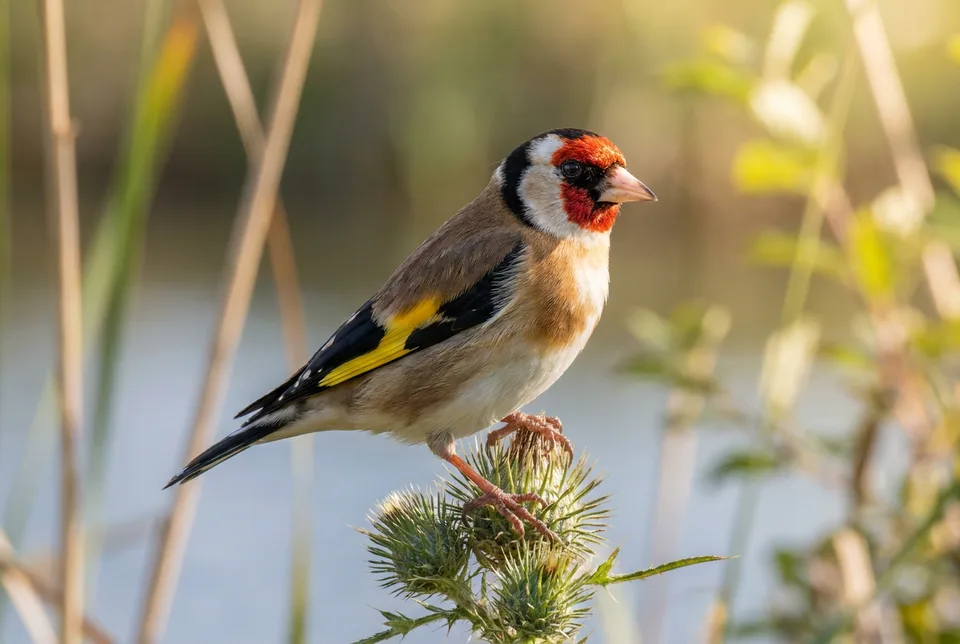
The European goldfinch is a specialist at exploiting small seeds, especially those held in composite flowerheads. Its fine pointed bill and agile movements let it work food sources that are awkward for bulkier seed-eaters. This ecological role makes rough vegetation and surviving seedheads important, even in a polished riverside park. A flock may move between trees, weedy ground and gardens rather than stay at the water's edge. Adults are immediately recognisable by their red face and yellow wings, but recently fledged birds lack the red facial pattern. The registry association lies on the lower Saône promenade between Rochetaillée-sur-Saône, Fontaines-sur-Saône and Lyon, upstream of the Rhône confluence. It is an account of the vegetated riverside landscape, not a claim that goldfinches depend on the river channel. Seed-bearing margins may be more productive to watch than an unobstructed view of the water.
Behaviour & reproduction

Size
Species-specific measurement not verified in retrieved sources
Weight
Species-specific weight not verified
Lifespan
Species-specific lifespan not verified
Status
See sourced assessment

Goldfinches are sociable and often forage in small, mobile groups, maintaining contact with liquid twittering calls. A flock can arrive noisily in a tree, descend to seedheads and then move on together. Breeding may occur in loose neighbourhoods rather than tightly defended isolated territories. BTO gives a typical clutch of five eggs and usually two broods, with a third possible. The female incubates for roughly twelve to fourteen days. Chicks hatch dependent and generally leave the nest about two weeks later, but fledging does not instantly give them the adult face pattern. Juveniles can accompany adults in mixed-age feeding parties, making family activity visible without finding a nest. On a Saône walk, listening for contact calls and watching the direction of a moving group is usually more effective than repeatedly inspecting a single apparently promising tree after the flock has departed.

Top wildlife locations

Saone river landscape — River Cruises wildlife habitatAI-modified

Saone

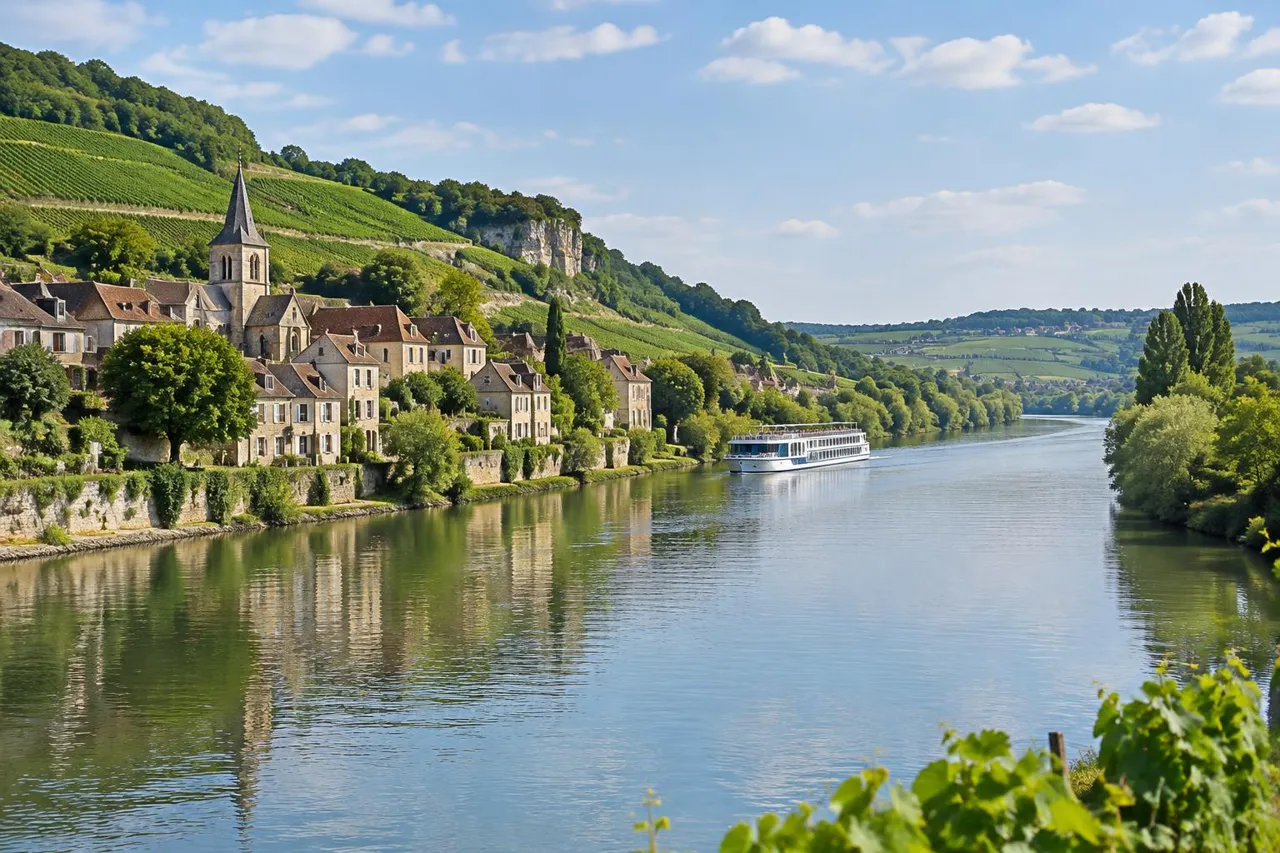
Lower Saône: Grand Lyon Rives de Saône promenade, Rochetaillée-sur-Saône–Fontaines-sur-Saône–Lyon, upstream of the Rhône confluence.
Explore river cruises

Destinations describe the species' habitat, not guaranteed cruise stops. Some animals require an optional inland excursion or are found in restricted reserves.

Fun facts about the European Goldfinch

  • The fine bill extracts small seeds from flowerheads.
  • Birds cling to stems while feeding.
  • Thistle and teasel are characteristic food plants.
  • Flocks also forage in stubble fields.
  • Juveniles lack the adult red face.
  • Males and females look very similar.
  • Five eggs form a typical clutch.
  • The female incubates for about twelve to fourteen days.
  • Two broods are usual and a third is possible.

Best time to see the European Goldfinch

Goldfinches can be seen throughout the year over much of western Europe, with local movement and flocking changing the pattern of encounters. Breeding activity brings pairs and dependent young; outside breeding, mobile feeding flocks can make a productive patch suddenly busy and then apparently empty. These general patterns are useful for understanding observations, but the retained lower-Saône evidence does not establish a month-by-month local schedule. Numerical month lists remain unchanged and empty. At the scale of a promenade visit, seed availability is a better planning clue than importing a British garden-feeder calendar. Look for plants retaining ripe heads and listen for passing flocks. Cutting or tidying can alter food availability within a season without any change in the species' regional status. A recent report should therefore be checked against the current condition of the actual vegetation patch, not only the date on which birds were previously seen.

European Goldfinch: season matrix by destination

Highlighted months reflect the stated local evidence, not guaranteed encounters. Neutral months mean no verified monthly viewing window, not absence. Observation records and recommended viewing windows are distinct.

Saone

Exact local species-specific monthly viewing evidence has not been verified; no monthly calendar is inferred.

JanFebMarAprMayJunJulAugSepOctNovDec
Explore river cruises

Where the European Goldfinch lives

The relevant riverside habitat is a patchwork of trees and shrubs near seed-rich open ground. Thistles, teasels and other standing plants can support feeding, while tree canopies and garden vegetation offer shelter and nesting opportunities. A uniformly mown lawn may look green but provide far fewer ripe seedheads than an untidy edge. Conversely, a narrow neglected strip beside a path can be worth a careful scan. The lower Saône promenade includes a human-shaped landscape, so habitat should be assessed at the scale of individual margins, gardens and planted sections rather than described simply as river habitat. Look where rough vegetation meets woody cover, and distinguish food plants that still hold seeds from stems already emptied by earlier flocks. The registry does not establish occupancy of every landscaped segment between the named communes, and the species' wider familiarity should not replace a precise observation locality.

What the European Goldfinch eats

Thistle and teasel seeds are classic goldfinch foods. The slender bill helps reach and extract small seeds, while agile feet allow a bird to cling to stems and work a head from different angles. BTO also describes foraging flocks using stubble fields, illustrating that the food resource is not confined to gardens. Sunflower hearts and other supplied foods can attract goldfinches to feeders, but feeding stations are only one part of their ecology. Animal food can supplement the diet, particularly in the breeding period, yet the retained Saône evidence does not document local proportions. Observe whether a bird removes seeds from a plant, searches the ground or visits a feeder; those are different feeding contexts. A lingering bird on a dead flowerhead may still be actively feeding. Do not assume that every yellow-winged finch on a seed plant is a goldfinch without checking head pattern and bill.

Species at a glance

Common name
European Goldfinch
Scientific name
Carduelis carduelis
Animal group
Birds
Size
Species-specific measurement not verified in retrieved sources
Weight
Species-specific weight not verified
Lifespan
Species-specific lifespan not verified
Status
Current global category not independently verified; regional conservation statements must not be presented as a global assessment.
Identification
Adults combine a red face, black-and-white head and a broad yellow patch in otherwise dark wings. The body is warm brown and pale below. In flight, the yellow wing area can remain visible when finer facial details disappear. Males and females look very similar in ordinary field views; the subtle extent of red around the eye should not be treated as a reliable sexing mark in a distant or moving bird. Juveniles are the important age exception: they lack the adult red face but retain the yellow wing feature. This makes a young goldfinch quite unlike a miniature fully coloured adult. Greenfinches are more heavily built with a thicker bill and do not share the same adult face pattern. Siskins can also flash yellow but differ in structure and markings. Confirm several features on a settled bird rather than identifying a flock solely from its musical calls.

European Goldfinch: frequently asked questions

Where can I see the European Goldfinch?
Saone. On the lower-Saône promenade, pause beside rough seed-bearing margins and listen before looking into the canopy. A twittering flock may first reveal itself overhead, then settle where the food is. Watch a single plant head through binoculars: bill movements and shifting footholds can show how seeds are extracted. If adults are accompanied by plain-headed birds with the same yellow wing patch, consider juveniles rather than assuming a second species. Good observations can be made from the path without pushing through vegetation or attracting birds with food. Note the named commune or promenade section and whether the birds were using seedheads, trees, the ground or a feeder. The sighting belongs to that terrestrial riverside patch, not the navigation channel. Revisit a productive margin only if its seed supply remains intact; a flock is mobile, and a previous encounter does not guarantee a stationary group.
When is the best time to see the European Goldfinch?
Goldfinches can be seen throughout the year over much of western Europe, with local movement and flocking changing the pattern of encounters. Breeding activity brings pairs and dependent young; outside breeding, mobile feeding flocks can make a productive patch suddenly busy and then apparently empty. These general patterns are useful for understanding observations, but the retained lower-Saône evidence does not establish a month-by-month local schedule. Numerical month lists remain unchanged and empty. At the scale of a promenade visit, seed availability is a better planning clue than importing a British garden-feeder calendar. Look for plants retaining ripe heads and listen for passing flocks. Cutting or tidying can alter food availability within a season without any change in the species' regional status. A recent report should therefore be checked against the current condition of the actual vegetation patch, not only the date on which birds were previously seen.
How big does the European Goldfinch get?
Species-specific measurement not verified in retrieved sources. Adult weight: Species-specific weight not verified. Size varies with age, sex and population.
How should I behave around the European Goldfinch?
On the lower-Saône promenade, pause beside rough seed-bearing margins and listen before looking into the canopy. A twittering flock may first reveal itself overhead, then settle where the food is. Watch a single plant head through binoculars: bill movements and shifting footholds can show how seeds are extracted. If adults are accompanied by plain-headed birds with the same yellow wing patch, consider juveniles rather than assuming a second species. Good observations can be made from the path without pushing through vegetation or attracting birds with food. Note the named commune or promenade section and whether the birds were using seedheads, trees, the ground or a feeder. The sighting belongs to that terrestrial riverside patch, not the navigation channel. Revisit a productive margin only if its seed supply remains intact; a flock is mobile, and a previous encounter does not guarantee a stationary group.
What does the European Goldfinch eat?
Thistle and teasel seeds are classic goldfinch foods. The slender bill helps reach and extract small seeds, while agile feet allow a bird to cling to stems and work a head from different angles. BTO also describes foraging flocks using stubble fields, illustrating that the food resource is not confined to gardens. Sunflower hearts and other supplied foods can attract goldfinches to feeders, but feeding stations are only one part of their ecology. Animal food can supplement the diet, particularly in the breeding period, yet the retained Saône evidence does not document local proportions. Observe whether a bird removes seeds from a plant, searches the ground or visits a feeder; those are different feeding contexts. A lingering bird on a dead flowerhead may still be actively feeding. Do not assume that every yellow-winged finch on a seed plant is a goldfinch without checking head pattern and bill.
Are wildlife sightings guaranteed on a river cruise?
No. Animals move freely and routes, weather, access restrictions and local conditions influence every outing. Confirm the actual itinerary and shore program before booking.

Compare wildlife in the same destinations

Explore other birds recorded in these destinations. Similar surroundings do not mean the animals share the same habits or viewing season.

Species comparison by animal group and destination
European Goldfinch in wetland habitat — Saone, River Cruises wildlifeAI-modifiedEuropean GoldfinchAlpine Swift in wetland habitat — Saone, River Cruises wildlifeAI-modifiedAlpine SwiftBlack Redstart in wetland habitat — Saone, Douro, River Cruises wildlifeAI-modifiedBlack Redstart
Animal groupBirdsAnimal groupBirdsAnimal groupBirds
DestinationsSaoneDestinationsSaoneDestinationsSaone, Douro
Scientific name
Carduelis carduelis
Scientific name
Scientific name
Previous speciesEuropean Golden PloverNext speciesEuropean Green Woodpecker
All river wildlife
On this page
  • 01About
  • 02Behaviour & reproduction
  • 03Top wildlife locations
  • 04Fun facts
  • 05Best season
  • 06Season matrix by destination
  • 07Habitat
  • 08Diet
  • 09Species at a glance
  • 10Questions & answers
  • 11Compare

Find your river cruise

AI-modified
Plan your trip

Find your next river journey

Compare destinations, shore programs and dates with the animals and habitats you would love to see.

  • Daily shore excursions
  • Responsible wildlife watching
  • Boutique river ships
Explore river cruises