Bluerides – Blue Rides - Book Liveaboards worldwideOCEAN ADVENTURES
River CruisesRiversNature & WildlifeOur Promise
River CruisesRiversNature & WildlifeOur PromiseSign In

River destinations

  • River destinations
  • Amazon
  • Danube
  • Rhine
  • Mekong
  • Nile

Ships & departures

  • River Cruise Search
  • Deals

Nature & Wildlife

  • Nature & Wildlife

Travel support

  • Our Promise
  • Contact

Contact

Get in Touch

Get in touch anytime, we're happy to help you find the right trip or sort out any question.

EmailWrite us, we usually reply within a few hours.
contact@bluerides.com
WhatsAppChat with us on WhatsApp, Mon–Fri 10:00–16:00 (CET).
Start WhatsApp Chat
PhoneCall us, we're happy to help.
Free call, Mon–Fri 10 AM – 8 PM (CET).
Europe+49 800 1144 990USA+1 888 557 7735UK+44 800 707 4152Australia+61 2 8599 6113Canada+1 888 557 7735
Which river journey is yours?Answer 8 quick questions and find the river cruise that fits you.
8 questions, 1 minute·Plus Gift
Secure Payment MethodsYour payments are fully secured with AES-256 encryption.
Powered byStripeWiseAMEXPayGoogle PaySEPABank
Imprint·Terms & Conditions·Privacy Policy·About·Contact·Liability Waiver·Affiliate Program·Cruise·
Visit us here

© 2026 Blue Rides. All rights reserved.·

Bluerides – Blue Rides - Book Liveaboards worldwideOCEAN ADVENTURES
River CruisesRiversNature & WildlifeOur Promise
River CruisesRiversNature & WildlifeOur PromiseSign In
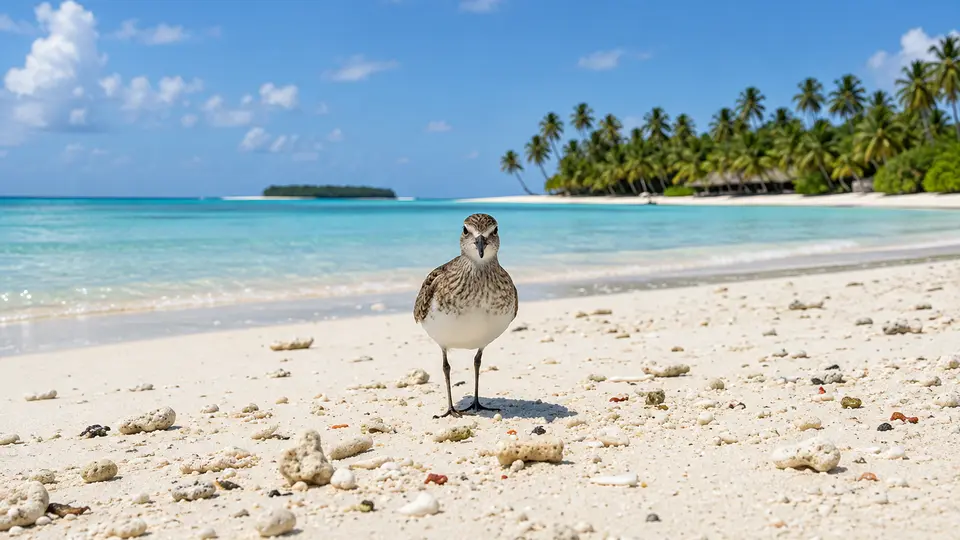
Common sandpiper in wetland habitat — Danube, Rhine, Douro, River Cruises wildlife
Home›River Cruises›River Wildlife›Common sandpiper

Common sandpiperActitis hypoleucosWhere and when to see them

Previous speciesCommon RedshankNext speciesCommon Snipe

Common sandpiper at a glance

The Common Sandpiper is a small brown-and-white wader best recognized by its restless bobbing movement. Brown upperparts contrast with a clean white belly, and a small white projection rises at each side of the neck. Unlike shorebirds that typically gather in huge feeding flocks, it is often encountered in small numbers along a water edge. This profile covers separate registered stretches of the Danube, Rhine and Douro, each with its own limits. A river cruise can provide access to a nearby viewing area, but the boat itinerary and the wildlife site are not interchangeable. Check whether the relevant shore visit is actually included and whether there is time for patient observation. Historical occurrence is useful context rather than a promise of a present-day encounter. A local guide can help interpret recent records and distinguish similar birds without pushing closer to them.

Behaviour & reproduction

Size
Species-specific size not verified in the consulted source text
Weight
Species-specific weight not verified
Lifespan
Species-specific lifespan not verified
Status
See sourced assessment

The bird repeatedly bobs its rear body and tail, a movement often called teetering. Its low flight over water alternates shallow wingbeats with brief glides on stiff, bowed wings. The RSPB describes a three-note flight call that may attract attention before the bird is seen. Donau-Auen independently describes the characteristic flight and a bird pumping its tail while sitting on a stone. Observe these behaviours without deliberately approaching close enough to make it fly. Watch a complete sequence from a settled position: movement, pauses, reactions to neighbours and changes as water conditions alter. A brief view can be enough to appreciate the bird without interrupting its activity. Do not provoke flight for a photograph or use calls to attract attention. Keep other visitors informed if birds are resting nearby, and allow space for natural feeding and retreat. Local disturbance and tide can change what is visible during a single visit.

Top wildlife locations

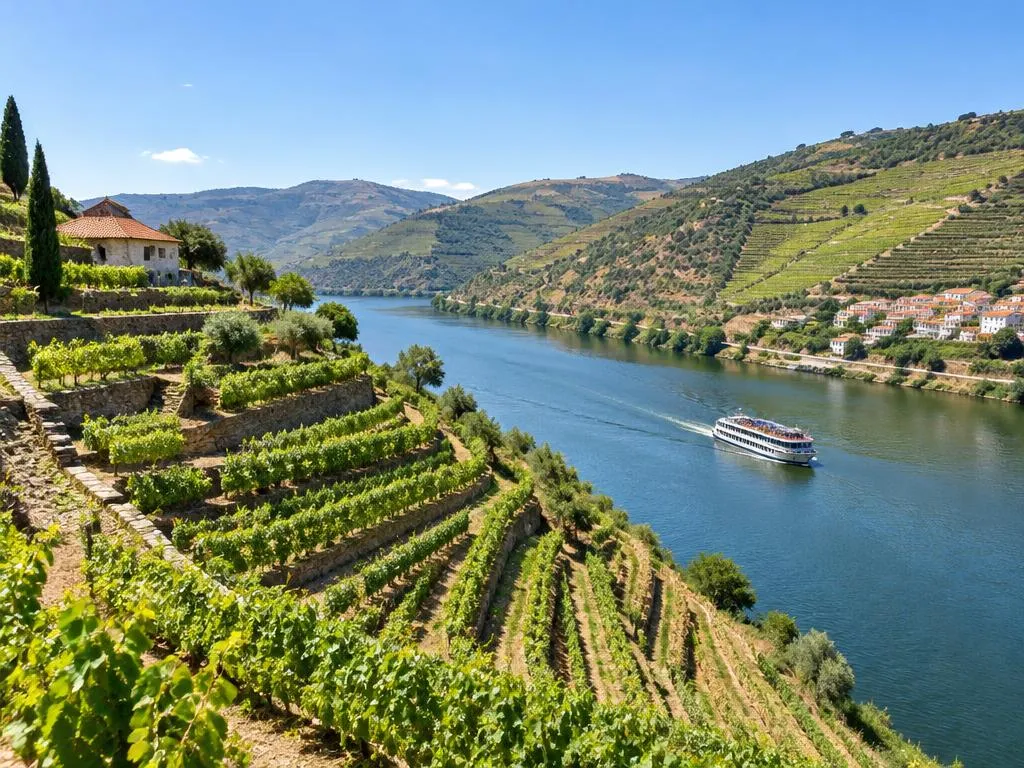
Danube river landscape — River Cruises wildlife habitat

Danube

Austria: Donau-Auen floodplains east of Vienna towards Hainburg, on Vienna–Bratislava reach; optional shore/backwater excursion, not Passau or Budapest. Best on spring/autumn passage; exposed stones and shorelines.

Explore river cruises
Rhine river landscape — River Cruises wildlife habitat

Rhine

Lower end of Middle Rhine: Grafenwerth–Königswinter, south of Bonn/Cologne, not Cologne city. Best winter or spring/autumn passage; view from riverbank; use telescope for ducks and gravel banks.

Explore river cruises
Douro river landscape — River Cruises wildlife habitat

Douro

Porto / Vila Nova de Gaia: Douro estuary reserve, Afurada–Cabedelo–São Paio; NOT a claim for inland Régua–Pinhão Accessible Porto shore visit with paths and hides; waders/gulls concentrated at low tide and migration/winter. Osprey and Short-eared Owl irregular/seasonal; no guaranteed sightings.

Explore river cruises

Destinations describe the species' habitat, not guaranteed cruise stops. Some animals require an optional inland excursion or are found in restricted reserves.

Fun facts about the Common sandpiper

  • Teetering is its characteristic bobbing movement.
  • The belly is white and unmarked.
  • White plumage rises at the sides of the neck.
  • The legs can appear greyish or greenish.
  • Flight often stays close to the water.
  • Shallow wingbeats alternate with short glides.
  • The RSPB describes a three-note flight call.
  • The species uses fresh, brackish and salt water habitats.
  • Aves de Portugal specifically highlights winter occurrence at the Douro estuary.

Best time to see the Common sandpiper

Aves de Portugal specifically describes Common Sandpipers at the Douro estuary especially in winter. That exact local qualitative statement supports winter prose, not a guessed set of numbered months. The Danube registry emphasizes spring and autumn passage; the Rhine registry adds winter to spring and autumn passage. These are different local contexts, and no single season should be assigned indiscriminately to all three rivers. National year-round presence in Portugal is broader than any individual viewing site. For planning, ask about recent observations at the exact site, the tide during the available visit and any seasonal closures. A comfortable sailing season is not automatically the best wildlife season. Protected-site records describe occurrence within a particular geographical and historical context, not daily visibility. Keep flexibility in the shore programme and accept that an appropriate visit can still produce no sighting. Local weather, water conditions and disturbance may matter as much as the broad time of year.

Common sandpiper: season matrix by destination

Highlighted months reflect the stated local evidence, not guaranteed encounters. Neutral months mean no verified monthly viewing window, not absence. Observation records and recommended viewing windows are distinct.

Danube

JanFebMarAprMayJunJulAugSepOctNovDec
Explore river cruises

Rhine

JanFebMarAprMayJunJulAugSepOctNovDec
Explore river cruises

Douro

JanFebMarAprMayJunJulAugSepOctNovDec
Explore river cruises

Where the Common sandpiper lives

Common Sandpipers use freshwater, brackish and saline wetlands, including river margins, small weirs, flooded marshes and estuaries. Aves de Portugal notes that numbers vary with local water conditions. Exposed stones and shorelines are particularly relevant to the registered Danube and Rhine viewing contexts. The Douro record instead concerns the estuary reserve at Porto and Vila Nova de Gaia. These different water-edge habitats should not be collapsed into a claim of uniform presence throughout three river systems. Suitable habitat is only one part of a responsible visit. Access must also be lawful, safe and compatible with reserve management. Remain on established paths or in public observation facilities, and do not cross mud, dunes or protected shore to shorten the viewing distance. Consult current access notices before setting out. The presence of a wetland on a map does not show whether it is open, visible from a cruise deck or suitable for an unsupervised landing.

What the Common sandpiper eats

Common Sandpipers search for small animal prey along wet margins and exposed shore surfaces. Their water-edge activity should be distinguished from simply resting on a stone: a teetering bird is not necessarily feeding at that moment. Watch for purposeful searching and brief picking movements without trying to identify tiny prey from an inadequate view. The consulted local and identification accounts do not establish prey proportions, feeding rates or a separate diet for the Danube, Rhine or Douro populations. Natural food availability changes with water levels, exposed surfaces and local conditions. Feeding observations are most useful when made quietly over time rather than by following one bird along the shore. Never bait wildlife or throw food from the deck, a path or a hide. If a bird repeatedly stops feeding to watch your group, increase the distance. A telescope or long lens can show natural searching behaviour while leaving the bird access to its preferred feeding and resting space.

Species at a glance

Common name
Common sandpiper
Scientific name
Actitis hypoleucos
Animal group
Birds
Size
Species-specific size not verified in the consulted source text
Weight
Species-specific weight not verified
Lifespan
Species-specific lifespan not verified
Status
Aves de Portugal lists Vulnerable status in Portugal; this is not presented as a current global assessment.
Identification
Look for brown upperparts, a white unmarked belly and the small white tongue of plumage extending up at each side of the neck. Aves de Portugal describes greyish or greenish legs. Persistent teetering is a strong behavioural clue, and a departing bird often flies low with stiff, bowed wings. The RSPB highlights its three-note flight call. Combining posture, neck pattern, movement and flight is more reliable than identifying any solitary brown wader by habitat alone. Use binoculars first to locate the bird, then a telescope if available to check fine details from the permitted viewpoint. Compare more than one feature, because posture, distance and strong reflections can change its apparent shape and colour. A photograph is helpful only if obtained without disturbing the bird. If important marks remain hidden, leave the identification provisional rather than moving into protected habitat or flushing the bird to force a clearer view.

Common sandpiper: frequently asked questions

Where can I see the Common sandpiper?
Danube, Rhine, Douro. Use authorized shore viewpoints, public paths and hides, with binoculars or a telescope rather than a close approach. Austria: Donau-Auen floodplains east of Vienna towards Hainburg, on Vienna–Bratislava reach; optional shore/backwater excursion, not Passau or Budapest. Best on spring/autumn passage; exposed stones and shorelines. Lower end of Middle Rhine: Grafenwerth–Königswinter, south of Bonn/Cologne, not Cologne city. Best winter or spring/autumn passage; view from riverbank; use telescope for ducks and gravel banks. Porto / Vila Nova de Gaia: Douro estuary reserve, Afurada–Cabedelo–São Paio; NOT a claim for inland Régua–Pinhão Accessible Porto shore visit with paths and hides; waders/gulls concentrated at low tide and migration/winter. Osprey and Short-eared Owl irregular/seasonal; no guaranteed sightings. Keep away from nests and roosts, never feed birds and avoid playback. Check current access restrictions before the visit; a cruise stop does not automatically include permission to enter a reserve. Allow birds to move and feed naturally, and do not follow them across exposed flats. Sightings are not guaranteed.
When is the best time to see the Common sandpiper?
Aves de Portugal specifically describes Common Sandpipers at the Douro estuary especially in winter. That exact local qualitative statement supports winter prose, not a guessed set of numbered months. The Danube registry emphasizes spring and autumn passage; the Rhine registry adds winter to spring and autumn passage. These are different local contexts, and no single season should be assigned indiscriminately to all three rivers. National year-round presence in Portugal is broader than any individual viewing site. For planning, ask about recent observations at the exact site, the tide during the available visit and any seasonal closures. A comfortable sailing season is not automatically the best wildlife season. Protected-site records describe occurrence within a particular geographical and historical context, not daily visibility. Keep flexibility in the shore programme and accept that an appropriate visit can still produce no sighting. Local weather, water conditions and disturbance may matter as much as the broad time of year.
How big does the Common sandpiper get?
Species-specific size not verified in the consulted source text. Adult weight: Species-specific weight not verified. Size varies with age, sex and population.
How should I behave around the Common sandpiper?
Use authorized shore viewpoints, public paths and hides, with binoculars or a telescope rather than a close approach. Austria: Donau-Auen floodplains east of Vienna towards Hainburg, on Vienna–Bratislava reach; optional shore/backwater excursion, not Passau or Budapest. Best on spring/autumn passage; exposed stones and shorelines. Lower end of Middle Rhine: Grafenwerth–Königswinter, south of Bonn/Cologne, not Cologne city. Best winter or spring/autumn passage; view from riverbank; use telescope for ducks and gravel banks. Porto / Vila Nova de Gaia: Douro estuary reserve, Afurada–Cabedelo–São Paio; NOT a claim for inland Régua–Pinhão Accessible Porto shore visit with paths and hides; waders/gulls concentrated at low tide and migration/winter. Osprey and Short-eared Owl irregular/seasonal; no guaranteed sightings. Keep away from nests and roosts, never feed birds and avoid playback. Check current access restrictions before the visit; a cruise stop does not automatically include permission to enter a reserve. Allow birds to move and feed naturally, and do not follow them across exposed flats. Sightings are not guaranteed.
What does the Common sandpiper eat?
Common Sandpipers search for small animal prey along wet margins and exposed shore surfaces. Their water-edge activity should be distinguished from simply resting on a stone: a teetering bird is not necessarily feeding at that moment. Watch for purposeful searching and brief picking movements without trying to identify tiny prey from an inadequate view. The consulted local and identification accounts do not establish prey proportions, feeding rates or a separate diet for the Danube, Rhine or Douro populations. Natural food availability changes with water levels, exposed surfaces and local conditions. Feeding observations are most useful when made quietly over time rather than by following one bird along the shore. Never bait wildlife or throw food from the deck, a path or a hide. If a bird repeatedly stops feeding to watch your group, increase the distance. A telescope or long lens can show natural searching behaviour while leaving the bird access to its preferred feeding and resting space.
Are wildlife sightings guaranteed on a river cruise?
No. Animals move freely and routes, weather, access restrictions and local conditions influence every outing. Confirm the actual itinerary and shore program before booking.

Compare wildlife in the same destinations

Explore other birds recorded in these destinations. Similar surroundings do not mean the animals share the same habits or viewing season.

Species comparison by animal group and destination
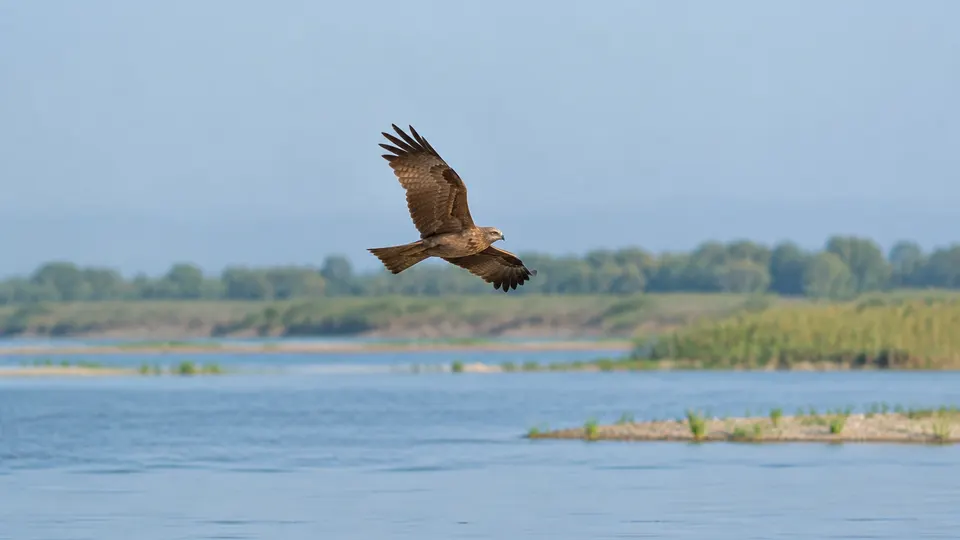
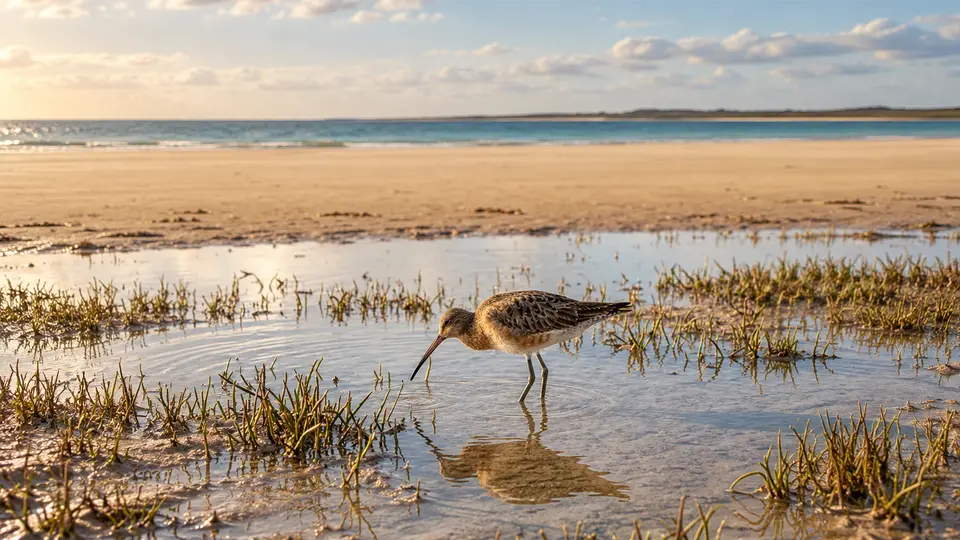
Common sandpiper in wetland habitat — Danube, Rhine, Douro, River Cruises wildlifeCommon sandpiperBar-tailed godwit in wetland habitat — Douro, River Cruises wildlifeBar-tailed godwitBlack kite in wetland habitat — Danube, Rhine, River Cruises wildlifeBlack Kite
Animal groupBirdsAnimal groupBirdsAnimal groupBirds
DestinationsDanube, Rhine, DouroDestinationsDouroDestinationsDanube, Rhine
Scientific name
Actitis hypoleucos

Actitis hypoleucos

Scientific name
Scientific name
Size
Species-specific size not verified in the consulted source text
Size
Size
Weight
Species-specific weight not verified
Weight
Weight
Lifespan
Species-specific lifespan not verified
Lifespan
Lifespan
Status
See sourced assessment
Status
Status
Identification
Look for brown upperparts, a white unmarked belly and the small white tongue of plumage extending up at each side of the neck.

Look for brown upperparts, a white unmarked belly and the small white tongue of plumage extending up at each side of the neck. Aves de Portugal describes greyish or greenish legs. Persistent teetering is a strong behavioural clue, and a departing bird often flies low with stiff, bowed wings. The RSPB highlights its three-note flight call. Combining posture, neck pattern, movement and flight is more reliable than identifying any solitary brown wader by habitat alone. Use binoculars first to locate the bird, then a telescope if available to check fine details from the permitted viewpoint. Compare more than one feature, because posture, distance and strong reflections can change its apparent shape and colour. A photograph is helpful only if obtained without disturbing the bird. If important marks remain hidden, leave the identification provisional rather than moving into protected habitat or flushing the bird to force a clearer view.

Identification
Identification
Habitat
Common Sandpipers use freshwater, brackish and saline wetlands, including river margins, small weirs, flooded marshes and estuaries.

Common Sandpipers use freshwater, brackish and saline wetlands, including river margins, small weirs, flooded marshes and estuaries. Aves de Portugal notes that numbers vary with local water conditions. Exposed stones and shorelines are particularly relevant to the registered Danube and Rhine viewing contexts. The Douro record instead concerns the estuary reserve at Porto and Vila Nova de Gaia. These different water-edge habitats should not be collapsed into a claim of uniform presence throughout three river systems. Suitable habitat is only one part of a responsible visit. Access must also be lawful, safe and compatible with reserve management. Remain on established paths or in public observation facilities, and do not cross mud, dunes or protected shore to shorten the viewing distance. Consult current access notices before setting out. The presence of a wetland on a map does not show whether it is open, visible from a cruise deck or suitable for an unsupervised landing.

Habitat
Habitat
Diet
Common Sandpipers search for small animal prey along wet margins and exposed shore surfaces.

Common Sandpipers search for small animal prey along wet margins and exposed shore surfaces. Their water-edge activity should be distinguished from simply resting on a stone: a teetering bird is not necessarily feeding at that moment. Watch for purposeful searching and brief picking movements without trying to identify tiny prey from an inadequate view. The consulted local and identification accounts do not establish prey proportions, feeding rates or a separate diet for the Danube, Rhine or Douro populations. Natural food availability changes with water levels, exposed surfaces and local conditions. Feeding observations are most useful when made quietly over time rather than by following one bird along the shore. Never bait wildlife or throw food from the deck, a path or a hide. If a bird repeatedly stops feeding to watch your group, increase the distance. A telescope or long lens can show natural searching behaviour while leaving the bird access to its preferred feeding and resting space.

Diet
Diet
Best season
Aves de Portugal specifically describes Common Sandpipers at the Douro estuary especially in winter.

Aves de Portugal specifically describes Common Sandpipers at the Douro estuary especially in winter. That exact local qualitative statement supports winter prose, not a guessed set of numbered months. The Danube registry emphasizes spring and autumn passage; the Rhine registry adds winter to spring and autumn passage. These are different local contexts, and no single season should be assigned indiscriminately to all three rivers. National year-round presence in Portugal is broader than any individual viewing site. For planning, ask about recent observations at the exact site, the tide during the available visit and any seasonal closures. A comfortable sailing season is not automatically the best wildlife season. Protected-site records describe occurrence within a particular geographical and historical context, not daily visibility. Keep flexibility in the shore programme and accept that an appropriate visit can still produce no sighting. Local weather, water conditions and disturbance may matter as much as the broad time of year.

Best season
Best season
Season matrix by destination
DanubeNo verified monthly viewing evidence

No verified monthly viewing evidence

RhineNo verified monthly viewing evidence

No verified monthly viewing evidence

DouroNo verified monthly viewing evidence

No verified monthly viewing evidence

Season matrix by destinationSeason matrix by destination
Previous speciesCommon RedshankNext speciesCommon Snipe
All river wildlife
On this page
  • 01About
  • 02Behaviour & reproduction
  • 03Top wildlife locations
  • 04Fun facts
  • 05Best season
  • 06Season matrix by destination
  • 07Habitat
  • 08Diet
  • 09Species at a glance
  • 10Questions & answers
  • 11Compare

Find your river cruise

Plan your trip

Find your next river journey

Compare destinations, shore programs and dates with the animals and habitats you would love to see.

  • Daily shore excursions
  • Responsible wildlife watching
  • Boutique river ships
Explore river cruises