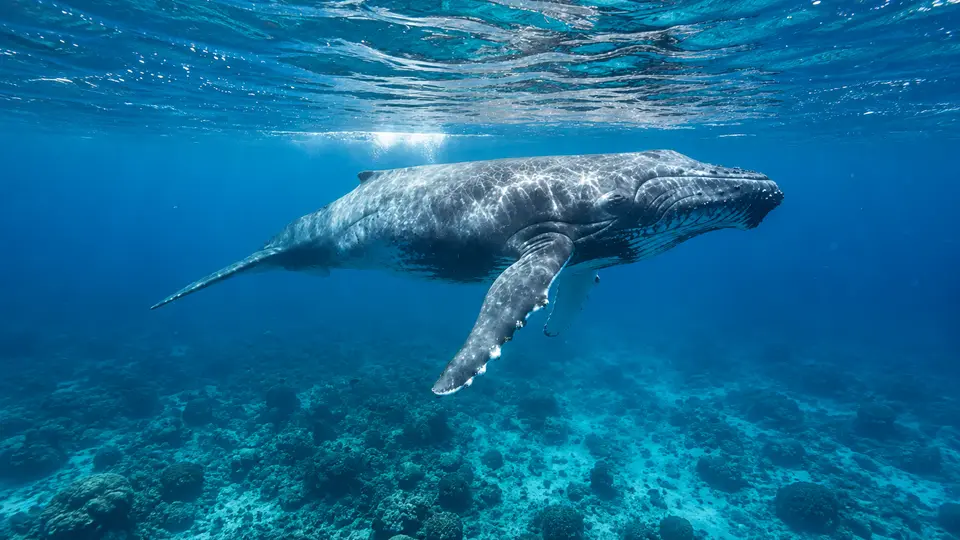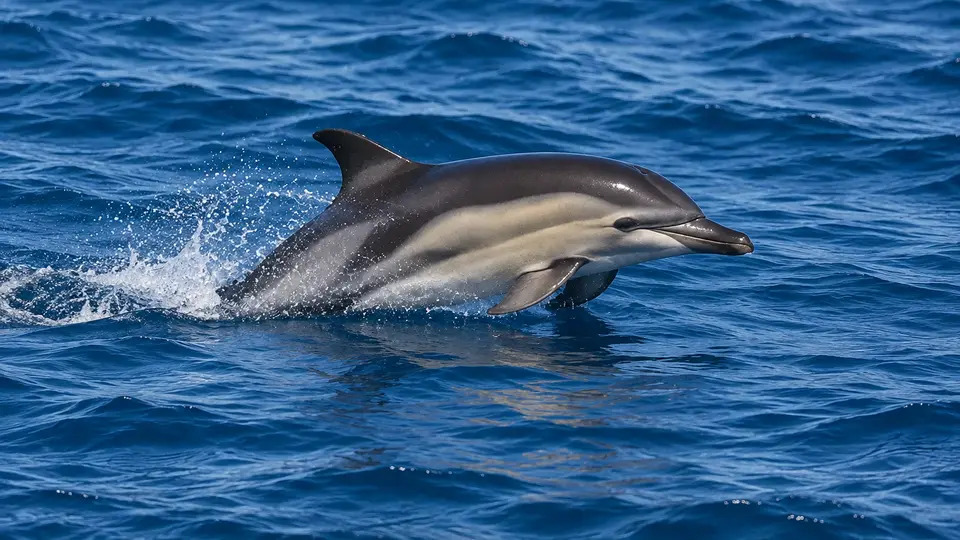
Short-beaked Common Dolphin in its natural habitatAI-modified

Short-beaked Common DolphinDelphinus delphisWhere and when to see them

Short-beaked Common Dolphin at a glance

The short-beaked common dolphin is a highly social marine mammal of temperate and tropical seas. Modern treatments generally place common dolphins within Delphinus delphis, although regional forms and historical names complicate older records. Its distinctive hourglass flank pattern can be visible during a clear surfacing sequence. The species is globally widespread, but some regional populations have declined severely through fisheries interactions, prey depletion and other pressures, so global status should not obscure local vulnerability.

Behaviour & reproduction

Size
1.7–2.4 m (5.6–7.9 ft) long
Weight
70–135 kg (154–298 lb)
Lifespan
20–35 years
Status
Least Concern

Common dolphins often travel in energetic groups that may join into much larger aggregations around concentrated prey. They coordinate movements while feeding and communicate through whistles, clicks and body movements. Leaping and rapid surface travel can make a distant group conspicuous, but behavior changes with prey and disturbance. From land or a vessel's deck, observers usually see only brief surfacings, dorsal fins and occasional jumps rather than the group's full activity. Common dolphins often travel in energetic groups that may join into much larger aggregations around concentrated prey. They coordinate movements while feeding and communicate through whistles, clicks and body movements. Leaping and rapid surface travel can make a distant group conspicuous, but behavior changes with prey and disturbance. From land or a vessel's deck, observers usually see only brief surfacings, dorsal fins and occasional jumps rather than the group's full activity. They are highly social and are frequently observed bow riding on vessels or riding ocean swells. Their acrobatic displays, including porpoising and breaching, are common and serve various social or environmental functions.

Top wildlife locations

Mexico wildlife habitatAI-modified

Mexico

Pacific headlands and decks off Baja California offer plausible distant viewing over productive coastal waters. Groups may remain offshore, and distinguishing regional common-dolphin forms from shore is difficult; no inland excursion is relevant.

Cape Verde wildlife habitatAI-modified

Cape Verde

Scan deep water beyond island headlands or from a vessel's deck. Common dolphins are less predictable than several other local cetaceans, and shore sightings may be rare or too distant for identification.

Egypt wildlife habitatAI-modified

Egypt

Egypt's Mediterranean coast is more relevant than typical Red Sea itineraries, but confirmed shore opportunities are poorly established. Coastal viewpoints may overlook suitable water, yet this species should be treated as an unlikely observation.

Greece wildlife habitatAI-modified

Greece

Ionian coastal viewpoints and decks overlooking productive channels offer possible distant observations. Distribution is fragmented and some former strongholds have declined, so common dolphins are not expected at every island or accessible shoreline.

Portugal wildlife habitatAI-modified

Portugal

Atlantic headlands and coastal vessel decks can overlook feeding habitat, particularly where shelf waters concentrate fish. Land observations are possible but unpredictable, and many groups remain beyond dependable shore-based identification range.

Scotland wildlife habitatAI-modified

Scotland

Western headlands and island coasts provide distant views over suitable Atlantic waters. Common dolphins are less consistent at many sites than other cetaceans, and exposed viewpoints require care even during favorable summer weather.

Destinations describe the species' habitat, not guaranteed cruise stops. Some animals require an optional inland excursion or are found in restricted reserves.

Fun facts about the Short-beaked Common Dolphin

  • The common dolphin's hourglass pattern changes from warm tones forward to gray behind.
  • Groups sometimes number hundreds or thousands.
  • Older records may separate short-beaked and long-beaked forms differently from current taxonomy.
  • The globally Least Concern assessment does not describe the condition of every regional population.

Best time to see the Short-beaked Common Dolphin

There is no single season across this extensive range. Choose locally supported coastal watching periods with good visibility and manageable sea conditions. Seasonal prey movements can influence proximity to shore, but pleasant travel weather alone does not establish dolphin presence or distinguish common dolphins from similar species. There is no single season across this extensive range. Choose locally supported coastal watching periods with good visibility and manageable sea conditions. Seasonal prey movements can influence proximity to shore, but pleasant travel weather alone does not establish dolphin presence or distinguish common dolphins from similar species. Peak activity and sightings often correlate with warmer water temperatures and periods of higher primary productivity. Consulting local marine wildlife guides or tour operators for region-specific seasonal information is highly recommended.

Short-beaked Common Dolphin: season matrix by destination

Travel and observation windows vary by region. Highlighted months are an orientation for planning, not confirmed sightings or a guarantee of access.

Mexico

Mexico spans several marine regions, and taxonomy complicates records; no single defensible national shore-viewing window is assigned.

JanFebMarAprMayJunJulAugSepOctNovDec
Cruise ships in Mexico

Cape Verde

Occurrence and shore detectability are insufficiently predictable to give a species-specific monthly window; general holiday weather is not evidence of presence.

JanFebMarAprMayJunJulAugSepOctNovDec
Cruise ships in Cape Verde

Egypt

No supported Egyptian shore-observation season is assigned; Red Sea dolphin records should not automatically be attributed to this species.

JanFebMarAprMayJunJulAugSepOctNovDec
Cruise ships in Egypt

Greece

These months generally support coastal travel and daylight watching; they are not a breeding season or assurance of animals near shore.

JanFebMarAprMayJunJulAugSepOctNovDec
Cruise ships in Greece

Portugal

Longer daylight and often more workable sea conditions favor observation attempts; dolphins occur outside this window and local weather remains decisive.

JanFebMarAprMayJunJulAugSepOctNovDec
Cruise ships in Portugal

Scotland

Late spring through early autumn offers longer daylight and practical coastal watching, not a guaranteed seasonal arrival at any particular headland.

JanFebMarAprMayJunJulAugSepOctNovDec
Cruise ships in Scotland

Turkey

This is a practical daylight and coastal-travel window, not evidence of a nationwide dolphin peak; local distribution must be checked.

JanFebMarAprMayJunJulAugSepOctNovDec
Cruise ships in Turkey

Where the Short-beaked Common Dolphin lives

They occupy coastal and offshore waters, often favoring productive shelf edges, fronts and areas where schooling fish concentrate. Some populations use relatively enclosed seas. Shore visibility depends on local bathymetry and prey movements, and many groups remain too far offshore for reliable land-based identification. They occupy coastal and offshore waters, often favoring productive shelf edges, fronts and areas where schooling fish concentrate. Some populations use relatively enclosed seas. Shore visibility depends on local bathymetry and prey movements, and many groups remain too far offshore for reliable land-based identification. Their global distribution includes tropical to cold temperate zones, spanning across the Atlantic, Pacific, and Indian Oceans. They can be found in water depths ranging from 100 to 2000 meters, preferring areas with strong oceanographic features.

What the Short-beaked Common Dolphin eats

Schooling fish such as sardines, anchovies and small mackerel are important prey, alongside squid. Diet varies regionally and seasonally with availability. Groups may herd prey or exploit dense schools, sometimes feeding in association with seabirds and other marine predators at productive ocean features. Schooling fish such as sardines, anchovies and small mackerel are important prey, alongside squid. Diet varies regionally and seasonally with availability. Groups may herd prey or exploit dense schools, sometimes feeding in association with seabirds and other marine predators at productive ocean features. They are opportunistic feeders, capable of consuming a wide variety of cephalopods and small to medium sized fish. Coordinated hunting strategies allow them to efficiently exploit dense prey aggregations, often driving fish to the surface.

Species at a glance

Common name
Short-beaked Common Dolphin
Scientific name
Delphinus delphis
Animal group
Mammals
Size
1.7–2.4 m (5.6–7.9 ft) long
Weight
70–135 kg (154–298 lb)
Lifespan
20–35 years
Status
Least Concern
Identification
A yellowish foreflank and gray rear flank form an hourglass pattern that distinguishes common dolphins from uniformly gray bottlenose dolphins and the differently striped striped dolphin. A yellowish foreflank and gray rear flank form an hourglass pattern that distinguishes common dolphins from uniformly gray bottlenose dolphins and the differently striped striped dolphin. Their slender body, relatively tall and falcate dorsal fin, and long, distinct beak are also key features. The crisscross pattern on their flanks is unique and the most reliable field mark, especially when seen clearly.

Short-beaked Common Dolphin: frequently asked questions

Where can I see the Short-beaked Common Dolphin?
Mexico, Cape Verde, Egypt, Greece, Portugal, Scotland, Turkey. Use binoculars from a safe headland or stable deck and assess several surfacings before identifying animals. Keep back from cliff edges and never encourage pursuit or feeding. A distant dorsal fin alone cannot confirm this species. Use binoculars from a safe headland or stable deck and assess several surfacings before identifying animals. Keep back from cliff edges and never encourage pursuit or feeding. A distant dorsal fin alone cannot confirm this species. Look for rapid, energetic swimming patterns and frequent breaching or bow riding when observing from a vessel. Patience is key, as groups can travel quickly and unpredictably, making sustained observation challenging but rewarding.
When is the best time to see the Short-beaked Common Dolphin?
There is no single season across this extensive range. Choose locally supported coastal watching periods with good visibility and manageable sea conditions. Seasonal prey movements can influence proximity to shore, but pleasant travel weather alone does not establish dolphin presence or distinguish common dolphins from similar species. There is no single season across this extensive range. Choose locally supported coastal watching periods with good visibility and manageable sea conditions. Seasonal prey movements can influence proximity to shore, but pleasant travel weather alone does not establish dolphin presence or distinguish common dolphins from similar species. Peak activity and sightings often correlate with warmer water temperatures and periods of higher primary productivity. Consulting local marine wildlife guides or tour operators for region-specific seasonal information is highly recommended.
How big does the Short-beaked Common Dolphin get?
1.7–2.4 m (5.6–7.9 ft) long. Adult weight: 70–135 kg (154–298 lb). Size varies with age, sex and population.
How should I behave around the Short-beaked Common Dolphin?
Use binoculars from a safe headland or stable deck and assess several surfacings before identifying animals. Keep back from cliff edges and never encourage pursuit or feeding. A distant dorsal fin alone cannot confirm this species. Use binoculars from a safe headland or stable deck and assess several surfacings before identifying animals. Keep back from cliff edges and never encourage pursuit or feeding. A distant dorsal fin alone cannot confirm this species. Look for rapid, energetic swimming patterns and frequent breaching or bow riding when observing from a vessel. Patience is key, as groups can travel quickly and unpredictably, making sustained observation challenging but rewarding.
What does the Short-beaked Common Dolphin eat?
Schooling fish such as sardines, anchovies and small mackerel are important prey, alongside squid. Diet varies regionally and seasonally with availability. Groups may herd prey or exploit dense schools, sometimes feeding in association with seabirds and other marine predators at productive ocean features. Schooling fish such as sardines, anchovies and small mackerel are important prey, alongside squid. Diet varies regionally and seasonally with availability. Groups may herd prey or exploit dense schools, sometimes feeding in association with seabirds and other marine predators at productive ocean features. They are opportunistic feeders, capable of consuming a wide variety of cephalopods and small to medium sized fish. Coordinated hunting strategies allow them to efficiently exploit dense prey aggregations, often driving fish to the surface.
Are wildlife sightings guaranteed on an adventure cruise?
No. Animals move freely and routes, weather, access restrictions and local conditions influence every outing. Confirm the actual itinerary and shore program before booking.

Compare wildlife in the same destinations

Explore other mammals recorded in these destinations. Similar surroundings do not mean the animals share the same habits or viewing season.

Species comparison by animal group and destination
Short-beaked Common DolphinAI-modifiedShort-beaked Common DolphinBaja California Rock SquirrelAI-modifiedBaja California Rock SquirrelBlue WhaleAI-modifiedBlue Whale
Animal groupMammalsAnimal groupMammalsAnimal groupMammals
DestinationsMexico, Cape Verde, Egypt, Greece, Portugal, Scotland, TurkeyDestinationsMexicoDestinationsMexico, Norway, Portugal, Antarctica, Arctic, Maldives, New Zealand
Scientific nameDelphinus delphisScientific nameScientific name
All wildlife destinations
AI-modified
Plan your trip

Find your next wildlife adventure

Compare destinations, shore programs and dates with the animals and habitats you would love to see.

  • Naturalist-led shore excursions
  • Responsible wildlife watching
  • Small expedition ships