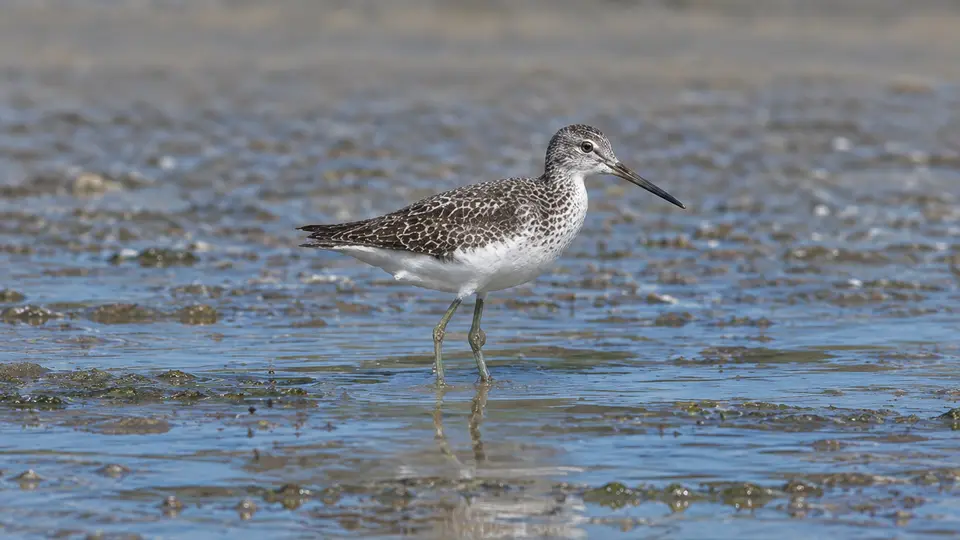
Nordmann's greenshank in its natural habitatAI-modified

Nordmann's greenshankTringa guttiferWhere and when to see them

Nordmann's greenshank at a glance

Nordmann's greenshank is a scarce migratory shorebird linking the Russian Far East with coastal wetlands in eastern and southeastern Asia. It breeds in a restricted northern range and spends the nonbreeding season around tidal flats and sheltered shores. Its small global population faces pressure from coastal reclamation, disturbance and the loss of feeding and roosting habitat. Outside breeding plumage, its subtle appearance makes careful comparison with common greenshanks particularly important.

Behaviour & reproduction

Size
29–32 cm (11.4–12.6 in) length
Weight
140–200 g (4.9–7.1 oz)
Lifespan
Not reliably established
Status
Endangered

On its wintering grounds, Nordmann's greenshank follows the tide between exposed feeding flats and higher roosts. It may gather with other waders, sometimes forming small groups of its own species. Birds walk through shallow water, picking or probing for prey and occasionally pursuing mobile animals. Breeding behavior is unusual among greenshanks because nests are placed in trees. During migration, a limited network of productive coastal wetlands provides essential opportunities to feed and rest. Outside the breeding season, Nordmann's greenshanks are largely solitary or found in small groups, though they may join mixed flocks of other shorebirds. During migration, they undertake long-distance flights between critical stopover sites, needing undisturbed areas to refuel.

Top wildlife locations

Thailand wildlife habitatAI-modified

Thailand

Gulf of Thailand mudflats and adjacent salt-pan embankments provide plausible shore-viewing habitat. This is a rare, localized visitor, and reaching suitable wetlands usually requires a dedicated coastal excursion rather than casual beach watching.

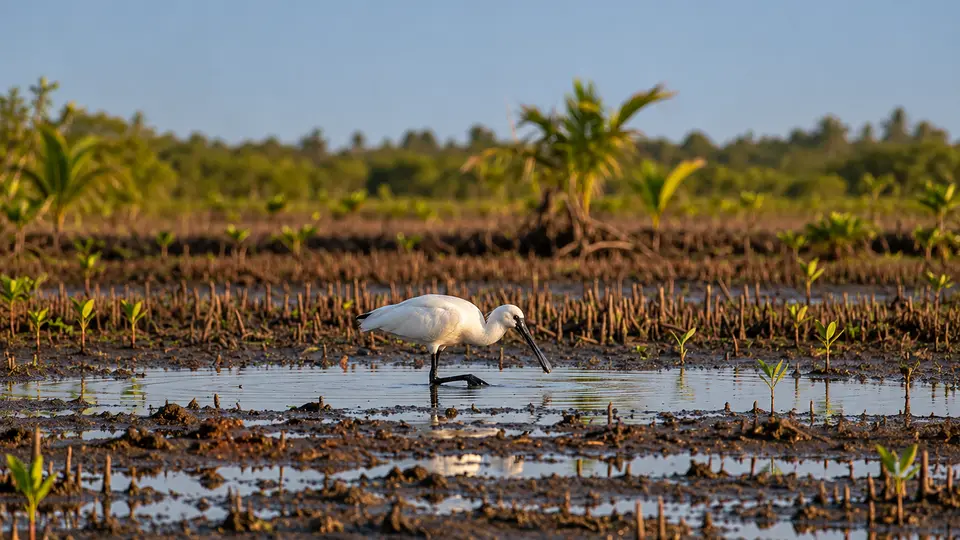
Vietnam wildlife habitatAI-modified

Vietnam

Sheltered estuaries and extensive intertidal flats offer plausible viewing from accessible coastal dikes. The species is exceptionally scarce and localized; a specialist wetland excursion may be required, and many apparently suitable shores lack records.

Destinations describe the species' habitat, not guaranteed cruise stops. Some animals require an optional inland excursion or are found in restricted reserves.

Fun facts about the Nordmann's greenshank

  • Unlike most shorebirds, it builds its nest above ground in a tree.
  • Its breeding distribution is concentrated in the Russian Far East, including Sakhalin.
  • The alternative English name spotted greenshank refers to its strongly marked breeding plumage.
  • High-tide roosts can be as important for its survival as the mudflats where it feeds.

Best time to see the Nordmann's greenshank

For Thailand and Vietnam, the northern winter is the most defensible planning window, broadly November through March. Passage can extend beyond these months, but records are localized. Tidal timing and access to undisturbed roosts are more useful than assuming uniform availability throughout either country. Prime viewing opportunities often align with high tide, as birds gather at traditional roosting sites before dispersing to feed. Early morning or late afternoon observations can be particularly productive as activity levels peak.

Nordmann's greenshank: season matrix by destination

Travel and observation windows vary by region. Highlighted months are an orientation for planning, not confirmed sightings or a guarantee of access.

Thailand

These months cover the main nonbreeding window, not the northern breeding season. Current local reports and tide information are essential because occurrence is highly localized.

JanFebMarAprMayJunJulAugSepOctNovDec
Cruise ships in Thailand

Vietnam

This is a broad winter search window for a rare migrant, not evidence of regular presence at any particular Vietnamese coast.

JanFebMarAprMayJunJulAugSepOctNovDec
Cruise ships in Vietnam

Where the Nordmann's greenshank lives

Breeding habitat combines open larch woodland, wet ground and nearby coastal feeding areas in the Russian Far East. During migration and winter, the species uses intertidal mudflats, estuaries, sheltered bays and adjacent roosts, sometimes including managed salt pans or aquaculture margins. This species also utilizes saline lagoons and shrimp farm ponds, particularly during non-breeding periods when natural mudflat habitats are under pressure. Its reliance on specific coastal wetlands makes these areas critical for its survival and population stability.

What the Nordmann's greenshank eats

Crabs are important prey on nonbreeding coastal grounds, alongside worms, mollusks and other small aquatic animals. Birds take prey from mud surfaces or shallow water using their robust bills. Diet changes with location and season, with insects contributing on northern breeding grounds. Foraging typically occurs during low tide, with birds often concentrating in areas where prey is abundant. Their diet shifts with the availability of prey, adapting to local conditions on their extensive migratory routes.

Species at a glance

Common name
Nordmann's greenshank
Scientific name
Tringa guttifer
Animal group
Birds
Size
29–32 cm (11.4–12.6 in) length
Weight
140–200 g (4.9–7.1 oz)
Lifespan
Not reliably established
Status
Endangered
Identification
Compared with common greenshank, Nordmann's greenshank typically has shorter yellowish legs, a heavier two-toned bill with a thicker base, and a stockier, shorter-legged appearance. Juveniles are less distinctly marked than adults, typically showing duller plumage. A key identification feature in flight is the lack of a white rump, distinguishing it from several similar-looking waders.

Nordmann's greenshank: frequently asked questions

Where can I see the Nordmann's greenshank?
Thailand, Vietnam. Use a telescope from a public embankment or designated hide, staying well back from high-tide roosts. Do not approach flocks for photographs or use playback; repeated flushing wastes energy in this endangered migrant. Maintain a respectful distance to avoid disturbing the birds, especially if they are feeding or resting. On adventure cruises, quiet observation from designated viewing decks or zodiacs, without approaching too closely, is recommended to minimize impact.
When is the best time to see the Nordmann's greenshank?
For Thailand and Vietnam, the northern winter is the most defensible planning window, broadly November through March. Passage can extend beyond these months, but records are localized. Tidal timing and access to undisturbed roosts are more useful than assuming uniform availability throughout either country. Prime viewing opportunities often align with high tide, as birds gather at traditional roosting sites before dispersing to feed. Early morning or late afternoon observations can be particularly productive as activity levels peak.
How big does the Nordmann's greenshank get?
29–32 cm (11.4–12.6 in) length. Adult weight: 140–200 g (4.9–7.1 oz). Size varies with age, sex and population.
How should I behave around the Nordmann's greenshank?
Use a telescope from a public embankment or designated hide, staying well back from high-tide roosts. Do not approach flocks for photographs or use playback; repeated flushing wastes energy in this endangered migrant. Maintain a respectful distance to avoid disturbing the birds, especially if they are feeding or resting. On adventure cruises, quiet observation from designated viewing decks or zodiacs, without approaching too closely, is recommended to minimize impact.
What does the Nordmann's greenshank eat?
Crabs are important prey on nonbreeding coastal grounds, alongside worms, mollusks and other small aquatic animals. Birds take prey from mud surfaces or shallow water using their robust bills. Diet changes with location and season, with insects contributing on northern breeding grounds. Foraging typically occurs during low tide, with birds often concentrating in areas where prey is abundant. Their diet shifts with the availability of prey, adapting to local conditions on their extensive migratory routes.
Are wildlife sightings guaranteed on an adventure cruise?
No. Animals move freely and routes, weather, access restrictions and local conditions influence every outing. Confirm the actual itinerary and shore program before booking.

Compare wildlife in the same destinations

Explore other birds recorded in these destinations. Similar surroundings do not mean the animals share the same habits or viewing season.

Species comparison by animal group and destination
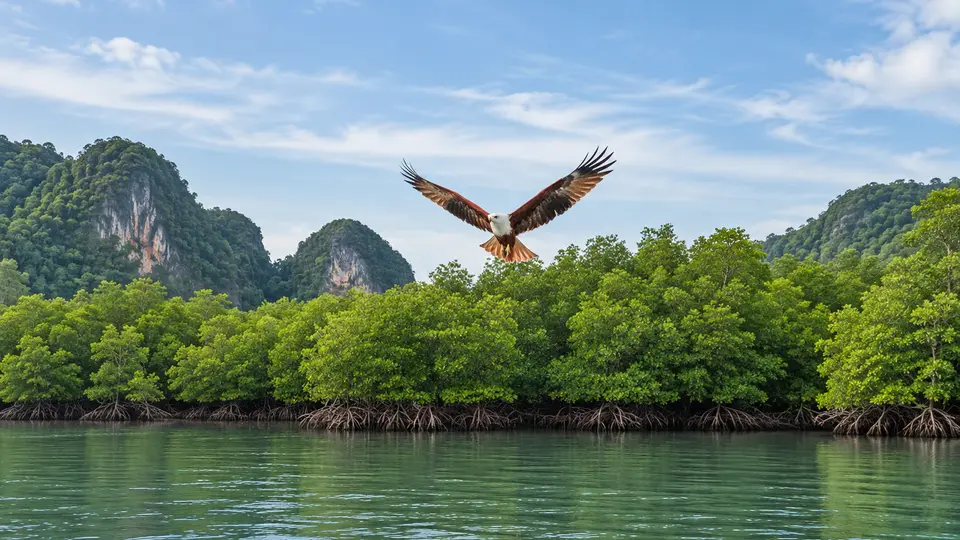
Nordmann's greenshankAI-modifiedNordmann's greenshankBlack-faced spoonbillAI-modifiedBlack-faced spoonbillBrahminy kiteAI-modifiedBrahminy kite
Animal groupBirdsAnimal groupBirdsAnimal groupBirds
DestinationsThailand, VietnamDestinationsVietnamDestinationsIndonesia, Thailand, Vietnam
Scientific nameTringa guttiferScientific nameScientific name
All wildlife destinations
AI-modified
Plan your trip

Find your next wildlife adventure

Compare destinations, shore programs and dates with the animals and habitats you would love to see.

  • Naturalist-led shore excursions
  • Responsible wildlife watching
  • Small expedition ships