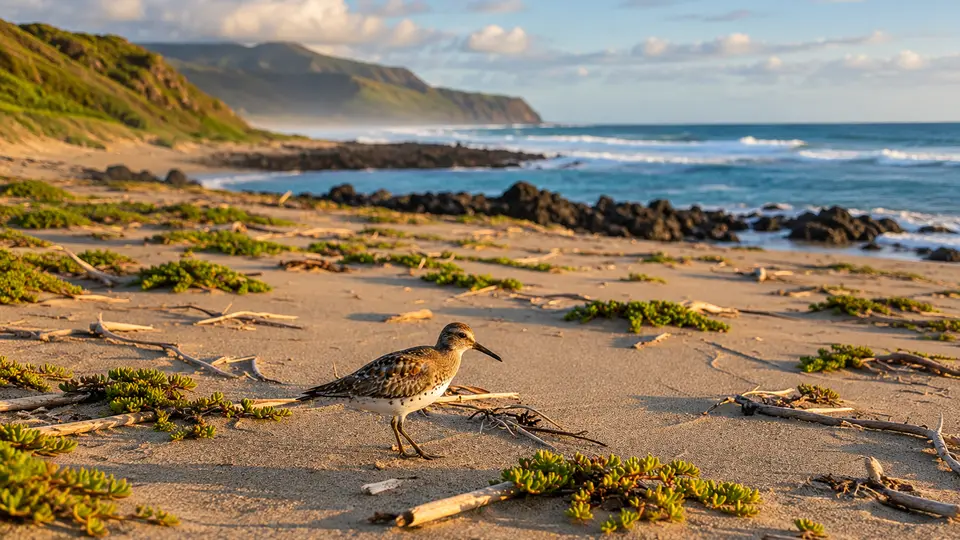
New Zealand dotterel in its natural habitatAI-modified

New Zealand dotterelAnarhynchus obscurusWhere and when to see them

New Zealand dotterel at a glance

The New Zealand dotterel is an endemic plover associated with beaches, estuaries and, in its southern population, unusual inland breeding terrain. Its substantial bill and warm breeding plumage distinguish it from smaller coastal plovers. Northern birds occur mainly around the North Island, while the southern population is extremely depleted. Camouflaged eggs laid in shallow ground scrapes face pressure from introduced predators, vehicles, coastal development and people or dogs crossing nesting areas.

Behaviour & reproduction

Size
25 cm (9.8 in) body length
Weight
130-170 g (4.6-6.0 oz)
Lifespan
Not reliably established
Status
Check current assessment

Dotterels forage with a characteristic run, pause and peck rhythm, watching for small prey on sand or mud. Breeding pairs defend territories and may use distraction displays to draw intruders away from eggs or chicks. Chicks leave the nest soon after hatching but remain dependent on parental protection. Outside breeding, birds can gather in coastal flocks. Northern and southern populations differ in seasonal movements, so local behaviour should not be generalized nationally. Courtship displays often involve aerial acrobatics and vocalizations. Both parents share incubation duties and chick-rearing, diligently guarding their young until they fledge.

Top wildlife locations

New Zealand wildlife habitatAI-modified

New Zealand

North Island sandy beaches and estuary margins offer the most practical shore opportunities. Southern birds are exceptionally rare, and their inland breeding habitat is not an appropriate target for casual coastal excursions.
Destinations describe the species' habitat, not guaranteed cruise stops. Some animals require an optional inland excursion or are found in restricted reserves.

Fun facts about the New Zealand dotterel

  • The Māori name tūturiwhatu is associated with this dotterel.
  • Its eggs closely resemble surrounding sand, pebbles and shell fragments.
  • Southern birds breed on Stewart Island uplands rather than typical northern nesting beaches.
  • Young chicks feed themselves but rely on adults for brooding and warning.

Best time to see the New Zealand dotterel

Spring and summer bring territorial birds to northern breeding beaches, but these are also the most sensitive months for disturbance. Autumn and winter can offer coastal flock observation. Southern population access is much more constrained and should never involve seeking occupied breeding grounds. During spring and summer, careful observation can reveal breeding pair behaviors such as courtship rituals and territory defense. Winter flocks can be dynamic, offering chances to observe social interactions and foraging strategies.

New Zealand dotterel: season matrix by destination

Travel and observation windows vary by region. Highlighted months are an orientation for planning, not confirmed sightings or a guarantee of access.

New Zealand

These are practical coastal travel months, not a single breeding window; obey seasonal closures and nesting-zone restrictions.

JanFebMarAprMayJunJulAugSepOctNovDec
Cruise ships in New Zealand

Where the New Zealand dotterel lives

Northern birds favor sandy beaches, dune margins, estuary edges and nearby open ground. Southern birds breed on exposed uplands of Stewart Island and use coastal feeding areas outside breeding. Both need unobstructed foraging habitat and ground sites safe from disturbance and predators. Coastal habitats are critical, with populations often concentrated in a few key areas, especially during breeding. Habitat loss and degradation due to coastal development and introduced predators are major threats to their survival.

What the New Zealand dotterel eats

Small invertebrates dominate, including marine worms, crustaceans, molluscs and insects. Feeding takes place on intertidal flats, damp sand and open terrestrial ground. Prey choice changes with habitat and tide, with visual searching and short probing movements used to capture food. Dotterels will actively search for food items on the surface or perform shallow probes into the substrate. They exhibit adaptability, adjusting their foraging methods and prey selection based on local conditions and availability.

Species at a glance

Common name
New Zealand dotterel
Scientific name
Anarhynchus obscurus
Animal group
Birds
Size
25 cm (9.8 in) body length
Weight
130-170 g (4.6-6.0 oz)
Lifespan
Not reliably established
Status
Check current assessment
Identification
Its larger size, heavier bill and broad orange breeding underparts distinguish it from the smaller banded dotterel with separate dark and chestnut breast bands. The northern subspecies, Anarhynchus obscurus aquilonius, is generally smaller and paler than the southern nominate subspecies, Anarhynchus obscurus obscurus. Adults exhibit distinctive orange or reddish-orange underparts that become more vibrant during the breeding season.

New Zealand dotterel: frequently asked questions

Where can I see the New Zealand dotterel?
New Zealand. Stay outside fenced nesting zones and keep dogs away from occupied beaches. If a bird alarm-calls or performs a distraction display, retreat along your approach route while checking carefully for camouflaged chicks. Always maintain a respectful distance to avoid causing stress to the birds, especially during breeding season. Binoculars or a spotting scope are highly recommended for detailed observation without encroaching on their space.
When is the best time to see the New Zealand dotterel?
Spring and summer bring territorial birds to northern breeding beaches, but these are also the most sensitive months for disturbance. Autumn and winter can offer coastal flock observation. Southern population access is much more constrained and should never involve seeking occupied breeding grounds. During spring and summer, careful observation can reveal breeding pair behaviors such as courtship rituals and territory defense. Winter flocks can be dynamic, offering chances to observe social interactions and foraging strategies.
How big does the New Zealand dotterel get?
25 cm (9.8 in) body length. Adult weight: 130-170 g (4.6-6.0 oz). Size varies with age, sex and population.
How should I behave around the New Zealand dotterel?
Stay outside fenced nesting zones and keep dogs away from occupied beaches. If a bird alarm-calls or performs a distraction display, retreat along your approach route while checking carefully for camouflaged chicks. Always maintain a respectful distance to avoid causing stress to the birds, especially during breeding season. Binoculars or a spotting scope are highly recommended for detailed observation without encroaching on their space.
What does the New Zealand dotterel eat?
Small invertebrates dominate, including marine worms, crustaceans, molluscs and insects. Feeding takes place on intertidal flats, damp sand and open terrestrial ground. Prey choice changes with habitat and tide, with visual searching and short probing movements used to capture food. Dotterels will actively search for food items on the surface or perform shallow probes into the substrate. They exhibit adaptability, adjusting their foraging methods and prey selection based on local conditions and availability.
Are wildlife sightings guaranteed on an adventure cruise?
No. Animals move freely and routes, weather, access restrictions and local conditions influence every outing. Confirm the actual itinerary and shore program before booking.

Compare wildlife in the same destinations

Explore other birds recorded in these destinations. Similar surroundings do not mean the animals share the same habits or viewing season.

Species comparison by animal group and destination
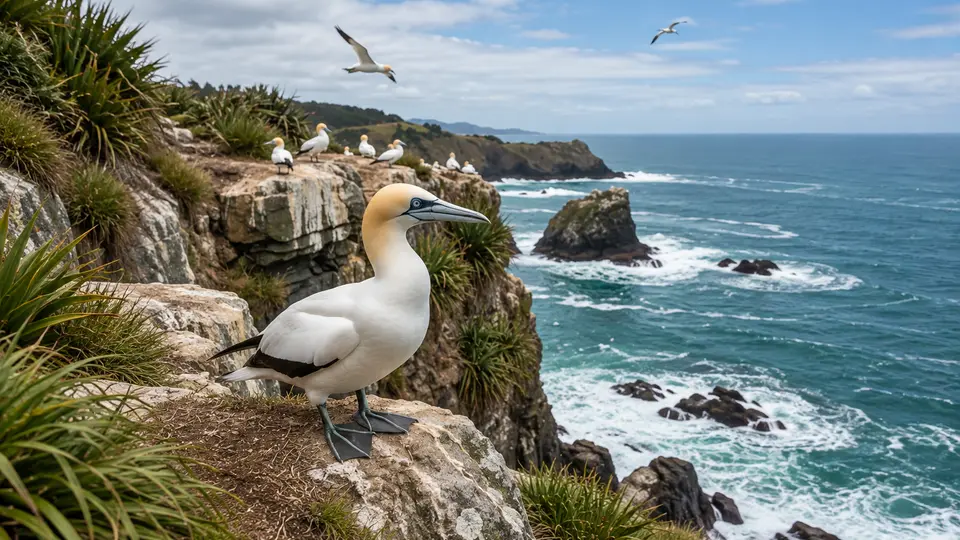
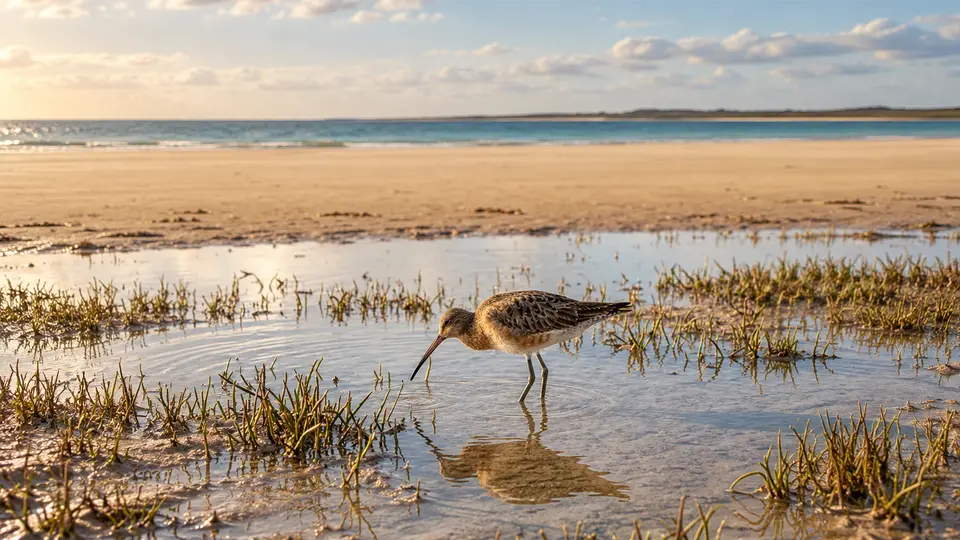
New Zealand dotterelAI-modifiedNew Zealand dotterelAustralasian gannetAI-modifiedAustralasian gannetBar-tailed godwitAI-modifiedBar-tailed godwit
Animal groupBirdsAnimal groupBirdsAnimal groupBirds
DestinationsNew ZealandDestinationsNew ZealandDestinationsAustralia, New Zealand
Scientific nameAnarhynchus obscurusScientific nameScientific name
All wildlife destinations
AI-modified
Plan your trip

Find your next wildlife adventure

Compare destinations, shore programs and dates with the animals and habitats you would love to see.

  • Naturalist-led shore excursions
  • Responsible wildlife watching
  • Small expedition ships