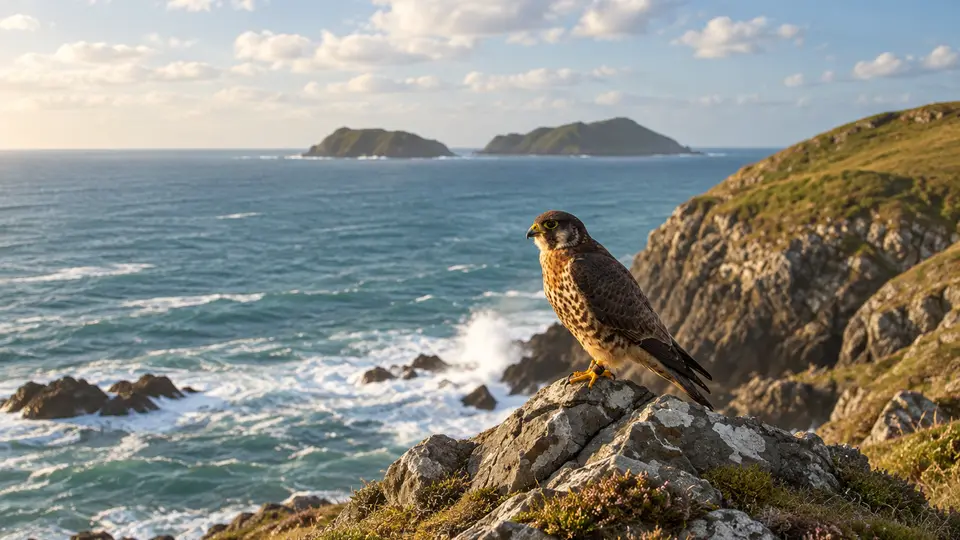
New Zealand falcon in its natural habitatAI-modified

New Zealand falconFalco novaeseelandiaeWhere and when to see them

New Zealand falcon at a glance

The New Zealand falcon, or kārearea, is an endemic raptor built for rapid pursuit rather than prolonged scavenging. Relatively short, rounded wings and a long tail allow agile flight through forest openings as well as across open country. Females are substantially larger than males. Although it inhabits both main islands, it is sparsely distributed and easily overlooked. Introduced predators, habitat change and persecution have affected a bird that often nests surprisingly close to ground level.

Behaviour & reproduction

Size
36-48 cm (14.2-18.9 in) body length
Weight
250-600 g (8.8-21.2 oz)
Lifespan
Not reliably established
Status
Near Threatened

Kārearea hunt from perches or in fast, maneuverable flight, taking birds on the wing and sometimes pursuing prey through vegetation. Pairs defend breeding territories vigorously, with adults making close warning passes if people approach a nest. Nest sites may be on the ground, on ledges or in trees. Outside breeding, individuals can range widely, and a brief sighting over a forest edge may be the only indication of their presence. Courtship displays involve aerial acrobatics and vocalizations, often high above the nesting site. The female primarily incubates the eggs, while the male brings food to her and later to the chicks.

Top wildlife locations

New Zealand wildlife habitatAI-modified

New Zealand

Forested coastal hills occasionally offer distant views from public tracks, but inland forest margins and tussock country are more representative. An inland excursion is often required, and encounters remain unpredictable.
Destinations describe the species' habitat, not guaranteed cruise stops. Some animals require an optional inland excursion or are found in restricted reserves.

Fun facts about the New Zealand falcon

  • Kārearea appears on New Zealand's twenty-dollar banknote.
  • Females can be roughly twice the mass of smaller males.
  • Some pairs nest directly on the ground beneath cover.
  • Its hunting flight can remain highly maneuverable within forested terrain.

Best time to see the New Zealand falcon

Falcons can be encountered year-round, with spring and summer bringing increased territorial activity. Those months also demand particular care around nests. There is no dependable national viewing season, and local habitat, recent records and access matter more than general tourism conditions. Breeding season typically runs from September to March, during which adults are more tied to their territories and nests. Winter can offer opportunities to observe younger, dispersing birds in unexpected locations as they search for food and territory.

New Zealand falcon: season matrix by destination

Travel and observation windows vary by region. Highlighted months are an orientation for planning, not confirmed sightings or a guarantee of access.

New Zealand

These months generally suit walking excursions; they are not a guaranteed activity peak, and breeding territories require extra caution.

JanFebMarAprMayJunJulAugSepOctNovDec
Cruise ships in New Zealand

Where the New Zealand falcon lives

Native forest, forest margins, plantation mosaics, tussock grasslands and rugged hill country can support New Zealand falcons. Suitable hunting space must occur near secure nesting sites. They are not principally coastal birds, and many worthwhile observation areas require an inland excursion. They are highly adaptable and can be found in alpine areas, subalpine shrubland, and even occasionally around urban fringes where suitable hunting and nesting opportunities exist. While less common on offshore islands, they are present on some larger islands with appropriate forest cover and prey.

What the New Zealand falcon eats

Small and medium-sized birds form most of the diet, including native and introduced species. Large insects and small mammals are also taken. Unlike the commonly seen swamp harrier, the falcon primarily captures live prey and does not routinely patrol roads for carrion. Their hunting prowess allows them to tackle prey larger than themselves, including other birds of prey like magpies. They are powerful predators, using their sharp talons to dispatch prey quickly.

Species at a glance

Common name
New Zealand falcon
Scientific name
Falco novaeseelandiae
Animal group
Birds
Size
36-48 cm (14.2-18.9 in) body length
Weight
250-600 g (8.8-21.2 oz)
Lifespan
Not reliably established
Status
Near Threatened
Identification
Pointed wings, a compact body and rapid direct flight separate kārearea from the much larger, long-winged swamp harrier that often glides with raised wings. Adult falcons have dark plumage on their back and head, with a rufous breast and barred undertail coverts. Juveniles often appear browner overall with less distinct barring, sometimes causing confusion with other raptors.

New Zealand falcon: frequently asked questions

Where can I see the New Zealand falcon?
New Zealand. Scan forest edges from public tracks with binoculars. If a falcon calls repeatedly or makes warning passes, retreat promptly and protect your head. Never search for a nest or use playback to provoke activity. Listen for their distinctive, sharp 'kek-kek-kek' call, which often signals their presence before they are seen. When watching from a distance, look for tell-tale white droppings or 'mutes' on prominent perches, indicating a regular falcon lookout.
When is the best time to see the New Zealand falcon?
Falcons can be encountered year-round, with spring and summer bringing increased territorial activity. Those months also demand particular care around nests. There is no dependable national viewing season, and local habitat, recent records and access matter more than general tourism conditions. Breeding season typically runs from September to March, during which adults are more tied to their territories and nests. Winter can offer opportunities to observe younger, dispersing birds in unexpected locations as they search for food and territory.
How big does the New Zealand falcon get?
36-48 cm (14.2-18.9 in) body length. Adult weight: 250-600 g (8.8-21.2 oz). Size varies with age, sex and population.
How should I behave around the New Zealand falcon?
Scan forest edges from public tracks with binoculars. If a falcon calls repeatedly or makes warning passes, retreat promptly and protect your head. Never search for a nest or use playback to provoke activity. Listen for their distinctive, sharp 'kek-kek-kek' call, which often signals their presence before they are seen. When watching from a distance, look for tell-tale white droppings or 'mutes' on prominent perches, indicating a regular falcon lookout.
What does the New Zealand falcon eat?
Small and medium-sized birds form most of the diet, including native and introduced species. Large insects and small mammals are also taken. Unlike the commonly seen swamp harrier, the falcon primarily captures live prey and does not routinely patrol roads for carrion. Their hunting prowess allows them to tackle prey larger than themselves, including other birds of prey like magpies. They are powerful predators, using their sharp talons to dispatch prey quickly.
Are wildlife sightings guaranteed on an adventure cruise?
No. Animals move freely and routes, weather, access restrictions and local conditions influence every outing. Confirm the actual itinerary and shore program before booking.

Compare wildlife in the same destinations

Explore other birds recorded in these destinations. Similar surroundings do not mean the animals share the same habits or viewing season.

Species comparison by animal group and destination
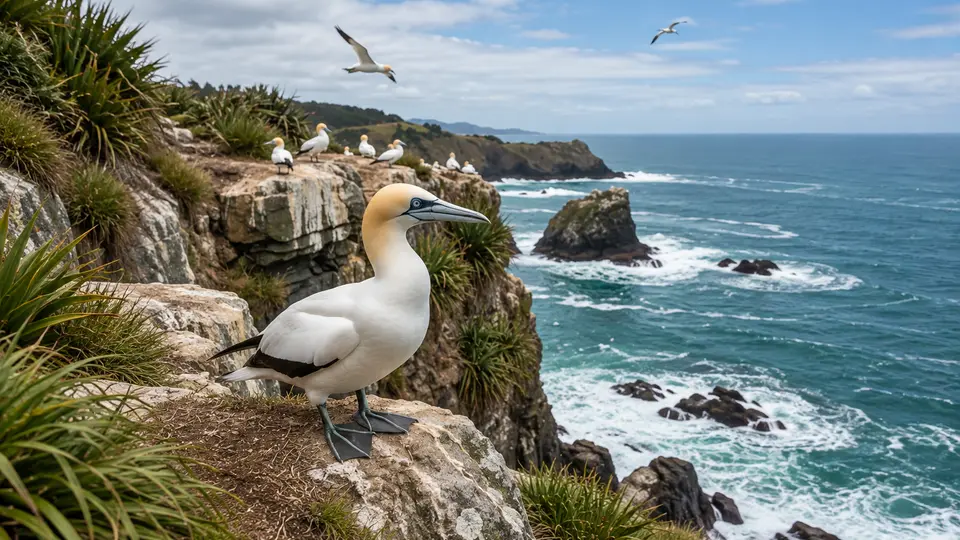
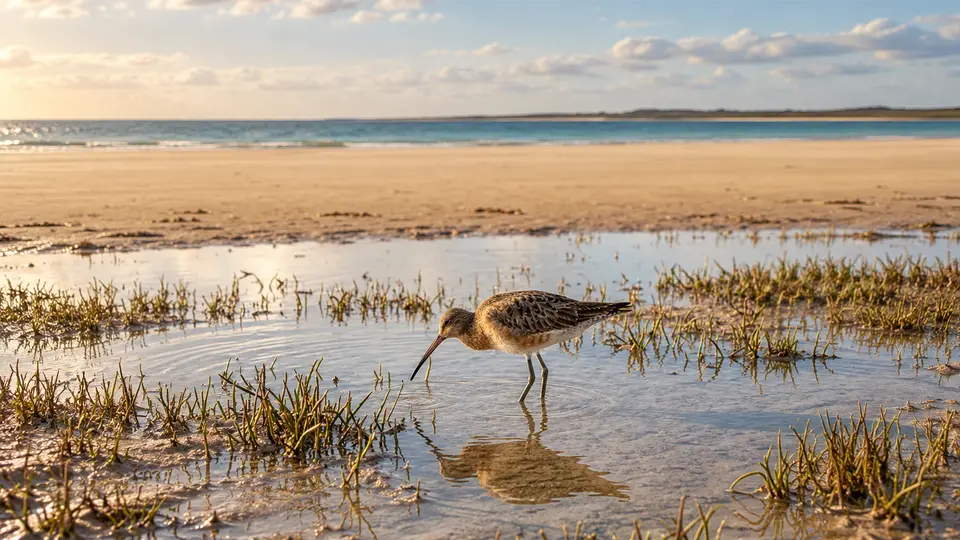
New Zealand falconAI-modifiedNew Zealand falconAustralasian gannetAI-modifiedAustralasian gannetBar-tailed godwitAI-modifiedBar-tailed godwit
Animal groupBirdsAnimal groupBirdsAnimal groupBirds
DestinationsNew ZealandDestinationsNew ZealandDestinationsAustralia, New Zealand
Scientific nameFalco novaeseelandiaeScientific nameScientific name
All wildlife destinations
AI-modified
Plan your trip

Find your next wildlife adventure

Compare destinations, shore programs and dates with the animals and habitats you would love to see.

  • Naturalist-led shore excursions
  • Responsible wildlife watching
  • Small expedition ships