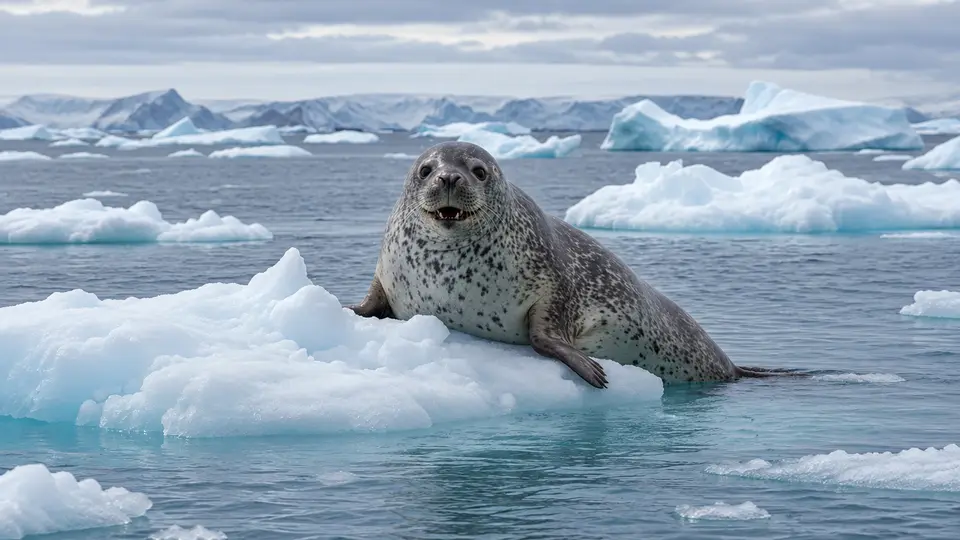
Leopard Seal in its natural habitat, AI illustration

Leopard SealHydrurga leptonyxWhere and when to see them

Leopard Seal at a glance

The leopard seal is a large Antarctic predator with a long body, powerful jaws and a dark, spotted coat. Females are generally larger than males, an unusual pattern among seals. Although famous for hunting penguins, it also consumes substantial quantities of krill. Its flexible feeding equipment and broad prey range allow it to exploit different parts of the Southern Ocean ecosystem as ice conditions and food availability change.

Behaviour & reproduction

Size
2.4-3.5 m long
Weight
200-500 kg
Lifespan
20-30 years
Status
Least Concern

Usually solitary outside breeding interactions, leopard seals rest on ice floes between feeding trips. Individuals may patrol penguin colonies, ambush birds near the water's edge or repeatedly use productive feeding areas. During the breeding season, males produce elaborate calls that carry through the water. Females normally give birth to one pup on pack ice and nurse it for about a month before it becomes independent. Leopard seals are known for their formidable hunting strategies, often ambushing prey from beneath ice or water. During the breeding season, acoustic communication through underwater vocalizations plays a significant role in male-female interactions across vast distances.

Top wildlife locations

Antarctica wildlife habitat

Antarctica

Scan pack-ice edges and coastal floes from the deck, or watch a hauled-out animal from an authorized shore area. Access depends on ice and weather, and sightings remain unpredictable.

New Zealand wildlife habitat

New Zealand

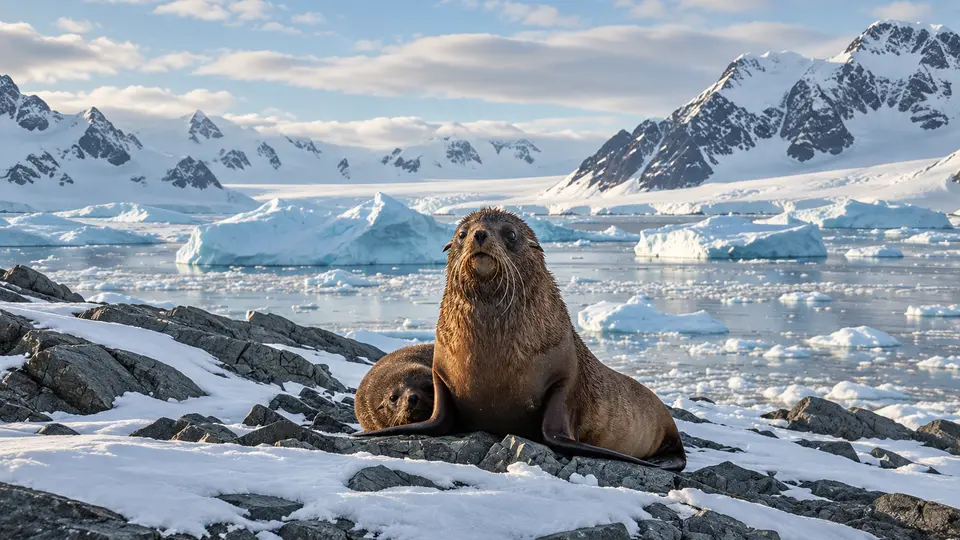
Occasional animals rest on exposed beaches and rocky coastlines, sometimes near settlements. These are uncommon visitors rather than dependable coastal residents; follow local closures and do not approach a hauled-out seal.

Destinations describe the species' habitat, not guaranteed cruise stops. Some animals require an optional inland excursion or are found in restricted reserves.

Fun facts about the Leopard Seal

  • Females usually exceed males in both length and mass.
  • Its cheek teeth can act as a sieve for krill.
  • Males produce patterned breeding-season calls beneath the sea surface.
  • The genus name Hydrurga means water worker.

Best time to see the Leopard Seal

November to March offers the main Antarctic visitor window, when daylight is long and coastal access is more feasible. This is an access season rather than a guarantee of encounters. New Zealand records are irregular, although wandering seals are often reported during cooler months. In Antarctica, the summer months facilitate cruise expeditions, increasing the chance of encountering these elusive predators, though specific sightings are unpredictable. For New Zealand, records are opportunistic and more common during cooler, stormy weather when seals may be displaced northward.

Leopard Seal: season matrix by destination

Travel and observation windows vary by region. Highlighted months are an orientation for planning, not confirmed sightings or a guarantee of access.

Antarctica

These months reflect the main Antarctic travel and coastal-access window, not continuous local presence or assured encounters.

JanFebMarAprMayJunJulAugSepOctNovDec
Cruise ships in Antarctica

New Zealand

Records are irregular and geographically scattered. Cooler-season arrivals occur, but no dependable shore-observation window can be assigned.

JanFebMarAprMayJunJulAugSepOctNovDec
Cruise ships in New Zealand

Where the Leopard Seal lives

Leopard seals inhabit Antarctic and subantarctic waters, especially the edges of drifting pack ice. They also use coastal ice and occasionally haul out on beaches. Wandering individuals reach temperate shores, including New Zealand, well beyond their principal Antarctic distribution. The species occupies a wide circumpolar range around the Antarctic continent, frequently observed on ice floes, particularly during summer. While typically solitary, they are not strictly territorial and individuals may utilize vast areas of ocean for foraging.

What the Leopard Seal eats

Diet includes Antarctic krill, fish, squid, penguins and other seals, with strong differences among individuals and regions. Interlocking cheek teeth help strain small prey, while the large canine teeth and powerful jaws enable the capture and processing of larger animals. Prey consumed is diverse, ranging from microscopic krill, strained effectively with specialized teeth, to large vertebrates such as other seals, for which their powerful jaws are adapted. They are considered apex predators in their ecosystem, with very few natural predators themselves.

Species at a glance

Common name
Leopard Seal
Scientific name
Hydrurga leptonyx
Animal group
Mammals
Size
2.4-3.5 m long
Weight
200-500 kg
Lifespan
20-30 years
Status
Least Concern
Identification
Its elongated reptile-like head, unusually wide gape and spotted grey body distinguish it from the rounder-headed Weddell seal and the paler, narrower-faced crabeater seal. Their distinctive, large head and formidable, almost reptilian appearance are key identifiers, setting them apart from other Antarctic pinnipeds. The dark spots on their grey coat are unique to each individual, similar to a human fingerprint.

Leopard Seal: frequently asked questions

Where can I see the Leopard Seal?
Antarctica, New Zealand. Watch resting seals from a permitted shore position or vessel deck, using binoculars. Keep well clear of their head and route to the sea; leopard seals can move quickly and may react aggressively if approached. When observing from a vessel, scanning ice floes and the water's edge of coastal areas offers the best chance of spotting a resting or hunting leopard seal. Maintain a respectful distance to avoid disturbing the animal, ensuring both your safety and its well-being.
When is the best time to see the Leopard Seal?
November to March offers the main Antarctic visitor window, when daylight is long and coastal access is more feasible. This is an access season rather than a guarantee of encounters. New Zealand records are irregular, although wandering seals are often reported during cooler months. In Antarctica, the summer months facilitate cruise expeditions, increasing the chance of encountering these elusive predators, though specific sightings are unpredictable. For New Zealand, records are opportunistic and more common during cooler, stormy weather when seals may be displaced northward.
How big does the Leopard Seal get?
2.4-3.5 m long. Adult weight: 200-500 kg. Size varies with age, sex and population.
How should I behave around the Leopard Seal?
Watch resting seals from a permitted shore position or vessel deck, using binoculars. Keep well clear of their head and route to the sea; leopard seals can move quickly and may react aggressively if approached. When observing from a vessel, scanning ice floes and the water's edge of coastal areas offers the best chance of spotting a resting or hunting leopard seal. Maintain a respectful distance to avoid disturbing the animal, ensuring both your safety and its well-being.
What does the Leopard Seal eat?
Diet includes Antarctic krill, fish, squid, penguins and other seals, with strong differences among individuals and regions. Interlocking cheek teeth help strain small prey, while the large canine teeth and powerful jaws enable the capture and processing of larger animals. Prey consumed is diverse, ranging from microscopic krill, strained effectively with specialized teeth, to large vertebrates such as other seals, for which their powerful jaws are adapted. They are considered apex predators in their ecosystem, with very few natural predators themselves.
Are wildlife sightings guaranteed on an adventure cruise?
No. Animals move freely and routes, weather, access restrictions and local conditions influence every outing. Confirm the actual itinerary and shore program before booking.

Compare wildlife in the same destinations

Explore other mammals recorded in these destinations. Similar surroundings do not mean the animals share the same habits or viewing season.

Species comparison by animal group and destination
Leopard SealLeopard SealAntarctic Fur SealAntarctic Fur SealBlue WhaleBlue Whale
Animal groupMammalsAnimal groupMammalsAnimal groupMammals
DestinationsAntarctica, New ZealandDestinationsAntarcticaDestinationsMexico, Norway, Portugal, Antarctica, Arctic, Maldives, New Zealand
All wildlife destinations
Plan your trip

Find your next wildlife adventure

Compare destinations, shore programs and dates with the animals and habitats you would love to see.

  • Naturalist-led shore excursions
  • Responsible wildlife watching
  • Small expedition ships

Newsletter

Take Blue Rides with you

Adventure cruise offers, last-minute deals and trip inspiration.

Free, unsubscribe anytime. Details: Privacy Policy

Partner with Blue Rides

Affiliate Program

Recommend adventure cruises and earn commission on every confirmed booking.

Share. Track. Earn.

Your footage, our stage

Send us your videos or pictures.

Captured remarkable nature or wildlife on your journey? Share it with us, we may feature it on Blue Rides.