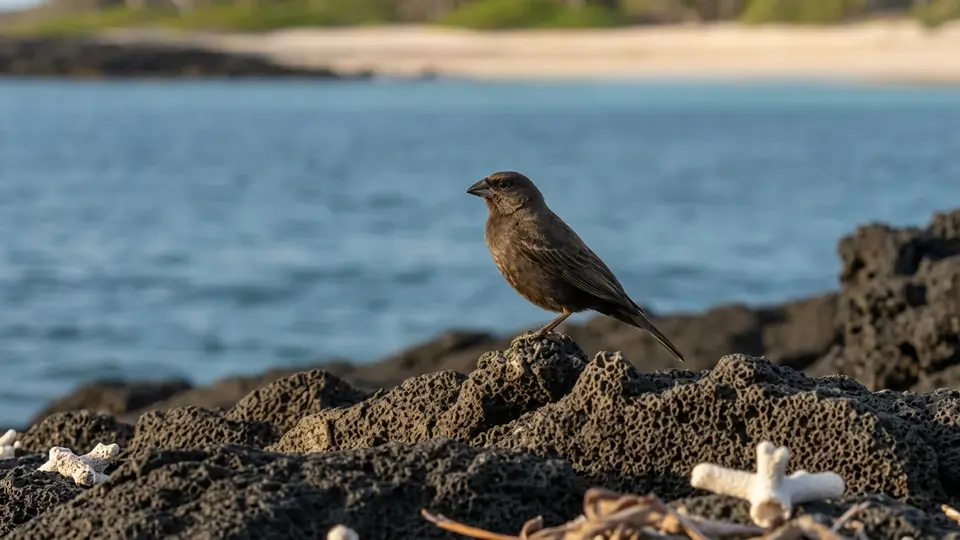
Large Ground Finch in its natural habitatAI-modified

Large Ground FinchGeospiza magnirostrisWhere and when to see them

Large Ground Finch at a glance

The large ground finch is a Galápagos endemic best known for its exceptionally deep, powerful bill. It belongs to the radiation of Darwin's finches, a group that illustrates how feeding opportunities and environmental change can influence evolution. Adult males are mainly black, while females and immature birds are brown and streaked. Although its bill is striking, identification still requires care because ground finches vary individually and can hybridize where species occur together.

Behaviour & reproduction

Size
15–16 cm (5.9–6.3 in) long
Weight
27–39 g (0.95–1.38 oz)
Lifespan
Not reliably established
Status
Least Concern

Birds commonly forage on the ground or in low vegetation, manipulating seeds before crushing them with their massive bills. They may gather at rich food patches, but breeding males defend territories and sing from exposed perches. Nesting responds strongly to rainfall and the resulting food supply rather than a perfectly fixed calendar. Courtship and song help maintain species boundaries, although occasional hybridization shows that those boundaries are not completely impermeable. Males use a simple, often repetitive song from prominent perches to advertise their territory and attract mates. During courtship, males may offer food items to females. Nests are cup-shaped structures built in low bushes or cacti, often close to their primary feeding grounds. Their robust social structure during non-breeding periods can lead to small, scattered foraging groups.

Top wildlife locations

Galapagos wildlife habitatAI-modified

Galapagos

Authorized trails through coastal arid scrub on occupied islands provide plausible viewing habitat. Distribution is uneven, so guides should confirm local occurrence; a standard island visit does not guarantee access to this finch.
Destinations describe the species' habitat, not guaranteed cruise stops. Some animals require an optional inland excursion or are found in restricted reserves.

Fun facts about the Large Ground Finch

  • Its bill can process hard seeds unavailable to many smaller finches.
  • Darwin's finches are classified within the tanager family rather than the true finch family.
  • Male song is learned and contributes to mate recognition.
  • The arrival of large ground finches on Daphne Major influenced competition studied in long-term evolutionary research.

Best time to see the Large Ground Finch

The species is resident, so there is no migration-based viewing window. Warm-season rains can stimulate breeding and singing, while drier months change seed availability and feeding patterns. Rainfall is highly variable, making local conditions more informative than a rigid annual timetable. Breeding activity peaks during the hot and wet season, typically from January to May, coinciding with the flush of new vegetation and insect availability. During dry periods, their feeding behavior becomes more concentrated around specific, persistent seed sources. Although always present, observing active breeding displays like nest building or courtship feeding is more likely during the early wet season.

Large Ground Finch: season matrix by destination

Travel and observation windows vary by region. Highlighted months are an orientation for planning, not confirmed sightings or a guarantee of access.

Galapagos

Year-round months reflect resident status and general visitor access, not confirmed observations at every landing; rainfall alters breeding and visibility.

JanFebMarAprMayJunJulAugSepOctNovDec
Cruise ships in Galapagos

Where the Large Ground Finch lives

It uses arid lowland scrub, open woodland and other seed-producing habitats on several Galápagos islands. Vegetated coastal zones can be suitable where the species occurs. Island distribution matters, so a convenient landing does not automatically provide an opportunity. Found on approximately ten islands within the archipelago, with Española, Pinta, and Marchena being key strongholds. Their habitat preference reflects the distribution of plants producing large, hard seeds, often in arid zones. These finches generally avoid dense highland forests, preferring more open and accessible food sources.

What the Large Ground Finch eats

Large, hard seeds are a major resource, opened with the deep bill and powerful jaw muscles. It also takes smaller seeds and some invertebrates when available. Diet changes with rainfall, plant productivity and competition with other seed-eating finches. Their powerful mandibles and specialized jaw musculature allow them to crush seeds that are inaccessible to other finch species. This includes tough-shelled seeds from plants like Tribulus cistoides, which are a critical resource during dry periods. While seeds are primary, they also opportunistically consume insect larvae and small invertebrates, especially during wet seasons when protein demands for breeding are higher.

Species at a glance

Common name
Large Ground Finch
Scientific name
Geospiza magnirostris
Animal group
Birds
Size
15–16 cm (5.9–6.3 in) long
Weight
27–39 g (0.95–1.38 oz)
Lifespan
Not reliably established
Status
Least Concern
Identification
Its disproportionately deep, broad bill separates it from most medium and small ground finches, though unusually large individuals and hybrids can make identification uncertain. The bill's conical shape and impressive depth, often appearing almost as tall as the finch's head, are the most reliable distinguishing features. Males typically have entirely black plumage, while females and immatures are streaky brown with a paler underside. Their size, being one of the largest finch species, also aids in identification, especially when seen alongside smaller ground finches.

Large Ground Finch: frequently asked questions

Where can I see the Large Ground Finch?
Galapagos. Watch naturally feeding birds from designated trails and keep bags closed. Never offer seeds or water to attract finches, and clean footwear between visits to reduce movement of invasive organisms. When observing, look for individuals foraging deliberately on the ground or within low-lying shrubs. Their movements are often slow and methodical as they search for fallen seeds. Binoculars are highly recommended to appreciate their distinctive bill size and feeding techniques from a respectful distance.
When is the best time to see the Large Ground Finch?
The species is resident, so there is no migration-based viewing window. Warm-season rains can stimulate breeding and singing, while drier months change seed availability and feeding patterns. Rainfall is highly variable, making local conditions more informative than a rigid annual timetable. Breeding activity peaks during the hot and wet season, typically from January to May, coinciding with the flush of new vegetation and insect availability. During dry periods, their feeding behavior becomes more concentrated around specific, persistent seed sources. Although always present, observing active breeding displays like nest building or courtship feeding is more likely during the early wet season.
How big does the Large Ground Finch get?
15–16 cm (5.9–6.3 in) long. Adult weight: 27–39 g (0.95–1.38 oz). Size varies with age, sex and population.
How should I behave around the Large Ground Finch?
Watch naturally feeding birds from designated trails and keep bags closed. Never offer seeds or water to attract finches, and clean footwear between visits to reduce movement of invasive organisms. When observing, look for individuals foraging deliberately on the ground or within low-lying shrubs. Their movements are often slow and methodical as they search for fallen seeds. Binoculars are highly recommended to appreciate their distinctive bill size and feeding techniques from a respectful distance.
What does the Large Ground Finch eat?
Large, hard seeds are a major resource, opened with the deep bill and powerful jaw muscles. It also takes smaller seeds and some invertebrates when available. Diet changes with rainfall, plant productivity and competition with other seed-eating finches. Their powerful mandibles and specialized jaw musculature allow them to crush seeds that are inaccessible to other finch species. This includes tough-shelled seeds from plants like Tribulus cistoides, which are a critical resource during dry periods. While seeds are primary, they also opportunistically consume insect larvae and small invertebrates, especially during wet seasons when protein demands for breeding are higher.
Are wildlife sightings guaranteed on an adventure cruise?
No. Animals move freely and routes, weather, access restrictions and local conditions influence every outing. Confirm the actual itinerary and shore program before booking.

Compare wildlife in the same destinations

Explore other birds recorded in these destinations. Similar surroundings do not mean the animals share the same habits or viewing season.

Species comparison by animal group and destination
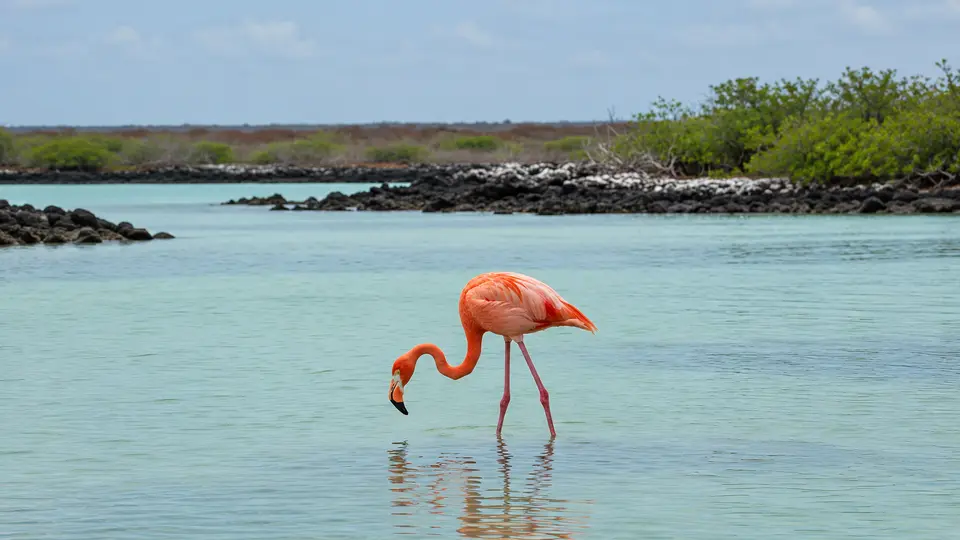
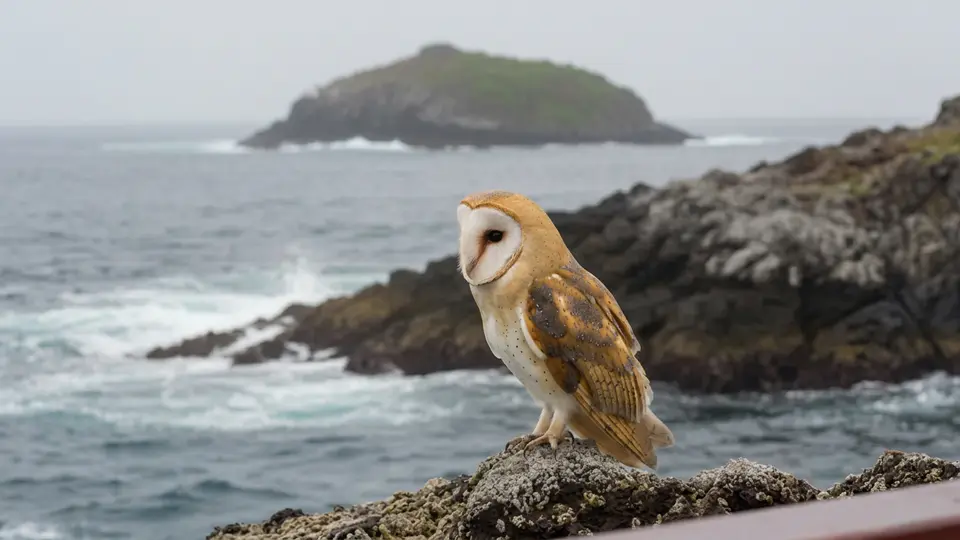
Large Ground FinchAI-modifiedLarge Ground FinchAmerican FlamingoAI-modifiedAmerican FlamingoBarn OwlAI-modifiedBarn Owl
Animal groupBirdsAnimal groupBirdsAnimal groupBirds
DestinationsGalapagosDestinationsGalapagos, MexicoDestinationsGalapagos
Scientific nameGeospiza magnirostrisScientific nameScientific name
All wildlife destinations
AI-modified
Plan your trip

Find your next wildlife adventure

Compare destinations, shore programs and dates with the animals and habitats you would love to see.

  • Naturalist-led shore excursions
  • Responsible wildlife watching
  • Small expedition ships