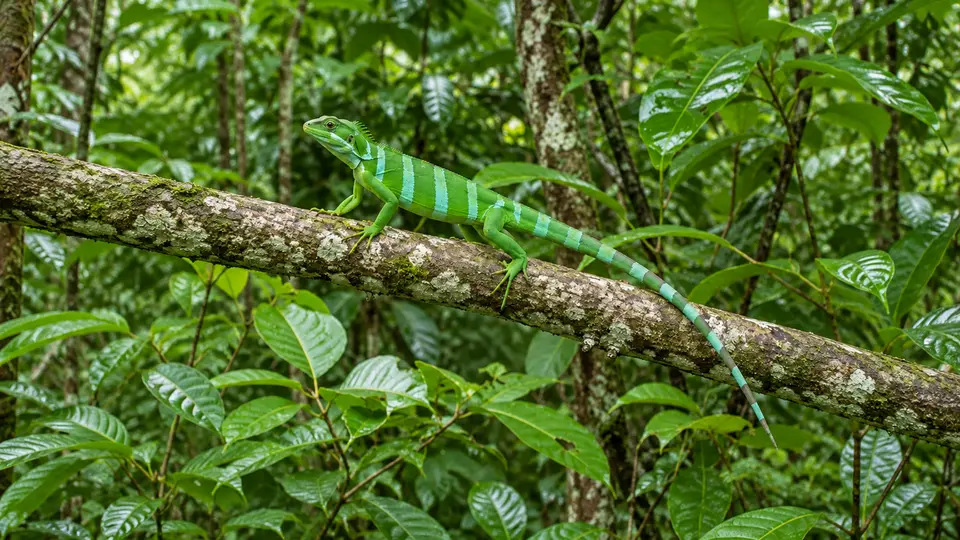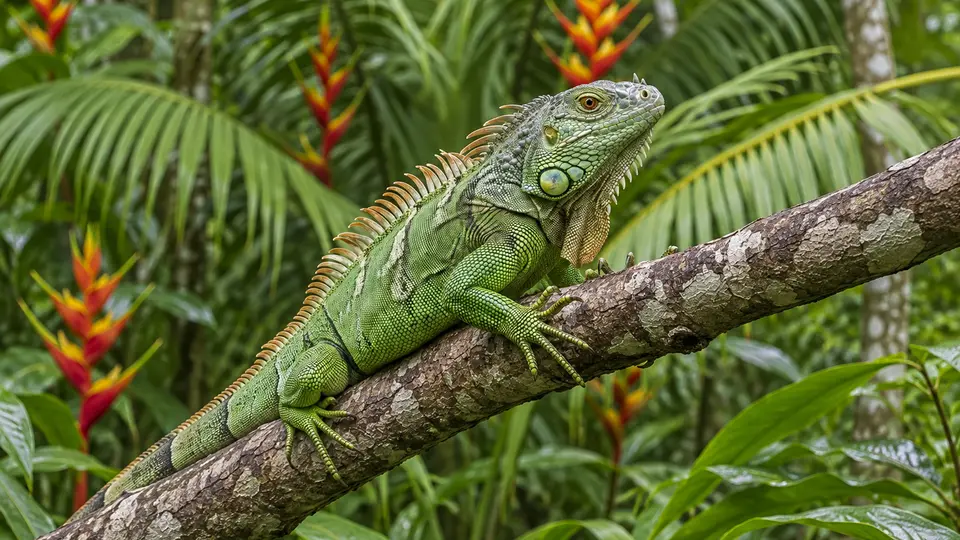
Fiji crested iguana in its natural habitat, AI illustration
Size20–25 cm snout-to-vent lengthLifespanNot reliably establishedStatusCritically Endangered

Fiji crested iguana: where and when to see them

Brachylophus vitiensis

Fiji crested iguana at a glance

The Fiji crested iguana is a highly threatened, arboreal reptile associated with a small number of western Fijian islands. Its tall dorsal spines and narrow pale body bands give it a distinctive outline. Remaining populations depend heavily on the survival of native dry forest, a habitat much reduced by clearing, fire and introduced animals. Conservation management includes habitat protection and invasive-species control, and important strongholds are not places for casual, unregulated wildlife visits.

Behaviour & reproduction

Size
20–25 cm snout-to-vent length
Weight
Not reliably established
Lifespan
Not reliably established
Status
Critically Endangered

Crested iguanas spend much of their time in trees, feeding and basking during daylight before resting on branches at night. Males defend space using visual displays and may become aggressive toward rivals. Their skin can darken considerably during social interactions or disturbance. Females leave the canopy to excavate nesting burrows, then cover their eggs with soil. Slow reproduction and highly localised populations make the loss of mature animals especially consequential. Crested iguanas are generally diurnal, spending their days foraging and thermoregulating in the sun. They exhibit a 'head bobbing' display to communicate with other iguanas, signaling territorial claims or courtship intentions. Females typically lay 2 to 6 eggs in an underground nest, which can remain there for an extended incubation period of several months.

Top wildlife locations

Fiji wildlife habitat

Fiji

Native coastal dry forest on a few western islands provides habitat, but major strongholds have restricted access. This iguana is not a standard landing attraction; any permitted visit requires conservation-led arrangements.

Adventure cruises in Fiji
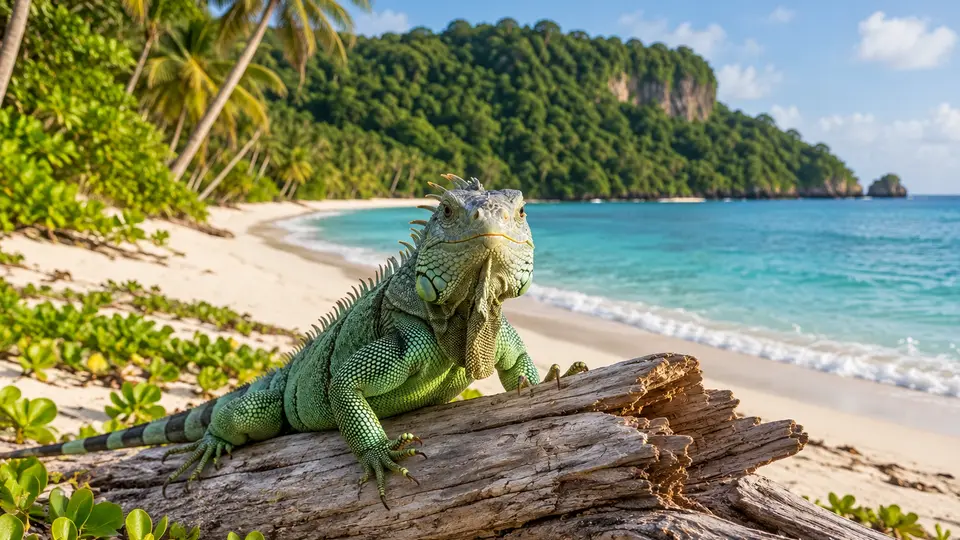
Destinations describe the species' habitat, not guaranteed cruise stops. Some animals require an optional inland excursion or are found in restricted reserves.

Fun facts about the Fiji crested iguana

  • The species was scientifically described in 1981.
  • It can change from bright green to a much darker colour.
  • Its eggs undergo an unusually long incubation lasting many months.
  • Yadua Taba is a crucial protected stronghold, not an unrestricted visitor site.

Best time to see the Fiji crested iguana

May to October is generally a practical period for authorised terrestrial visits in western Fiji. There is no dependable public viewing season for this restricted iguana. Permission, conservation priorities and availability of a legitimate guided programme matter more than the calendar. Breeding typically occurs from March to April, with egg laying following a few months later, making successful nesting highly weather-dependent. The dry season from May to October generally offers more stable weather conditions for forest exploration and less risk of cyclone disruption. While the breeding season is earlier, hatchlings may emerge later in the year after suitable rainfall.

Fiji crested iguana: season matrix by destination

Travel and observation windows vary by region. Highlighted months are an orientation for planning, not confirmed sightings or a guarantee of access.

Fiji

These months describe a generally favourable travel period only; access restrictions and conservation needs may prevent visits at any time.

JanFebMarAprMayJunJulAugSepOctNovDec
Cruise ships in Fiji

Where the Fiji crested iguana lives

The species is closely associated with tropical dry forest and suitable native woodland on western Fijian islands. Trees provide food, sleeping branches and refuge, while nesting requires usable ground. Fire, invasive plants, goats and forest clearance can degrade these small habitat remnants. Coastal dry forest and adjoining woodland are vital as this species cannot survive in heavily disturbed or cultivated areas. They are also found on some smaller, uninhabited islets with suitable vegetation. The fragmented nature of their habitat makes them particularly vulnerable to localized threats.

What the Fiji crested iguana eats

Leaves form an important part of the diet, supplemented by flowers and fruit from selected native plants. Different trees supply food at different times. Protecting a diverse forest is therefore more useful than preserving only individual trees where iguanas have been seen. Hatchlings and juveniles may occasionally consume insects, but adults are almost exclusively herbivorous. They are known to feed on leaves, flowers, and fruits from at least 30 different plant species. This varied diet reflects their adaptive foraging strategies in a dynamic forest environment.

Species at a glance

Common name
Fiji crested iguana
Scientific name
Brachylophus vitiensis
Animal group
Reptiles
Size
20–25 cm snout-to-vent length
Weight
Not reliably established
Lifespan
Not reliably established
Status
Critically Endangered
Identification
A conspicuous crest of elongated dorsal spines and narrow, often dark-edged white bands distinguish it from the lower-crested Fijian banded iguanas. Their vibrant emerald green coloration, often with distinct white or pale blue bands, provides excellent camouflage among foliage. The male's crest can be up to 1.5 cm high, significantly taller than the female's smaller crest. During mating season, males may display more intense banding and brighter coloration to attract mates.

Fiji crested iguana: frequently asked questions

Where can I see the Fiji crested iguana?
Fiji. Observe only through authorised access arrangements, using binoculars from designated paths. Never touch animals or nesting soil, and follow footwear-cleaning rules. Important protected populations are not available on standard landings, and sightings cannot be assumed. Be aware that these iguanas possess impressive camouflage and can be very difficult to spot even in suitable habitat. Binoculars are essential for observing these tree-dwelling lizards from a respectful distance without causing disturbance. Always defer to the guidance of local experts and conservation staff regarding approach distances and viewing protocols.
When is the best time to see the Fiji crested iguana?
May to October is generally a practical period for authorised terrestrial visits in western Fiji. There is no dependable public viewing season for this restricted iguana. Permission, conservation priorities and availability of a legitimate guided programme matter more than the calendar. Breeding typically occurs from March to April, with egg laying following a few months later, making successful nesting highly weather-dependent. The dry season from May to October generally offers more stable weather conditions for forest exploration and less risk of cyclone disruption. While the breeding season is earlier, hatchlings may emerge later in the year after suitable rainfall.
How big does the Fiji crested iguana get?
20–25 cm snout-to-vent length. Adult weight: Not reliably established. Size varies with age, sex and population.
How should I behave around the Fiji crested iguana?
Observe only through authorised access arrangements, using binoculars from designated paths. Never touch animals or nesting soil, and follow footwear-cleaning rules. Important protected populations are not available on standard landings, and sightings cannot be assumed. Be aware that these iguanas possess impressive camouflage and can be very difficult to spot even in suitable habitat. Binoculars are essential for observing these tree-dwelling lizards from a respectful distance without causing disturbance. Always defer to the guidance of local experts and conservation staff regarding approach distances and viewing protocols.
What does the Fiji crested iguana eat?
Leaves form an important part of the diet, supplemented by flowers and fruit from selected native plants. Different trees supply food at different times. Protecting a diverse forest is therefore more useful than preserving only individual trees where iguanas have been seen. Hatchlings and juveniles may occasionally consume insects, but adults are almost exclusively herbivorous. They are known to feed on leaves, flowers, and fruits from at least 30 different plant species. This varied diet reflects their adaptive foraging strategies in a dynamic forest environment.
Are wildlife sightings guaranteed on an adventure cruise?
No. Animals move freely and routes, weather, access restrictions and local conditions influence every outing. Confirm the actual itinerary and shore programme before booking.

Compare wildlife in the same destinations

Explore other reptiles recorded in these destinations. Similar surroundings do not mean the animals share the same habits or viewing season.

Species comparison by animal group and destination
Fiji crested iguanaFiji crested iguanaBrachylophus bulabulaBrachylophus bulabulaCentral Fijian banded iguanaCentral Fijian banded iguana
Animal groupReptilesAnimal groupReptilesAnimal groupReptiles
DestinationsFijiDestinationsFijiDestinationsFiji
All wildlife destinations
Plan your trip

Find your next wildlife adventure

Compare destinations, shore programmes and dates with the animals and habitats you would love to see.

  • Naturalist-led shore excursions
  • Responsible wildlife watching
  • Small expedition ships

Newsletter

Take Blue Rides with you

Adventure cruise offers, last-minute deals and trip inspiration.

Free, unsubscribe anytime. Details: Privacy Policy

Partner with Blue Rides

Affiliate Program

Recommend adventure cruises and earn commission on every confirmed booking.

Share. Track. Earn.