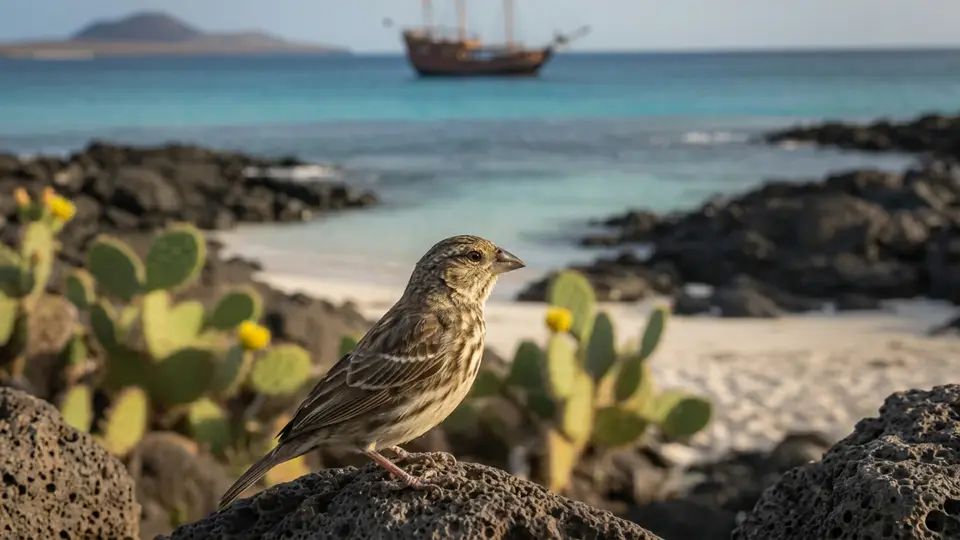
Cactus Finch in its natural habitatAI-modified

Cactus FinchGeospiza scandensWhere and when to see them

Cactus Finch at a glance

The common cactus finch is one of the Galapagos birds whose varied beaks helped illuminate evolution by natural selection. Its relatively long, pointed bill is well suited to exploiting prickly pear flowers and fruits. Males are mostly black, while females and immature birds are brown and streaked. It occurs on several islands rather than throughout the archipelago, and its ecology is closely tied to the distribution and condition of Opuntia cactus.

Behaviour & reproduction

Size
12-15 cm (4.7-5.9 in) long
Weight
20-25 g (0.7-0.9 oz)
Lifespan
Up to 16 years
Status
Least Concern

Birds forage on cactus pads, around flowers and on the ground, adjusting their feeding as resources change. Males sing from exposed perches and construct domed nests, which females assess during pair formation. Territorial behaviour becomes more conspicuous when breeding conditions improve. Rainfall can rapidly alter food supplies and reproductive activity. Outside active nesting, birds may gather loosely at productive food sources rather than maintaining conspicuous separation. Males attract mates with their characteristic song, often delivered from a prominent perch, such as a dead tree or a high *Opuntia* pad. They construct domed nests, usually placed low in shrubs or cacti, where females lay their eggs. Territorial displays, including chases and vocalizations, are more frequent during the breeding season as males defend their nesting sites and food sources.

Top wildlife locations

Galapagos wildlife habitatAI-modified

Galapagos

Authorised coastal paths through Opuntia scrub on islands within its range offer plausible viewing. No inland excursion is necessarily required, but island identity matters and similar finches can cause confusion.
Destinations describe the species' habitat, not guaranteed cruise stops. Some animals require an optional inland excursion or are found in restricted reserves.

Fun facts about the Cactus Finch

  • Prickly pear flowers supply both nectar and pollen.
  • Males build domed nests rather than open cups.
  • Females and young birds lack the adult male's black plumage.
  • Rainfall-driven food pulses can strongly influence breeding.

Best time to see the Cactus Finch

The species can be observed year-round on islands within its range. January to May often brings warmer, wetter conditions, flowering and increased breeding activity, but rainfall varies sharply between years. Dry-season visits can also be productive around remaining cactus food sources. Breeding activity peaks during the hot-wet season when food resources are most abundant, typically from January to May, coinciding with the flowering and fruiting of many plants. Even during the dry season, the persistent *Opuntia* cactus provides a consistent food supply, making year-round observation possible. The warm season also brings an increase in insect populations, providing additional protein for breeding adults and their young.

Cactus Finch: season matrix by destination

Travel and observation windows vary by region. Highlighted months are an orientation for planning, not confirmed sightings or a guarantee of access.

Galapagos

Resident birds may be observed year-round; rainfall and cactus flowering change activity, and access remains subject to park rules.

JanFebMarAprMayJunJulAugSepOctNovDec
Cruise ships in Galapagos

Where the Cactus Finch lives

Dry lowland scrub with prickly pear cactus is the characteristic habitat. Open volcanic terrain, scattered shrubs and cactus woodland provide feeding and nesting opportunities. Suitable habitat can occur near authorised coastal visitor routes, but not every island supports this particular finch. This finch is primarily found on the islands of Genovesa, Santa Fe, Española, Fernandina, Isabela, San Cristóbal, Santa Cruz, and Floreana. While not present on every island, its distribution is closely tied to the presence of its primary food source, the prickly pear cactus. They often favor the drier, lower elevations of these islands where *Opuntia* species thrive.

What the Cactus Finch eats

Opuntia nectar, pollen, flowers, fruits and seeds are important foods. Insects and other seeds supplement the diet, especially as seasonal resources change. Its pointed bill allows access to floral food while retaining the strength needed to process small seeds. The finch uses its specialized bill to probe *Opuntia* flowers for nectar and pollen, and to extract pulp from ripening fruits. During the dry season, the ability to exploit remaining *Opuntia* fruits and seeds becomes crucial for survival. Its long, pointed bill is perfectly adapted for piercing the base of *Opuntia* flower petals to access nectar without damaging the reproductive parts.

Species at a glance

Common name
Cactus Finch
Scientific name
Geospiza scandens
Animal group
Birds
Size
12-15 cm (4.7-5.9 in) long
Weight
20-25 g (0.7-0.9 oz)
Lifespan
Up to 16 years
Status
Least Concern
Identification
Its elongated, pointed bill separates it from the blunter-billed ground finches, while the large cactus finch generally has a heavier, deeper bill. Distinguishing it from the large cactus finch (*Geospiza conirostris*) can be challenging in some areas, but *G. scandens* typically has a proportionally longer and more slender bill. Males are generally all black, while females and immatures are streaky brown with a paler belly. The upper mandible often appears decurved, contributing to its distinctive profile.

Cactus Finch: frequently asked questions

Where can I see the Cactus Finch?
Galapagos. Stay on authorised paths and examine cactus plants without touching nests or fragile pads. Never feed finches or let them take food from bags, since artificial feeding can spread disease and alter behaviour. When observing these finches, look for their characteristic foraging on *Opuntia* cacti, often carefully navigating the spines. Their presence is a good indicator of healthy prickly pear cactus populations in an area. Remember to maintain a respectful distance to avoid disturbing their natural activities, especially during nesting periods.
When is the best time to see the Cactus Finch?
The species can be observed year-round on islands within its range. January to May often brings warmer, wetter conditions, flowering and increased breeding activity, but rainfall varies sharply between years. Dry-season visits can also be productive around remaining cactus food sources. Breeding activity peaks during the hot-wet season when food resources are most abundant, typically from January to May, coinciding with the flowering and fruiting of many plants. Even during the dry season, the persistent *Opuntia* cactus provides a consistent food supply, making year-round observation possible. The warm season also brings an increase in insect populations, providing additional protein for breeding adults and their young.
How big does the Cactus Finch get?
12-15 cm (4.7-5.9 in) long. Adult weight: 20-25 g (0.7-0.9 oz). Size varies with age, sex and population.
How should I behave around the Cactus Finch?
Stay on authorised paths and examine cactus plants without touching nests or fragile pads. Never feed finches or let them take food from bags, since artificial feeding can spread disease and alter behaviour. When observing these finches, look for their characteristic foraging on *Opuntia* cacti, often carefully navigating the spines. Their presence is a good indicator of healthy prickly pear cactus populations in an area. Remember to maintain a respectful distance to avoid disturbing their natural activities, especially during nesting periods.
What does the Cactus Finch eat?
Opuntia nectar, pollen, flowers, fruits and seeds are important foods. Insects and other seeds supplement the diet, especially as seasonal resources change. Its pointed bill allows access to floral food while retaining the strength needed to process small seeds. The finch uses its specialized bill to probe *Opuntia* flowers for nectar and pollen, and to extract pulp from ripening fruits. During the dry season, the ability to exploit remaining *Opuntia* fruits and seeds becomes crucial for survival. Its long, pointed bill is perfectly adapted for piercing the base of *Opuntia* flower petals to access nectar without damaging the reproductive parts.
Are wildlife sightings guaranteed on an adventure cruise?
No. Animals move freely and routes, weather, access restrictions and local conditions influence every outing. Confirm the actual itinerary and shore program before booking.

Compare wildlife in the same destinations

Explore other birds recorded in these destinations. Similar surroundings do not mean the animals share the same habits or viewing season.

Species comparison by animal group and destination
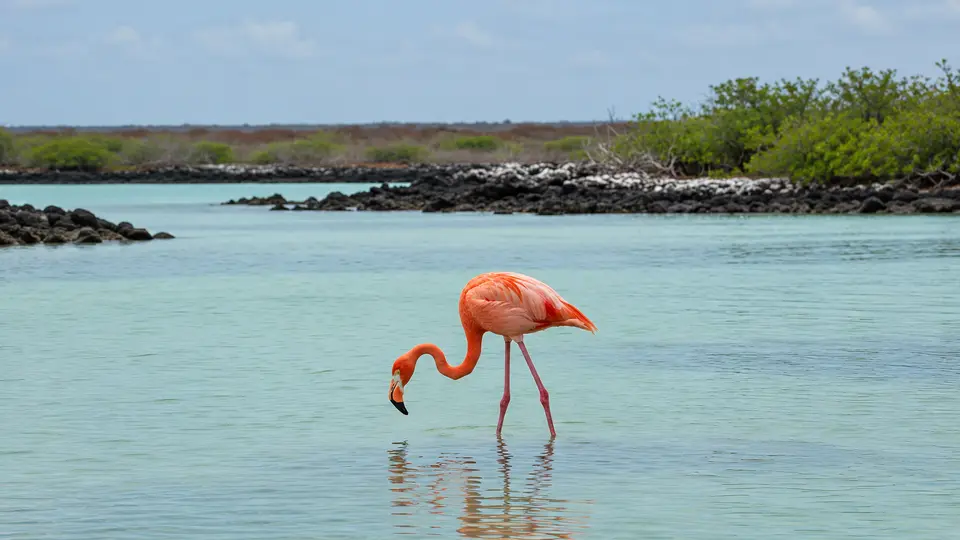
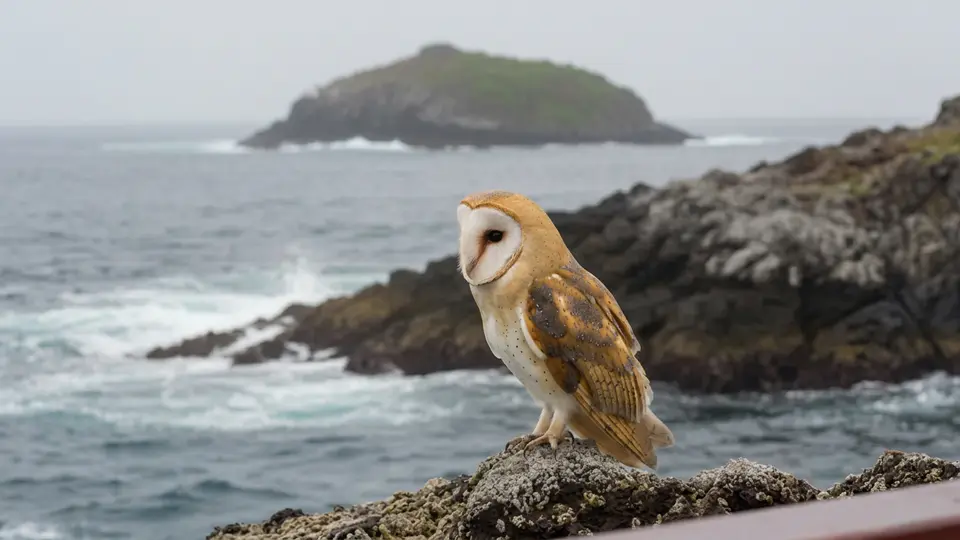
Cactus FinchAI-modifiedCactus FinchAmerican FlamingoAI-modifiedAmerican FlamingoBarn OwlAI-modifiedBarn Owl
Animal groupBirdsAnimal groupBirdsAnimal groupBirds
DestinationsGalapagosDestinationsGalapagos, MexicoDestinationsGalapagos
Scientific nameGeospiza scandensScientific nameScientific name
All wildlife destinations
AI-modified
Plan your trip

Find your next wildlife adventure

Compare destinations, shore programs and dates with the animals and habitats you would love to see.

  • Naturalist-led shore excursions
  • Responsible wildlife watching
  • Small expedition ships