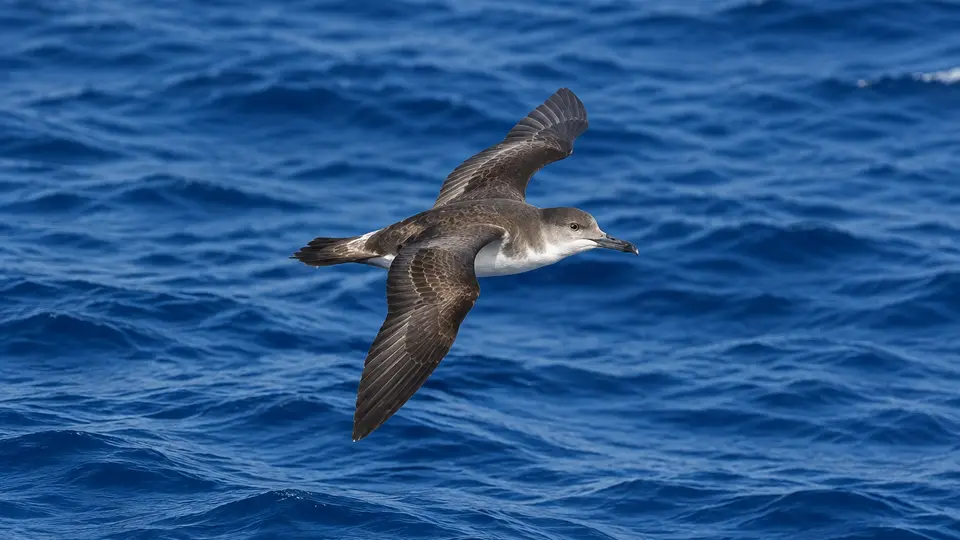
Yelkouan Shearwater in its natural habitatAI-modified

Yelkouan ShearwaterPuffinus yelkouanWhere and when to see them

Yelkouan Shearwater at a glance

The Yelkouan shearwater is a Mediterranean seabird with dark upperparts and predominantly white underparts, usually seen traveling low over the sea. Its breeding range is centered on Mediterranean islands and rocky coasts, while movements also carry birds into the Black Sea. It faces serious pressures from introduced predators at colonies, accidental capture in fishing gear and other human impacts. Coastal observers in Croatia, Greece and Turkey may see passage, but identification requires care.

Behaviour & reproduction

Size
30-38 cm (11.8-15.0 in) body length
Weight
330-500 g (11.6-17.6 oz)
Lifespan
Not reliably established
Status
Vulnerable

Birds alternate quick wingbeats with low glides, often moving in loose lines or gathering in feeding flocks. They spend most of their lives at sea and return to nesting cavities mainly at night, reducing exposure to some predators. Pairs usually lay one egg and share incubation. Seasonal movements are complex: some birds remain within the Mediterranean, while others travel through Turkish straits toward productive Black Sea waters after breeding. Yelkouan shearwaters are long-lived birds, some individuals reaching over 20 years of age. They exhibit strong philopatry, often returning to the same nesting colony and even the same burrow year after year. During their long migratory flights, they can cover vast distances across open water, sometimes flying hundreds of kilometers in a day.

Top wildlife locations

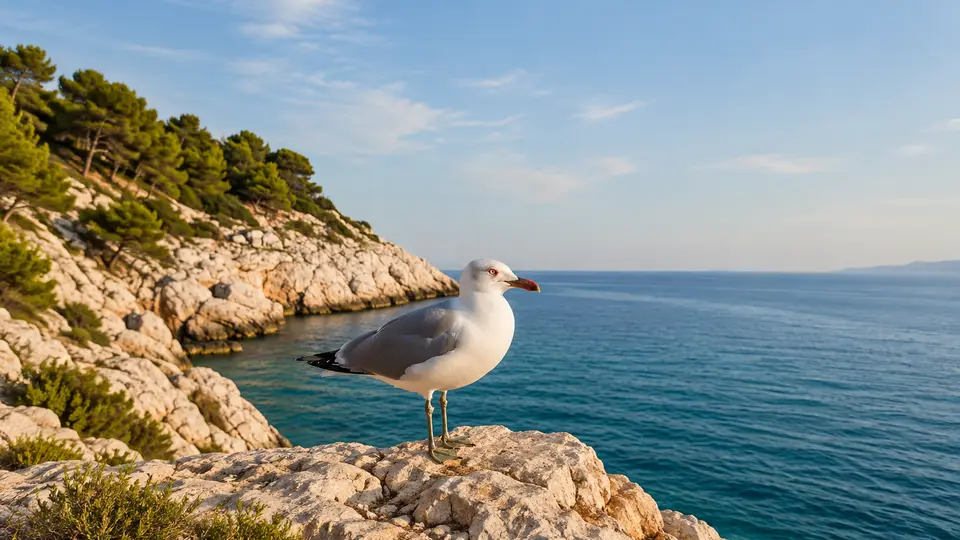
Croatia wildlife habitatAI-modified

Croatia

Adriatic headlands and open island coasts provide possible distant views over feeding or passage waters. Breeding crevices are generally inaccessible or sensitive; ordinary coastal access does not imply proximity to a colony.

Greece wildlife habitatAI-modified

Greece

Open Aegean and Ionian headlands can offer distant shore views, with deck observations possible in exposed coastal waters. Nesting islands and caves may be inaccessible or protected, so seek birds at sea.

Turkey wildlife habitatAI-modified

Turkey

Public viewpoints overlooking the Bosporus and exposed Marmara or Aegean shores can support distant watching. Passage is variable, and cliff colonies are not visitor destinations; no inland wildlife excursion is necessary.

Destinations describe the species' habitat, not guaranteed cruise stops. Some animals require an optional inland excursion or are found in restricted reserves.

Fun facts about the Yelkouan Shearwater

  • Its name derives from a Turkish name associated with shearwaters.
  • Some birds pass through the Bosporus between Mediterranean-connected waters and the Black Sea.
  • Pairs normally raise only one chick in a breeding attempt.
  • Introduced rats can cause severe losses at island nesting colonies.

Best time to see the Yelkouan Shearwater

Spring and early summer can offer useful Mediterranean coastal watching, while Turkish straits may hold substantial seasonal movements. Timing differs among coasts and years. Choose a safe headland with favorable visibility, and consult local records rather than treating the entire region as seasonally uniform. Peak breeding activity in the central and eastern Mediterranean typically runs from March to July. Autumn movements through the Turkish straits can be particularly impressive as birds head into the Black Sea. Consider late autumn or early spring for less crowded coastal viewing experiences.

Yelkouan Shearwater: season matrix by destination

Travel and observation windows vary by region. Highlighted months are an orientation for planning, not confirmed sightings or a guarantee of access.

Croatia

Spring to early summer is a reasonable coastal watch window, but abundance differs locally and birds may remain beyond identification range.

JanFebMarAprMayJunJulAugSepOctNovDec
Cruise ships in Croatia

Greece

This window overlaps breeding-region activity and practical coastal travel; it does not predict attendance at any particular viewpoint or colony.

JanFebMarAprMayJunJulAugSepOctNovDec
Cruise ships in Greece

Turkey

Spring and early summer provide a credible watch window, but movement through the straits varies and is not equivalent to a local breeding season.

JanFebMarAprMayJunJulAugSepOctNovDec
Cruise ships in Turkey

Where the Yelkouan Shearwater lives

Yelkouan shearwaters feed in Mediterranean and Black Sea waters, including coastal shelves and offshore feeding areas. They breed in burrows, crevices and caves on islands or rugged coasts. Nesting terrain is often inaccessible, protected or unsuitable for casual visitor access. While breeding, they show a strong preference for remote, predator-free islands and islets. These shearwaters are vulnerable to habitat degradation and introduced predators at their nesting sites. Non-breeding individuals can disperse widely across the Mediterranean and Black Sea.

What the Yelkouan Shearwater eats

Small schooling fish are important, supplemented by squid and crustaceans. Birds pursue prey beneath the surface and may gather where fish are concentrated by currents or other predators. From shore or deck, observers generally see travel and surface activity rather than prey capture details. They opportunistically feed on discarded fish from fishing vessels, especially during trawling operations. This reliance on discards can make them vulnerable to changes in fishing practices. They often forage in mixed-species flocks, particularly with other seabirds and dolphins, to exploit concentrated prey.

Species at a glance

Common name
Yelkouan Shearwater
Scientific name
Puffinus yelkouan
Animal group
Birds
Size
30-38 cm (11.8-15.0 in) body length
Weight
330-500 g (11.6-17.6 oz)
Lifespan
Not reliably established
Status
Vulnerable
Identification
Cleaner white underparts and a relatively compact shape help distinguish it from the usually browner Balearic shearwater, but distant or intermediate-looking birds may remain unidentified. Their upperparts are uniformly dark sooty-brown, contrasting with the clean white underparts, a key field mark. The bill is dark and relatively slender, and their flight is typically stiffer and more direct than that of gulls. Pay attention to the underwing pattern, which is usually entirely white or with only a very faint darker margin.

Yelkouan Shearwater: frequently asked questions

Where can I see the Yelkouan Shearwater?
Croatia, Greece, Turkey. Use a telescope from a safe headland or binoculars from a stable deck. Avoid night lighting near colonies and never enter nesting caves; keep well back from cliff edges, especially in windy viewing conditions. While at sea, scan the horizon for characteristic low-flying groups following a wave trough. From shore, choose a location with a wide, unobstructed view of the sea, preferably at an elevated position. Avoid sudden movements or loud noises that might disturb any nearby wildlife.
When is the best time to see the Yelkouan Shearwater?
Spring and early summer can offer useful Mediterranean coastal watching, while Turkish straits may hold substantial seasonal movements. Timing differs among coasts and years. Choose a safe headland with favorable visibility, and consult local records rather than treating the entire region as seasonally uniform. Peak breeding activity in the central and eastern Mediterranean typically runs from March to July. Autumn movements through the Turkish straits can be particularly impressive as birds head into the Black Sea. Consider late autumn or early spring for less crowded coastal viewing experiences.
How big does the Yelkouan Shearwater get?
30-38 cm (11.8-15.0 in) body length. Adult weight: 330-500 g (11.6-17.6 oz). Size varies with age, sex and population.
How should I behave around the Yelkouan Shearwater?
Use a telescope from a safe headland or binoculars from a stable deck. Avoid night lighting near colonies and never enter nesting caves; keep well back from cliff edges, especially in windy viewing conditions. While at sea, scan the horizon for characteristic low-flying groups following a wave trough. From shore, choose a location with a wide, unobstructed view of the sea, preferably at an elevated position. Avoid sudden movements or loud noises that might disturb any nearby wildlife.
What does the Yelkouan Shearwater eat?
Small schooling fish are important, supplemented by squid and crustaceans. Birds pursue prey beneath the surface and may gather where fish are concentrated by currents or other predators. From shore or deck, observers generally see travel and surface activity rather than prey capture details. They opportunistically feed on discarded fish from fishing vessels, especially during trawling operations. This reliance on discards can make them vulnerable to changes in fishing practices. They often forage in mixed-species flocks, particularly with other seabirds and dolphins, to exploit concentrated prey.
Are wildlife sightings guaranteed on an adventure cruise?
No. Animals move freely and routes, weather, access restrictions and local conditions influence every outing. Confirm the actual itinerary and shore program before booking.

Compare wildlife in the same destinations

Explore other birds recorded in these destinations. Similar surroundings do not mean the animals share the same habits or viewing season.

Species comparison by animal group and destination
Yelkouan ShearwaterAI-modifiedYelkouan ShearwaterAudouin's GullAI-modifiedAudouin's GullBlack StorkAI-modifiedBlack Stork
Animal groupBirdsAnimal groupBirdsAnimal groupBirds
DestinationsCroatia, Greece, TurkeyDestinationsCroatia, Greece, Portugal, TurkeyDestinationsPortugal, Turkey
Scientific namePuffinus yelkouanScientific nameScientific name
All wildlife destinations
AI-modified
Plan your trip

Find your next wildlife adventure

Compare destinations, shore programs and dates with the animals and habitats you would love to see.

  • Naturalist-led shore excursions
  • Responsible wildlife watching
  • Small expedition ships