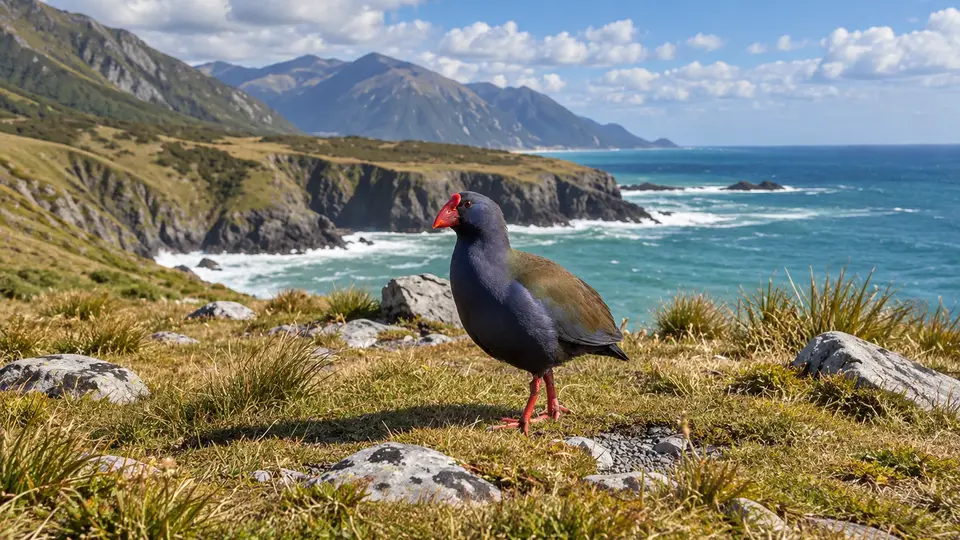
South Island takahe in its natural habitatAI-modified

South Island takahePorphyrio hochstetteriWhere and when to see them

South Island takahe at a glance

The South Island takahē is a large, flightless rail found only in New Zealand. Its blue plumage, greenish back and enormous red bill belong to a specialized grazer rather than a bird built for escape through flight. Once thought extinct, it was rediscovered in the Murchison Mountains in 1948. Intensive management, predator control and carefully planned transfers have since established additional populations, but the species remains dependent on sustained conservation work.

Behaviour & reproduction

Size
50-63 cm (19.7-24.8 in) long
Weight
2.3-3.8 kg (5.1-8.4 lb)
Lifespan
14-20 years
Status
Endangered

Takahē usually live as territorial pairs or family groups, moving deliberately through vegetation while cropping nutritious plant tissues. Pair bonds can persist for years, and both parents help raise young. Birds communicate with low calls and louder contact notes, especially when separated. Their wings are too reduced for flight, so they rely on cover and terrestrial movement. Managed populations may appear approachable, but close human contact can disrupt feeding and family interactions. Takahē breeding pairs typically produce one to three eggs, usually in a well-hidden nest on the ground. Both parents share incubation duties and extensive chick rearing, which can last for several months after hatching. Their elaborate courtship displays involve bowing, preening, and vocalizations to strengthen pair bonds.

Top wildlife locations

New Zealand wildlife habitatAI-modified

New Zealand

Some managed coastal or island sanctuaries have public viewing, but access must be verified. Natural alpine habitat requires an inland excursion and is restricted; takahē are not routine birds of standard coastal landings.
Destinations describe the species' habitat, not guaranteed cruise stops. Some animals require an optional inland excursion or are found in restricted reserves.

Fun facts about the South Island takahe

  • Geoffrey Orbell's expedition rediscovered living takahē in 1948.
  • The extinct North Island takahē was a separate species.
  • Adults use their powerful bills to process tough grass stems.
  • Conservation transfers have returned the species to several predator-controlled locations.

Best time to see the South Island takahe

Managed viewing sites may offer opportunities throughout the year, depending on opening arrangements and where birds are ranging. Spring and summer can bring breeding-related restrictions. Choose a confirmed public sanctuary program rather than assuming the species is visible on a general coastal itinerary. During spring (September to November), adults are actively defending breeding territories and raising chicks, making them potentially more visible but also more sensitive to disturbance. Summer (December to February) allows for observations of independent juveniles as family groups forage together. In autumn and winter, birds may be less active but can still be seen foraging for roots and tubers, often in larger, more accessible groups at managed sites.

South Island takahe: season matrix by destination

Travel and observation windows vary by region. Highlighted months are an orientation for planning, not confirmed sightings or a guarantee of access.

New Zealand

This is a potential year-round managed-site visiting window, not a guarantee of access or visibility; breeding and conservation work can temporarily close areas.

JanFebMarAprMayJunJulAugSepOctNovDec
Cruise ships in New Zealand

Where the South Island takahe lives

The surviving wild population was discovered in alpine tussock country, but takahē can also occupy lowland grassland, wetland edges and open habitats within predator-controlled sanctuaries. Suitable feeding vegetation and protection from introduced mammals are more important than altitude alone. The majority of the wild population is now found in the Murchison Mountains of Fiordland, a naturally isolated and rugged area. Captive breeding facilities and island sanctuaries, like Tiritiri Matangi and Kapiti Island, play a crucial role in the species' recovery by providing predator-free environments for population growth and reintroduction efforts. These managed sites often feature a mix of forest edge, shrubland, and grassland suitable for foraging and shelter.

What the South Island takahe eats

Takahē primarily eat grasses, sedges and rushes, selecting soft basal tissues, shoots and seeds. They often hold or manipulate stems while stripping edible portions. Food choice changes with season and habitat, and managed birds may receive supplementary feeding under conservation supervision. Takahē have particularly strong, muscular gizzards to help them digest the fibrous plant material they consume. In their tussock habitat, they often pull entire tussock plants from the ground to access the softer leaf bases, leaving characteristic 'tussock pulls'. Their diet also includes a variety of native seeds, berries, and even some invertebrates when available, particularly during the breeding season to supplement their nutritional intake.

Species at a glance

Common name
South Island takahe
Scientific name
Porphyrio hochstetteri
Animal group
Birds
Size
50-63 cm (19.7-24.8 in) long
Weight
2.3-3.8 kg (5.1-8.4 lb)
Lifespan
14-20 years
Status
Endangered
Identification
Compared with the flying pūkeko, takahē are much bulkier, with shorter legs, a heavier red bill and a greener back. Beyond the pūkeko, takahē are easily distinguished by their brilliant iridescent blue and green plumage, contrasting with the vibrant red bill and frontal shield. Their stocky build and sturdy red legs are key characteristics that differentiate them from other rails. Juveniles have duller plumage and a less developed frontal shield compared to adults.

South Island takahe: frequently asked questions

Where can I see the South Island takahe?
New Zealand. Visit only authorized public viewing areas and follow sanctuary biosecurity rules. Keep back from pairs and chicks, never offer food, and clean footwear and equipment as instructed to avoid transporting pests or plant pathogens. Be prepared to walk on uneven terrain at sanctuary locations, as takahē often inhabit remote or undulating landscapes. Early morning or late afternoon can be prime viewing times when the birds are most active foraging. Maintain a respectful distance to avoid causing stress to the birds or altering their natural foraging patterns.
When is the best time to see the South Island takahe?
Managed viewing sites may offer opportunities throughout the year, depending on opening arrangements and where birds are ranging. Spring and summer can bring breeding-related restrictions. Choose a confirmed public sanctuary program rather than assuming the species is visible on a general coastal itinerary. During spring (September to November), adults are actively defending breeding territories and raising chicks, making them potentially more visible but also more sensitive to disturbance. Summer (December to February) allows for observations of independent juveniles as family groups forage together. In autumn and winter, birds may be less active but can still be seen foraging for roots and tubers, often in larger, more accessible groups at managed sites.
How big does the South Island takahe get?
50-63 cm (19.7-24.8 in) long. Adult weight: 2.3-3.8 kg (5.1-8.4 lb). Size varies with age, sex and population.
How should I behave around the South Island takahe?
Visit only authorized public viewing areas and follow sanctuary biosecurity rules. Keep back from pairs and chicks, never offer food, and clean footwear and equipment as instructed to avoid transporting pests or plant pathogens. Be prepared to walk on uneven terrain at sanctuary locations, as takahē often inhabit remote or undulating landscapes. Early morning or late afternoon can be prime viewing times when the birds are most active foraging. Maintain a respectful distance to avoid causing stress to the birds or altering their natural foraging patterns.
What does the South Island takahe eat?
Takahē primarily eat grasses, sedges and rushes, selecting soft basal tissues, shoots and seeds. They often hold or manipulate stems while stripping edible portions. Food choice changes with season and habitat, and managed birds may receive supplementary feeding under conservation supervision. Takahē have particularly strong, muscular gizzards to help them digest the fibrous plant material they consume. In their tussock habitat, they often pull entire tussock plants from the ground to access the softer leaf bases, leaving characteristic 'tussock pulls'. Their diet also includes a variety of native seeds, berries, and even some invertebrates when available, particularly during the breeding season to supplement their nutritional intake.
Are wildlife sightings guaranteed on an adventure cruise?
No. Animals move freely and routes, weather, access restrictions and local conditions influence every outing. Confirm the actual itinerary and shore program before booking.

Compare wildlife in the same destinations

Explore other birds recorded in these destinations. Similar surroundings do not mean the animals share the same habits or viewing season.

Species comparison by animal group and destination
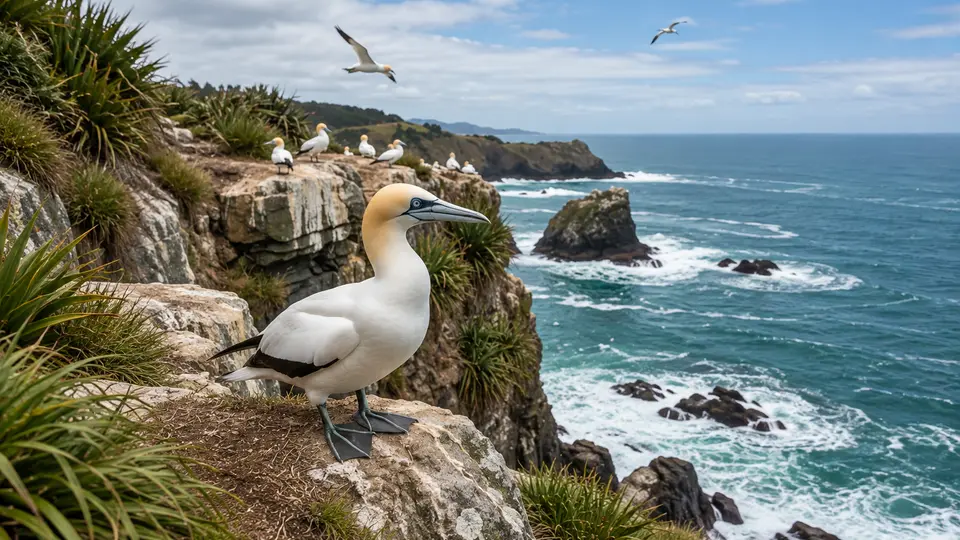
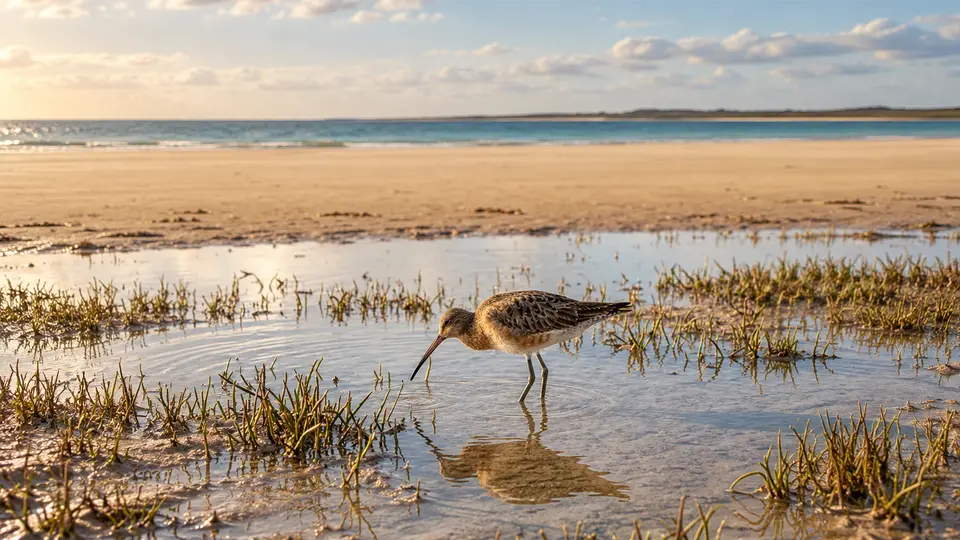
South Island takaheAI-modifiedSouth Island takaheAustralasian gannetAI-modifiedAustralasian gannetBar-tailed godwitAI-modifiedBar-tailed godwit
Animal groupBirdsAnimal groupBirdsAnimal groupBirds
DestinationsNew ZealandDestinationsNew ZealandDestinationsAustralia, New Zealand
Scientific namePorphyrio hochstetteriScientific nameScientific name
All wildlife destinations
AI-modified
Plan your trip

Find your next wildlife adventure

Compare destinations, shore programs and dates with the animals and habitats you would love to see.

  • Naturalist-led shore excursions
  • Responsible wildlife watching
  • Small expedition ships