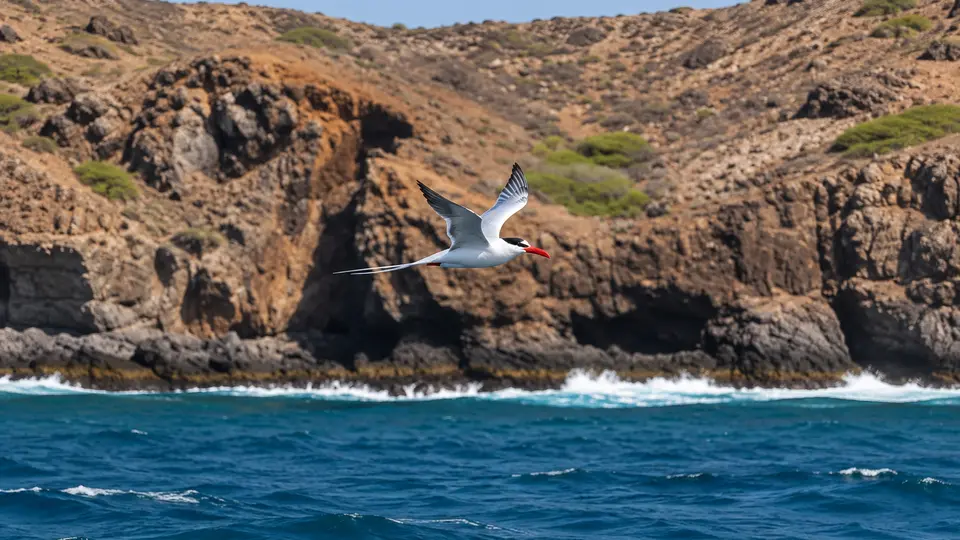
Red-billed Tropicbird in its natural habitatAI-modified

Red-billed TropicbirdPhaethon aethereusWhere and when to see them

Red-billed Tropicbird at a glance

Red-billed tropicbirds are tropical seabirds with white plumage, black wing markings and exceptionally long central tail feathers. They spend much of their lives over open water, returning to land principally to breed in sheltered rock cavities. Their strong coral-red bill and barred upperparts distinguish adults at suitable viewing distances. Colonies can be surprisingly difficult to detect from land because nest entrances are concealed and birds may spend long periods far offshore searching for food.

Behaviour & reproduction

Size
Body length 46–50 cm (18.1–19.7 in), excluding tail streamers
Weight
600–850 g (21.2–30.0 oz)
Lifespan
Not reliably established
Status
Least Concern

Around breeding cliffs, pairs perform aerial displays with repeated circling, close following and conspicuous tail streamers. On the ground they shuffle awkwardly because their legs are positioned far back on the body. A single egg is laid in a crevice or sheltered hollow, and both parents share incubation and provisioning. Adults capture marine prey by plunging from flight, while visits to nest sites can be brief and irregular. Courtship displays involve pairs flying in wide, synchronized arcs with their long tail streamers trailing behind them. On land, adults move slowly and are vulnerable to predators, emphasizing the need for secluded nest sites.

Top wildlife locations

Mexico wildlife habitatAI-modified

Mexico

Pacific island cliffs and rocky offshore coasts provide plausible deck or authorized shore views. Many colonies are remote or inaccessible, and ordinary mainland beach stops should not be treated as reliable viewing locations.

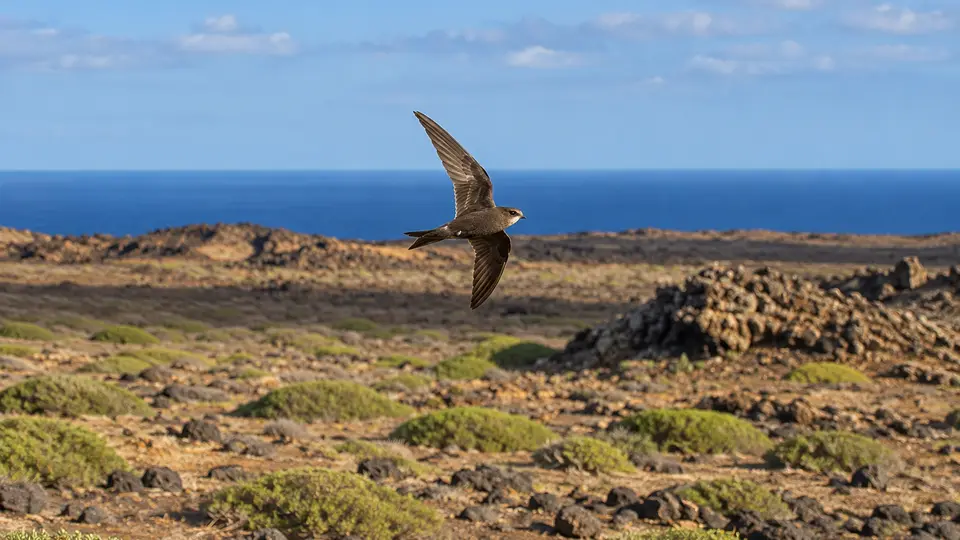
Cape Verde wildlife habitatAI-modified

Cape Verde

Rocky sea cliffs and offshore islets support potential coastal flight-path viewing. Nesting ledges are frequently inaccessible, and observations should remain at safe public viewpoints or on deck rather than involve colony approaches.

Destinations describe the species' habitat, not guaranteed cruise stops. Some animals require an optional inland excursion or are found in restricted reserves.

Fun facts about the Red-billed Tropicbird

  • The central tail streamers can exceed the body's length.
  • A normal clutch contains just one egg.
  • Its three recognized subspecies occupy widely separated ocean regions.
  • Its short legs make terrestrial movement noticeably awkward.

Best time to see the Red-billed Tropicbird

The most useful season depends on the particular colony, because breeding is not synchronized across the species' range. Choose locally documented colony activity alongside safe coastal travel conditions. Mexico's Pacific islands and Cape Verde require separate planning rather than one universal breeding window. In Mexico, breeding often peaks from late spring through summer, while in Cape Verde, nesting can occur year-round with peaks varying by island. Monitoring local conservation group reports can provide up to date information on nesting activity.

Red-billed Tropicbird: season matrix by destination

Travel and observation windows vary by region. Highlighted months are an orientation for planning, not confirmed sightings or a guarantee of access.

Mexico

A broadly practical Pacific travel window; colony attendance varies geographically and requires local confirmation.

JanFebMarAprMayJunJulAugSepOctNovDec
Cruise ships in Mexico

Cape Verde

These generally drier travel months do not establish breeding dates; wind, sea conditions and local colony attendance vary.

JanFebMarAprMayJunJulAugSepOctNovDec
Cruise ships in Cape Verde

Where the Red-billed Tropicbird lives

Breeding habitat consists mainly of rocky tropical islands, coastal cliffs and creviced sea-facing slopes with relatively safe nest cavities. Away from colonies, birds range over warm oceanic waters. Accessible mainland viewpoints only offer opportunities where colonies or regular flight paths lie nearby. Though generally colonial, some pairs may nest solitarily on remote islets. They prefer areas with limited terrestrial predation pressure to ensure chick survival.

What the Red-billed Tropicbird eats

Flying fish and other small surface-associated fishes are major prey, supplemented by squid. Birds search from the air and seize prey through short plunge attacks. Food availability at sea influences feeding journeys, so the presence of a colony does not ensure frequent coastal appearances. Despite their plunge-diving technique, they do not swim underwater after prey, instead snatching items from the surface or just below. Their diet can also include small crustaceans encountered near the water's surface.

Species at a glance

Common name
Red-billed Tropicbird
Scientific name
Phaethon aethereus
Animal group
Birds
Size
Body length 46–50 cm (18.1–19.7 in), excluding tail streamers
Weight
600–850 g (21.2–30.0 oz)
Lifespan
Not reliably established
Status
Least Concern
Identification
Adults differ from red-tailed and white-tailed tropicbirds through their red bill, finely barred back and white rather than red central tail streamers. Juveniles are distinguishable by a yellow or dusky bill and a more extensively barred upper surface compared to adults. The red bill of adults is bright and prominent, making it an unmistakable field mark.

Red-billed Tropicbird: frequently asked questions

Where can I see the Red-billed Tropicbird?
Mexico, Cape Verde. Watch flying birds from authorized cliff viewpoints or a vessel's deck using binoculars. Stay behind cliff barriers and away from nest cavities; close approaches can displace adults and expose eggs or chicks to heat and predators. Their distinctive, often shrill calls are a key indicator of their presence, especially around breeding cliffs. When viewing from a vessel, scanning the horizon for their distinctive flight pattern can help locate them from a distance.
When is the best time to see the Red-billed Tropicbird?
The most useful season depends on the particular colony, because breeding is not synchronized across the species' range. Choose locally documented colony activity alongside safe coastal travel conditions. Mexico's Pacific islands and Cape Verde require separate planning rather than one universal breeding window. In Mexico, breeding often peaks from late spring through summer, while in Cape Verde, nesting can occur year-round with peaks varying by island. Monitoring local conservation group reports can provide up to date information on nesting activity.
How big does the Red-billed Tropicbird get?
Body length 46–50 cm (18.1–19.7 in), excluding tail streamers. Adult weight: 600–850 g (21.2–30.0 oz). Size varies with age, sex and population.
How should I behave around the Red-billed Tropicbird?
Watch flying birds from authorized cliff viewpoints or a vessel's deck using binoculars. Stay behind cliff barriers and away from nest cavities; close approaches can displace adults and expose eggs or chicks to heat and predators. Their distinctive, often shrill calls are a key indicator of their presence, especially around breeding cliffs. When viewing from a vessel, scanning the horizon for their distinctive flight pattern can help locate them from a distance.
What does the Red-billed Tropicbird eat?
Flying fish and other small surface-associated fishes are major prey, supplemented by squid. Birds search from the air and seize prey through short plunge attacks. Food availability at sea influences feeding journeys, so the presence of a colony does not ensure frequent coastal appearances. Despite their plunge-diving technique, they do not swim underwater after prey, instead snatching items from the surface or just below. Their diet can also include small crustaceans encountered near the water's surface.
Are wildlife sightings guaranteed on an adventure cruise?
No. Animals move freely and routes, weather, access restrictions and local conditions influence every outing. Confirm the actual itinerary and shore program before booking.

Compare wildlife in the same destinations

Explore other birds recorded in these destinations. Similar surroundings do not mean the animals share the same habits or viewing season.

Species comparison by animal group and destination
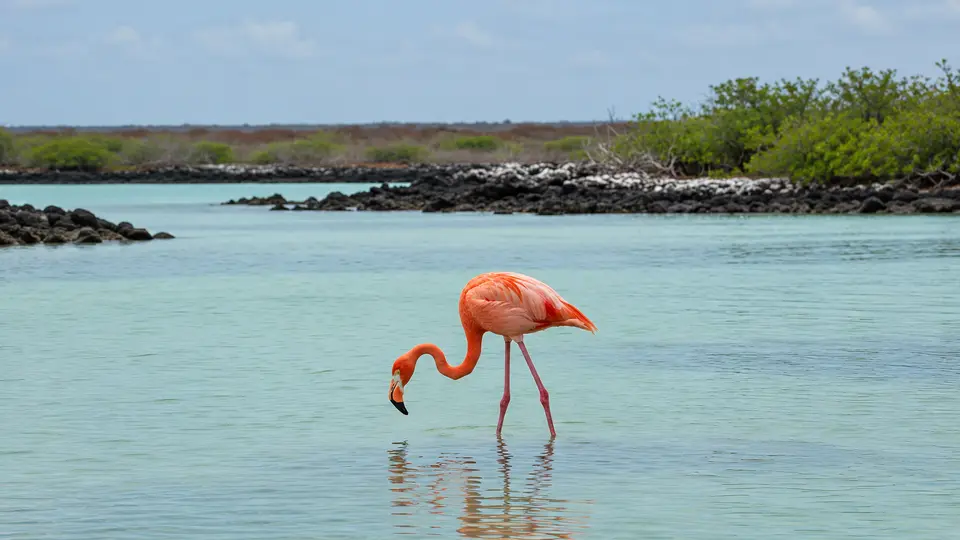
Red-billed TropicbirdAI-modifiedRed-billed TropicbirdAlexander's SwiftAI-modifiedAlexander's SwiftAmerican FlamingoAI-modifiedAmerican Flamingo
Animal groupBirdsAnimal groupBirdsAnimal groupBirds
DestinationsMexico, Cape VerdeDestinationsCape VerdeDestinationsGalapagos, Mexico
Scientific namePhaethon aethereusScientific nameScientific name
All wildlife destinations
AI-modified
Plan your trip

Find your next wildlife adventure

Compare destinations, shore programs and dates with the animals and habitats you would love to see.

  • Naturalist-led shore excursions
  • Responsible wildlife watching
  • Small expedition ships