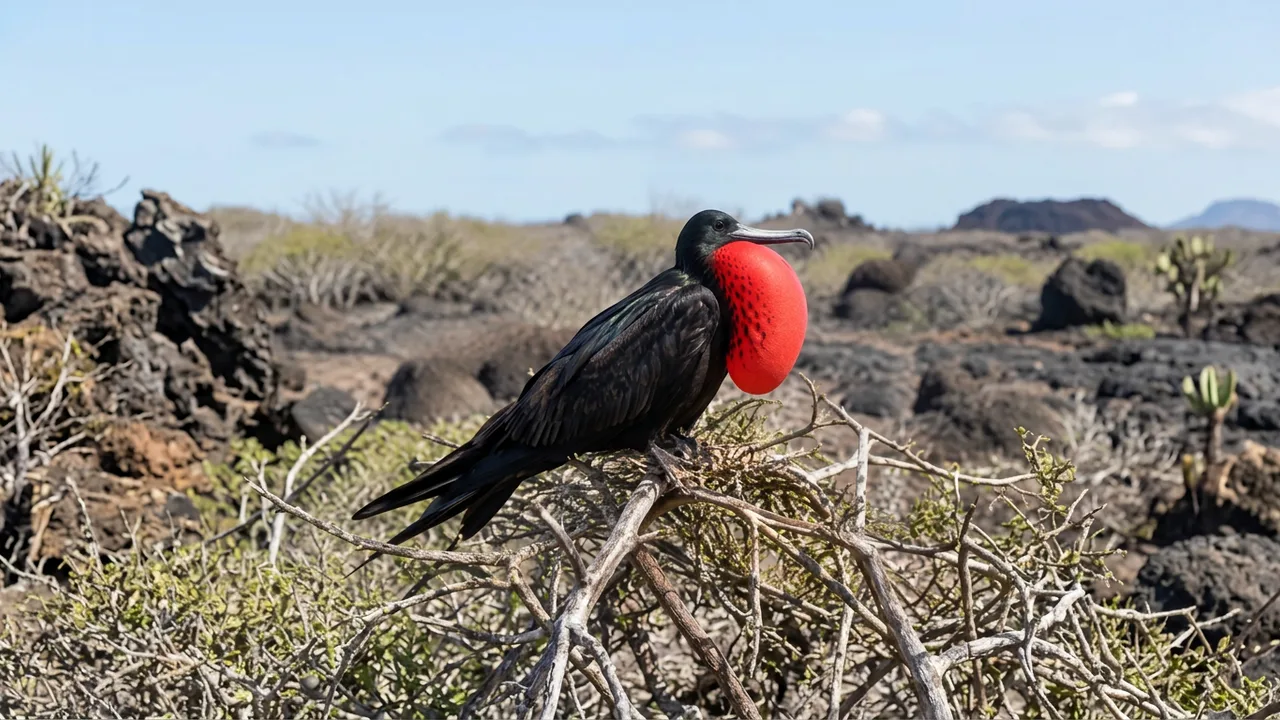
Magnificent Frigatebird in its natural habitatAI-modified

Magnificent FrigatebirdFregata magnificensWhere and when to see them

Magnificent Frigatebird at a glance

The magnificent frigatebird is a large tropical seabird built for effortless soaring, with extremely long wings and a deeply forked tail. Males inflate a red throat pouch during courtship, while females and juveniles show contrasting pale areas. It occurs around tropical American coasts and the Galapagos, with a historically tiny eastern Atlantic outpost in Cape Verde. Global status should not obscure the extreme vulnerability or uncertain persistence of such isolated local populations.

Behaviour & reproduction

Size
89–114 cm (35–45 in) long; wingspan 2.1–2.4 m (6.9–7.9 ft)
Weight
1.1–1.6 kg (2.4–3.5 lb)
Lifespan
Not reliably established
Status
Least Concern

Frigatebirds spend long periods soaring on rising air above coasts and offshore waters. They seize prey from the surface and sometimes pursue other seabirds until food is dropped or regurgitated, although they also catch much of their own food. At colonies, displaying males inflate their throat pouches, spread their wings and call. Breeding is prolonged, with females providing extended care after males cease their contribution to chick rearing. Courtship displays involve the male rapidly vibrating his inflated red gular pouch to attract females. Females lay a single egg, and the entire breeding cycle, from egg-laying to independence, can span over a year.

Top wildlife locations

Costa Rica wildlife habitatAI-modified

Costa Rica

Pacific coastal headlands, estuaries and harbour viewpoints offer plausible overhead observation. Colony vegetation may be inaccessible or protected, but birds can sometimes be watched soaring from ordinary public shores without an inland excursion.

Florida wildlife habitatAI-modified

Florida

Southern coastal bays, island overlooks and public waterfronts can provide views of soaring birds. Sightings are less dependable farther north, and offshore roost islands may be inaccessible or closed to disturbance.

Galapagos wildlife habitatAI-modified

Galapagos

Authorized coastal paths and vessel decks offer overhead views near bays and nesting habitat. Colony access is strictly managed, and distinguishing magnificent from great frigatebirds may require closer optical study rather than approach.

Mexico wildlife habitatAI-modified

Mexico

Tropical Pacific and Caribbean waterfronts, mangrove edges and headlands provide plausible shore viewing. Breeding islets and dense mangrove colonies may be inaccessible, so watch soaring birds from established public viewpoints.

Cape Verde wildlife habitatAI-modified

Cape Verde

The species historically occupied tiny offshore breeding refuges, not dependable public shore-viewing sites. Remaining occurrence is exceptionally rare or uncertain, and protected islets may be inaccessible; ordinary coastal travel should not anticipate sightings.

Destinations describe the species' habitat, not guaranteed cruise stops. Some animals require an optional inland excursion or are found in restricted reserves.

Fun facts about the Magnificent Frigatebird

  • The male's red courtship pouch is an inflatable area of throat skin.
  • Its wingspan is exceptionally large relative to its body mass.
  • It normally takes food without settling on the sea surface.
  • Young birds can depend on females for many months after fledging.

Best time to see the Magnificent Frigatebird

Year-round observation is possible in much of tropical America and the Galapagos, although local numbers and breeding stages vary. Florida is generally more promising in warmer months. Cape Verde should not be assigned a viewing season because the remnant population's current presence is uncertain. In the Galapagos, breeding activity can be observed throughout the year, with peak nesting varying by island and colony. For Costa Rica and Mexico, the dry season often offers clearer skies and easier viewing conditions along the coasts.

Magnificent Frigatebird: season matrix by destination

Travel and observation windows vary by region. Highlighted months are an orientation for planning, not confirmed sightings or a guarantee of access.

Costa Rica

A practical Pacific dry-season travel window; frigatebirds occur beyond these months, and breeding timing varies locally.

JanFebMarAprMayJunJulAugSepOctNovDec
Cruise ships in Costa Rica

Florida

Warmer months are generally more promising for coastal presence; storms and local movements can shift numbers markedly.

JanFebMarAprMayJunJulAugSepOctNovDec
Cruise ships in Florida

Galapagos

Observation is plausible year-round; display and nesting schedules vary by colony and should not be inferred from the general travel season.

JanFebMarAprMayJunJulAugSepOctNovDec
Cruise ships in Galapagos

Mexico

A broadly practical tropical coastal travel window, not the full period of occurrence; regional weather and nesting calendars differ.

JanFebMarAprMayJunJulAugSepOctNovDec
Cruise ships in Mexico

Cape Verde

Current local persistence and any credible observation window require verification; no dependable season can be supplied.

JanFebMarAprMayJunJulAugSepOctNovDec
Cruise ships in Cape Verde

Where the Magnificent Frigatebird lives

Warm coastal and offshore waters adjoining islands, mangroves and sheltered bays form the principal habitat. Colonies occupy shrubs, trees or low vegetation in relatively undisturbed places. Birds often soar over harbours and headlands, allowing land-based observation without entering nesting areas. They prefer islands with minimal human disturbance for breeding, often choosing areas with dense low vegetation or tall trees. Their large wingspan and soaring flight are perfectly adapted for extensive oceanic and coastal movements.

What the Magnificent Frigatebird eats

Flying fish, other small fish and squid are important foods. Birds also take prey made available by feeding predators and may steal catches from other seabirds. Eggs, chicks and discarded food are taken opportunistically, with diet varying among colonies and coastal settings. Despite their mastery of aerial hunting, their plumage is not waterproof, preventing them from diving into the water for prey. Young birds and adults are also known to prey on tern chicks and other small seabirds when available.

Species at a glance

Common name
Magnificent Frigatebird
Scientific name
Fregata magnificens
Animal group
Birds
Size
89–114 cm (35–45 in) long; wingspan 2.1–2.4 m (6.9–7.9 ft)
Weight
1.1–1.6 kg (2.4–3.5 lb)
Lifespan
Not reliably established
Status
Least Concern
Identification
Compared with great frigatebird, adult female magnificent frigatebirds have a dark throat and males often show purplish back sheen, but distant birds and juveniles require caution. Juveniles are typically identified by their white heads and bellies, which gradually darken as they mature. The species has a noticeably deeply forked tail, often held closed or slightly open, which is a key silhouette feature.

Magnificent Frigatebird: frequently asked questions

Where can I see the Magnificent Frigatebird?
Costa Rica, Florida, Galapagos, Mexico, Cape Verde. Scan above coastal roosts and bays from public paths or decks. Keep away from nesting shrubs and avoid flushing resting birds for photographs. Never feed birds or stand beneath crowded roosts, where falling droppings create hygiene concerns. From ship decks, watch for their characteristic M-shaped wing profile against the sky as they glide effortlessly. During shore excursions, listen for the distinctive rattling calls of displaying males emanating from nesting colonies.
When is the best time to see the Magnificent Frigatebird?
Year-round observation is possible in much of tropical America and the Galapagos, although local numbers and breeding stages vary. Florida is generally more promising in warmer months. Cape Verde should not be assigned a viewing season because the remnant population's current presence is uncertain. In the Galapagos, breeding activity can be observed throughout the year, with peak nesting varying by island and colony. For Costa Rica and Mexico, the dry season often offers clearer skies and easier viewing conditions along the coasts.
How big does the Magnificent Frigatebird get?
89–114 cm (35–45 in) long; wingspan 2.1–2.4 m (6.9–7.9 ft). Adult weight: 1.1–1.6 kg (2.4–3.5 lb). Size varies with age, sex and population.
How should I behave around the Magnificent Frigatebird?
Scan above coastal roosts and bays from public paths or decks. Keep away from nesting shrubs and avoid flushing resting birds for photographs. Never feed birds or stand beneath crowded roosts, where falling droppings create hygiene concerns. From ship decks, watch for their characteristic M-shaped wing profile against the sky as they glide effortlessly. During shore excursions, listen for the distinctive rattling calls of displaying males emanating from nesting colonies.
What does the Magnificent Frigatebird eat?
Flying fish, other small fish and squid are important foods. Birds also take prey made available by feeding predators and may steal catches from other seabirds. Eggs, chicks and discarded food are taken opportunistically, with diet varying among colonies and coastal settings. Despite their mastery of aerial hunting, their plumage is not waterproof, preventing them from diving into the water for prey. Young birds and adults are also known to prey on tern chicks and other small seabirds when available.
Are wildlife sightings guaranteed on an adventure cruise?
No. Animals move freely and routes, weather, access restrictions and local conditions influence every outing. Confirm the actual itinerary and shore program before booking.

Compare wildlife in the same destinations

Explore other birds recorded in these destinations. Similar surroundings do not mean the animals share the same habits or viewing season.

Species comparison by animal group and destination
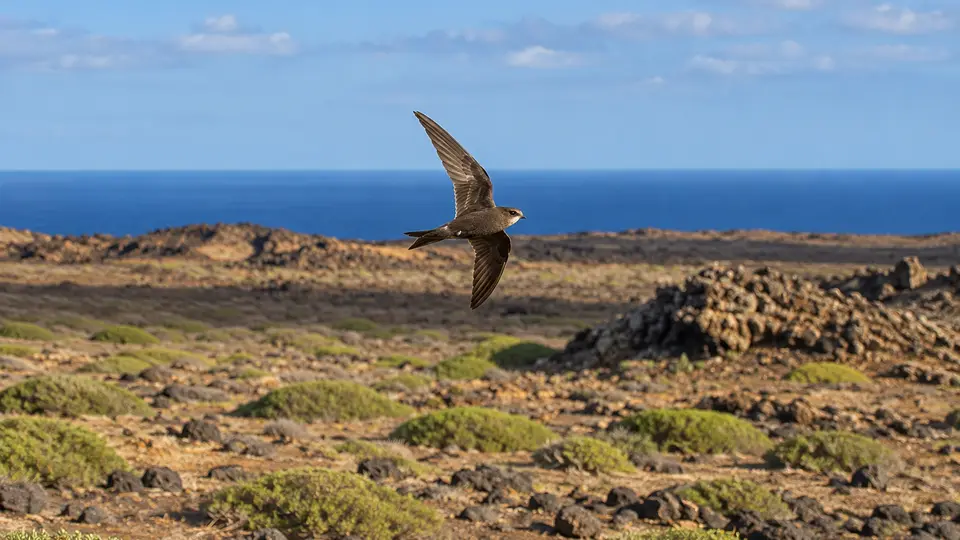
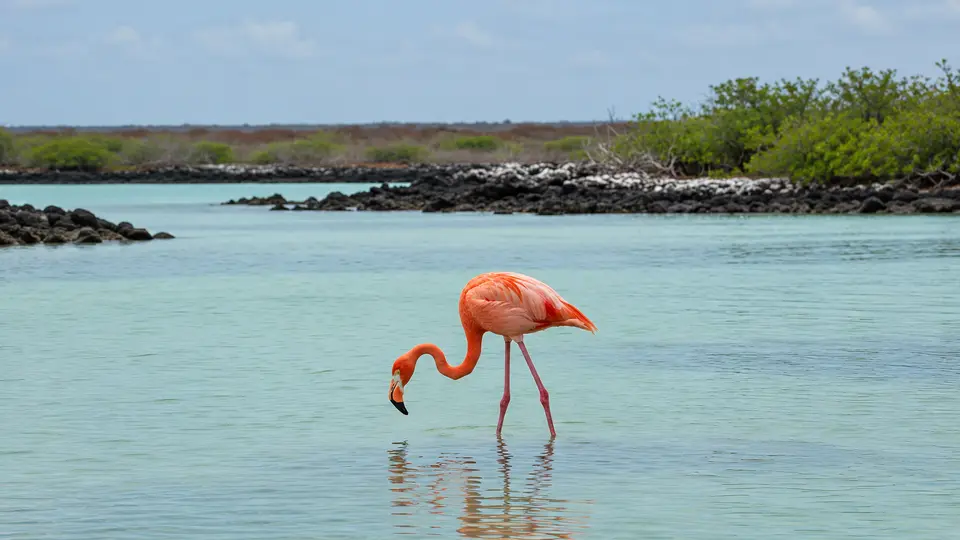
Magnificent FrigatebirdAI-modifiedMagnificent FrigatebirdAlexander's SwiftAI-modifiedAlexander's SwiftAmerican FlamingoAI-modifiedAmerican Flamingo
Animal groupBirdsAnimal groupBirdsAnimal groupBirds
DestinationsCosta Rica, Florida, Galapagos, Mexico, Cape VerdeDestinationsCape VerdeDestinationsGalapagos, Mexico
Scientific nameFregata magnificensScientific nameScientific name
All wildlife destinations
AI-modified
Plan your trip

Find your next wildlife adventure

Compare destinations, shore programs and dates with the animals and habitats you would love to see.

  • Naturalist-led shore excursions
  • Responsible wildlife watching
  • Small expedition ships