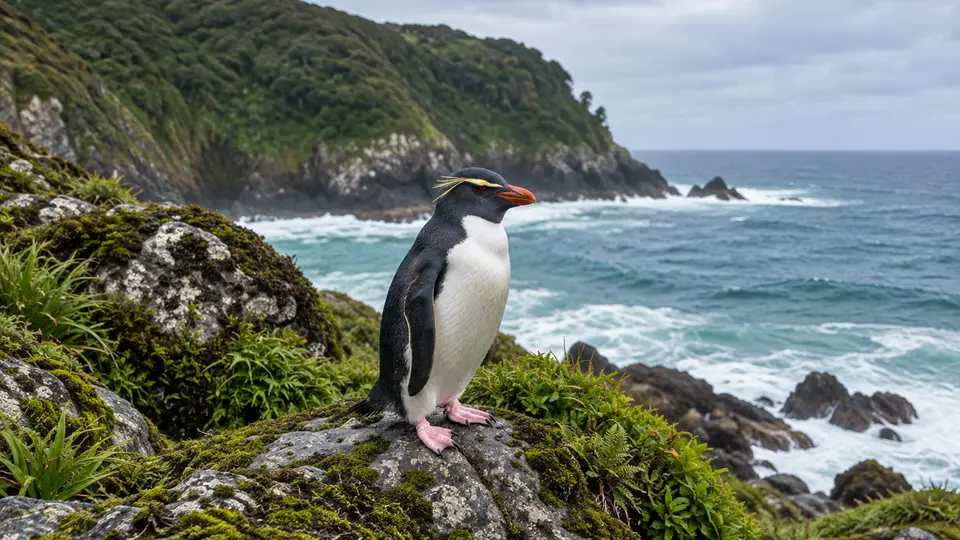
Fiordland penguin in its natural habitatAI-modified

Fiordland penguinEudyptes pachyrhynchusWhere and when to see them

Fiordland penguin at a glance

The Fiordland penguin, or tawaki, breeds along the wet southwestern coast of New Zealand’s South Island and around Stewart Island. Its yellow eyebrow plumes contrast with a dark head and thick reddish bill. Unlike penguins associated with open ice, tawaki often nest beneath dense vegetation, among roots or inside rocky cavities. Their secluded colonies are easily disturbed, and introduced predators, accidental capture in fishing gear and changing marine food conditions add to conservation concerns.

Behaviour & reproduction

Size
55–60 cm (21.7–23.6 in) tall
Weight
2.5–4.5 kg (5.5–9.9 lb)
Lifespan
Not reliably established
Status
Near Threatened

Adults return to coastal colonies during winter to breed, moving between the sea and concealed nests along established routes. Pairs share incubation and chick care, with changing attendance patterns as breeding progresses. After breeding, birds spend extended periods at sea before returning ashore to replace their feathers. This annual moult prevents normal feeding trips while the plumage is renewed. Tawaki can be cautious on land, delaying their return if people block access. Courtship rituals involve head-shaking and mutual preening, strengthening pair bonds for the breeding season. During their annual moult, penguins are unable to waterproof their feathers, making them vulnerable and highly susceptible to cold and predation.

Top wildlife locations

New Zealand wildlife habitatAI-modified

New Zealand

Approved viewing areas on the southwestern South Island and Stewart Island overlook forest-backed shores used by tawaki. Many colonies are remote or sensitive; local guidance is essential, and ordinary beach access does not ensure sightings.
Destinations describe the species' habitat, not guaranteed cruise stops. Some animals require an optional inland excursion or are found in restricted reserves.

Fun facts about the Fiordland penguin

  • Tawaki is the species’ Māori name.
  • Some nests lie beneath rainforest trees rather than on open beaches.
  • Both sexes share parental duties.
  • Adults replace their entire plumage during a concentrated annual moult.

Best time to see the Fiordland penguin

July to November broadly covers colony attendance during breeding, though timing varies and some sites restrict access. Late summer also brings moulting birds ashore, when disturbance is especially costly. Use locally approved viewing periods rather than treating either phase as unrestricted access. The breeding season typically runs from July to December, with egg-laying usually occurring in July and August. Chicks fledge around November, after which adults embark on a pre-moult foraging trip.

Fiordland penguin: season matrix by destination

Travel and observation windows vary by region. Highlighted months are an orientation for planning, not confirmed sightings or a guarantee of access.

New Zealand

This broadly matches breeding attendance, but site-specific access, weather and local conservation rules determine whether responsible viewing is possible.

JanFebMarAprMayJunJulAugSepOctNovDec
Cruise ships in New Zealand

Where the Fiordland penguin lives

Breeding habitat includes temperate rainforest, dense coastal scrub, boulder slopes and sheltered rocky cavities near the sea. Birds forage in surrounding marine waters and range far offshore outside breeding. Suitable colonies may be remote, and many should not be approached by visitors. They are endemic to the west coast of New Zealand's South Island, Stewart Island, and several small offshore islands. Their preference for dense undergrowth and caves makes them one of the most cryptic penguin species.

What the Fiordland penguin eats

Tawaki eat marine prey including squid, small fish and crustaceans. The balance varies between locations and years, reflecting what birds can obtain during foraging trips. Their food is captured at sea, so feeding behaviour is not normally visible from terrestrial observation points. Prey is typically consumed underwater, and their diet can include arrow squid, various small fish species like sprat and anchovy, and krill. Foraging dives can reach depths of over 100 meters, with some birds travelling considerable distances from colonies.

Species at a glance

Common name
Fiordland penguin
Scientific name
Eudyptes pachyrhynchus
Animal group
Birds
Size
55–60 cm (21.7–23.6 in) tall
Weight
2.5–4.5 kg (5.5–9.9 lb)
Lifespan
Not reliably established
Status
Near Threatened
Identification
Compared with Snares penguins, tawaki usually show white cheek streaks and lack the conspicuous bare pink skin patch at the bill base. The prominent yellow crests of tawaki extend backward from above their eyes. Juveniles initially lack the full yellow crests and instead have more subdued, browner plumage and smaller bills.

Fiordland penguin: frequently asked questions

Where can I see the Fiordland penguin?
New Zealand. Use designated viewing areas and remain well back from beach exit routes. Keep dogs away, avoid flash and never stand between a penguin and cover. Withdraw if a bird hesitates, changes direction or waits offshore. Always maintain a quiet demeanor to avoid startling these shy birds. Never attempt to touch or feed the penguins, as this can habituate them to humans and disrupt their natural behaviors.
When is the best time to see the Fiordland penguin?
July to November broadly covers colony attendance during breeding, though timing varies and some sites restrict access. Late summer also brings moulting birds ashore, when disturbance is especially costly. Use locally approved viewing periods rather than treating either phase as unrestricted access. The breeding season typically runs from July to December, with egg-laying usually occurring in July and August. Chicks fledge around November, after which adults embark on a pre-moult foraging trip.
How big does the Fiordland penguin get?
55–60 cm (21.7–23.6 in) tall. Adult weight: 2.5–4.5 kg (5.5–9.9 lb). Size varies with age, sex and population.
How should I behave around the Fiordland penguin?
Use designated viewing areas and remain well back from beach exit routes. Keep dogs away, avoid flash and never stand between a penguin and cover. Withdraw if a bird hesitates, changes direction or waits offshore. Always maintain a quiet demeanor to avoid startling these shy birds. Never attempt to touch or feed the penguins, as this can habituate them to humans and disrupt their natural behaviors.
What does the Fiordland penguin eat?
Tawaki eat marine prey including squid, small fish and crustaceans. The balance varies between locations and years, reflecting what birds can obtain during foraging trips. Their food is captured at sea, so feeding behaviour is not normally visible from terrestrial observation points. Prey is typically consumed underwater, and their diet can include arrow squid, various small fish species like sprat and anchovy, and krill. Foraging dives can reach depths of over 100 meters, with some birds travelling considerable distances from colonies.
Are wildlife sightings guaranteed on an adventure cruise?
No. Animals move freely and routes, weather, access restrictions and local conditions influence every outing. Confirm the actual itinerary and shore program before booking.

Compare wildlife in the same destinations

Explore other birds recorded in these destinations. Similar surroundings do not mean the animals share the same habits or viewing season.

Species comparison by animal group and destination
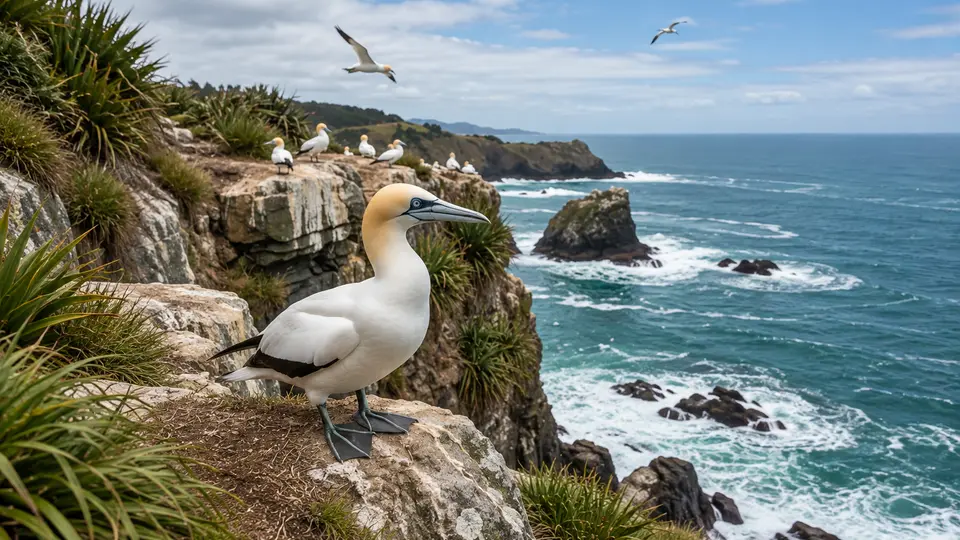
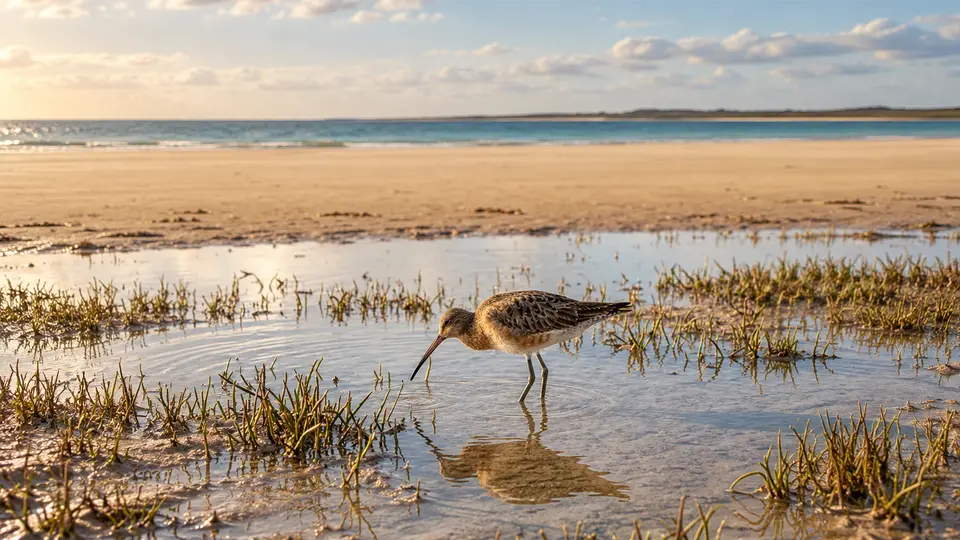
Fiordland penguinAI-modifiedFiordland penguinAustralasian gannetAI-modifiedAustralasian gannetBar-tailed godwitAI-modifiedBar-tailed godwit
Animal groupBirdsAnimal groupBirdsAnimal groupBirds
DestinationsNew ZealandDestinationsNew ZealandDestinationsAustralia, New Zealand
Scientific nameEudyptes pachyrhynchusScientific nameScientific name
All wildlife destinations
AI-modified
Plan your trip

Find your next wildlife adventure

Compare destinations, shore programs and dates with the animals and habitats you would love to see.

  • Naturalist-led shore excursions
  • Responsible wildlife watching
  • Small expedition ships